
Canal Barataria, Venice — History & Facts
What if beauty was never meant to be finished? In Canal Barataria, Venice, serenity flows like water, inviting contemplation and stillness. Look to the left at the gentle curve of the canal, where soft brushstrokes delineate the shimmering surface, mirroring the enchanting architecture that borders it. The muted palette of greens and blues evokes a sense of tranquility, while the delicate interplay of light and shadow guides your eyes through the composition. Notice how the light falls upon the buildings, catching their detailed façades, and creating a rhythmic harmony that feels almost meditative. As you delve deeper, consider the contrast between the bustling city life reflected in the water and the quietude of the canal.
Each boat gently gliding through the frame hints at fleeting moments of existence, while the stillness of the scene encapsulates a timeless beauty. The untouched nature of this serene waterway serves as a reminder of the balance between human endeavor and the tranquil embrace of the natural world. William Callow created this piece in 1885, during a period when the Impressionist movement was gaining momentum, and artists began to explore the play of light in their works. Living in England, he traveled extensively, with Venice captivating him during this era.
This painting reflects not only his admiration for the city but also the broader artistic shifts of the time, as artists sought new ways to connect with their subjects and evoke emotional responses.
More Artworks by William Callow
Browse all →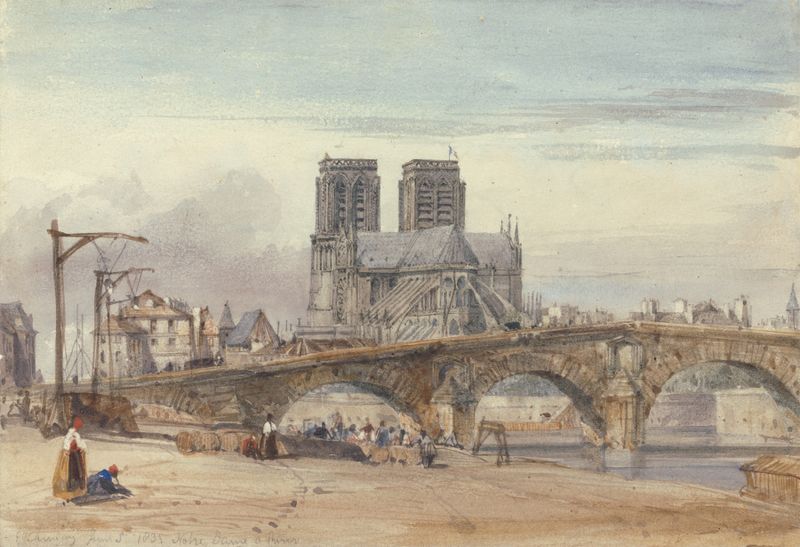
Notre Dame, Paris
William Callow
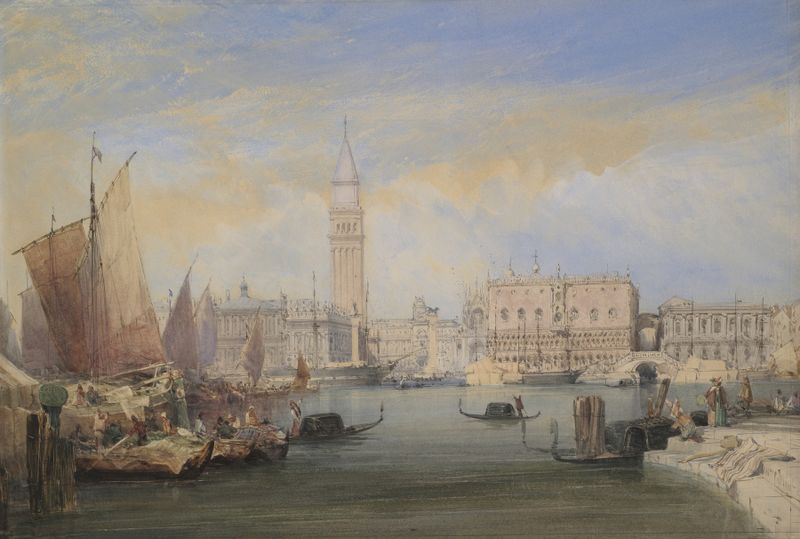
Venice from St. Giorgio
William Callow
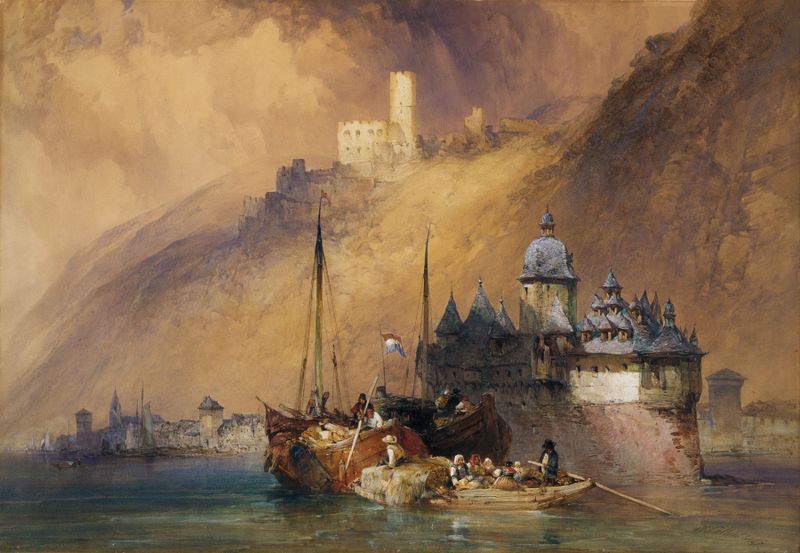
The Phalz Castle on the Rhine
William Callow

The Luxor, Paris, December 1833
William Callow

On the Wharfe, Bolton Abbey
William Callow

Caesar’s Tower, Warwick Castle
William Callow
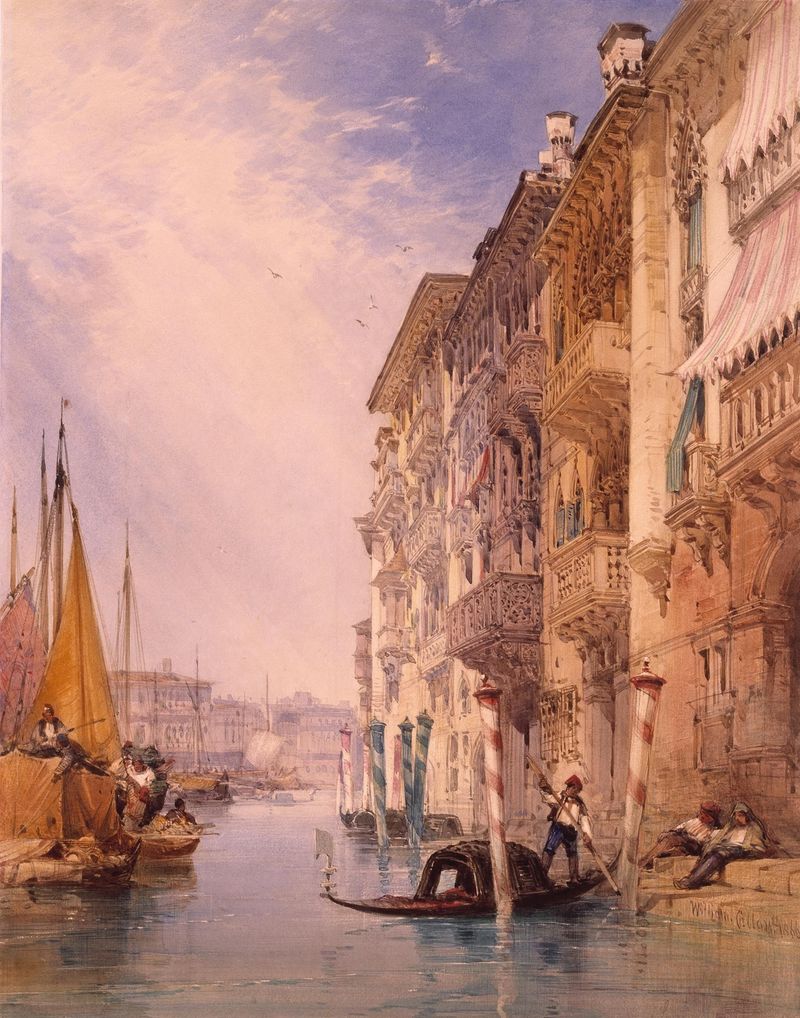
A Gondola on the Grand Canal, Venice
William Callow

Rheinfels and St. Goar
William Callow
Castel Sant’Angelo, Rome
William Callow

Entering Harbour
William Callow





