
Capriccio with an Ancient Temple — History & Facts
Can paint confess what words never could? In the quiet glow of Capriccio with an Ancient Temple, the interplay of light and shadow draws viewers into a world where memory and imagination intertwine. Focus on the luminous sky that bathes the ancient temple in a soft, golden hue. To the left, the crumbling columns stand as sentinels of time, their weathered surfaces catching the light with delicate warmth. Notice how the artist masterfully juxtaposes the vibrancy of the foliage in the foreground against the stark ruin of the temple, creating a dynamic tension that invites contemplation.
The gentle brushwork conveys a sense of nostalgia, while the serene waters reflect the temple's grandeur, enhancing its ethereal quality. Each detail in the scene whispers a story: the contrast between the resilient nature and the decaying architecture symbolizes the persistence of beauty even amidst ruin. The light plays a pivotal role, imbuing the landscape with a dreamlike ambiance that suggests a longing for history. Shadows linger in the corners, hinting at forgotten tales and the inevitable passage of time — a dance of mortality and eternity captured on canvas. Created in 1756, this work emerged during a period of great artistic exploration in France.
Hubert Robert was influenced by the Rococo style, which celebrated romance and nature, yet he sought to merge these elements with a classicism that reflected his travels to Italy. At the time, Europe was grappling with the Enlightenment's ideals, prompting artists to reflect on nature, ruins, and the human experience in new, profound ways.
More Artworks by Hubert Robert
Browse all →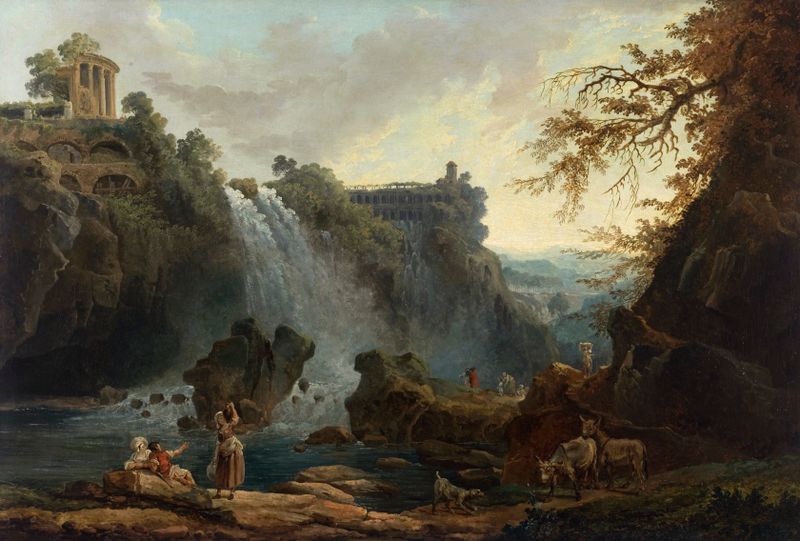
Les Cascatelles de Tivoli
Hubert Robert
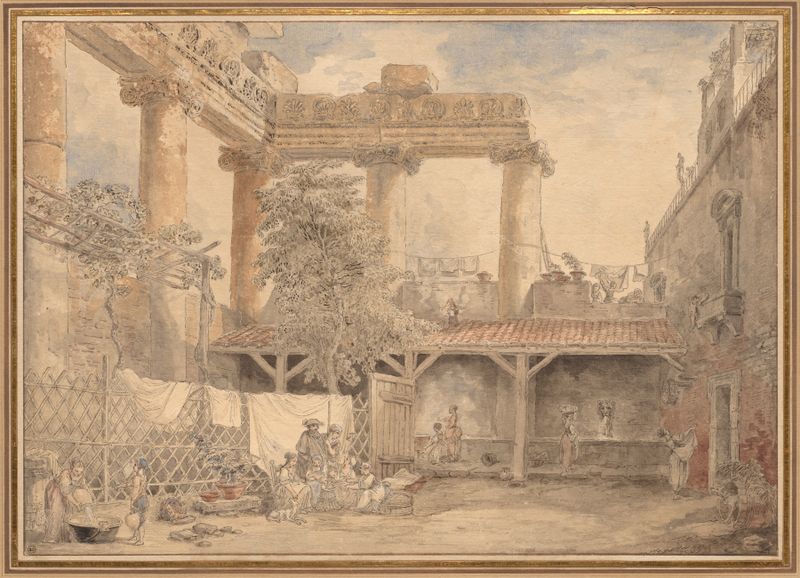
Roman Ruins, Villa Pamfili
Hubert Robert

The Rustic Bridge, Château de Méréville, France
Hubert Robert

The Portico of a Country Mansion
Hubert Robert

Architectural Capriccio
Hubert Robert

The Obelisk
Hubert Robert
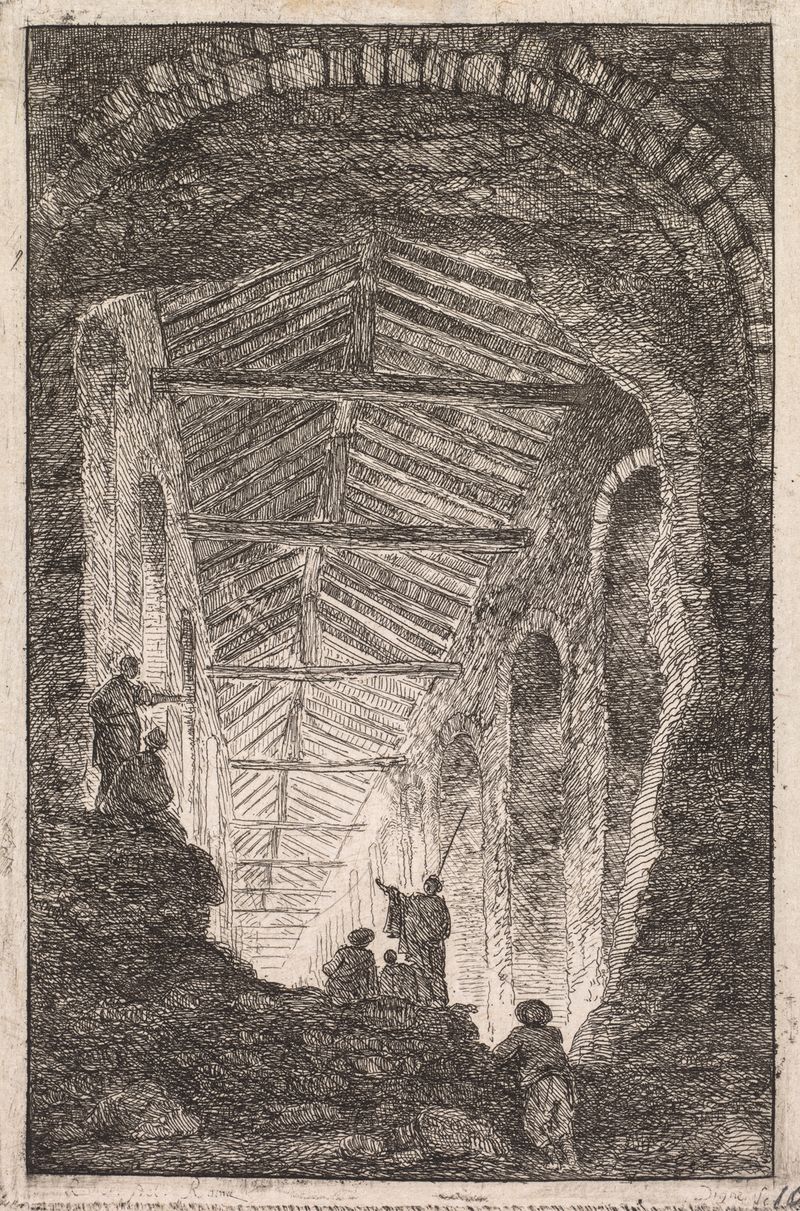
The Antique Gallery
Hubert Robert

L’incendie de l’Opéra, vu des jardins du Palais-Royal, le 8 juin 1781
Hubert Robert
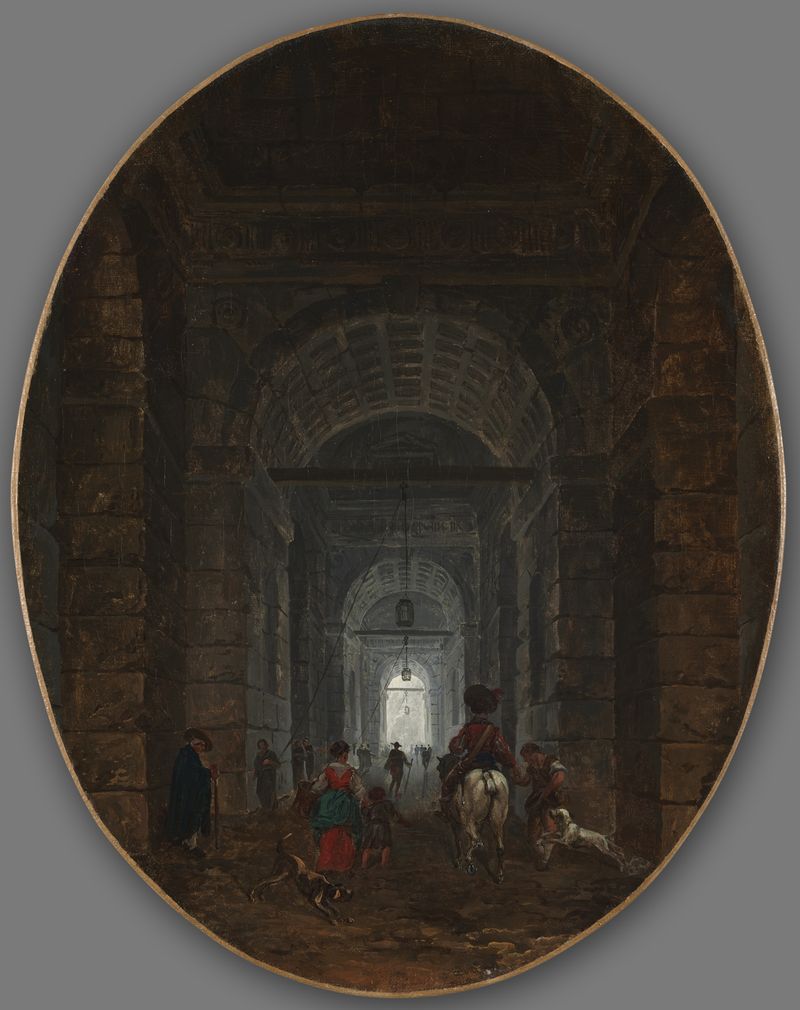
The Grotto of Posillipo
Hubert Robert

Architectural Capriccio with ruins of the Temple of Saturn and the Colosseum in the background
Hubert Robert





