
Cardinal of Portugal's Altarpiece — History & Facts
What first draws the eye in Cardinal of Portugal's Altarpiece by Antonio del Pollaiuolo is the poised, almost theatrical arrangement of the three saints, each haloed and distinct in their bearing. The central figure, with his hand raised in a gesture of speech or blessing, commands attention, while the two flanking saints—one in richly patterned red, the other in a dark tunic with striking red stockings—offer a study in contrasts. The intricate details of their garments, from the embroidered hems to the delicate clasps, speak of a world where textiles and symbols held deep meaning.
The artist leads the viewer through a dance of glances and gestures, each saint subtly interacting with the others, their feet firmly planted on a marble floor that glimmers with geometric design. Even the hat at their feet seems to invite speculation, hinting at a story just beyond the frame. Created between 1466 and 1468, this work belongs to a moment in the Italian Renaissance when altarpieces were not just devotional objects but also declarations of civic and personal identity. Such paintings were often commissioned by wealthy patrons or religious institutions to honor saints and assert their own legacy within the sacred space.
The trio here—St Vincent, St James Major, and St Eustace—reflects the era’s fascination with individuality and saintly virtue, rendered with a realism that was just coming into its own in Florence. While history has kept few traces of this specific altarpiece’s journey, its presence in a book collection today reminds us of the shifting fortunes of Renaissance art, and invites us to linger over the careful choreography of gesture, fabric, and gaze that Pollaiuolo set before us.
More Artworks by Antonio del Pollaiuolo

Martyrdom of Saint Sebastian
Antonio del Pollaiuolo
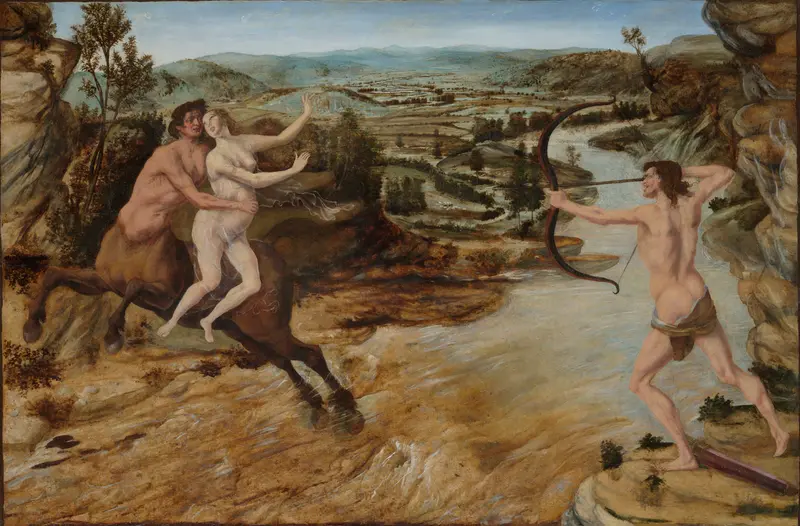
Hercules and Deianira
Antonio del Pollaiuolo
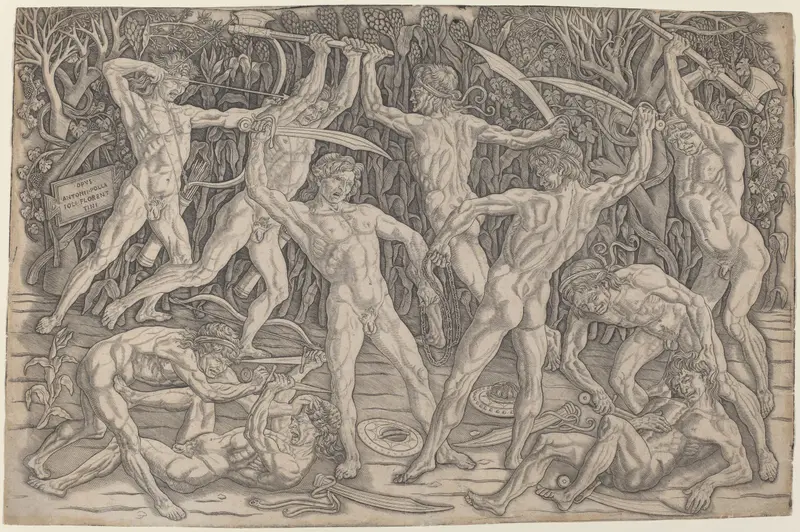
Battle of the Nudes
Antonio del Pollaiuolo
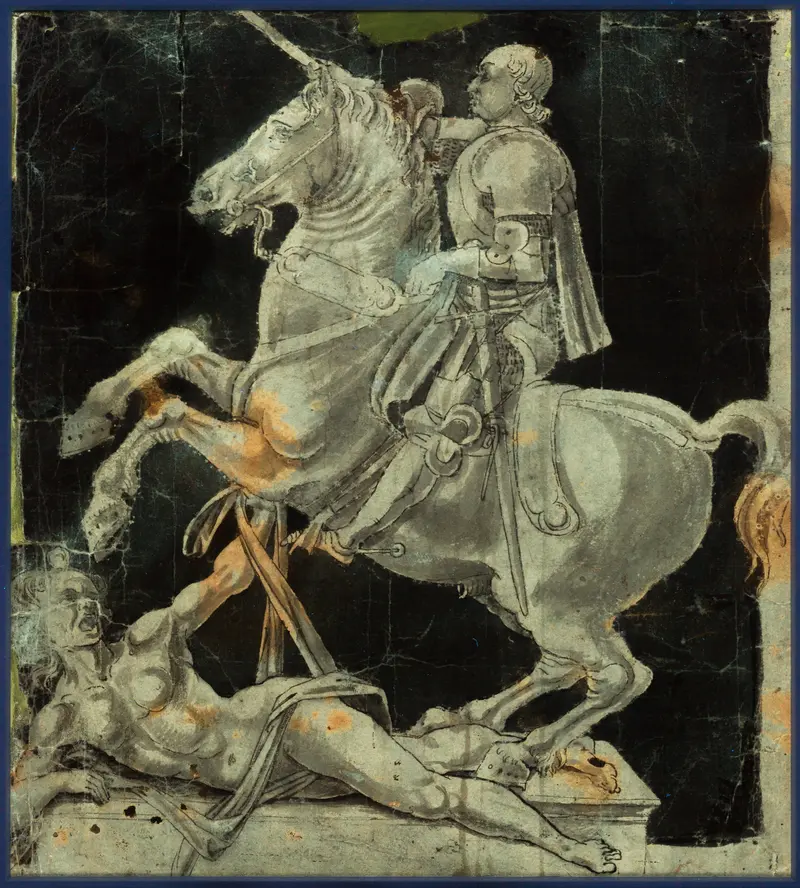
Study for the Equestrian Monument to Francesco Sforza
Antonio del Pollaiuolo
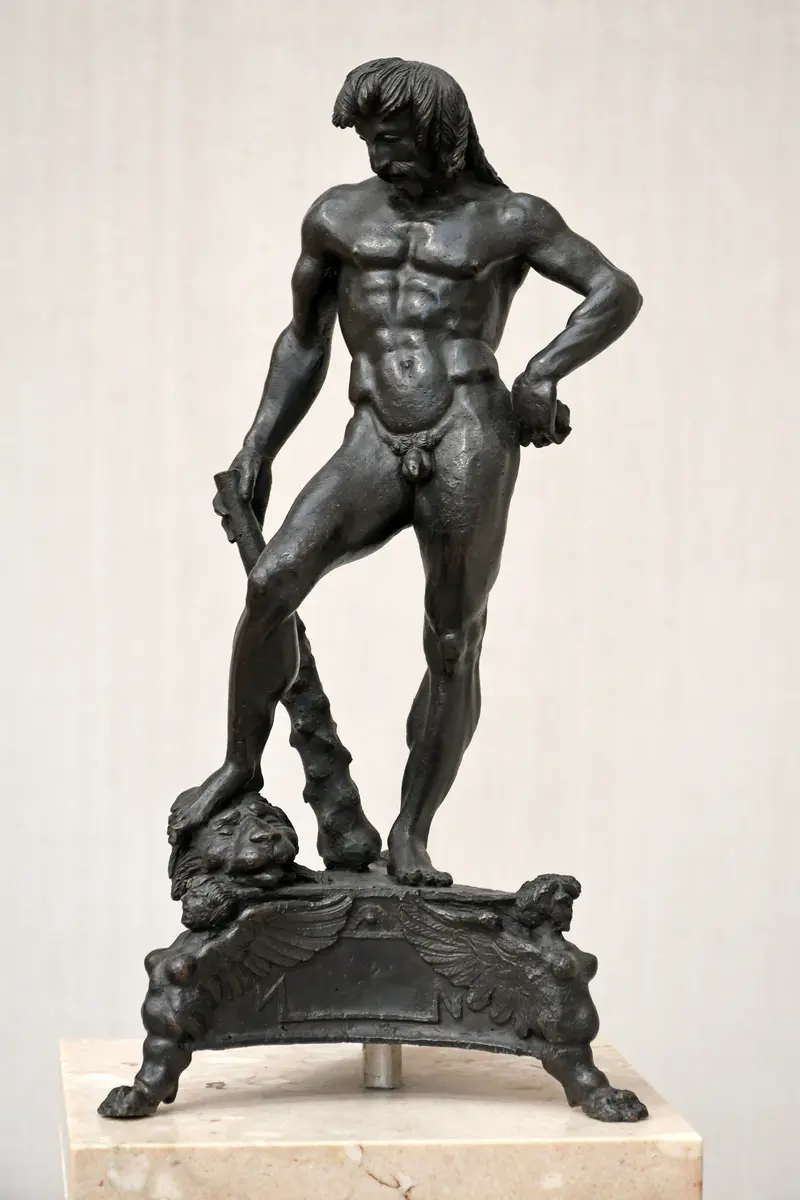
Heracles
Antonio del Pollaiuolo
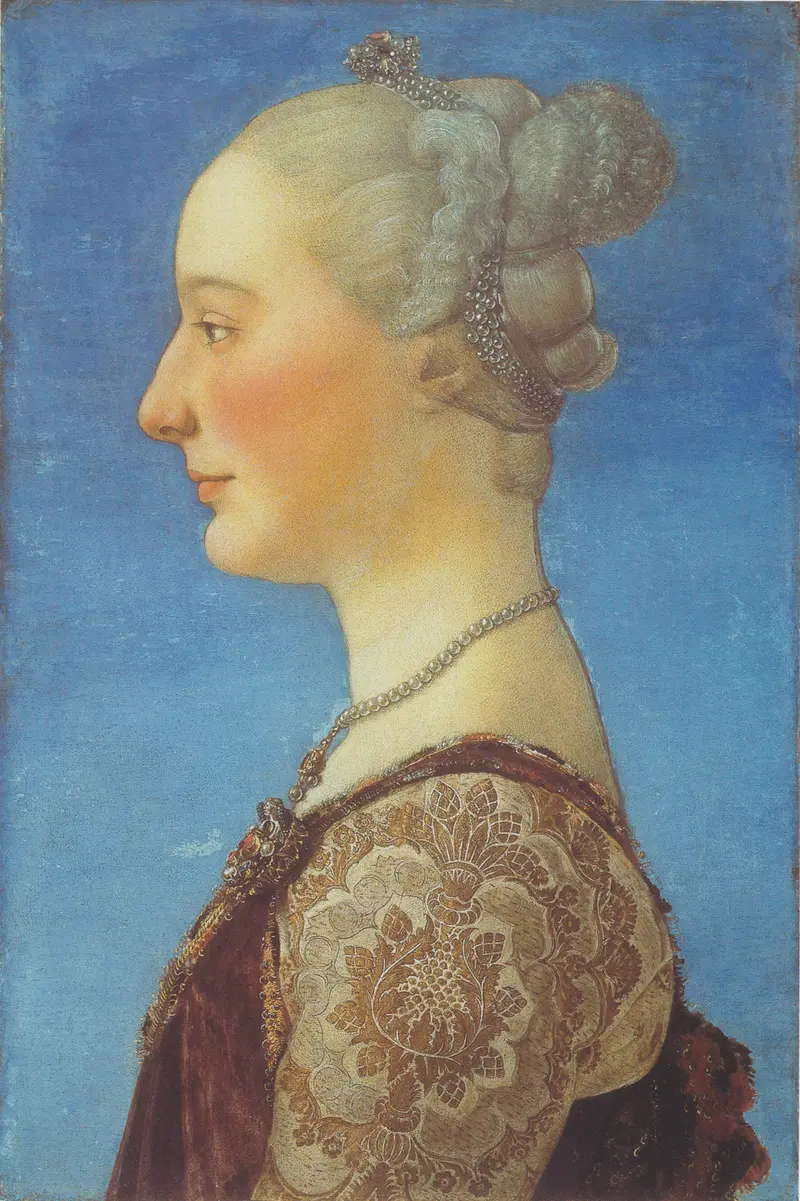
Portrait of a Lady
Antonio del Pollaiuolo
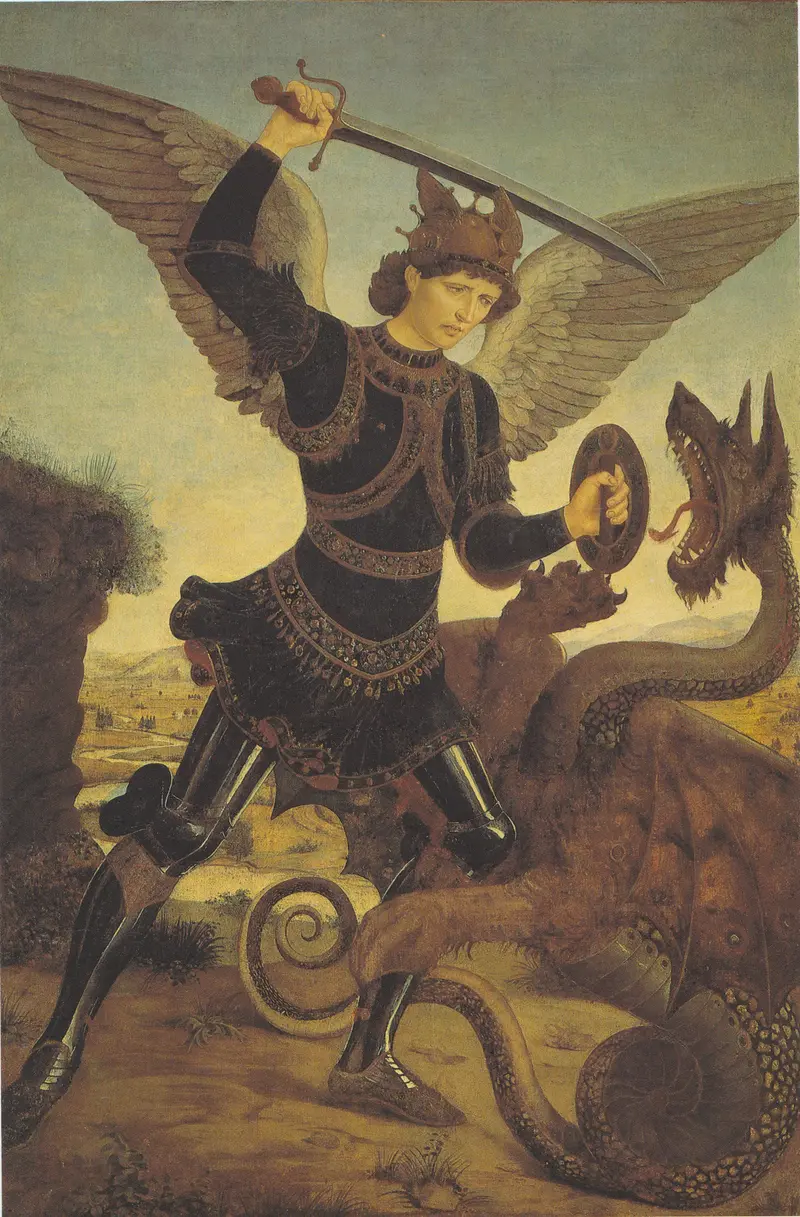
Archangel Michael and the dragon
Antonio del Pollaiuolo
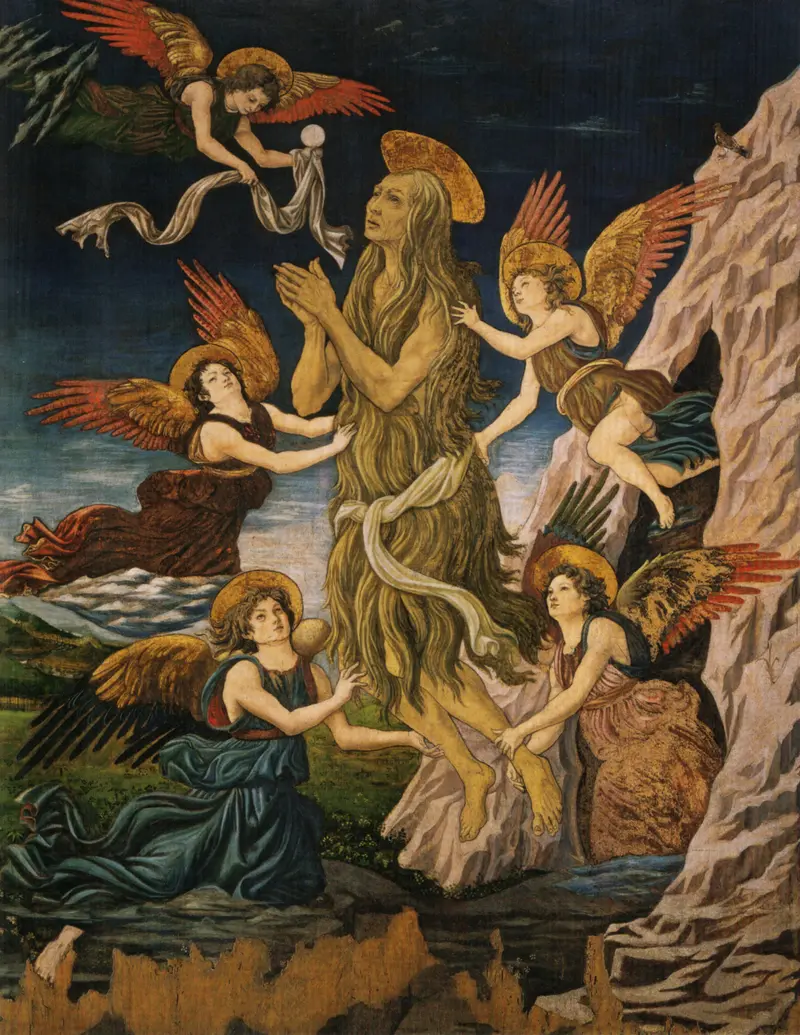
Elevation of the Magdalen
Antonio del Pollaiuolo
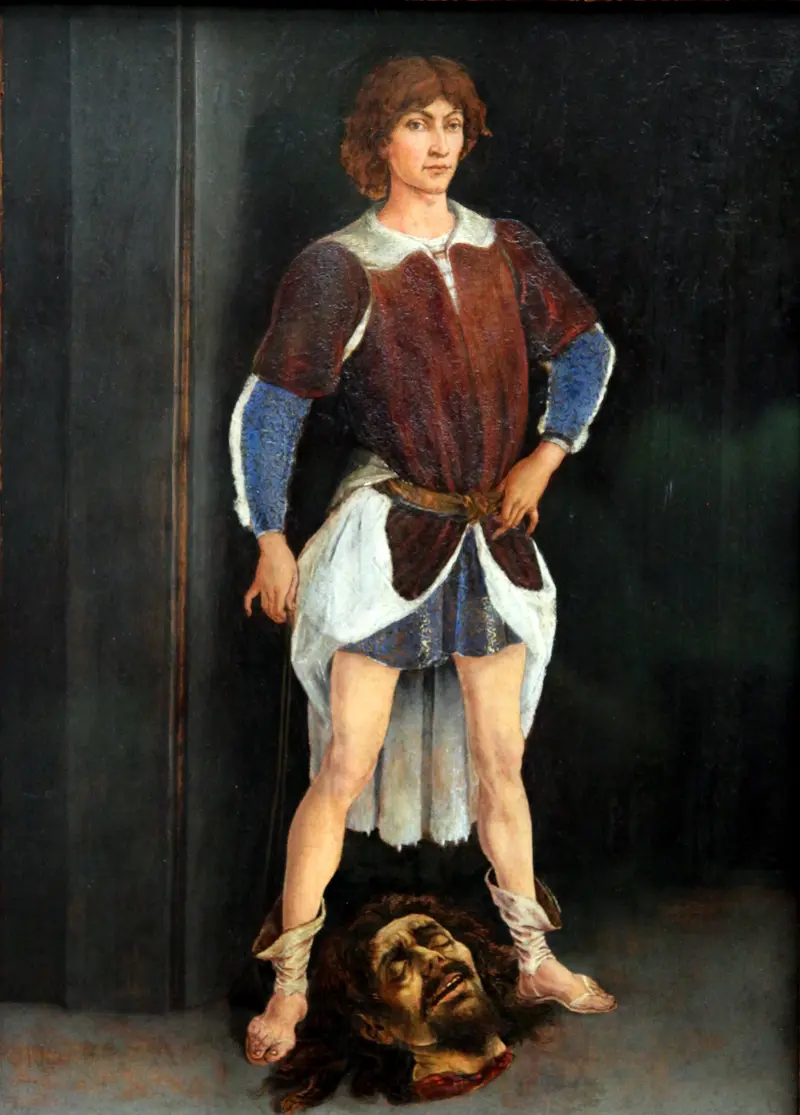
David Victorious
Antonio del Pollaiuolo





