
David Victorious — History & Facts
What first seizes the viewer in David Victorious is the unflinching calm of the young hero, standing with one hand on his hip and the other resting lightly on his sword, his bare foot planted beside the severed head of Goliath. The composition is stark and direct: David is not in the throes of battle, but in the moment after, his gaze steady and his posture almost casual. The artist draws your eye to the contrast between David’s youthful, almost delicate features and the brutal reality of the giant’s head at his feet.
The rich, warm reds and blues of David’s garments are set against a dark, undefined background, focusing all attention on the figure and his trophy. Here, the light falls across David’s face and legs, highlighting his humanity and vulnerability, while Goliath’s face is twisted in a final grimace, rendered with a detail that borders on the unsettling. This painting was created in 1470, a time when images of David were charged with political and spiritual meaning in Italian city-states. Such works were often commissioned to celebrate civic virtues—youthful courage, divine favor, and the triumph of the underdog—values that resonated in Renaissance Florence and beyond.
The artist, Antonio del Pollaiuolo, was known for his keen interest in anatomy and movement, and here he pares the scene down to its essentials, eschewing the dramatic action for a moment of quiet assertion. The painting now resides in the Staatliche Museen zu Berlin, a reminder of how the Renaissance fascination with the human body and classical heroism could be distilled into a single, unforgettable image. Every detail, from the twist of David’s torso to the lifeless weight of Goliath’s head, invites the viewer to linger and look again.
More Artworks by Antonio del Pollaiuolo

Martyrdom of Saint Sebastian
Antonio del Pollaiuolo
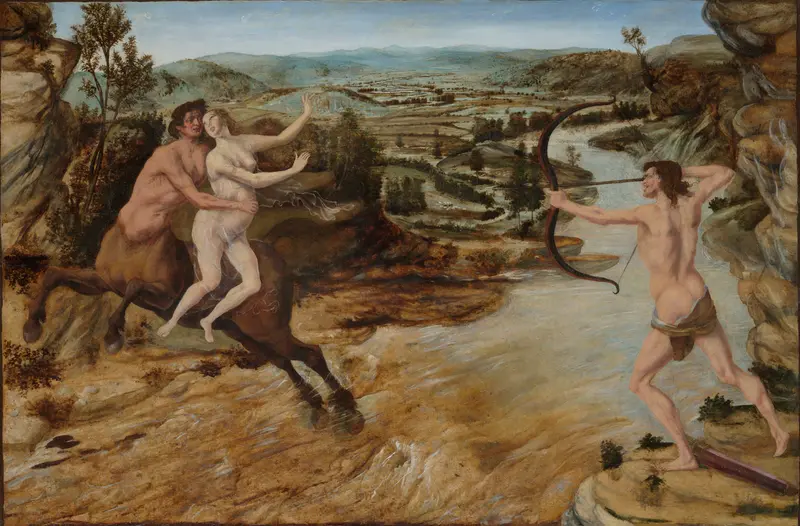
Hercules and Deianira
Antonio del Pollaiuolo
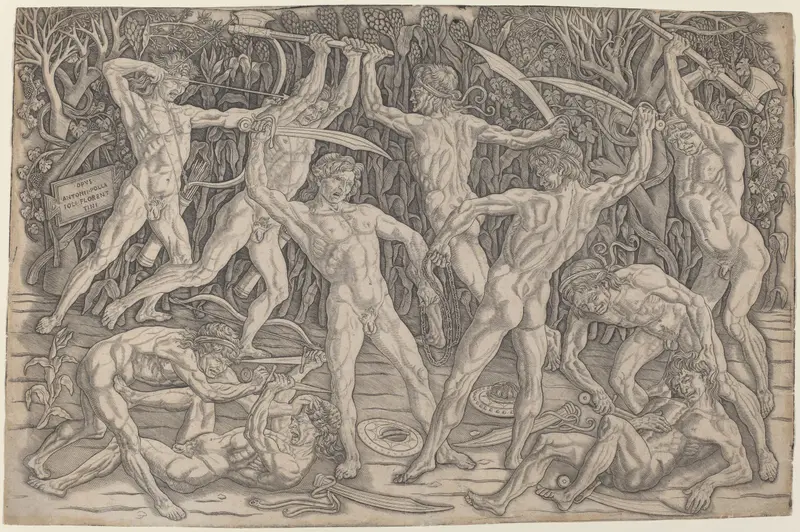
Battle of the Nudes
Antonio del Pollaiuolo
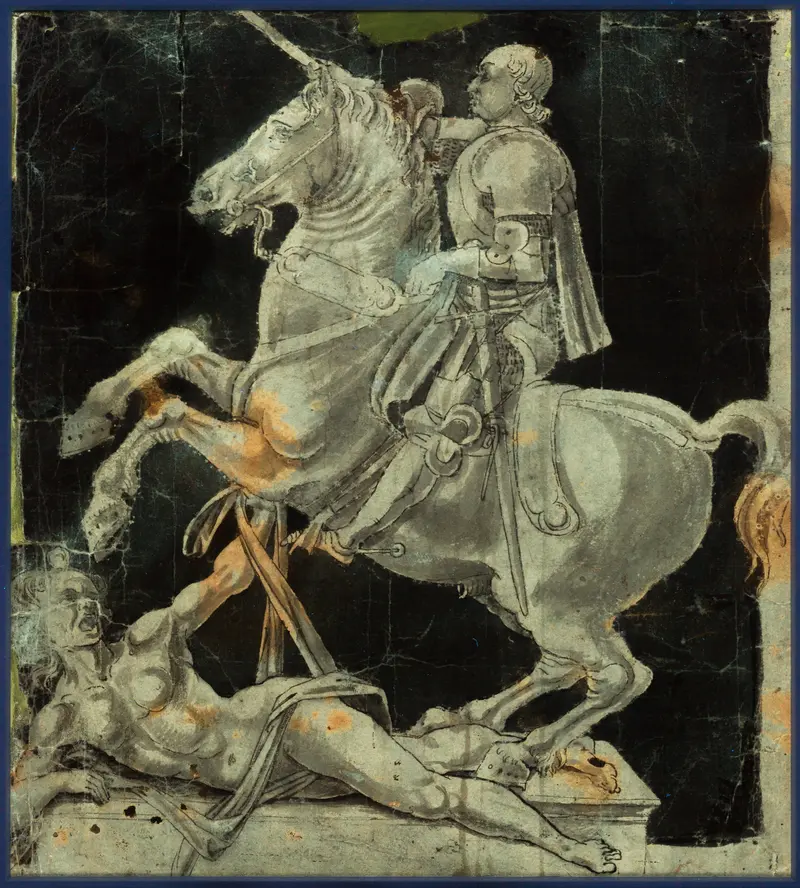
Study for the Equestrian Monument to Francesco Sforza
Antonio del Pollaiuolo
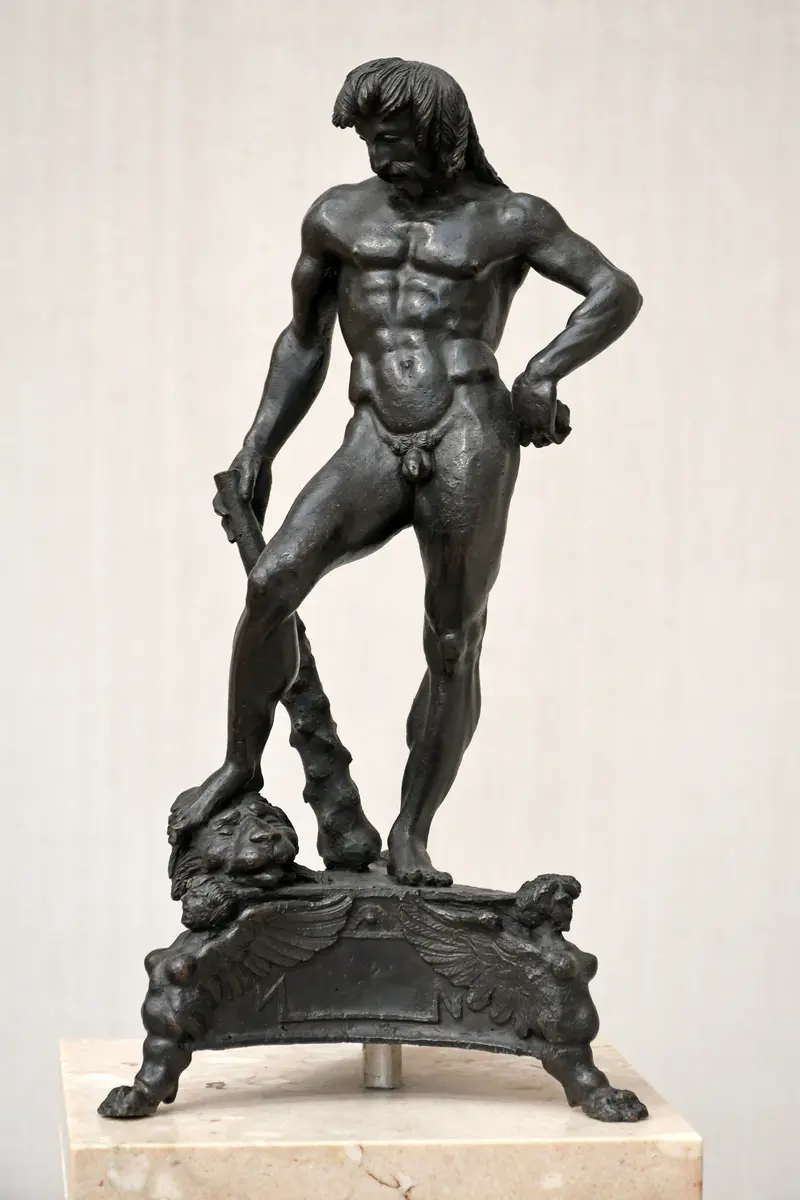
Heracles
Antonio del Pollaiuolo
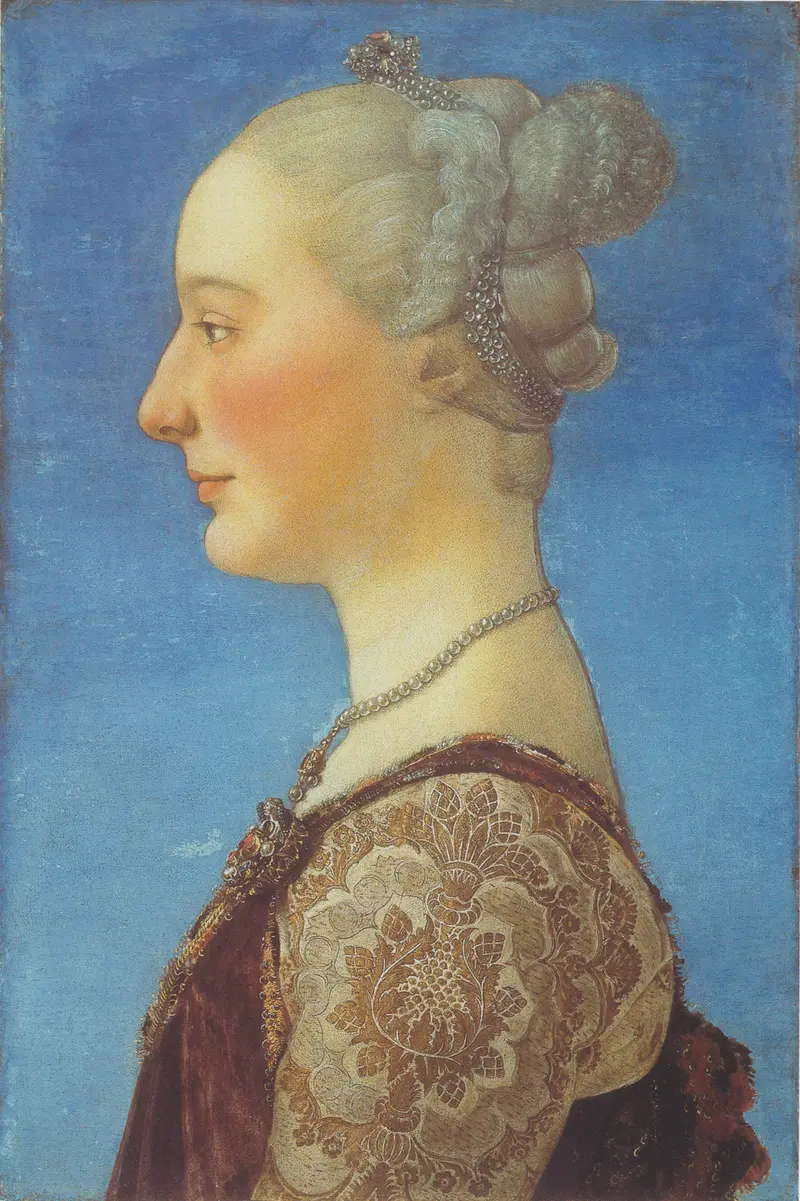
Portrait of a Lady
Antonio del Pollaiuolo
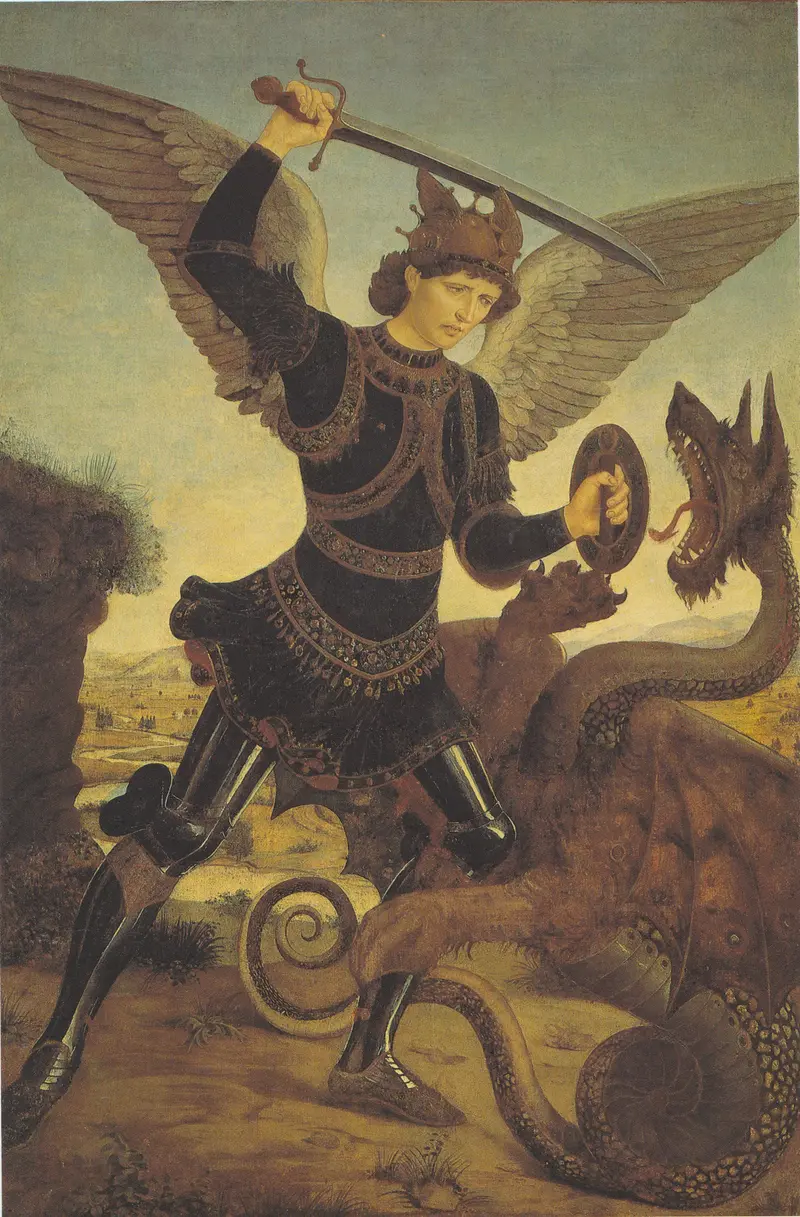
Archangel Michael and the dragon
Antonio del Pollaiuolo
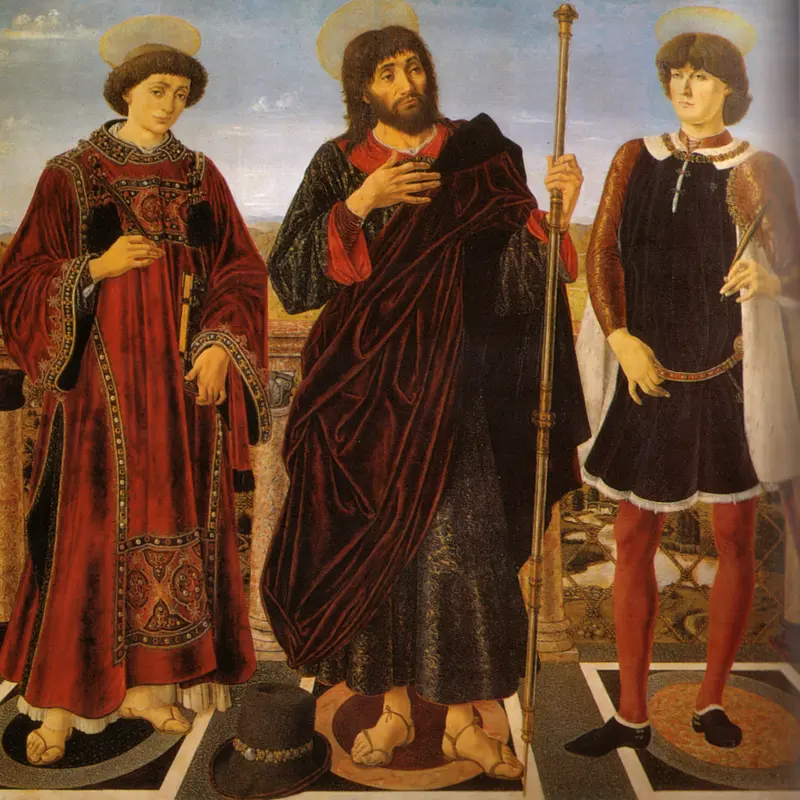
Cardinal of Portugal's Altarpiece
Antonio del Pollaiuolo
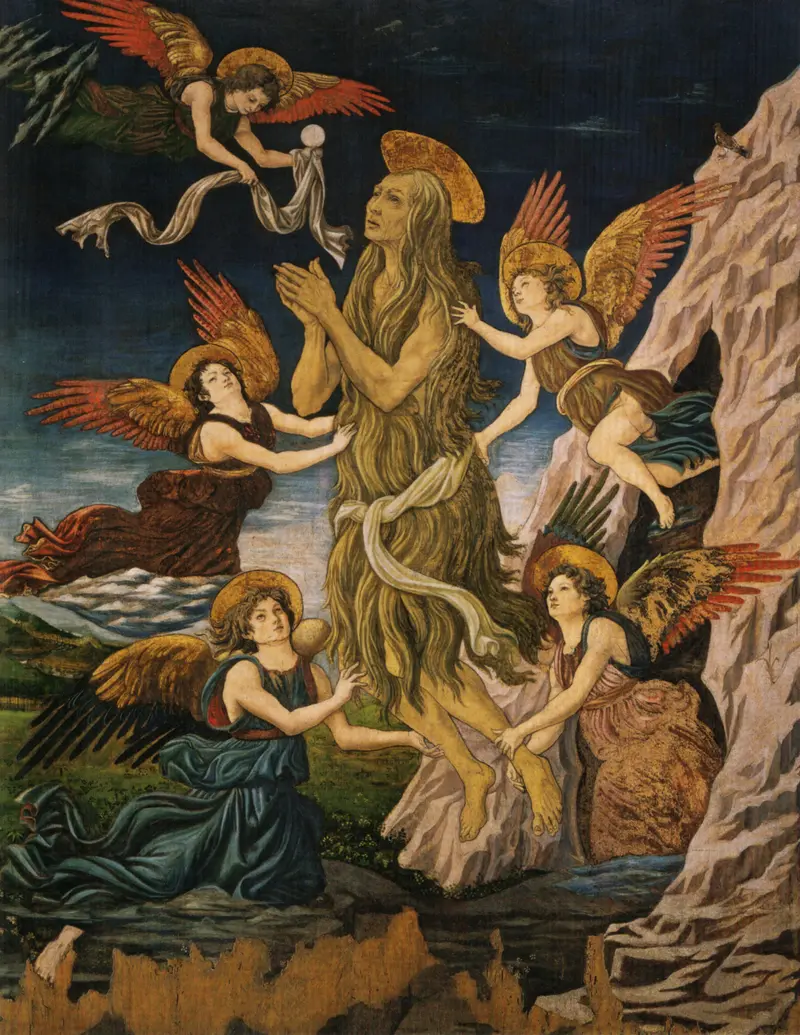
Elevation of the Magdalen
Antonio del Pollaiuolo



