
Carolina Parakeet — History & Facts
What first seizes the eye in Carolina Parakeet is the riot of green, yellow, and orange—an exuberant gathering that seems to burst from the page with restless energy. Seven birds cluster on tangled branches, each one caught in a different pose: wings outstretched, heads craning, beaks open in what might be alarm or conversation. The composition is dense, almost chaotic, but every feather is rendered with such precision that the viewer is drawn to linger over each bird’s individuality.
The tangle of dry, curling leaves and seedpods forms a muted stage, making the birds’ brilliant plumage all the more electric against the pale background. There is no single focal point; instead, the viewer’s gaze is swept from one parakeet to the next, as if following the flutter and chatter of a living flock. This plate, created between 1827 and 1838 by John James Audubon for his monumental Birds of America, belongs to a world where art and science met on the page. In the early nineteenth century, naturalists and artists alike raced to document the astonishing diversity of North American wildlife for audiences hungry for discovery.
Audubon’s fieldwork and artistry made his plates not only scientific records but also visual spectacles, intended for collectors and scholars who prized both accuracy and beauty. Housed today in the University of Pittsburgh’s collection, this image stands as part of a grand project that sought to capture—and, in a sense, to rescue—the fleeting wonders of the natural world. The longer you look, the more you sense the urgency behind every brushstroke: a world being recorded before it vanished.
More Artworks by John James Audubon
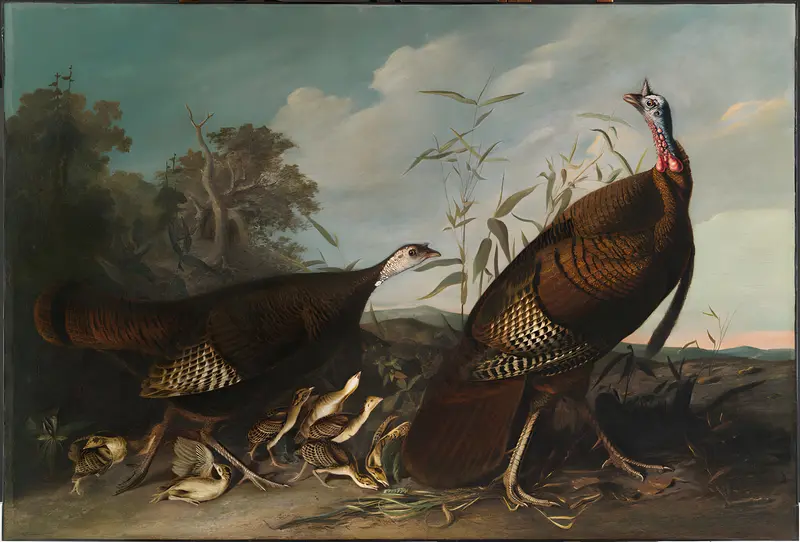
Wild Turkey Cock, Hen, and Chicks
John James Audubon
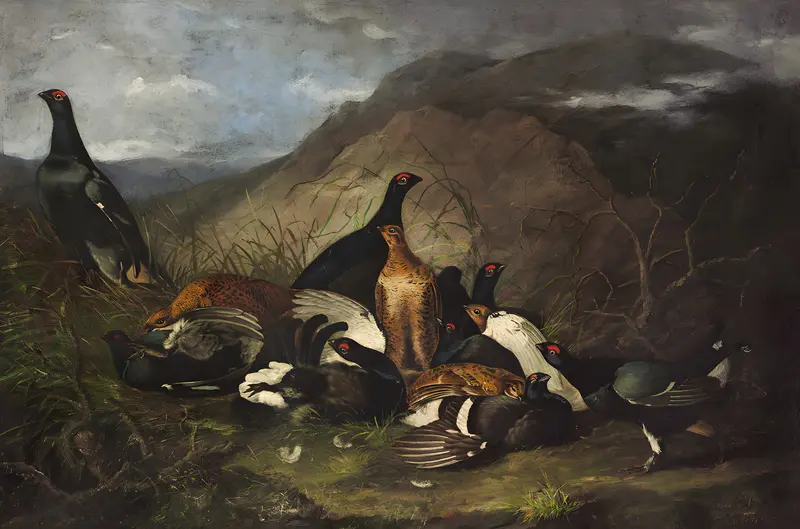
Scottish Black Grouse, Cocks and Hens
John James Audubon
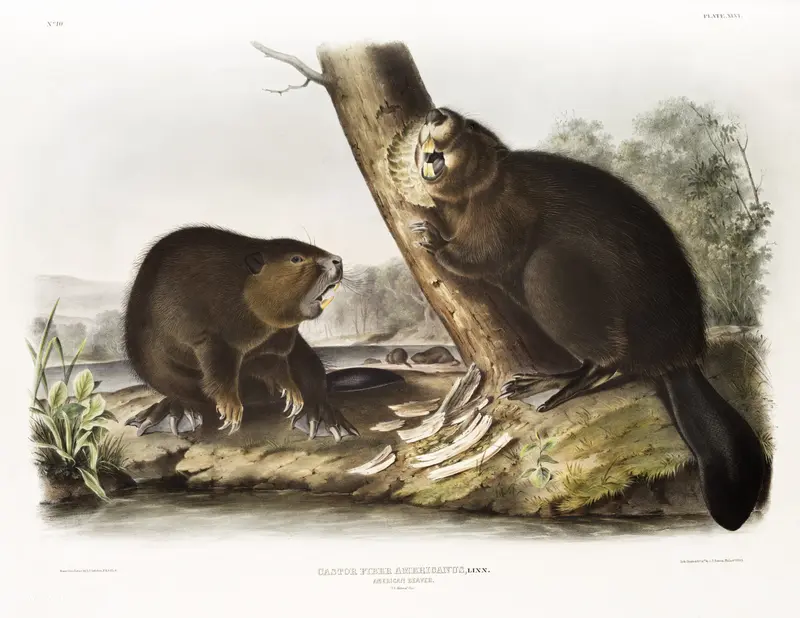
American Beaver
John James Audubon
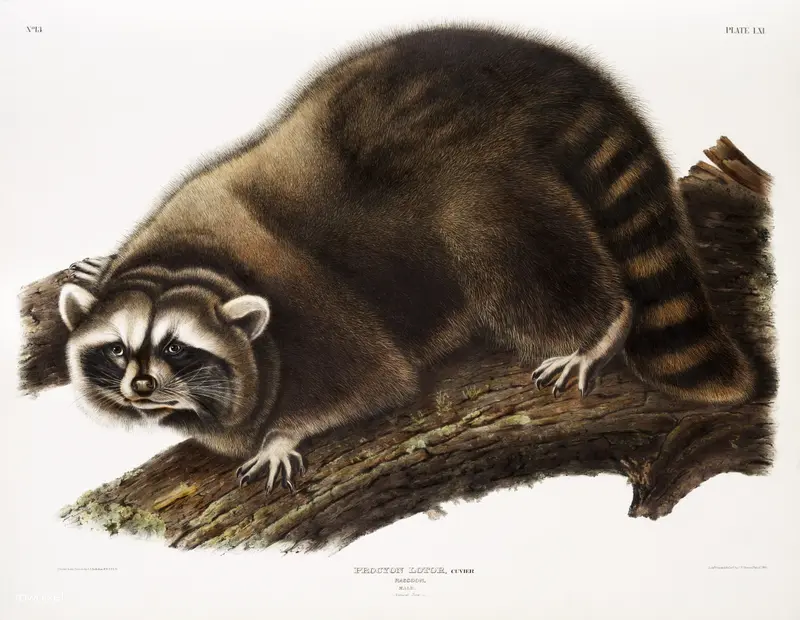
Raccoon
John James Audubon

Magnificent Frigatebird
John James Audubon
Great Blue Heron
John James Audubon
Northern Mockingbird
John James Audubon
Ivory-billed Woodpecker
John James Audubon
Mallard
John James Audubon
Ruby-throated Hummingbird
John James Audubon





