
Cattle in a Meadow — History & Facts
What first catches the eye in Cattle in a Meadow is not the animals themselves, but the gentle, almost conversational way the light moves across their backs and the grass beneath their feet. The largest cow stands with a quiet alertness, her flank catching the last of the afternoon sun, while a calf nestles close to her, and another cow rests in the shade. The painter, Adriaen van de Velde, has chosen a moment of stillness, where the animals’ calm is echoed by the soft, cloud-laden sky above and the hush of distant trees.
The low horizon gives the sky a generous presence, suggesting a world that is broad and open, yet intimately observed. Painted in 1658, this work belongs to a Dutch Golden Age tradition that prized the depiction of rural life, not as a backdrop for grand events, but as a subject worthy of close attention and care. Artists like van de Velde were celebrated for their ability to render the everyday with a sense of quiet dignity—these scenes were often commissioned by urban patrons longing for a vision of the countryside that was both familiar and idealized. Today, Cattle in a Meadow is part of the collection at Museum Boijmans Van Beuningen, a reminder of an age when painters found poetry in the ordinary, and when the gentle tilt of a cow’s head could invite viewers into a slower, more attentive way of seeing.
Look again at the way the clouds gather and break above the animals, and consider what it meant to find meaning in such a simple scene.
More Artworks by Adriaen van de Velde

Staande stier
Adriaen van de Velde
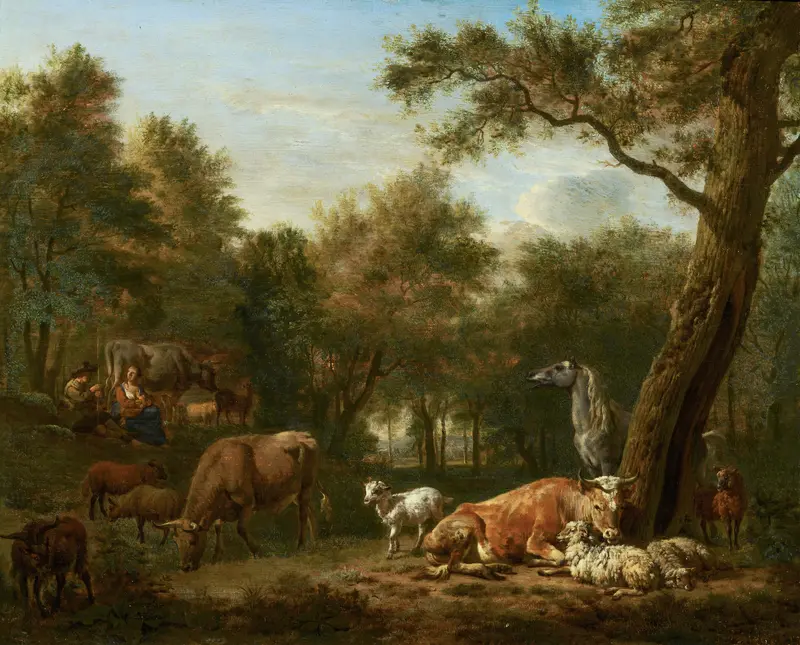
Wooded Landscape with Cattle
Adriaen van de Velde
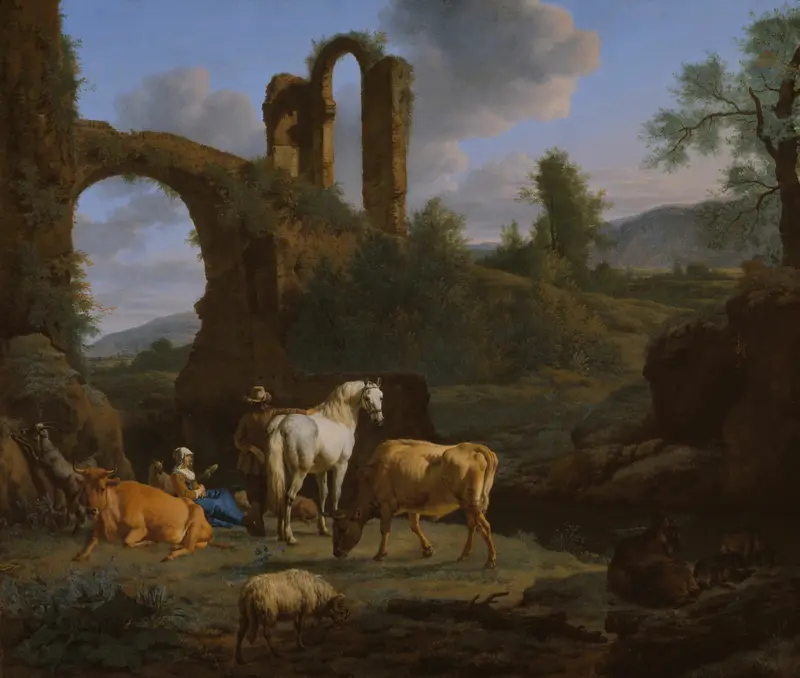
Pastoral Landscape with Ruins
Adriaen van de Velde
Pastoral Landscape with Ruins
Adriaen van de Velde
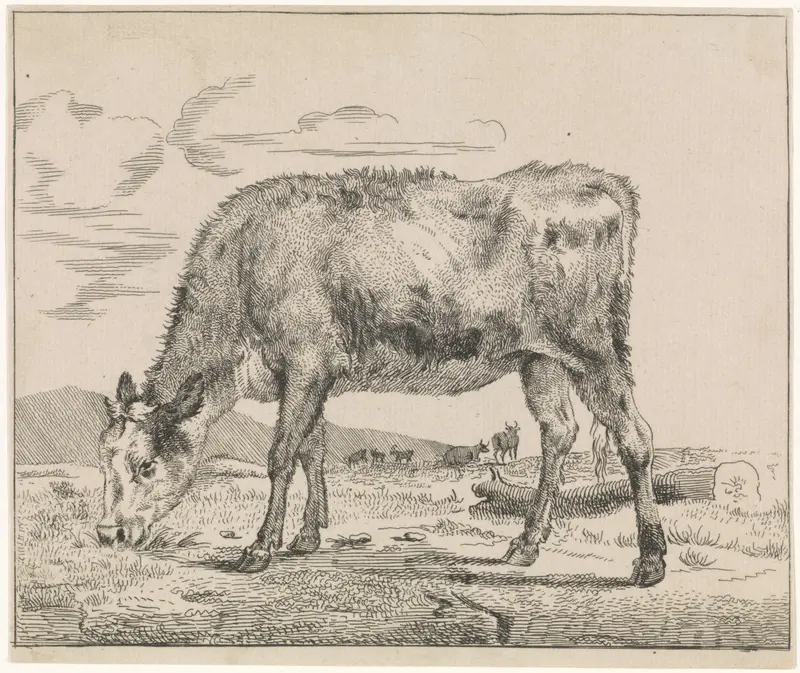
Grazend kalf
Adriaen van de Velde
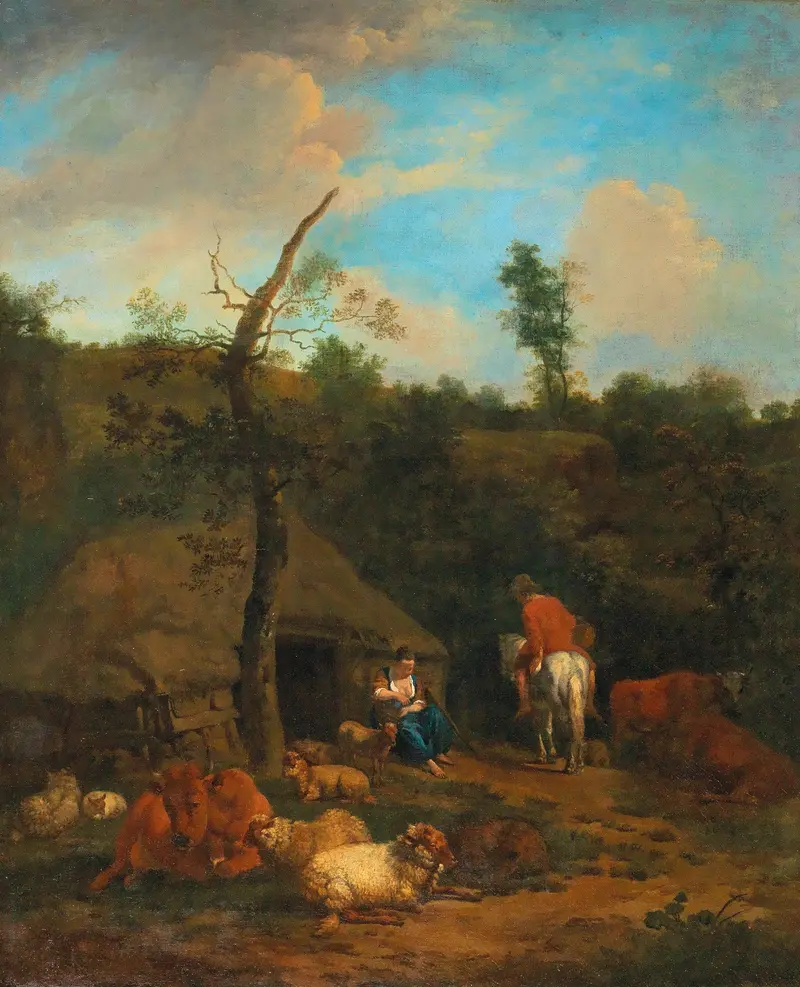
A herdsman and a shepherdess in front of a wooden farmhouse
Adriaen van de Velde
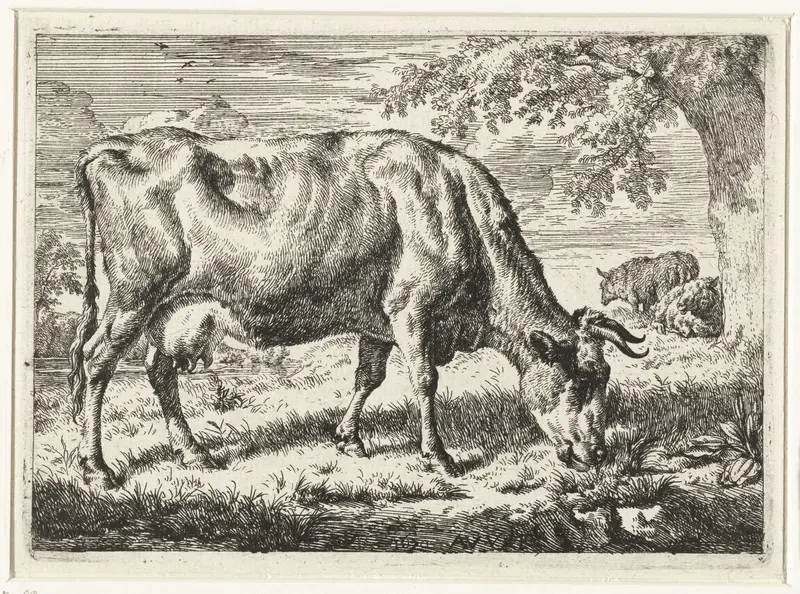
Grazende koe en twee schapen
Adriaen van de Velde
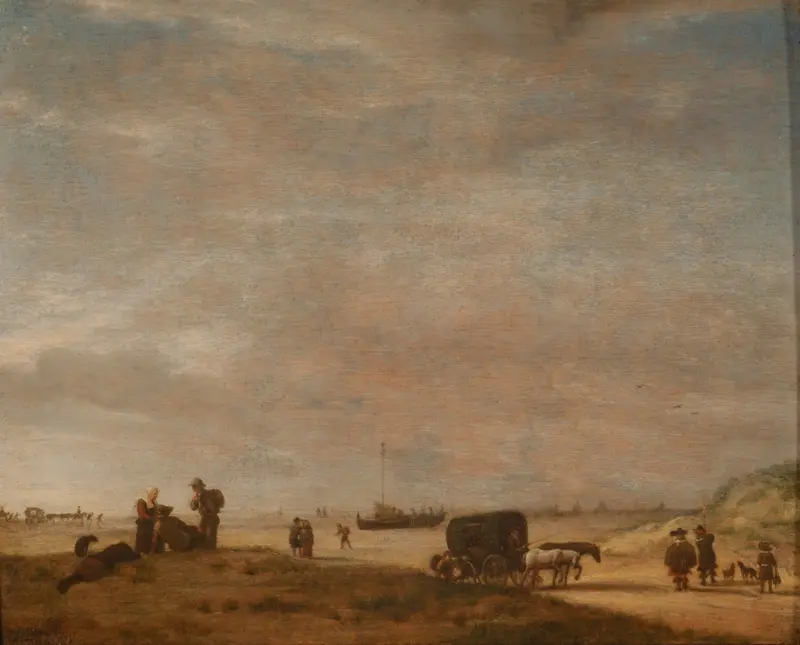
Scheveningen Beach
Adriaen van de Velde
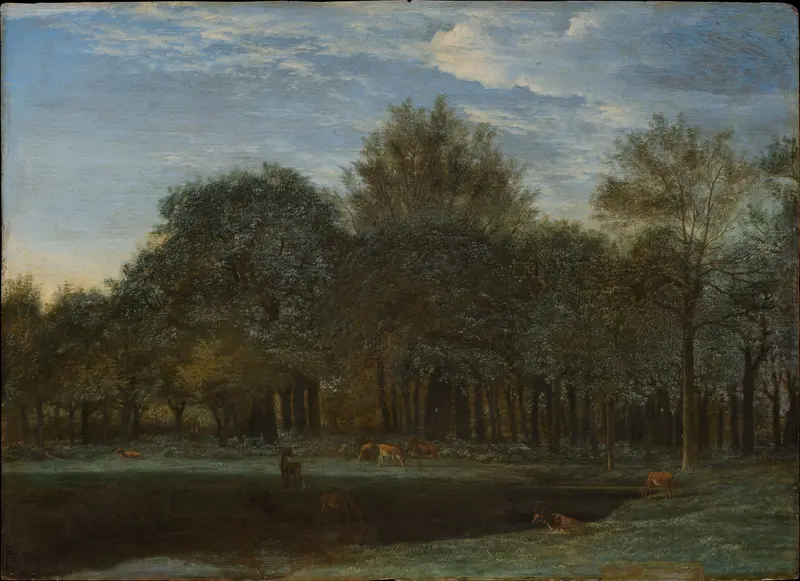
Forest Clearing with Grazing Deer
Adriaen van de Velde
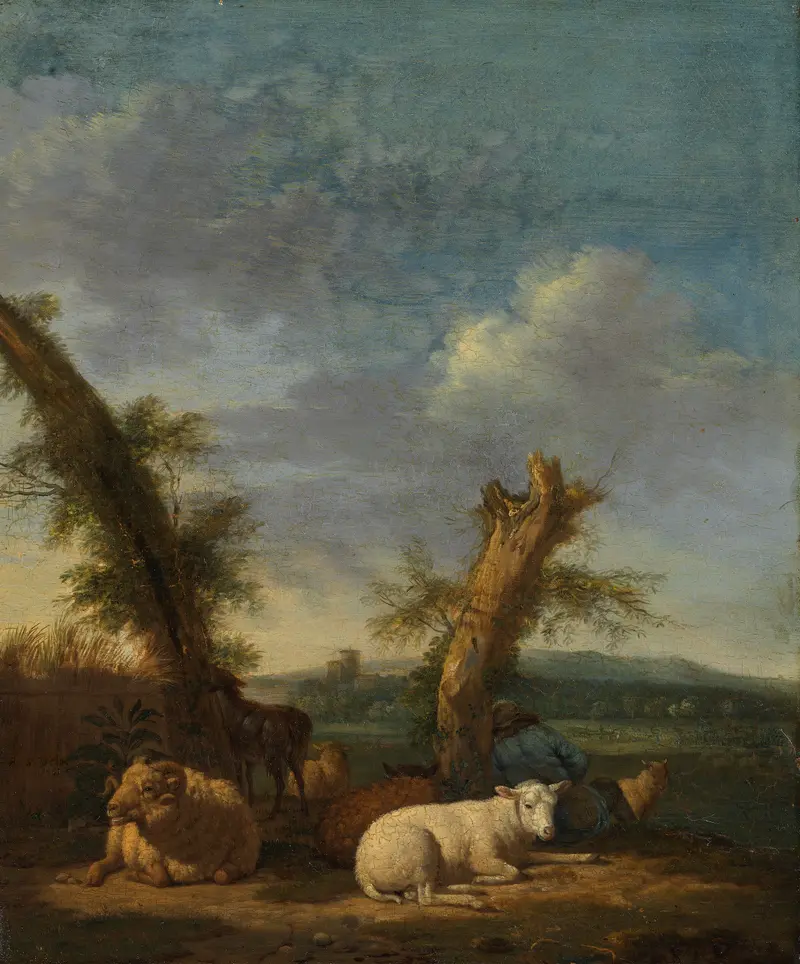
Landscape with Sheep and a Sleeping Shepherd
Adriaen van de Velde
More Landscape Art

The Starry Night
Vincent van Gogh

View of Delft
Johannes Vermeer

Water Lilies
Claude Monet

The Grand Canal, Venice, looking north-west from the Ca' Corner to the Ca' Contarini degli Scrigni, with the campanile of Santa Maria della Carità
Canaletto

Windsor Castle
Canaletto

The Grand Canal looking North-East from the Palazzo Dolfin-Manin to the Rialto Bridge
Canaletto