
Char de Gand ou les communes au XVe siécle — History & Facts
Could a single brushstroke hold eternity? Madness seems to dance across the canvas in a vibrant chaos that compels the viewer to ponder the delicate balance between sanity and the sublime. Look to the center of the composition where a tumultuous procession unfolds. The vivid reds and deep blues clash harmoniously in swirling forms, drawing your eye into the heart of the action. Notice how Helbig’s expressive brushwork creates a sense of movement; figures appear to be caught in a moment of fervor, their gestures ranging from jubilant to frenzied.
The light emanates from an unseen source, illuminating the faces of the townsfolk with a spectral glow, hinting at the collective psyche of a community caught in the grip of fervor. This piece captures not only a moment in time but also an emotional landscape where unity and chaos coexist. The close-knit arrangement of figures suggests community, yet their varied expressions evoke individual stories of elation and turmoil. The contrast between the vibrant hues and the darker undertones suggests an underlying madness that looms over the celebration—perhaps a reflection on the fragility of human joy amidst societal pressures. Jules Helbig painted this work in 1856, during a time when the art world was shifting towards more expressive and emotional depictions of human experiences.
Living in France, he was influenced by both Romanticism and emerging Impressionist ideas, seeking to capture both the external world and the internal psyche. This painting stands as a testament to his engagement with the complexities of human emotion, representing a moment where history and madness intermingle.
More Artworks by Jules Helbig
Browse all →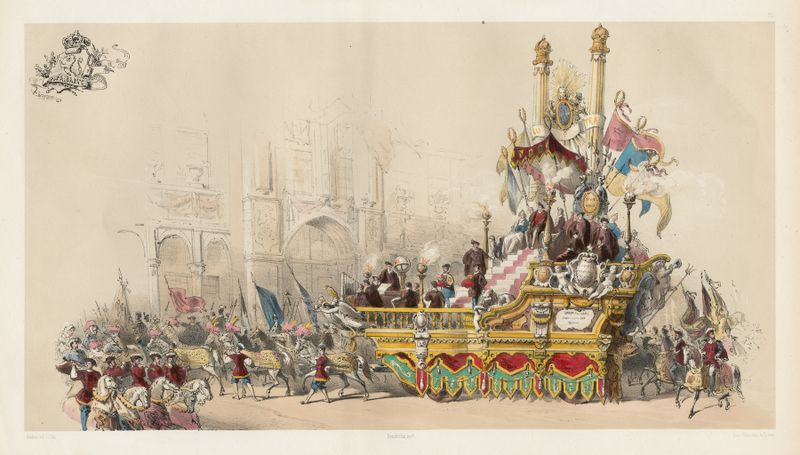
Char du Brabant ou de Charles Quint
Jules Helbig
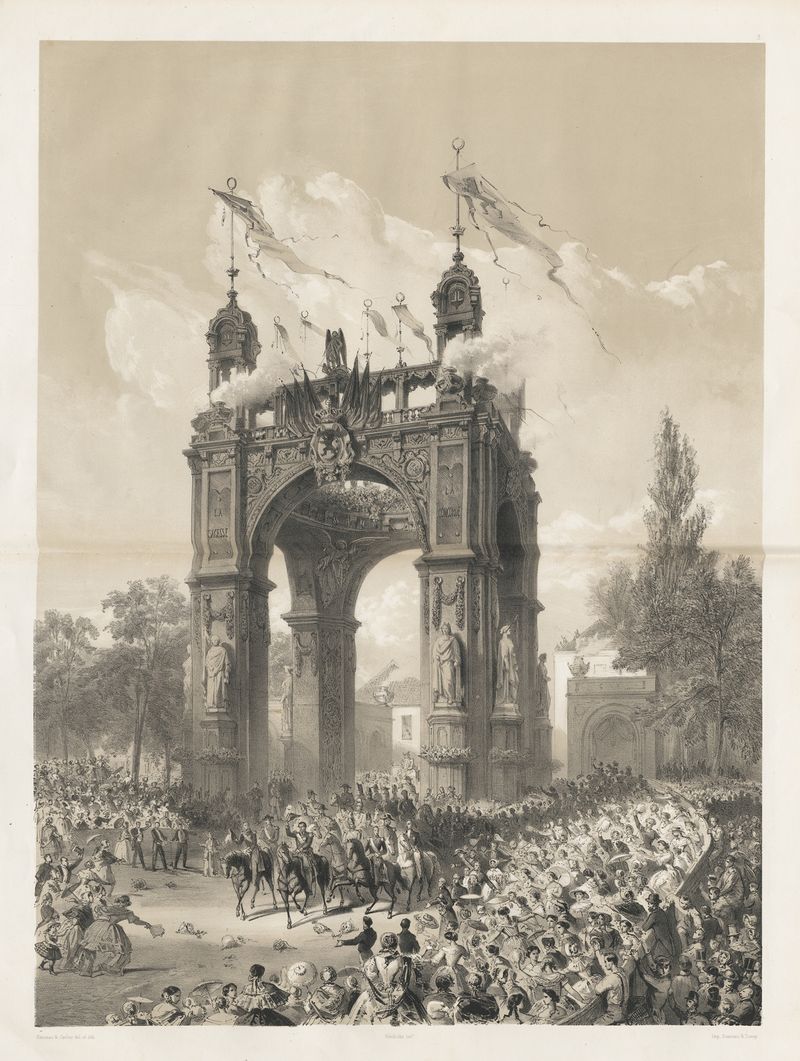
Réception du roi a la Porte de Laeken
Jules Helbig
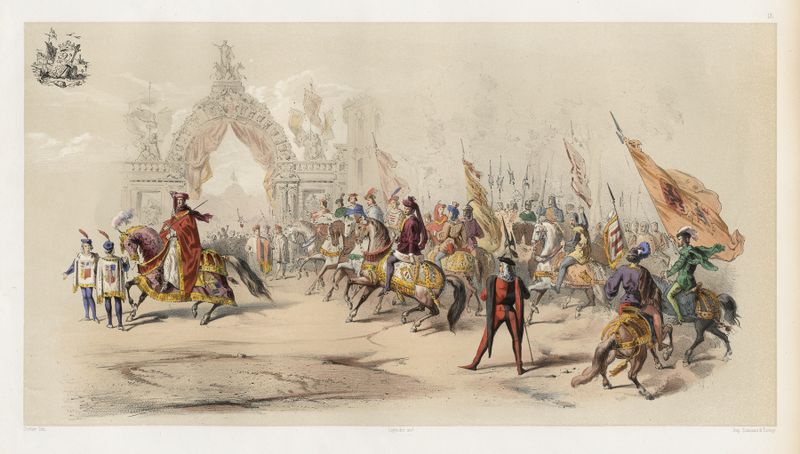
Cortége de la Toison d’or envoyé par la ville de Bruges
Jules Helbig

Char de l’Agriculture envoyé par la ville de Nivelles
Jules Helbig

Cortége de la Toison d’or envoyé par la ville de Bruges
Jules Helbig

Décoration de la Place des Palais
Jules Helbig

Char de l’Armurerie Liégeoise
Jules Helbig

Cortége de la Toison d’or envoyé par la ville de Bruges
Jules Helbig
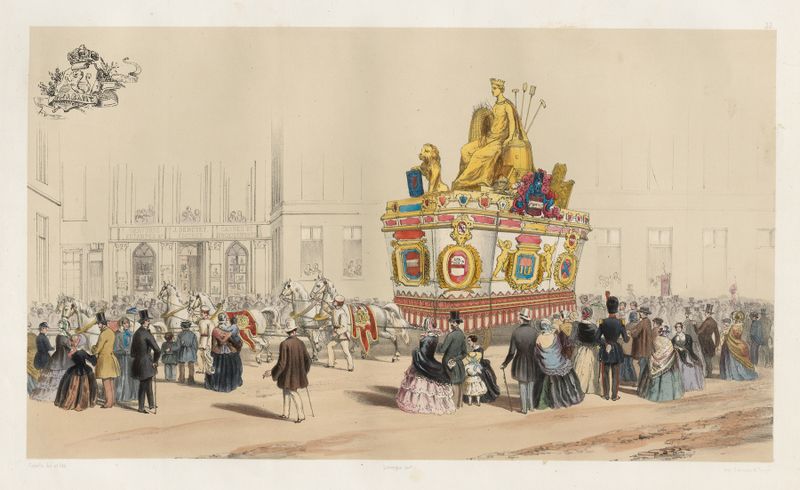
Char des Brasseurs de Louvain
Jules Helbig

Char du Luxembourg ou de Godfroid-de-Bouillon
Jules Helbig
More Historical Art
Browse all →
The Night Watch Militia Company of District II under the Command of Captain Frans Banninck Cocq
Rembrandt van Rijn

Lincoln Memorial
Henry Bacon

The Third of May 1808
Francisco de Goya

Isaac and Rebecca, Known as ‘The Jewish Bride’
Rembrandt van Rijn

The Charge of the Mamelukes (1814)
Francisco de Goya

De vier ruiters van de apocalyps
Albrecht Dürer