
Char de la Paix ou de Léopold Ier — History & Facts
In a world where yearning often mingles with despair, can art transform the turbulent into the sublime? This question lingers as we gaze upon the intricate layers of a remarkable composition. Look to the center of the canvas where a grand carriage, intricately detailed, commands attention amid a swirling backdrop of muted earth tones. The delicate interplay of light and shadow reveals the ornate decorations, hinting at the opulence of its passengers. Notice how the color palette transitions from rich browns to soft creams, creating a sense of movement, as if the carriage is gliding through the very fabric of time.
Each brushstroke is deliberate, weaving a narrative that speaks to both the majesty and the fragility of peace. Delve deeper into the nuances that quietly pulse beneath the surface. The figures that accompany the carriage are depicted in various states of contemplation, some lost in thought, others in animated exchange. This contrast reflects the duality of celebration and solemnity, revealing an unspoken relationship between joy and the weight of historical memory.
The slight tilt of heads and the gentle gestures suggest an unfulfilled desire for connection, emphasizing that even amid grandeur, hearts yearn for understanding and unity. Jules Helbig painted this work in 1856 against a backdrop of political upheaval in Europe, where the quest for peace was often marred by conflict. At this time, Belgium was navigating its identity post-independence, and the artist sought to capture the essence of his nation’s aspirations. Amidst the tumult of the era, this artwork serves as a poignant reminder of the fragile yet enduring hope that accompanies the pursuit of harmony.
More Artworks by Jules Helbig
Browse all →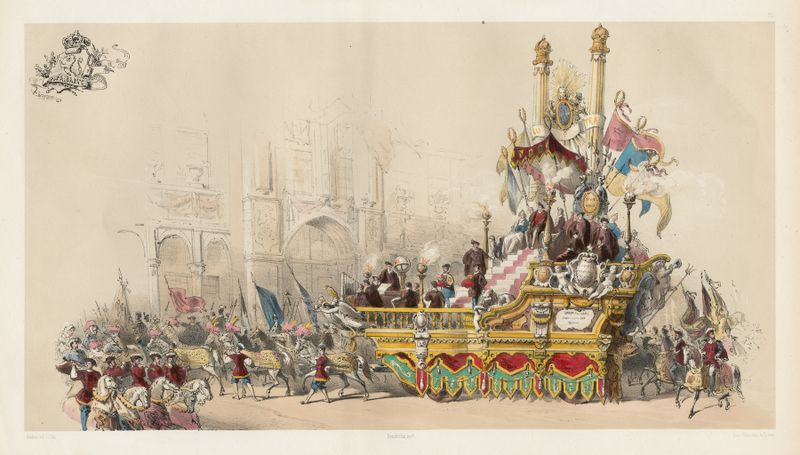
Char du Brabant ou de Charles Quint
Jules Helbig
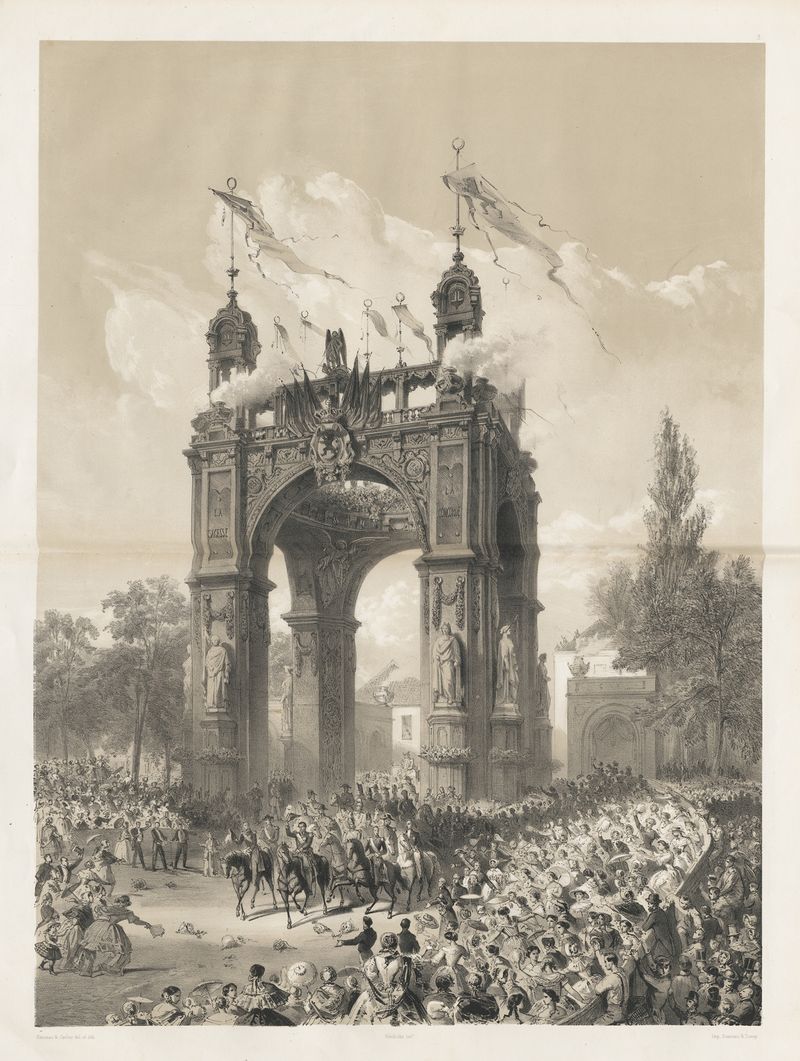
Réception du roi a la Porte de Laeken
Jules Helbig
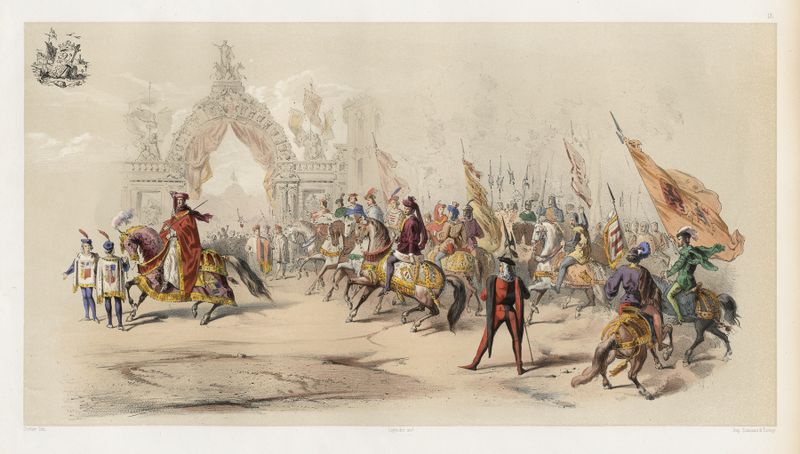
Cortége de la Toison d’or envoyé par la ville de Bruges
Jules Helbig

Char de l’Agriculture envoyé par la ville de Nivelles
Jules Helbig

Cortége de la Toison d’or envoyé par la ville de Bruges
Jules Helbig

Décoration de la Place des Palais
Jules Helbig

Char de l’Armurerie Liégeoise
Jules Helbig

Cortége de la Toison d’or envoyé par la ville de Bruges
Jules Helbig
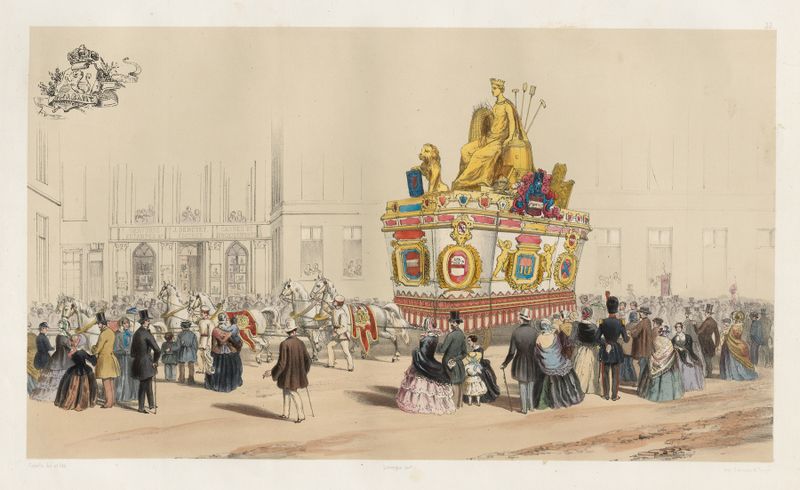
Char des Brasseurs de Louvain
Jules Helbig

Char du Luxembourg ou de Godfroid-de-Bouillon
Jules Helbig
More Historical Art
Browse all →
The Night Watch Militia Company of District II under the Command of Captain Frans Banninck Cocq
Rembrandt van Rijn

Lincoln Memorial
Henry Bacon

The Third of May 1808
Francisco de Goya

Isaac and Rebecca, Known as ‘The Jewish Bride’
Rembrandt van Rijn

The Charge of the Mamelukes (1814)
Francisco de Goya

De vier ruiters van de apocalyps
Albrecht Dürer