
Chemineau traversant un village endormi — History & Facts
A single figure and his dog drift through a village locked in sleep, their forms pressed into the quiet by the weight of the night. In Chemineau traversant un village endormi, Théophile Alexandre Steinlen draws the viewer’s eye down a deserted street, where every shuttered window and closed door signals a world turned inward. The wanderer’s bent posture, staff in hand and pack slung over his shoulder, tells of long roads and silent journeys, while the low, heavy sky seems to press the entire scene into hush.
Light is scarce—what little there is pools around the solitary traveler, isolating him in the vast emptiness of the street and amplifying the sense of distance from the sleeping village. The palette’s muted greys and blacks do not merely describe night; they conjure the loneliness of the chemineau, the archetypal vagabond, whose only companion is his shadow and the faithful animal at his side. Created in 1902, this work belongs to a moment when artists like Steinlen turned their gaze to the margins of society, capturing the lives of workers, wanderers, and the poor with a new seriousness and empathy. Such images, often produced as prints or illustrations, circulated widely in journals and books, bringing the realities of street life into bourgeois parlors and public libraries.
The Bibliothèque nationale de France preserves this piece, a testament to both the era’s fascination with the “types” of modern life and the growing reach of art as social commentary. History has kept few traces of this particular print’s journey, but its quiet drama invites us to linger, to walk a little way with the chemineau before the village wakes.
More Artworks by Théophile Alexandre Steinlen

Village et charrette
Théophile Alexandre Steinlen
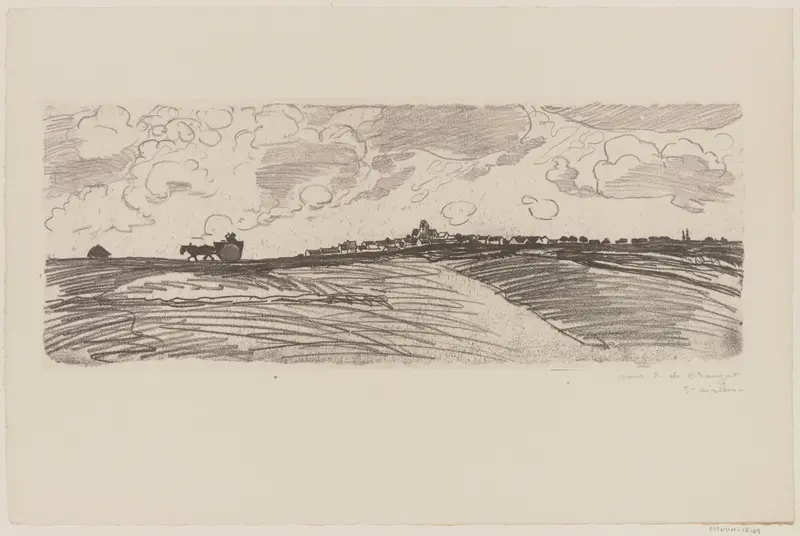
Village et charrette
Théophile Alexandre Steinlen
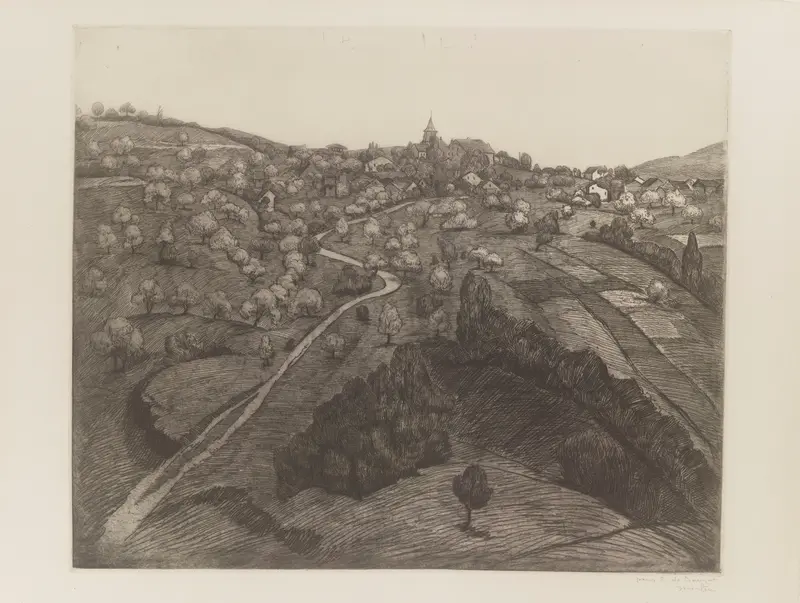
Vue de Belmont, près de Lausanne
Théophile Alexandre Steinlen
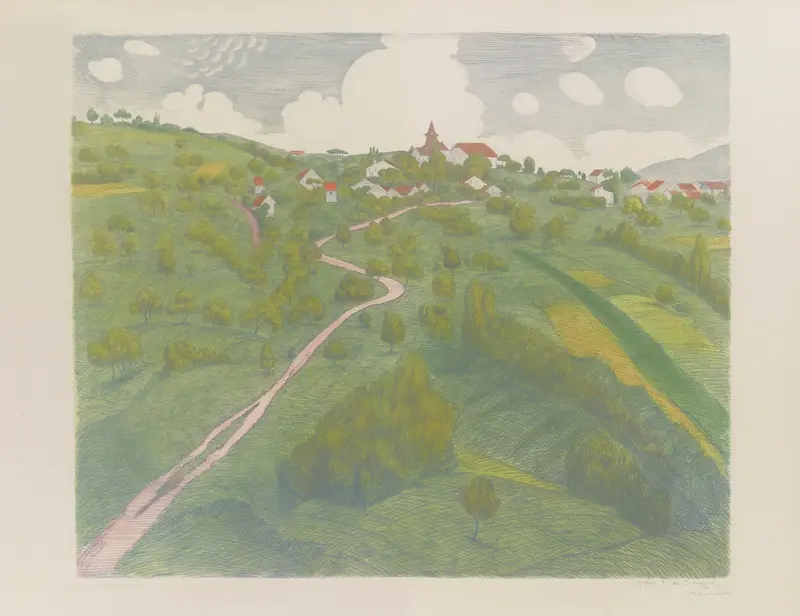
Vue de Belmont, près de Lausanne
Théophile Alexandre Steinlen
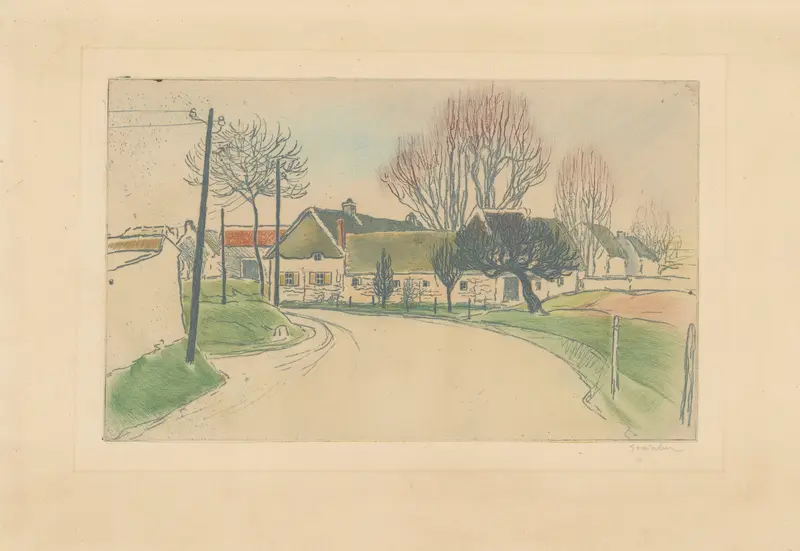
La maison à l’entrée du village
Théophile Alexandre Steinlen
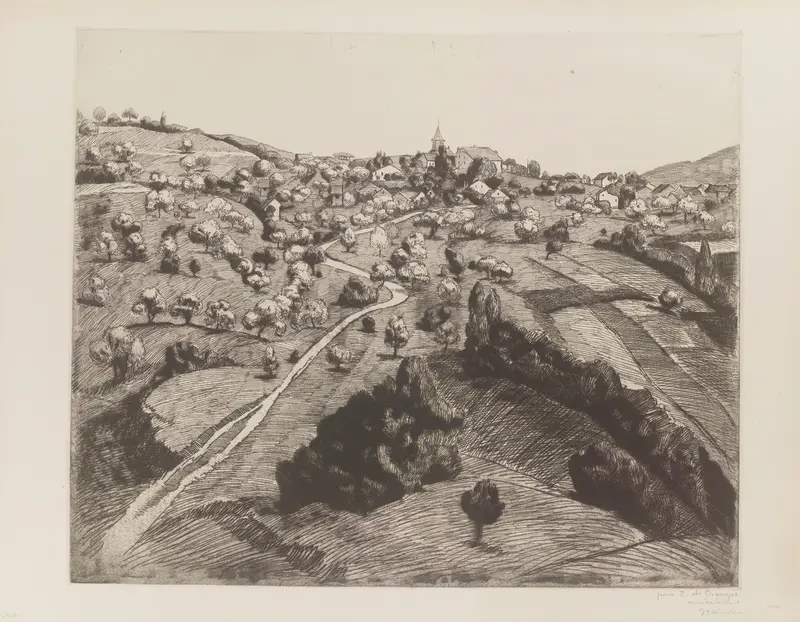
Vue de Belmont, près de Lausanne
Théophile Alexandre Steinlen
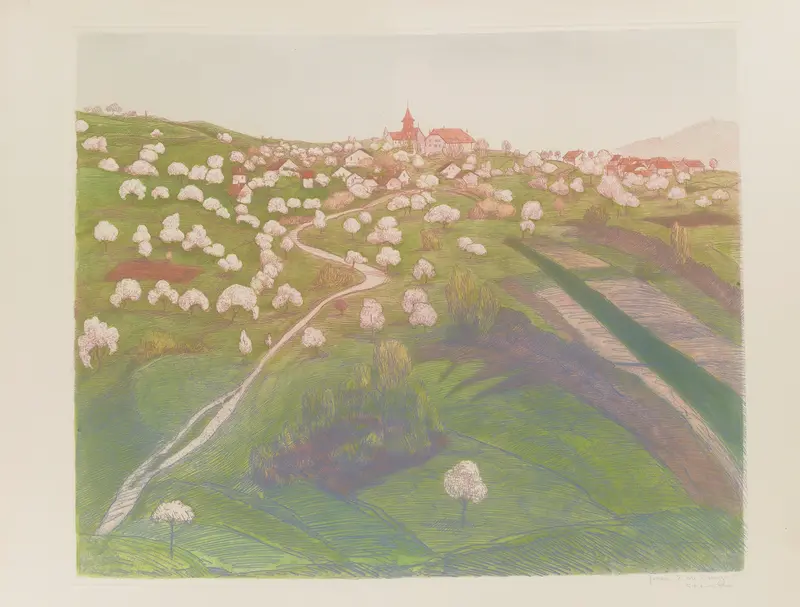
Vue de Belmont, près de Lausanne, n° 2
Théophile Alexandre Steinlen
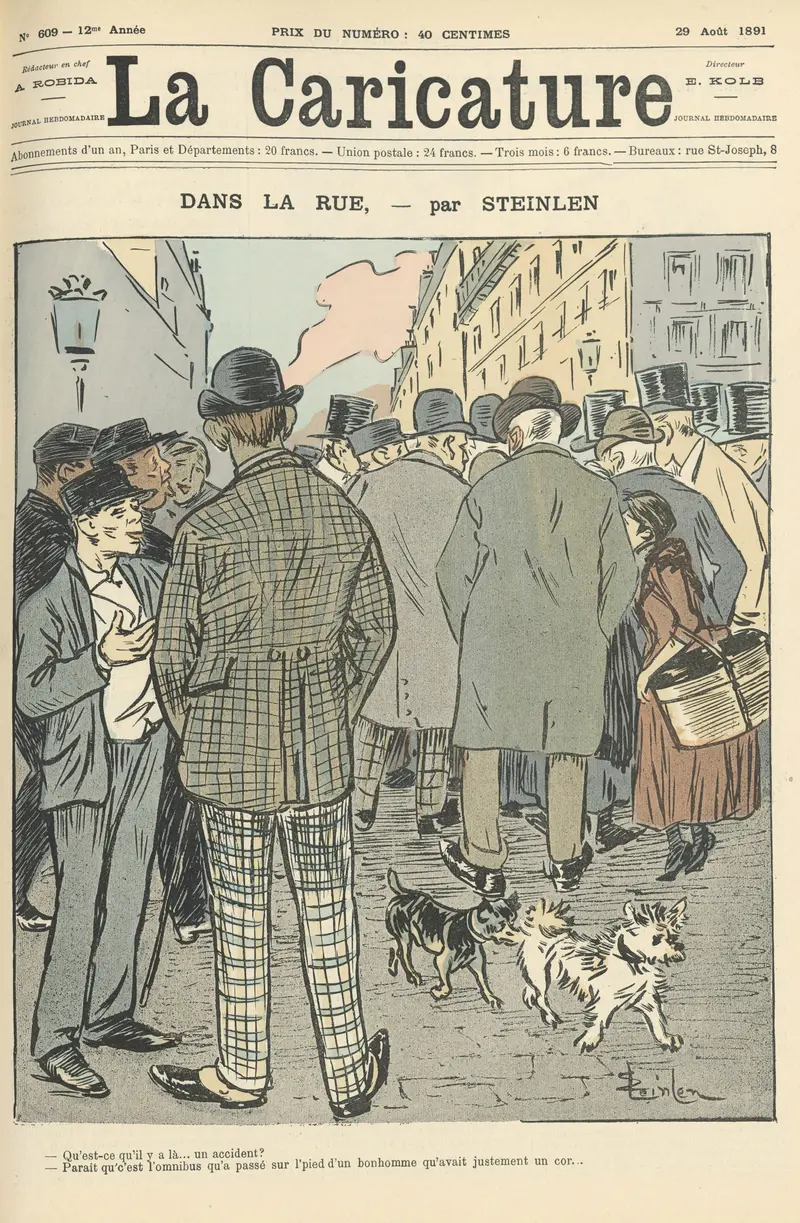
Dans la rue (La Caricature, 29 août 1891)
Théophile Alexandre Steinlen
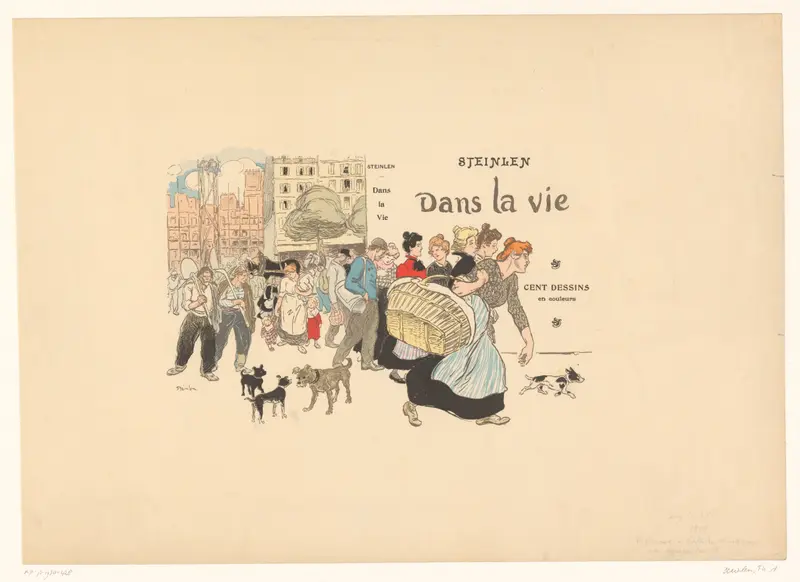
Dans la vie
Théophile Alexandre Steinlen
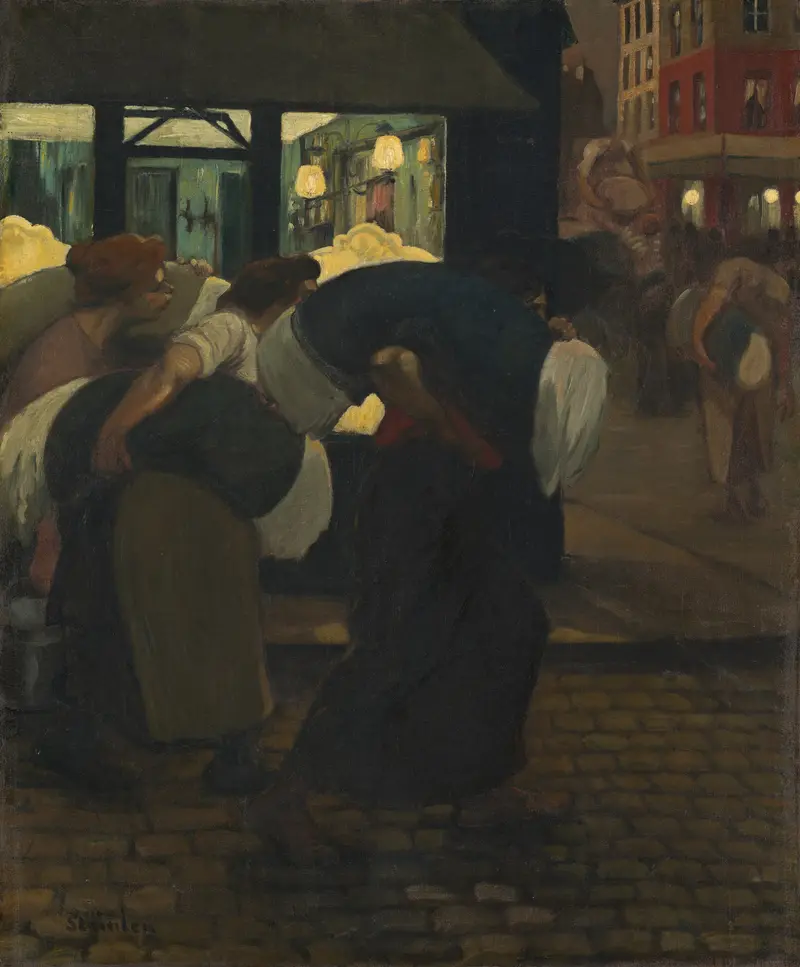
The Laundresses
Théophile Alexandre Steinlen
More Genre Scene Art

Banquet of the Officers of the St George Civic Guard
Frans Hals

Rembrandt and Saskia in the Scene of the Prodigal Son
Rembrandt van Rijn

Bal du moulin de la Galette
Pierre-Auguste Renoir

Quadrille at the Moulin Rouge
Henri de Toulouse-Lautrec

A Burial at Ornans
Gustave Courbet

When Will You Marry?
Paul Gauguin