
China Town — History & Facts
A riot of color and shape pulls the viewer into China Town, where Fernand Léger’s bold palette and restless forms refuse to settle into any single narrative. The eye is immediately caught by the jagged black silhouette that dominates the center, its irregular edges slicing through bands of primary color—blue, yellow, red—like a shadow cast by something unseen. Within this dark shape, fragments of white and gray suggest mechanical forms or perhaps the bustling confusion of a city street, while a roundel of yellow and red hints at a sun or a sign, a beacon amid the chaos.
The composition is restless, almost musical, with lines and curves that seem to pulse with energy, inviting the viewer to decode their meaning. Painted in 1943, this work belongs to a world in upheaval, when artists like Léger were responding to the shocks of war and the rapid transformation of urban life. The abstracted forms and machine-like motifs reflect the spirit of Cubism and Modernism, movements that sought to capture the fragmented reality of the twentieth century. Little is recorded about the specific origins or journey of this particular painting, now known from its appearance in a Sotheby’s sale, but its style is unmistakably that of an artist fascinated by the collision of technology, city life, and the human figure.
The title China Town suggests a place of mingled cultures and sensory overload, and the painting’s energy rewards every return to its tangled streets.
More Artworks by Fernand Léger

The Tugboat Bridge
Fernand Léger
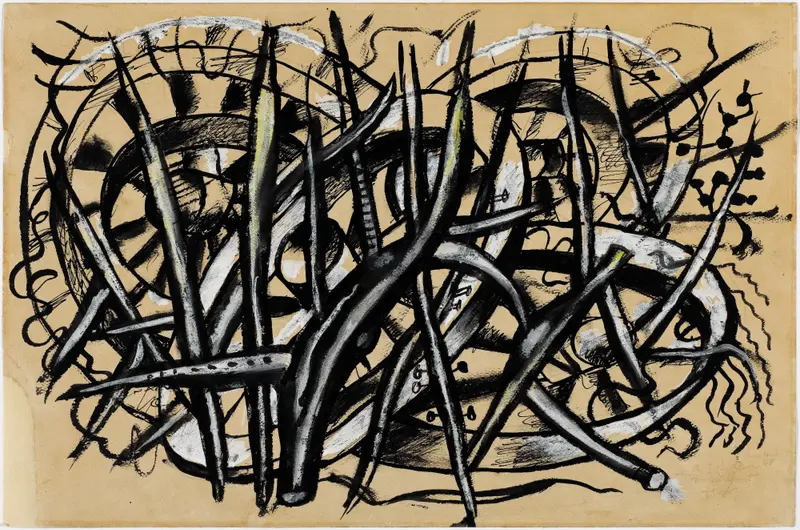
The Wheels
Fernand Léger

Le Cirque Médrano
Fernand Léger
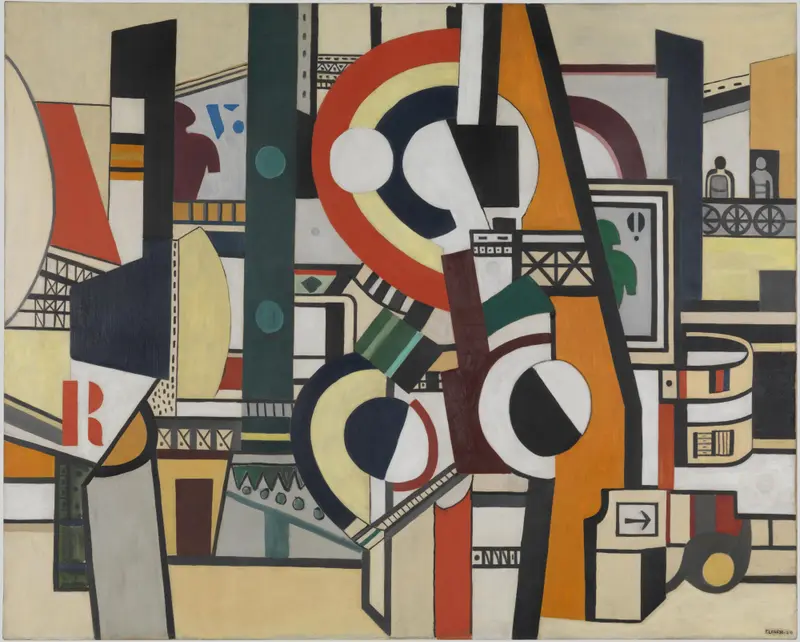
The Disks in the City
Fernand Léger
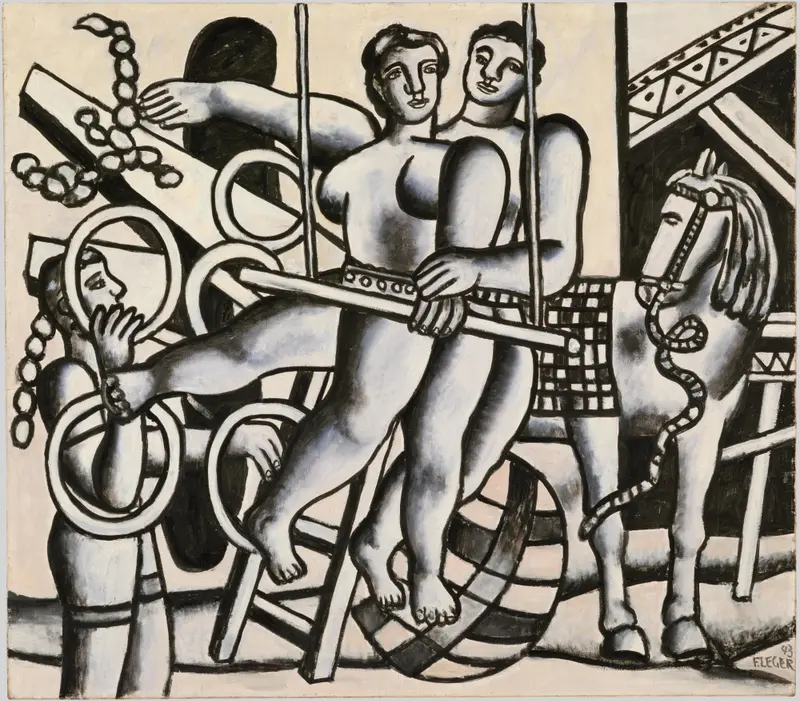
Le Jongleur et les acrobates
Fernand Léger
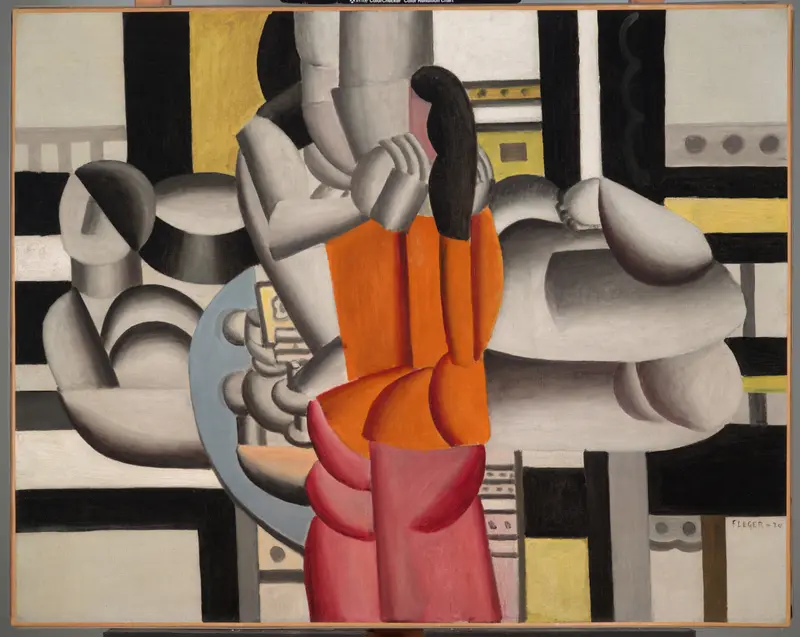
Three Women and Still Life (Déjeuner)
Fernand Léger
Reading
Fernand Léger
Femme couchée
Fernand Léger
Woman holding flowers
Fernand Léger
The Tug
Fernand Léger





