
Woman holding flowers — History & Facts
What first arrests the eye in Woman holding flowers is the sense of weight and monumentality, as if the two figures were carved from stone rather than painted on canvas. The woman’s arm forms a protective arc around the flowers she clutches, their yellow heads echoing the geometric patterns that pulse across the background. The palette is bold but controlled—primary reds, yellows, and blues set against a field of black, white, and grey—while the checkerboard and target motifs pull the gaze in and out of the picture plane.
Every curve and edge seems carefully measured, giving the scene a sense of engineered calm, yet the figures’ expressions remain enigmatic, suspended between intimacy and detachment. Created in 1922, this work stands at the crossroads of postwar Europe, when artists like Fernand Léger sought new visual languages to match the machine age. The painting’s stylized forms and rhythmic repetition speak to the influence of Cubism and the wider search for order after the chaos of the First World War. Léger’s approach, sometimes called “Tubism” for its rounded, volumetric shapes, was his answer to the era’s fascination with industry and reconstruction.
Little is recorded about the specific journey of this canvas, now housed in the Kunstsammlung, but its presence is a reminder of a time when artists believed that even the most ordinary gestures—a woman holding flowers, a hand resting on an arm—could be rebuilt, reimagined, and made new. Look again at those hands: they seem as solid as pistons, yet they cradle something as fragile as a bloom.
More Artworks by Fernand Léger

The Tugboat Bridge
Fernand Léger
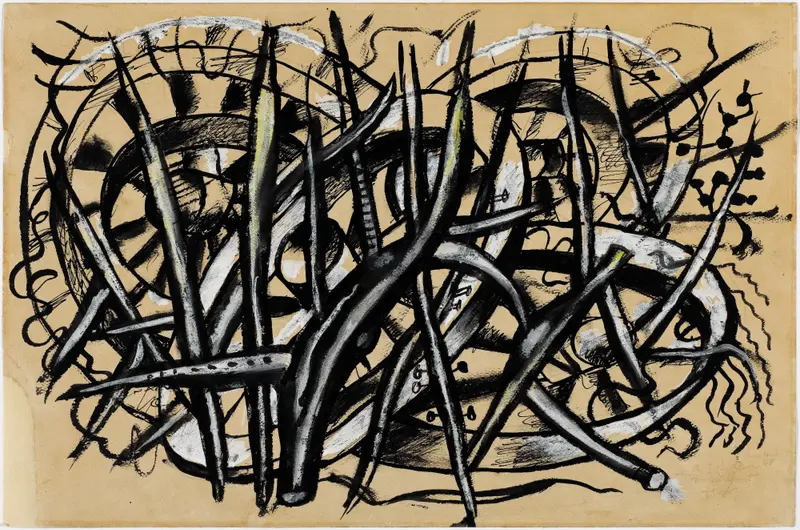
The Wheels
Fernand Léger

Le Cirque Médrano
Fernand Léger
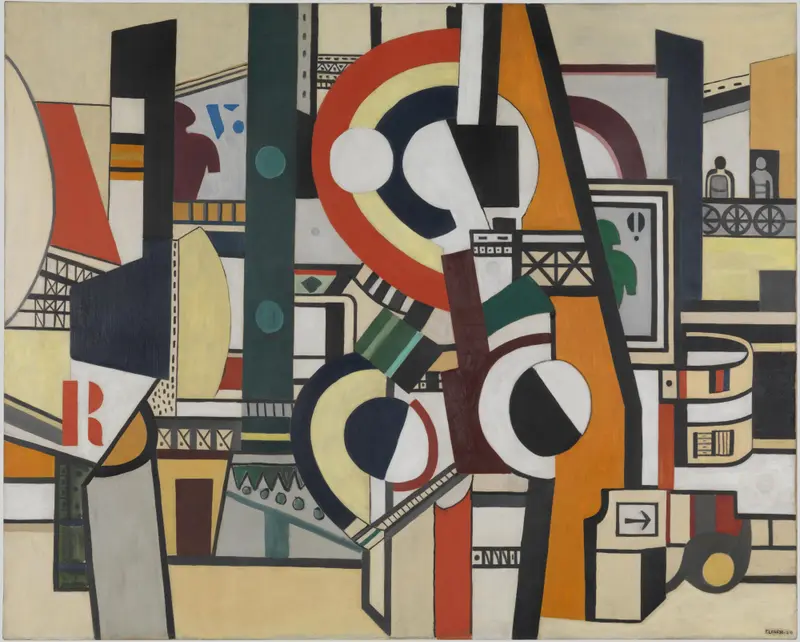
The Disks in the City
Fernand Léger
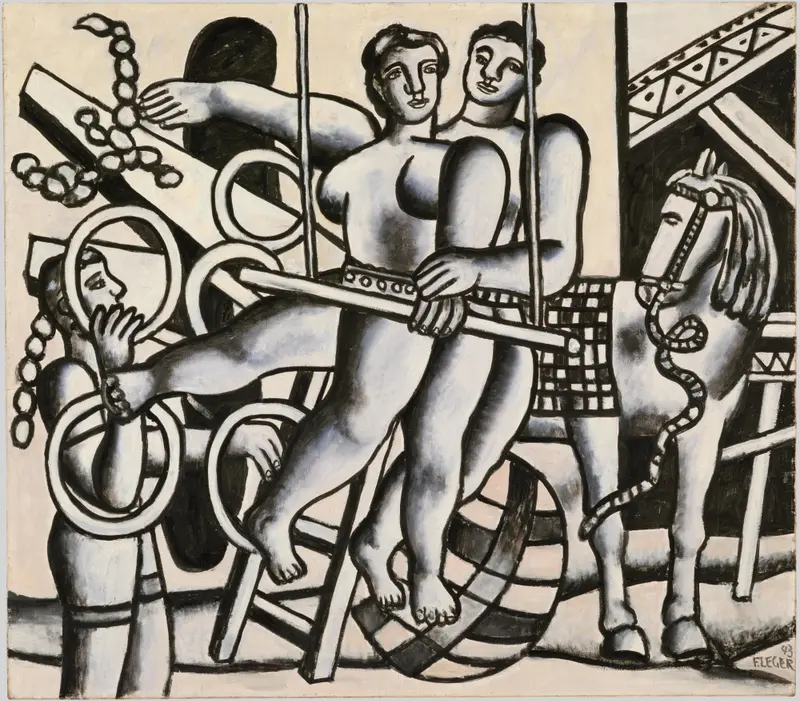
Le Jongleur et les acrobates
Fernand Léger
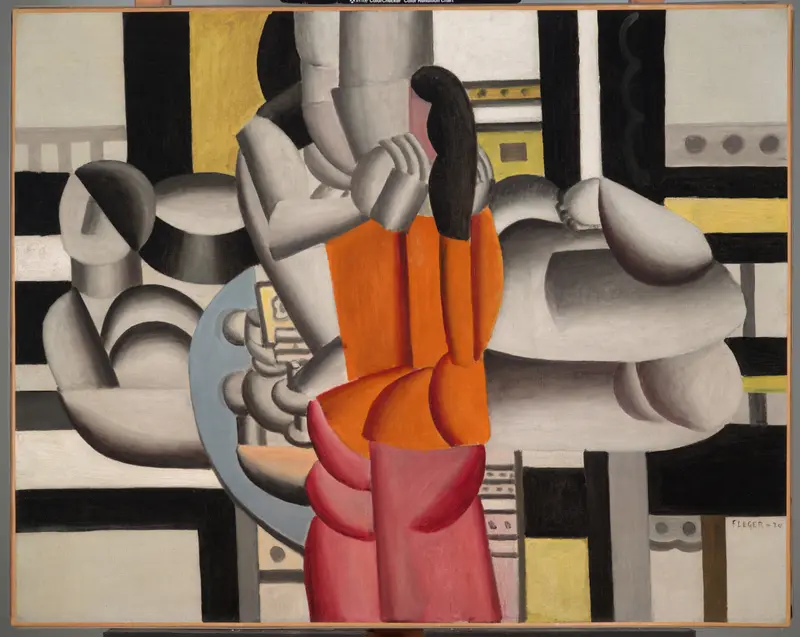
Three Women and Still Life (Déjeuner)
Fernand Léger
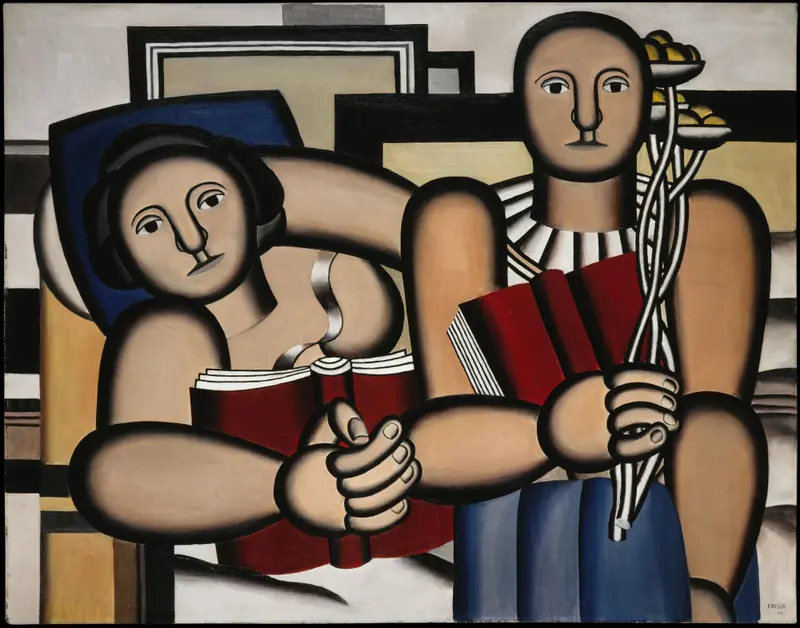
Reading
Fernand Léger
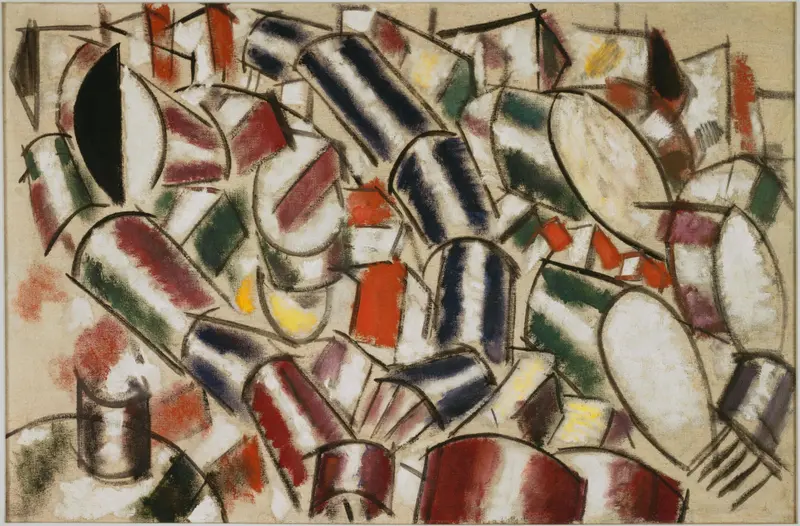
Femme couchée
Fernand Léger
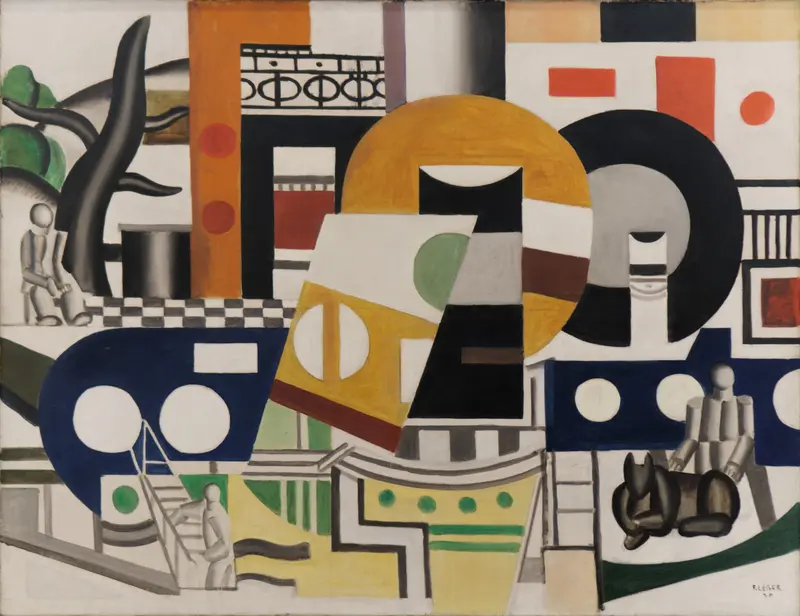
The Tug
Fernand Léger

Study for The Disks in the City
Fernand Léger



