
The Tug — History & Facts
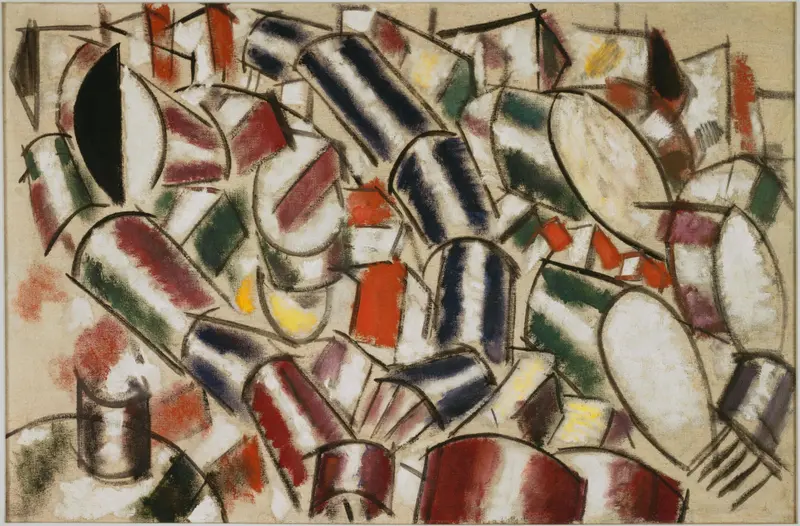
A riot of bold geometry and machine-age rhythm, The Tug by Fernand Léger seizes the eye with its orchestration of circles, blocks, and stylized figures that seem to pulse with the energy of a modern port. The most striking feature is how the composition refuses to settle: the overlapping disks and rectangles create a sense of perpetual movement, as if the tugboat and its world are always in the process of assembling themselves anew. The figures, rendered in a mannequin-like style, are not the focus but part of the machinery—cogs in a bustling industrial landscape.
The palette is both playful and calculated, with primary colors set against black and white, guiding the viewer’s gaze in loops and zigzags across the canvas. This painting belongs unmistakably to the world of early twentieth-century modernism, when artists like Léger reveled in the forms and energies of the machine age. In 1920, the aftermath of the First World War saw artists turning to the language of industry and reconstruction, fascinated by the promise and power of technology. Works like this were rarely private commissions; instead, they were declarations—hung in salons, galleries, and avant-garde homes as manifestos for a new way of seeing.
The source records this painting as Le Remorqueur, dated 1925-12-12, and while history has kept few traces of its individual journey, its visual vocabulary speaks fluently of the era’s optimism and its faith in the future. Stand before it, and you can almost hear the hum of engines and the clatter of a city in motion.
More Artworks by Fernand Léger

The Tugboat Bridge
Fernand Léger
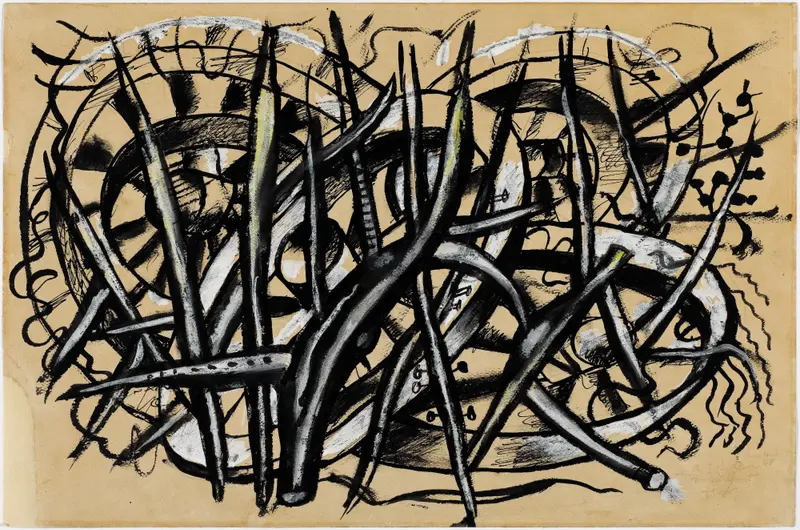
The Wheels
Fernand Léger

Le Cirque Médrano
Fernand Léger
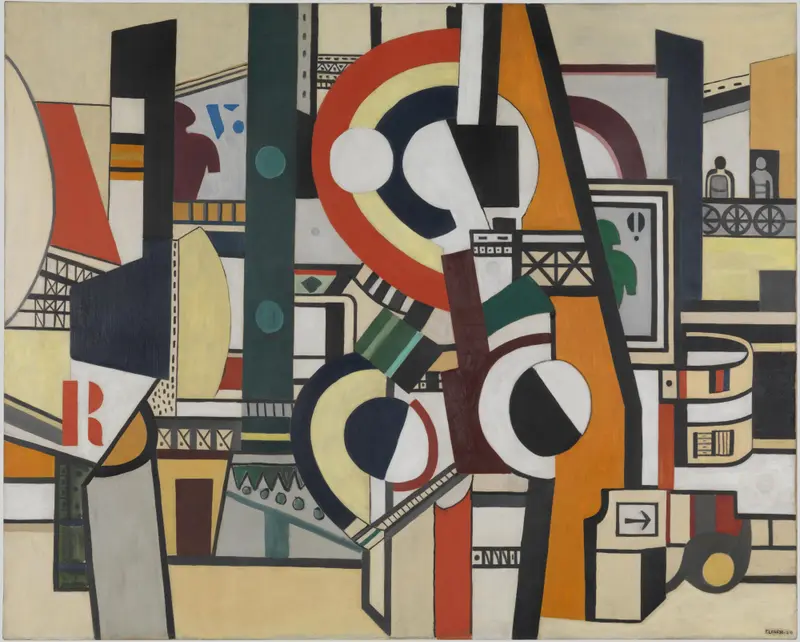
The Disks in the City
Fernand Léger
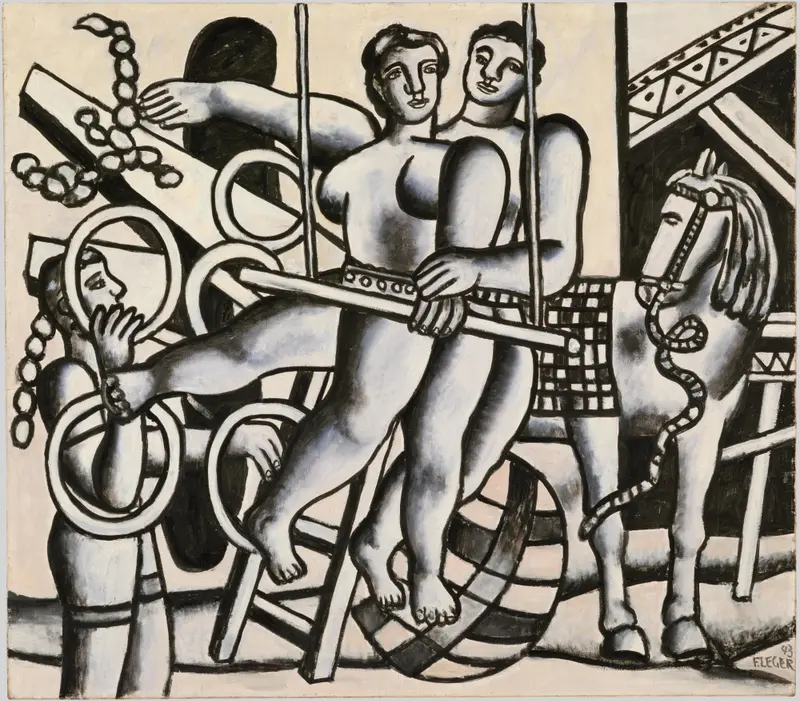
Le Jongleur et les acrobates
Fernand Léger
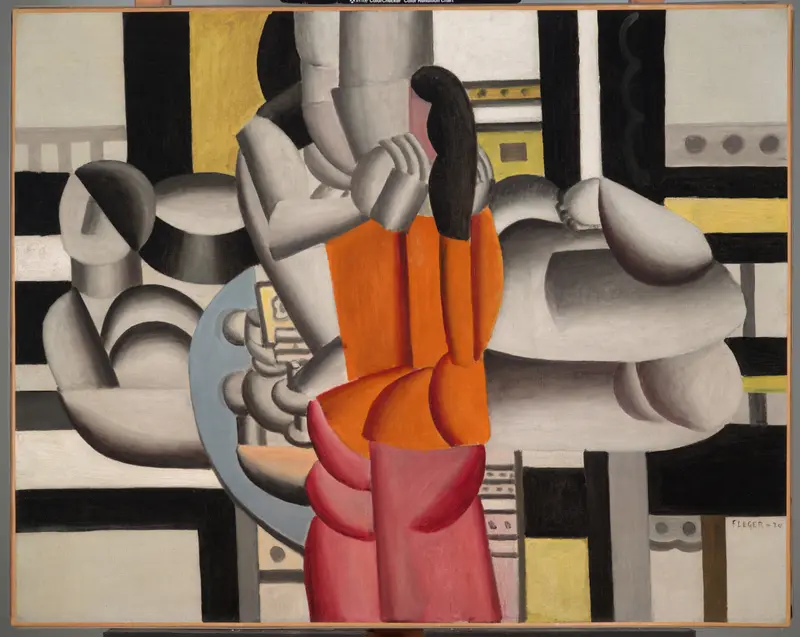
Three Women and Still Life (Déjeuner)
Fernand Léger

Reading
Fernand Léger
Femme couchée
Fernand Léger
Woman holding flowers
Fernand Léger

Study for The Disks in the City
Fernand Léger





