
Femme couchée — History & Facts
A reclining figure, but not as the Old Masters would have us know her: in Femme couchée, the human body is broken into a puzzle of bold, mechanical forms, as if the sitter is both woman and machine. The eye is drawn first to the cool, metallic blue that dominates the composition, then caught by the interlocking curves and cylinders that suggest limbs, torso, and face. Léger’s palette is restrained but deliberate—blues, blacks, and whites, with a single flash of red—creating a sense of both calm and tension.
The figure’s pose is classical, yet her anatomy is anything but; the familiar softness of a reclining nude has been reimagined as a harmony of engineered parts. Light glances off the forms, flattening some areas while giving others a sculptural weight, so that the figure seems to hover between two and three dimensions. Created in 1913, this work stands at a turning point in both Fernand Léger’s career and the history of modern painting. The world was on the brink of war, and artists across Europe were dismantling tradition, experimenting with Cubism, Futurism, and new ways of seeing.
Léger, a French painter fascinated by the machinery of modern life, was among those who sought to capture the energy and fragmentation of the new century. Paintings like Femme couchée were rarely made for private patrons; rather, they were statements—challenges to the old order, intended for the salons and galleries where artists debated the future of art itself. Today, as this work hangs in the Musée LaM, it invites us to look again at the human form and to wonder what it means to be modern.
More Artworks by Fernand Léger

The Tugboat Bridge
Fernand Léger
The Wheels
Fernand Léger

Le Cirque Médrano
Fernand Léger
The Disks in the City
Fernand Léger
Le Jongleur et les acrobates
Fernand Léger
Three Women and Still Life (Déjeuner)
Fernand Léger
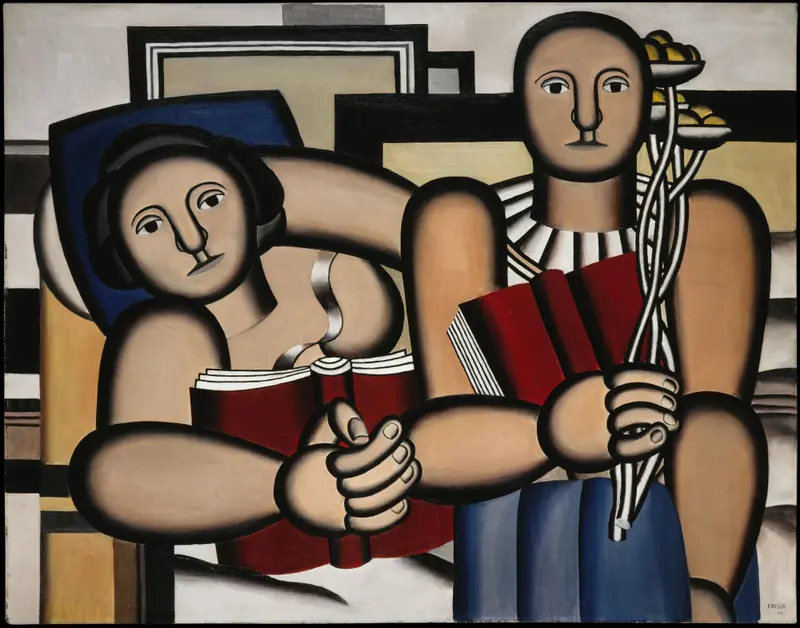
Reading
Fernand Léger
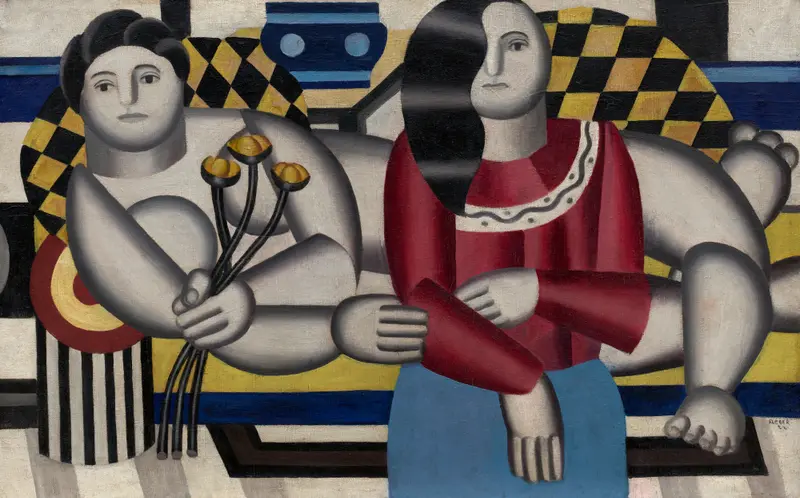
Woman holding flowers
Fernand Léger
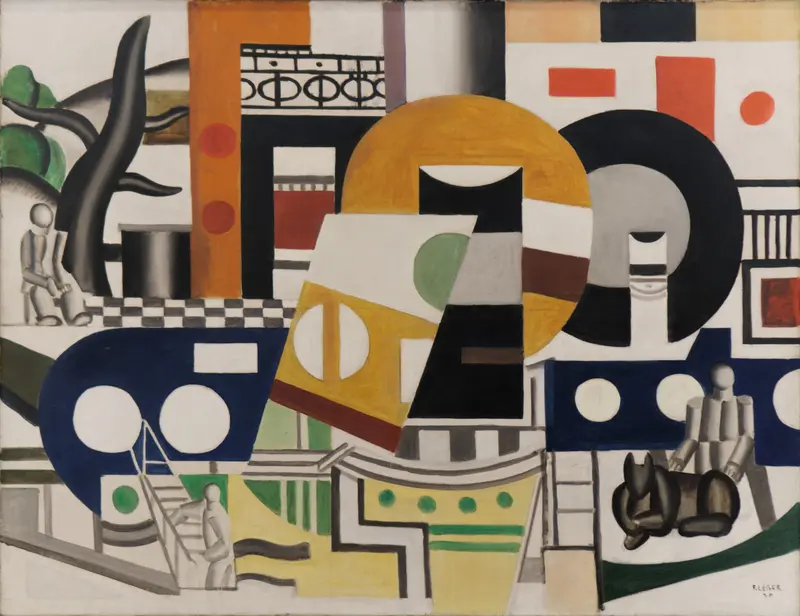
The Tug
Fernand Léger

Study for The Disks in the City
Fernand Léger



