
Three Women and Still Life (Déjeuner) — History & Facts
A trio of women, rendered in the unmistakable language of Fernand Léger, sit together in a world of polished geometry and bold, mechanical clarity. The first thing that strikes the eye is the sense of unity: bodies, table, and still life objects are all constructed from the same robust cylinders and slabs, their flesh as solid and engineered as the teapot or fruit before them. The women's faces are serene, almost mask-like, their gazes directed inward or toward each other, as if absorbed in silent conversation or contemplation.
Light glances off their limbs and the tabletop, picking out smooth curves and hard edges, while the palette—creams, ochres, deep reds, and steely blues—creates a mood at once intimate and monumental. Every detail, from the carefully modeled hands to the gleaming cup, signals a world where the human and the manufactured are inseparable. Painted in 1920, this work emerges from the heart of the Machine Age, when artists like Léger were reimagining what it meant to see and represent the modern world. The aftermath of World War I had left Europe fascinated—and sometimes unsettled—by the rise of industry, technology, and new social roles.
In Three Women and Still Life (Déjeuner), the traditional subject of women at a meal is transformed: instead of a fleeting impression or sentimental scene, we are given a vision of stability and order, as if these women are as much a part of the new machinery of life as the objects around them. History has kept few traces of this specific painting’s journey, but its date and style place it firmly within the search for harmony between humanity and the mechanical that defined Léger’s work. The longer you look, the more the image invites you to consider where the boundaries between person and object, intimacy and industry, might truly lie.
More Artworks by Fernand Léger

The Tugboat Bridge
Fernand Léger
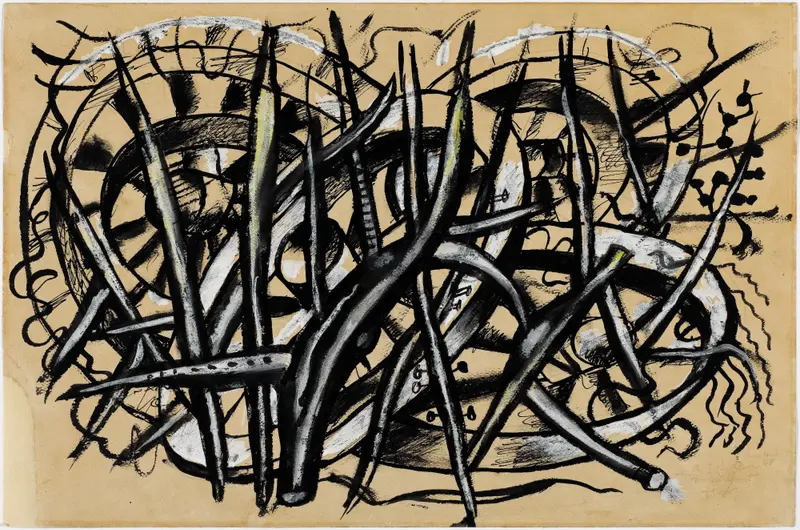
The Wheels
Fernand Léger

Le Cirque Médrano
Fernand Léger
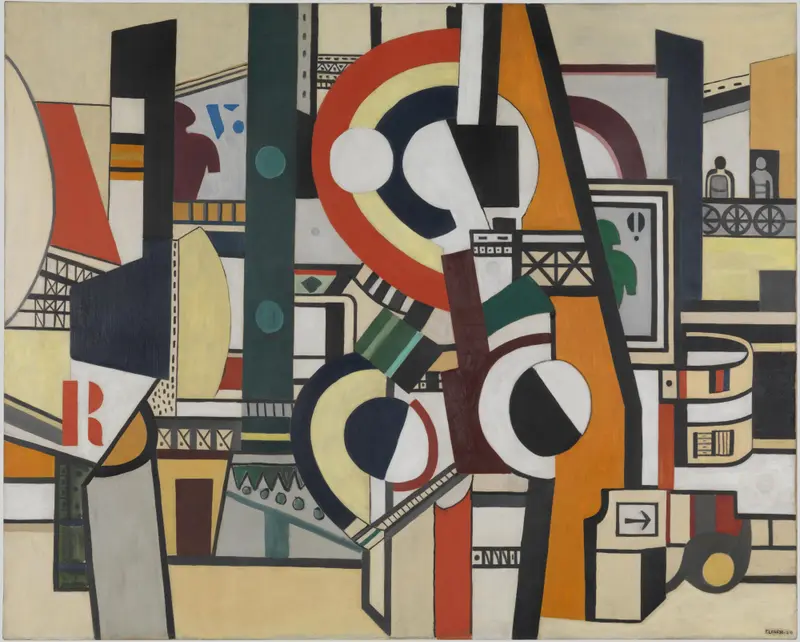
The Disks in the City
Fernand Léger
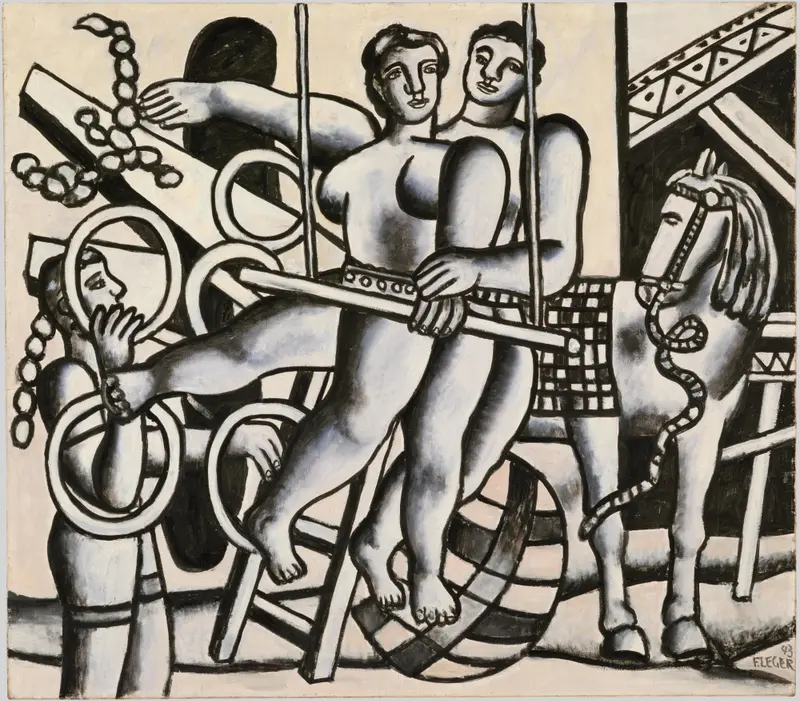
Le Jongleur et les acrobates
Fernand Léger
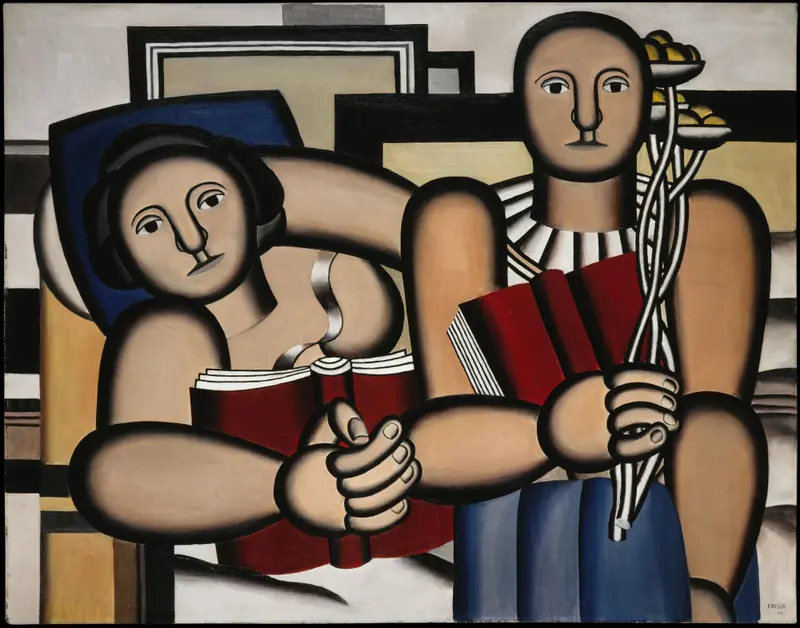
Reading
Fernand Léger
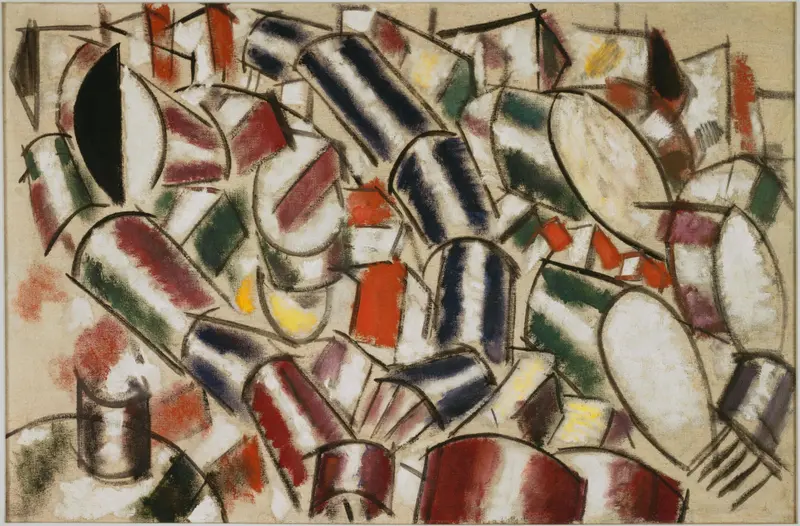
Femme couchée
Fernand Léger
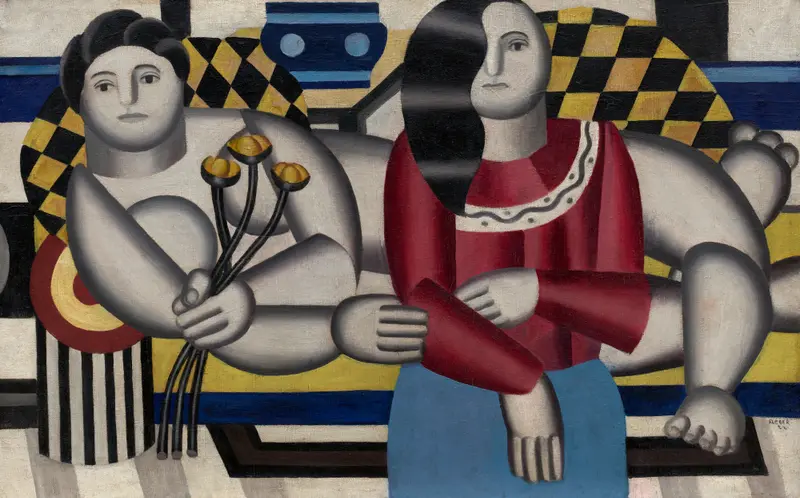
Woman holding flowers
Fernand Léger
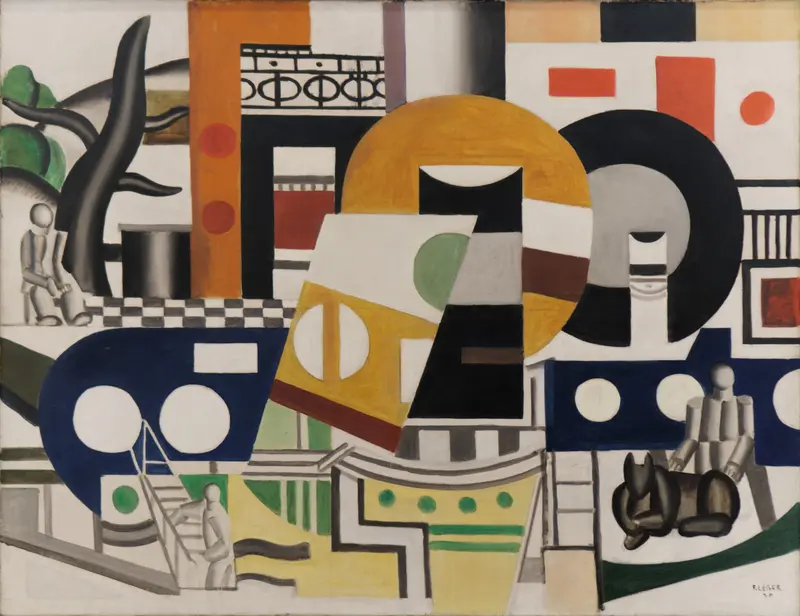
The Tug
Fernand Léger

Study for The Disks in the City
Fernand Léger
More Genre Scene Art

Banquet of the Officers of the St George Civic Guard
Frans Hals

Rembrandt and Saskia in the Scene of the Prodigal Son
Rembrandt van Rijn

Bal du moulin de la Galette
Pierre-Auguste Renoir

Quadrille at the Moulin Rouge
Henri de Toulouse-Lautrec

A Burial at Ornans
Gustave Courbet

When Will You Marry?
Paul Gauguin