
The Tugboat Bridge — History & Facts
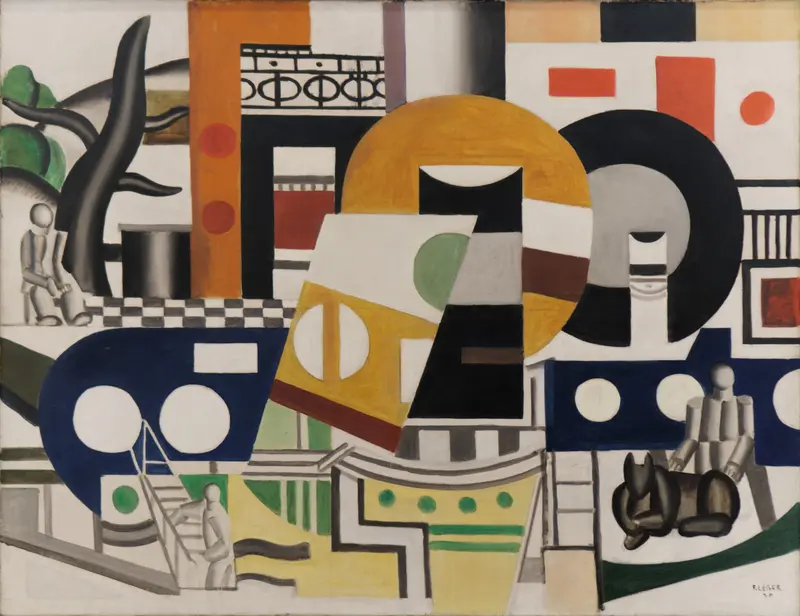
A riot of color and geometry leaps out at the viewer, as if the city itself has been taken apart and rebuilt in bold, mechanical fragments. In The Tugboat Bridge, every plane and curve seems to jostle for attention, yet the composition holds together with a sense of engineered balance. The eye is drawn first to the large, tilting rectangles of red, green, and black, which slice diagonally across the foreground, echoing the restless energy of modern industry.
Amid the abstraction, a small, stylized figure grips a railing, dwarfed by the machinery and architecture that surround him—reminding us that even in this world of steel and steam, the human presence remains. Created in 1920, this work sits at the crossroads of a world in transformation. The aftermath of World War I had left Europe obsessed with rebuilding and progress, and artists like Fernand Léger responded by celebrating the forms and rhythms of the machine age. The painting belongs to a moment when art was breaking away from illusion and narrative, embracing instead the language of construction, color, and movement.
Now housed in the Centre Pompidou, The Tugboat Bridge stands as a testament not only to the optimism of its era, but also to the restless curiosity that drove artists to find new ways of seeing. The longer you look, the more the picture reveals: a city, a river, a bridge, all reimagined as a living puzzle of modern life.
Sources: Wikidata Q137723130 · Image source (Wikimedia Commons)
More Artworks by Fernand Léger
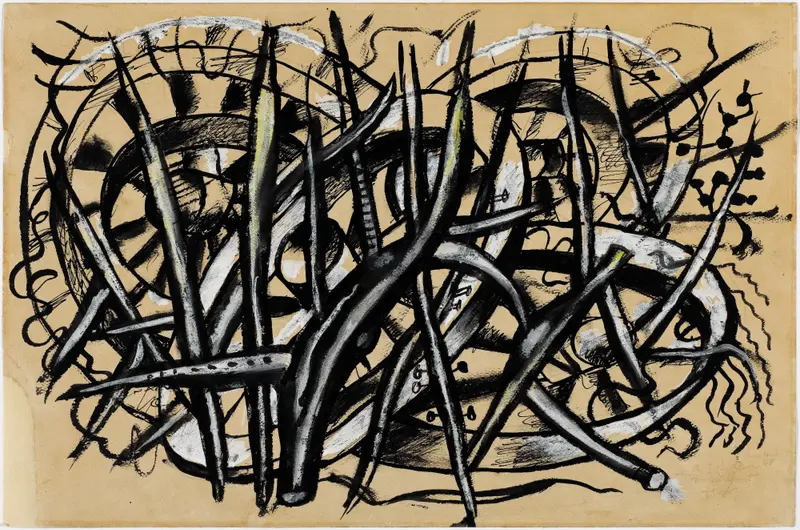
The Wheels
Fernand Léger

Le Cirque Médrano
Fernand Léger
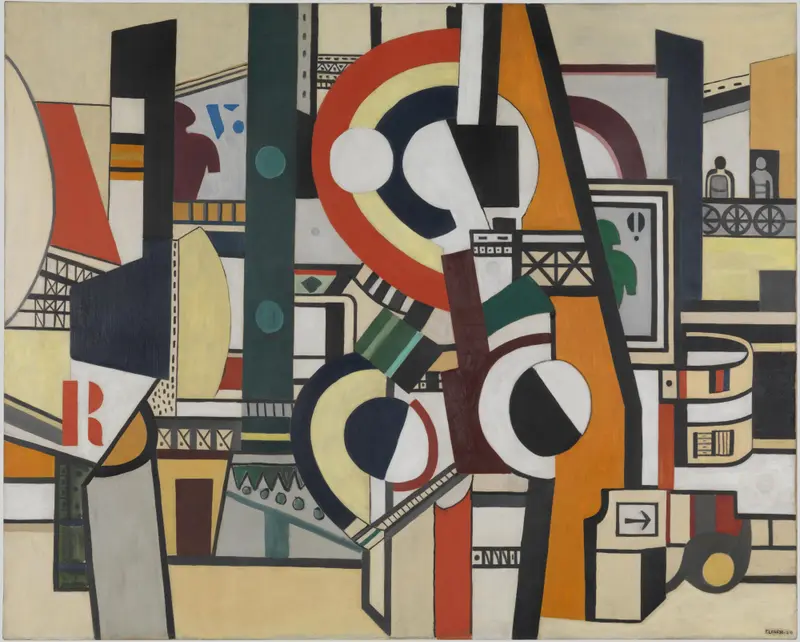
The Disks in the City
Fernand Léger
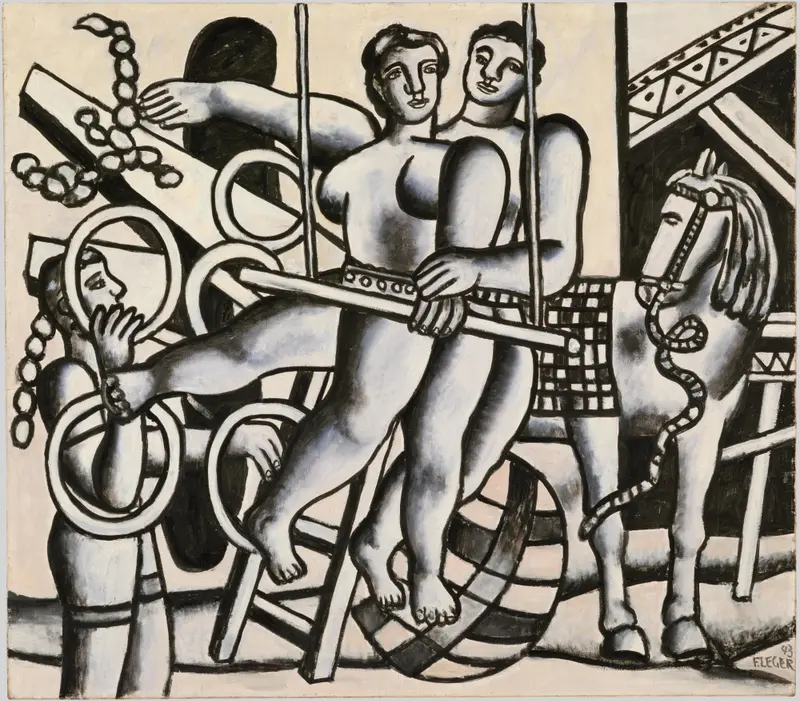
Le Jongleur et les acrobates
Fernand Léger
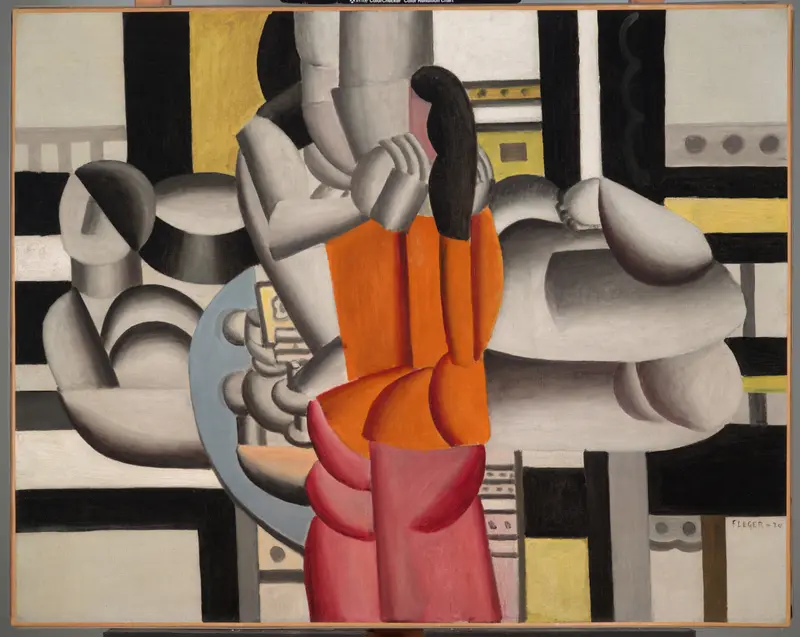
Three Women and Still Life (Déjeuner)
Fernand Léger

Reading
Fernand Léger
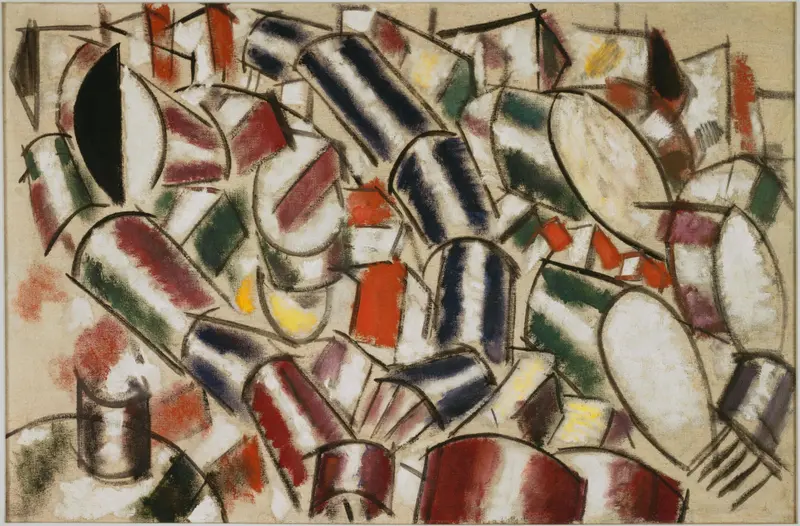
Femme couchée
Fernand Léger

Woman holding flowers
Fernand Léger
The Tug
Fernand Léger

Study for The Disks in the City
Fernand Léger





