
Christ carrying the Cross — History & Facts
The first thing that captures the eye in Abel Grimmer’s Christ carrying the Cross is the sheer scale of the procession winding through a fantastical landscape. Rather than isolating Christ in a moment of private agony, Grimmer sets him within a teeming world: a river of humanity, soldiers, townsfolk, and onlookers, all flowing through rolling hills and past storybook castles. The artist draws the viewer in by scattering small dramas across the canvas—each group, gesture, and glance a thread in the tapestry of the Passion.
The path, twisting and crowded, leads the gaze inexorably toward the distant city, while the muted greens and ochres of the land suggest a world both familiar and strangely detached from the biblical past. Painted in 1593, this work belongs to a period when Flemish painters often reimagined sacred stories in contemporary dress and settings, inviting viewers to see themselves within the narrative. Such paintings were frequently commissioned for private devotion or as didactic tools, their crowded compositions offering endless details for meditation. Grimmer’s approach, echoing the panoramic storytelling of Pieter Bruegel the Elder, places the sacred event amidst the bustle of daily life, blurring the line between the biblical and the everyday.
While little is recorded about the specific journey of this painting, its presence in a modern collection allows us to witness how late sixteenth-century artists made the Passion both a public spectacle and a personal reflection—inviting us, centuries later, to trace the winding path with our own eyes.
More Artworks by Abel Grimmer

Flemish proverbs
Abel Grimmer
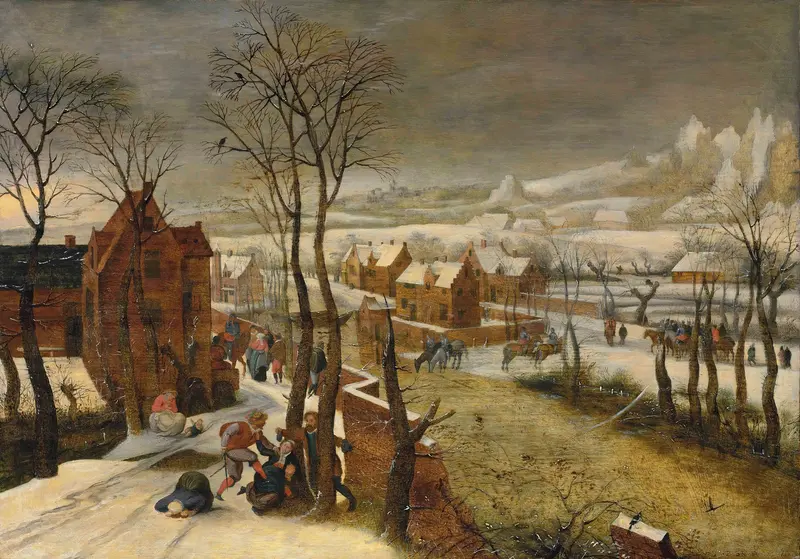
A Village Landscape In Winter With The Massacre Of The Innocents
Abel Grimmer
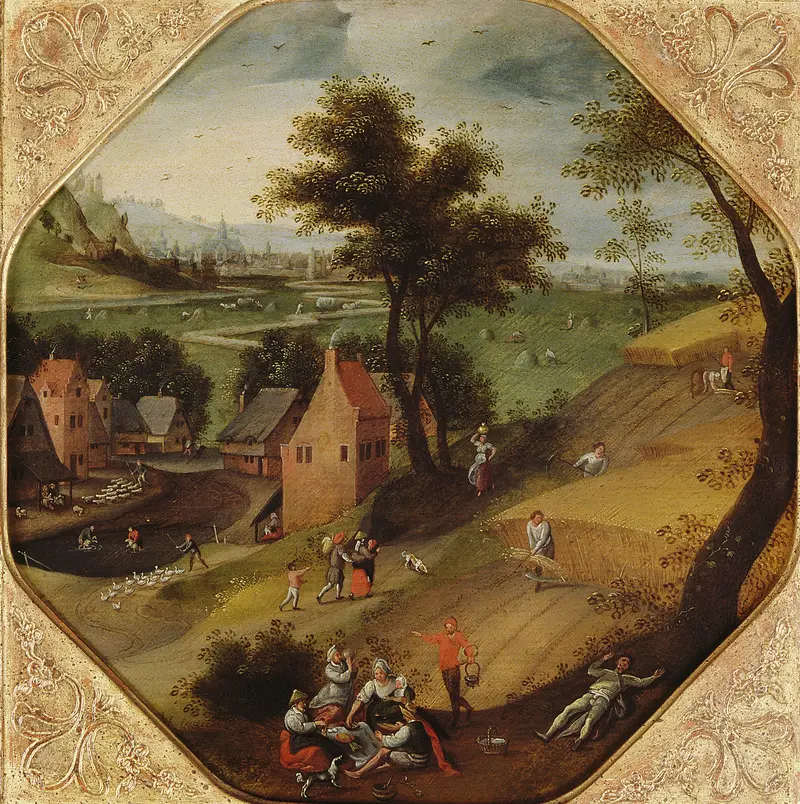
De Zomer
Abel Grimmer
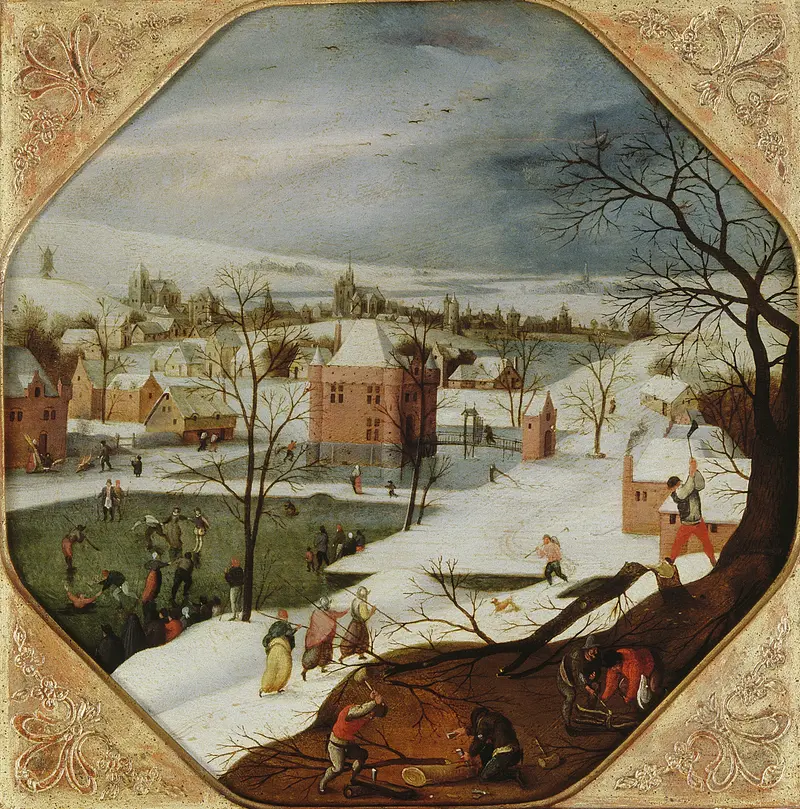
De Winter
Abel Grimmer
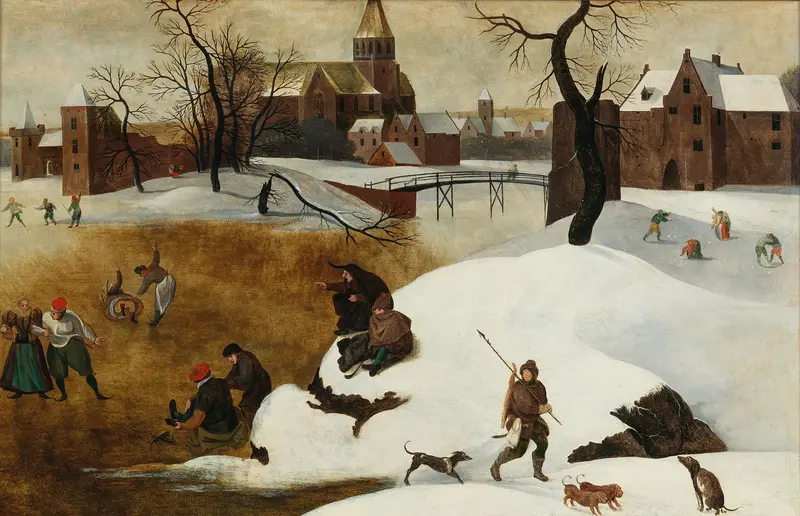
winter landscape with skaters
Abel Grimmer
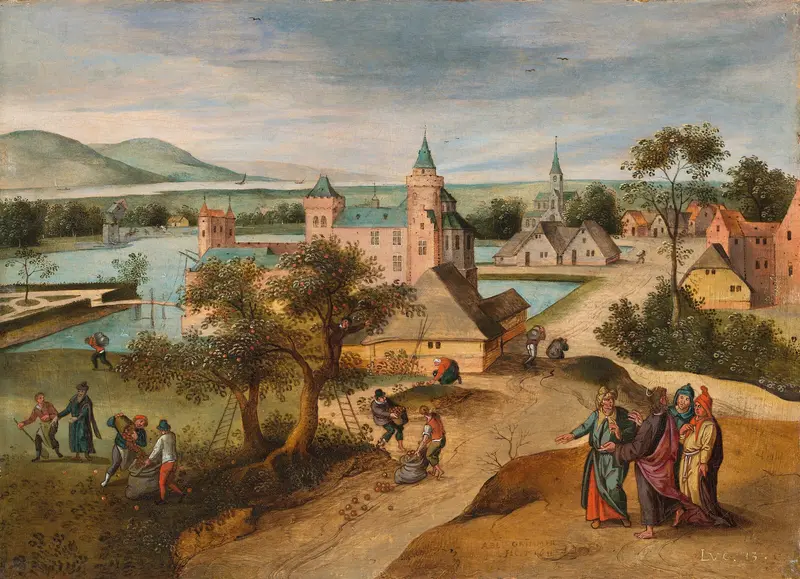
September – The Parable of the Barren Fig Tree
Abel Grimmer
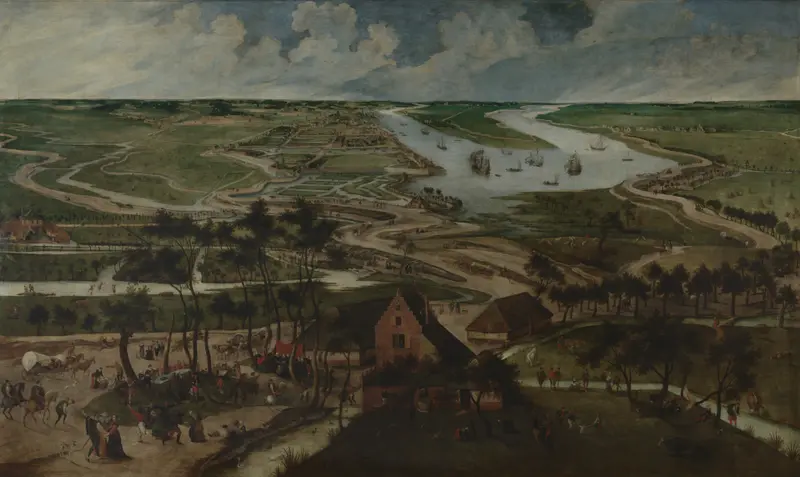
The Eel Huts in the Antwerp Polder outside the Lillo or Slijk Gate
Abel Grimmer
De Antwerpse polder en de Palinghuizen buiten de Slijk- of Lillopoort
Abel Grimmer
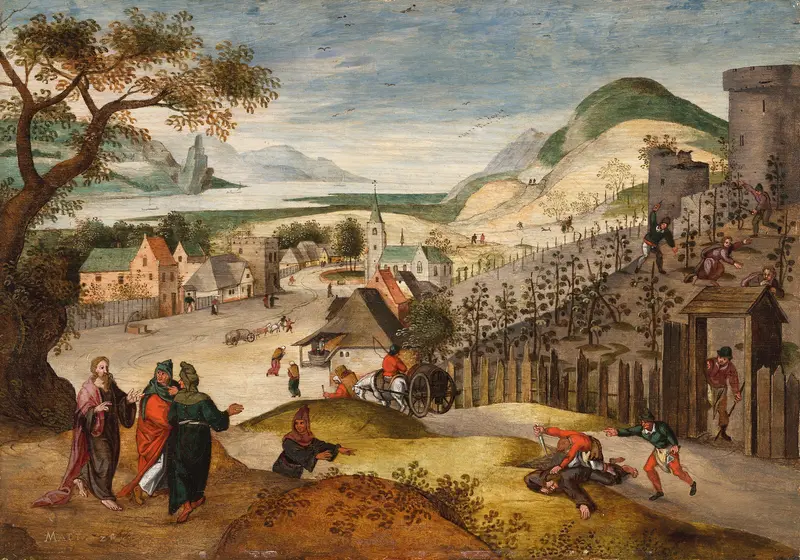
October – The Parable of the Vineyard
Abel Grimmer
The Marketplace in Bergen op Zoom
Abel Grimmer





