
Château Au Bord De La Rivière — History & Facts
In the stillness of a moment caught between the past and future, innocence lingers, unblemished by time or turmoil. Look to the right at the tranquil river, its surface kissed by the delicate light of dawn, reflecting a soft palette of greens and blues. The looming château stands resolutely in the background, a steadfast reminder of human presence amid nature’s gentle embrace. Notice how the meticulous brushwork captures the texture of the trees, their leaves whispering secrets through the vibrant strokes of verdant hues, while the sky above invites a sense of serenity and contemplation. Delve deeper into the contrasts presented in this composition: the grandeur of the château juxtaposed against the unassuming beauty of the river; the stillness of nature against the man-made structure suggesting an unyielding permanence.
Each element speaks of a different kind of innocence — the purity of the landscape, juxtaposed with the weight of civilization, hints at the fragility of both. The interplay between light and shadow invites viewers to linger and reflect on their relationship with nature and architecture. Courbet painted this piece in 1856 during a time of personal and artistic exploration in his life. Living in France, he was at the forefront of the realist movement, challenging the conventions of romanticism that dominated the art world.
This period of his life showcased his commitment to portraying the world as it is, which is clearly embodied in this serene and contemplative work, marking a significant moment in his artistic evolution.
More Artworks by Gustave Courbet
Browse all →
Marine
Gustave Courbet
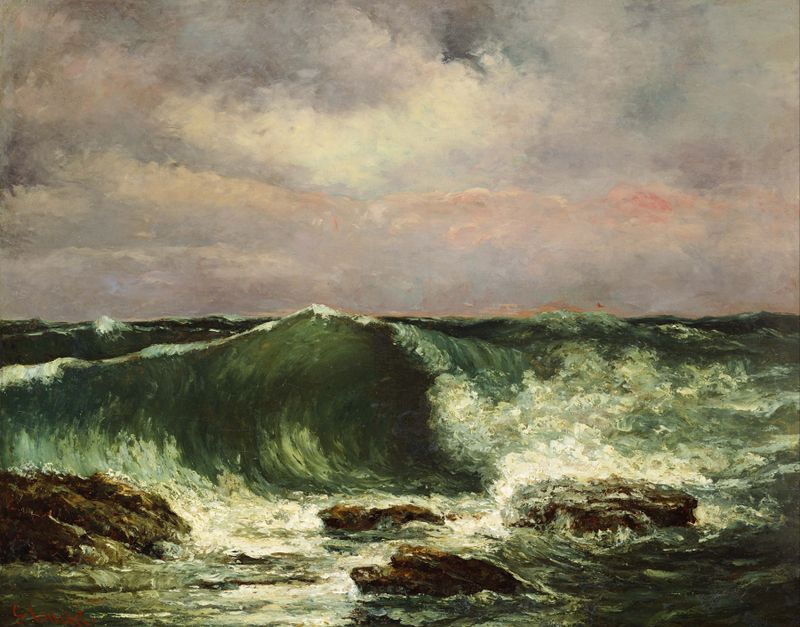
Waves
Gustave Courbet

Étretat; Les Falaises
Gustave Courbet
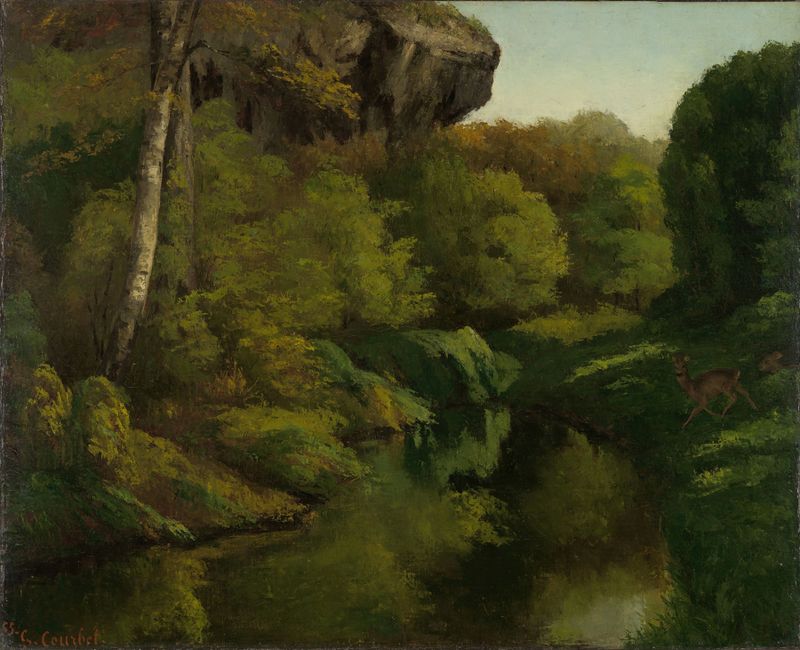
View in the Forest of Fontainebleau
Gustave Courbet
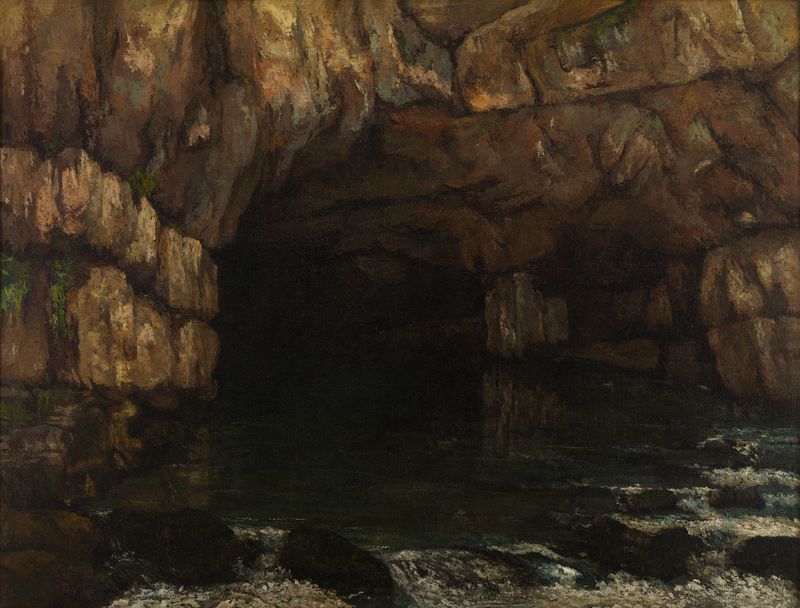
La source de la Loue (The Source of the Loue)
Gustave Courbet

Low Tide at Trouville
Gustave Courbet
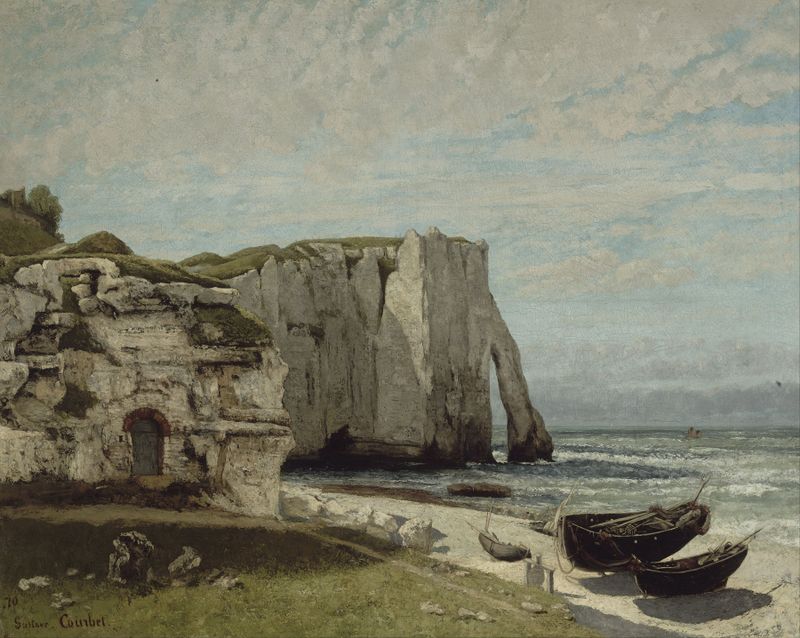
The Etretat Cliffs after the Storm
Gustave Courbet
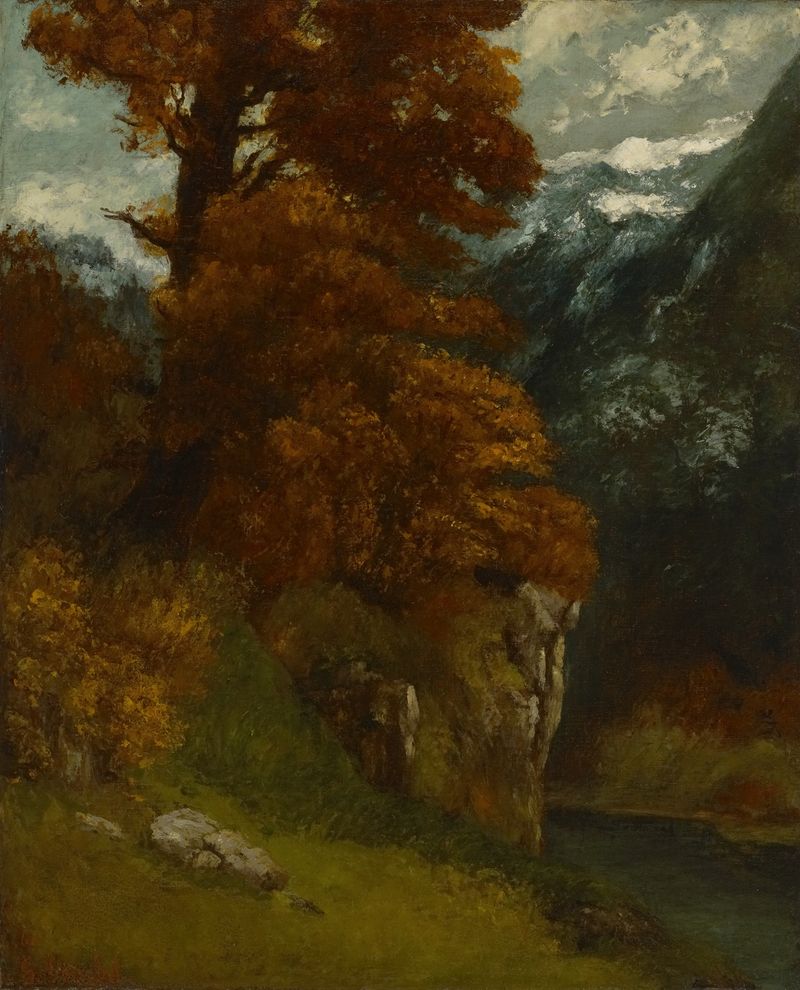
The Glen at Ornans (Bords du Doubs; Effet d’Automne)
Gustave Courbet
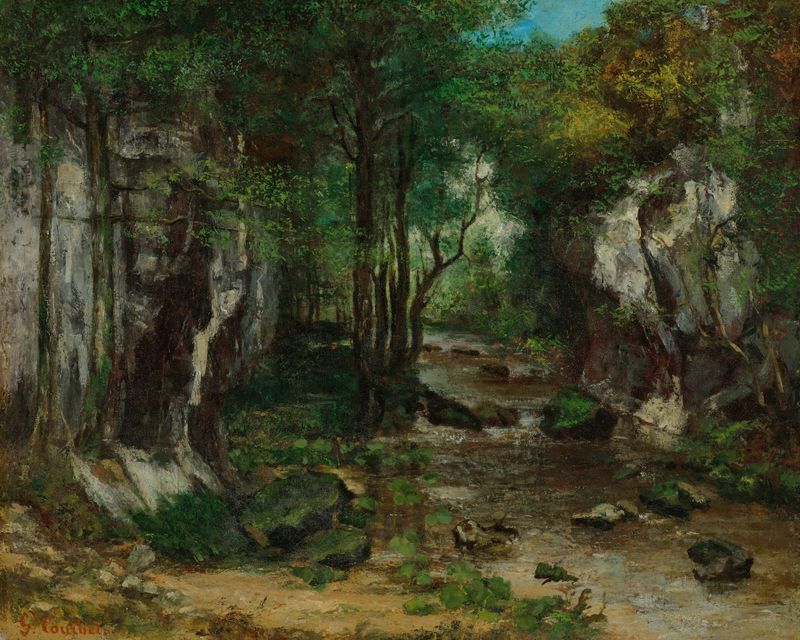
Le Ruisseau de Puits Noir
Gustave Courbet
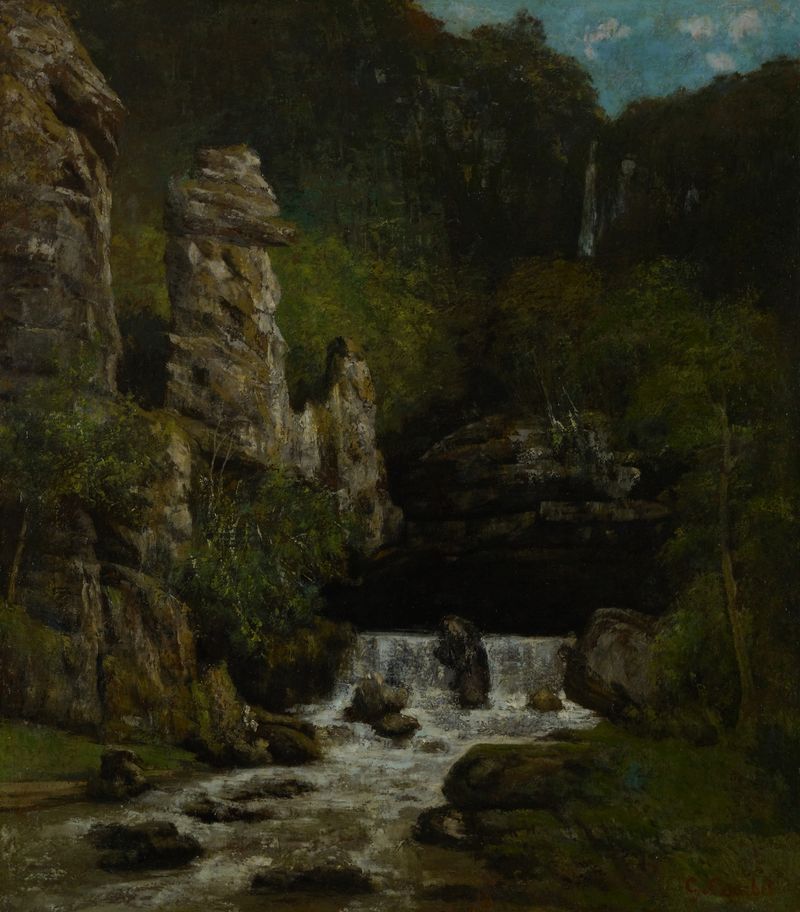
Landscape with a Waterfall
Gustave Courbet





