
Circassian at the Bath Watercolor — History & Facts
The first thing to catch the eye in Circassian at the Bath Watercolor by Theodoros Ralli is the poised, almost theatrical confidence of the bather. Light falls across her skin in a way that both reveals and protects, drawing attention to the careful choreography of her arms as she lifts a towel behind her neck. The fountain to her left, with its fantastical dragon-shaped spout, releases a steady stream of water that seems to cool the humid air.
Brass vessels glint at her feet, their curves echoing the softness of her form, while the patterned cloths—one wrapped around her legs, another cushioning her seat—add a note of domestic luxury. Every detail, from the mosaic floor to the steam rising in the background, is designed to immerse the viewer in a world of sensual ritual and private calm. Painted in 1909, this work belongs to the long tradition of Orientalist art that flourished in the late nineteenth and early twentieth centuries. Artists like Ralli—trained in the academic style but fascinated by the cultures of the Eastern Mediterranean—often painted such scenes for European collectors hungry for glimpses into the “exotic” world of the Ottoman Empire.
The Circassian woman, famed in the period’s imagination for her beauty, became a recurring motif in these bathhouse settings. While little is recorded about the specific journey of this painting, its presence in a modern collection speaks to the enduring allure of this genre. The viewer is left to wonder whether the serenity on the woman’s face is a mask or a moment of genuine repose—an ambiguity that invites a second, closer look.
More Artworks by Theodoros Ralli

The Sleeping Concubine
Theodoros Ralli
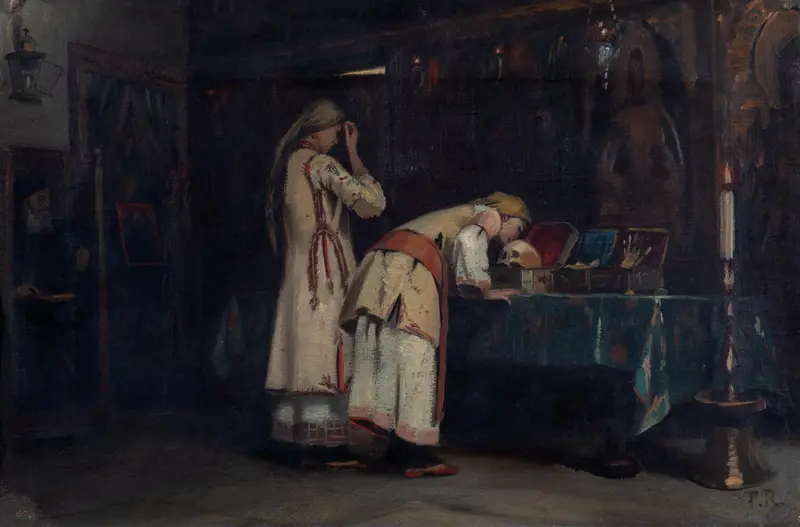
Holy Relics
Theodoros Ralli
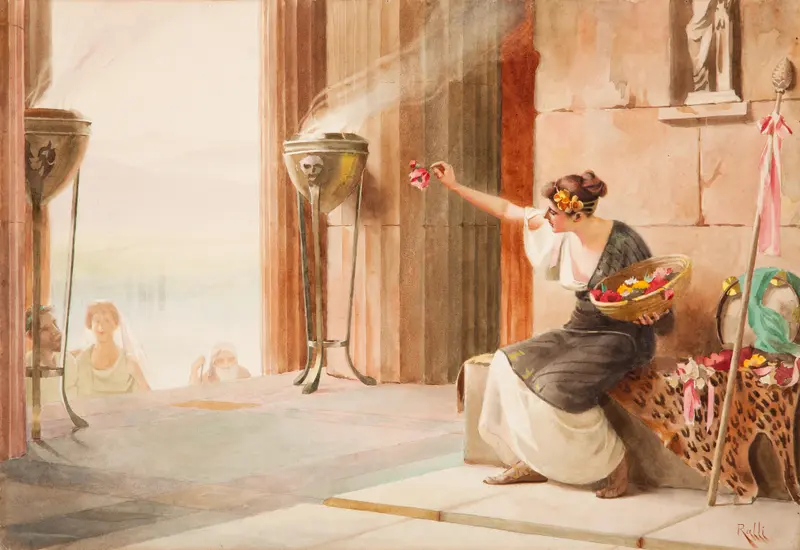
Flower Seller at the Parthenon
Theodoros Ralli
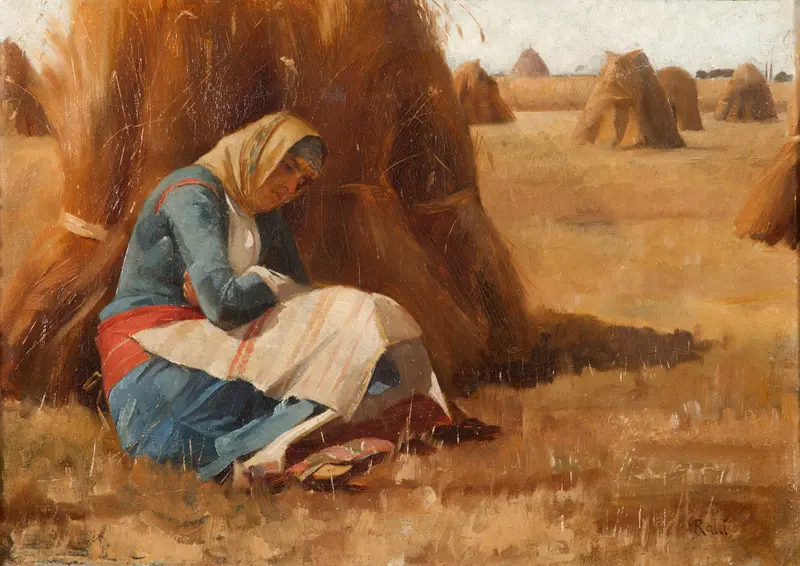
Resting by a Haystack
Theodoros Ralli
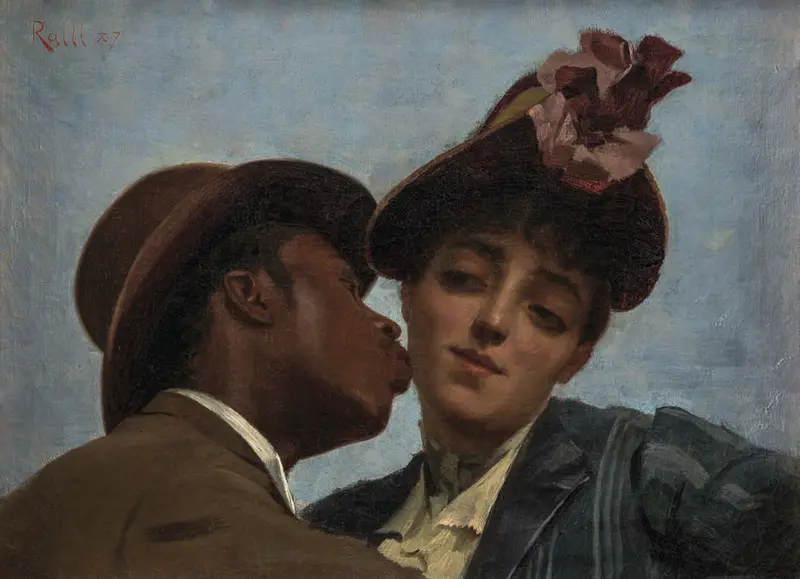
The Kiss (Ralli)
Theodoros Ralli
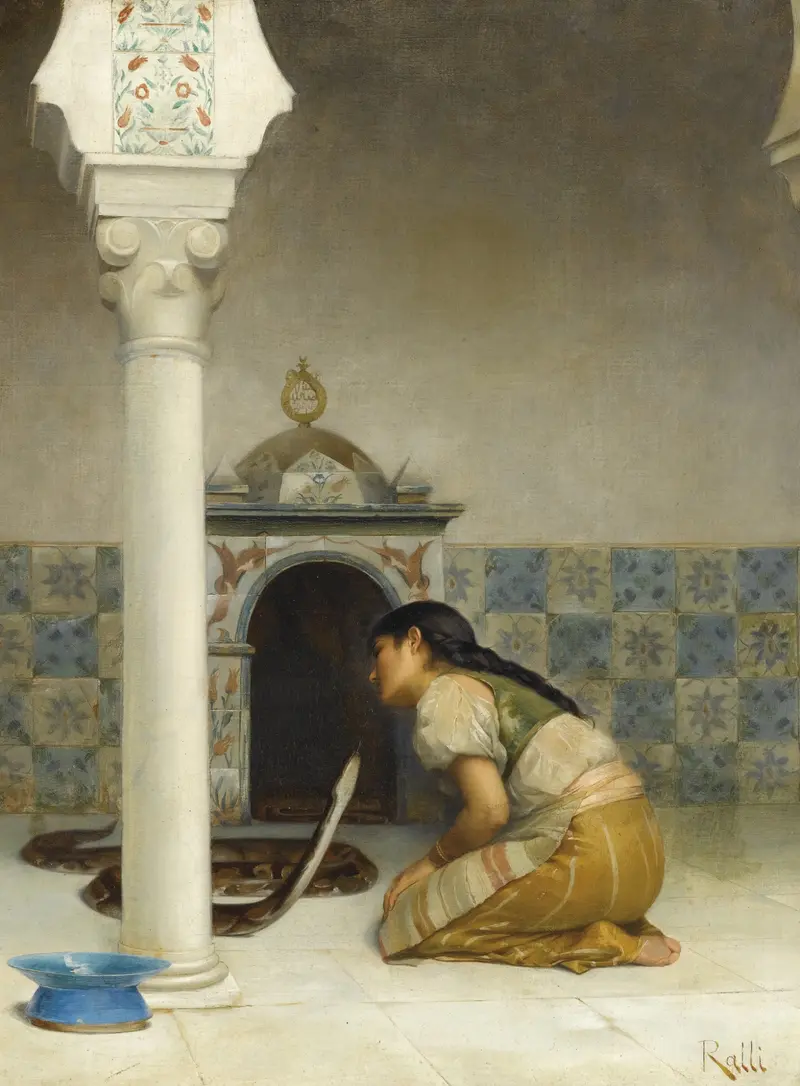
The Sacred Serpent
Theodoros Ralli
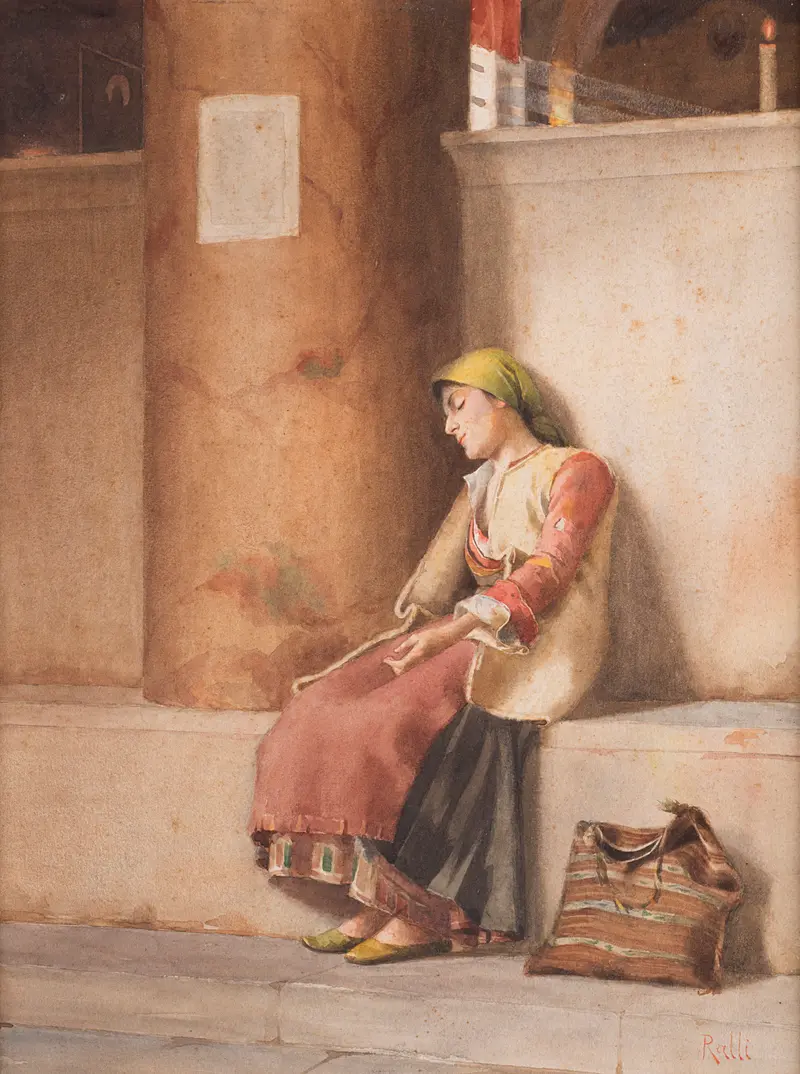
A Moment of Reflection
Theodoros Ralli
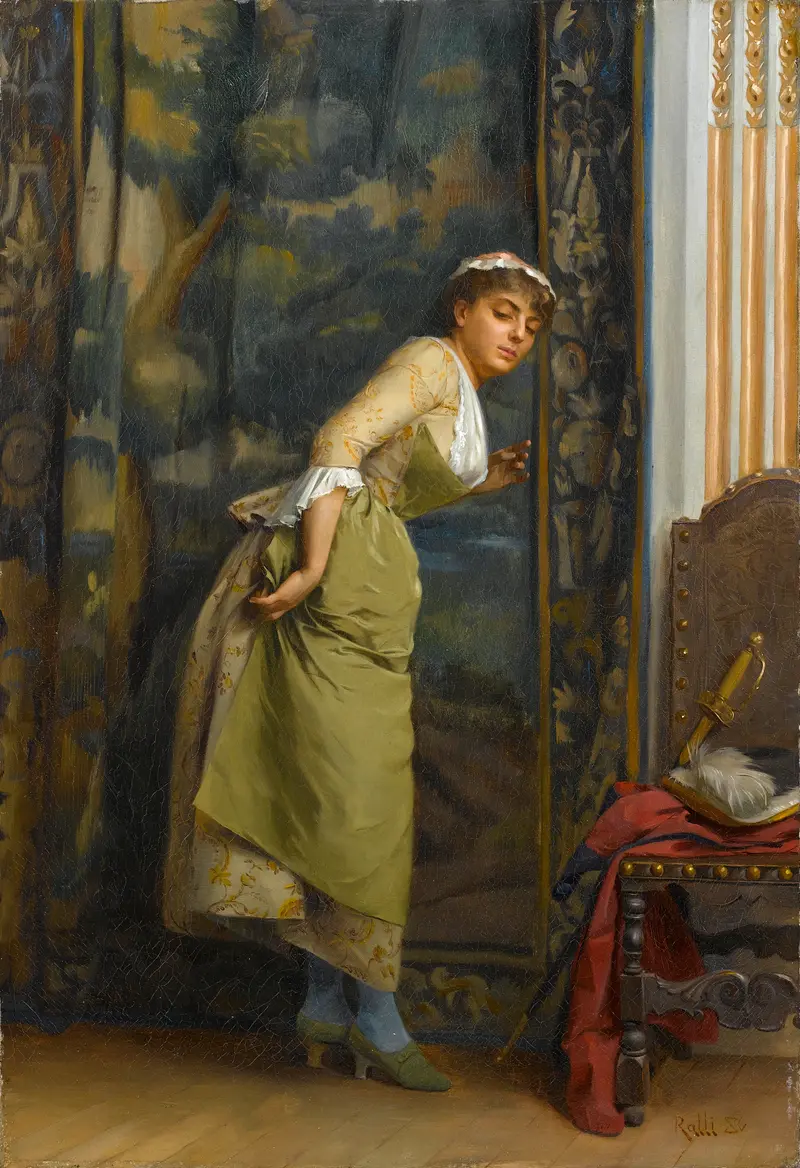
Eavesdropping (Ralli)
Theodoros Ralli
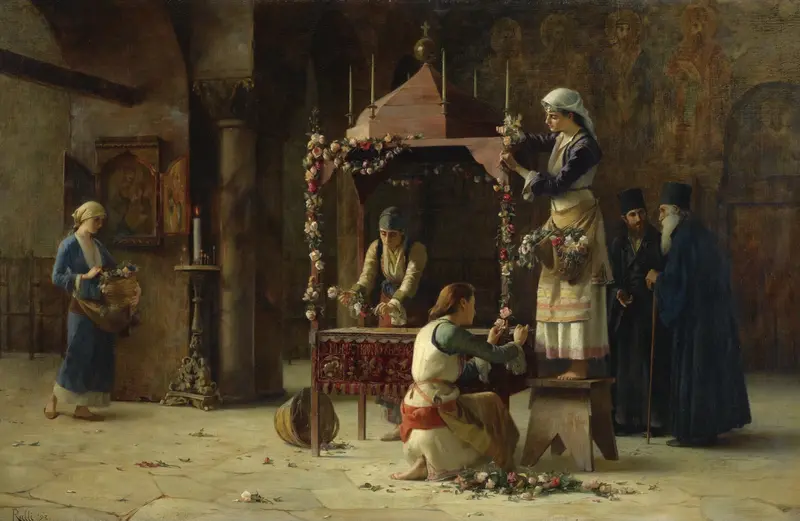
Holy Friday, Greece
Theodoros Ralli
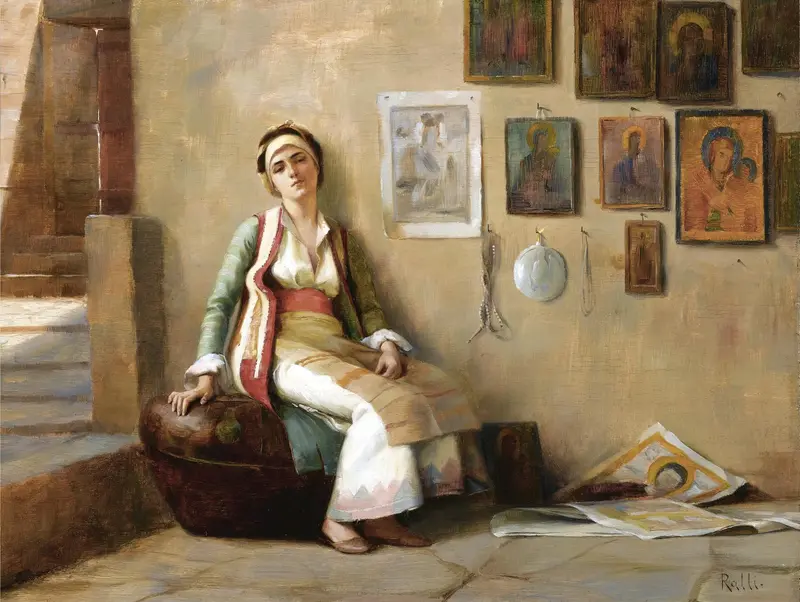
A Moment's Rest
Theodoros Ralli
More Genre Scene Art

Banquet of the Officers of the St George Civic Guard
Frans Hals

Rembrandt and Saskia in the Scene of the Prodigal Son
Rembrandt van Rijn

Bal du moulin de la Galette
Pierre-Auguste Renoir

Quadrille at the Moulin Rouge
Henri de Toulouse-Lautrec

A Burial at Ornans
Gustave Courbet

When Will You Marry?
Paul Gauguin