
Classic Composition — History & Facts
In this stillness, one can uncover layers of serenity that whisper truths about existence and perception. Look to the center of the piece, where harmonious forms converge, creating a balance that invites contemplation. The soft palette of muted greens and warm browns melds seamlessly, providing a tranquil backdrop for the intricate details that emerge from the canvas. Observe how Varley’s delicate brushwork gently defines the shapes, drawing your gaze to the careful interplay of light and shadow that enhances a sense of depth and calm. As you immerse yourself in the composition, consider the subtle contrasts between the rigid structures and the fluidity of nature depicted.
The juxtaposition of geometric precision against organic curves evokes a dialogue between order and chaos. Each element, from the foreground to the distant horizon, resonates with a profound stillness, encouraging a moment of reflection on the balance between human creation and the natural world. In 1800, Varley created this work amidst the Romantic movement, which sought to emphasize emotion and nature's beauty. Living in England, he was influenced by the shifting tides of artistry that celebrated individual expression.
This period marked a transition in art, where the serene landscapes and classical compositions began to challenge the rigid constraints of Neoclassicism, allowing Varley to explore a deeper connection to both his subject and the viewer.
More Artworks by John Varley
Browse all →
Knaresborough on the River Nidd, Yorkshire
John Varley

Kirkstall Abbey near Leeds
John Varley

Bamborough Castle from the Northeast, with Holy Island in the Distance, Northumberland
John Varley
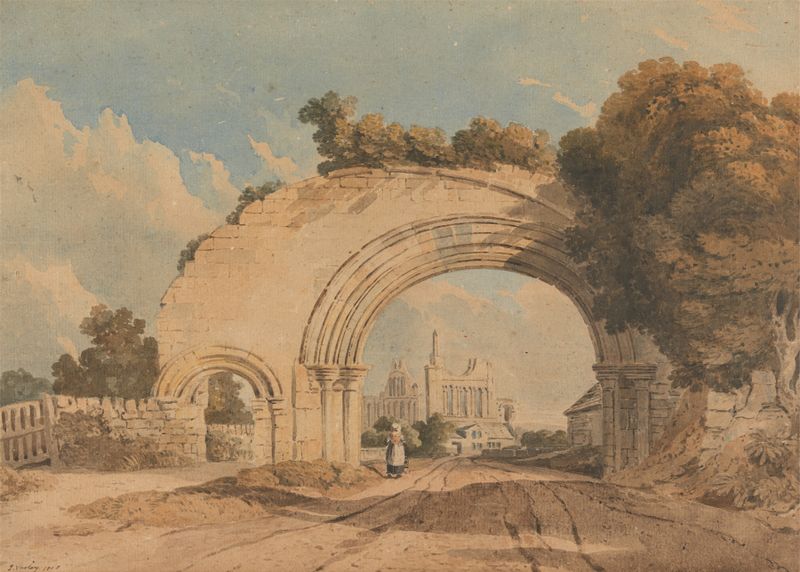
Byland Abbey, Yorkshire
John Varley

View of Conwy Castle, North Wales
John Varley
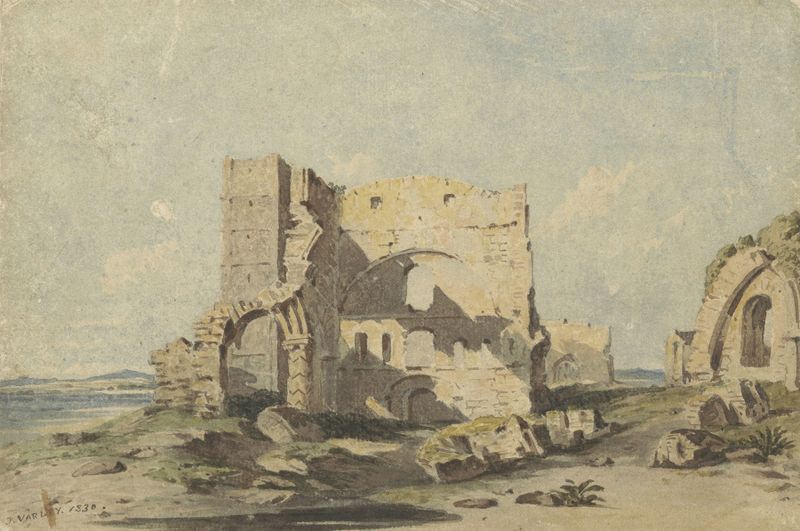
Lindisfarne Abbey op Holy Island, Northumberland
John Varley
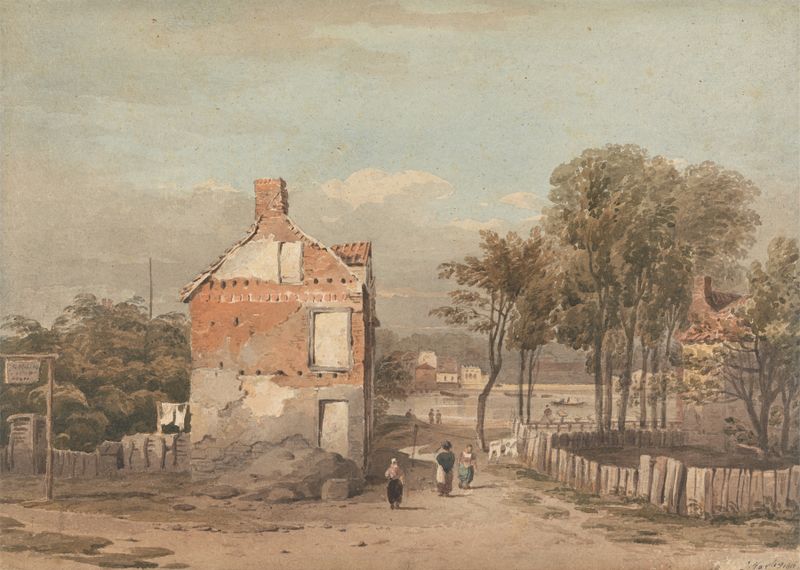
The Thames Near the Penitentiary, Millbank, London
John Varley

Vale of Clwyd, Wales
John Varley

A View along the Thames towards Chelsea Old Church
John Varley

The Thames at Windsor
John Varley





