
Clouds over the Sea — History & Facts
In the soft embrace of a dream, we encounter the immensity of sky and sea, where the horizon dances between reality and imagination. Look to the upper part of the canvas, where the swirling clouds capture the light's fleeting nature. Notice how the hues of blue and gray intermingle, creating an atmospheric depth that invites a sense of both calm and unease. The lower half reveals the gentle waves, their rhythmic patterns rendered with a delicate brushstroke that suggests movement and fluidity.
Each wave reflects the sky’s hues, creating a seamless connection between the heavens and the earth. Boudin masterfully captures the interplay between light and shadow, evoking emotions that linger just beneath the surface. The clouds appear heavy with the promise of rain, hinting at an impending storm, while the serene sea provides a contrasting stillness. This duality encapsulates the tension between nature’s beauty and its potential ferocity, stirring a sense of introspection and wonder in the viewer. In the mid-1860s, the artist was immersed in the landscapes of Normandy, seeking to portray the shifting moods of the coast.
This period marked a critical transition in the art world, as impressionism began to take root, pushing boundaries and redefining how artists perceived light and atmosphere. Boudin, often considered a precursor to this movement, painted Clouds over the Sea during a time when the allure of capturing transient moments was at the forefront of artistic exploration.
More Artworks by Eugène Boudin
Browse all →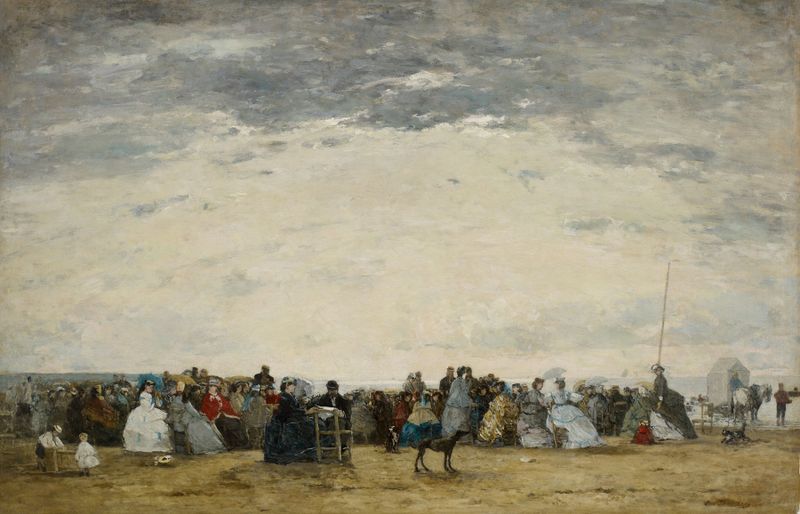
Vacationers on the Beach at Trouville
Eugène Boudin

Washerwoman near Trouville
Eugène Boudin
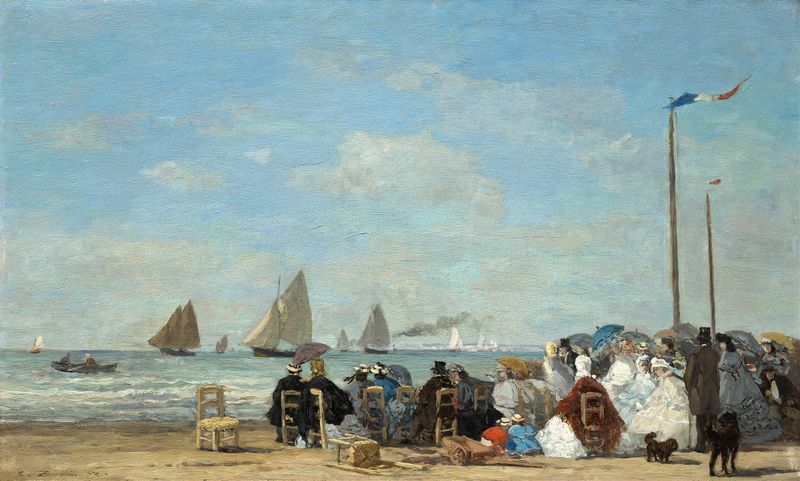
Beach Scene at Trouville
Eugène Boudin

Port aux environs d’Honfleur
Eugène Boudin

Le Faou, un coin du village
Eugène Boudin
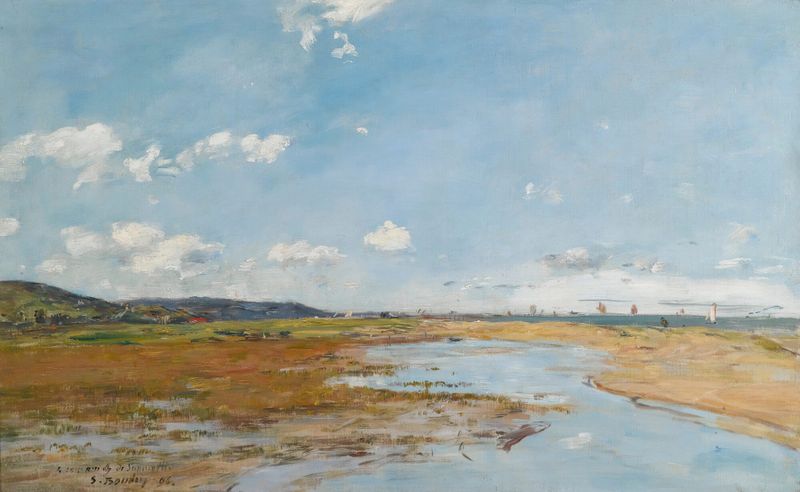
Deauville. Le Rivage
Eugène Boudin
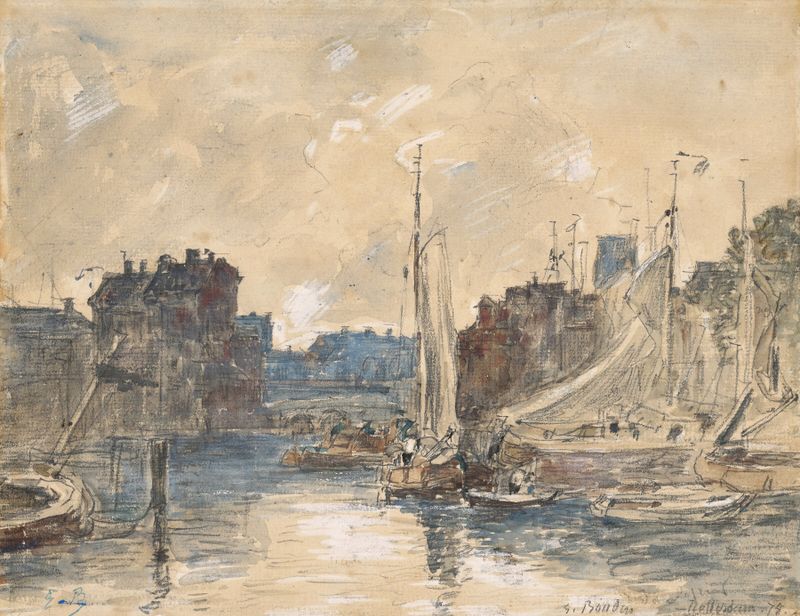
Port de Rotterdam
Eugène Boudin

View of Bordeaux, from the Quai des Chartrons
Eugène Boudin

Trouville, Scène De Plage
Eugène Boudin

Trouville, Le Port
Eugène Boudin





