
Coast Scene with a Beached Boat — History & Facts
Could a single brushstroke hold eternity? In Coast Scene with a Beached Boat, the illusion of a fleeting moment is masterfully captured, inviting the viewer to linger on the brink of reality and reverie. Look to the left at the weathered boat, grounded against the golden sands. Its timber, painted with a palette of faded blues and earthy browns, tells stories of past voyages and forgotten dreams. Notice how the sunlight spills over the scene, casting warm highlights that dance across the water’s edge, while the gentle waves lap at the shore, creating a rhythmic heartbeat in this tranquil tableau.
The subtle gradations of color evoke a sense of depth, inviting the eye to wander into the horizon where sea meets sky. Beneath the surface lies a poignant contrast: the permanence of the land against the transient nature of the sea. The beached boat, a symbol of lost journeys, stands in stark defiance of the relentless tide, evoking reflections on the passage of time. Soft clouds, tinged with hues of pink and gold, suggest both hope and melancholy, hinting at the interplay between human aspiration and nature’s indifference.
These elements coalesce, creating an emotional resonance that transcends mere depiction. Copley Fielding painted this piece between 1819 and 1822, during a period marked by his deepening engagement with the coastal landscape of England. As he explored the interplay of light and atmosphere, he was also influenced by the Romantic movement, which celebrated nature and the sublime. Fielding’s work encapsulated the transition in British art as it moved from neoclassicism towards a more personal and emotive approach to landscape painting.
More Artworks by Copley Fielding
Browse all →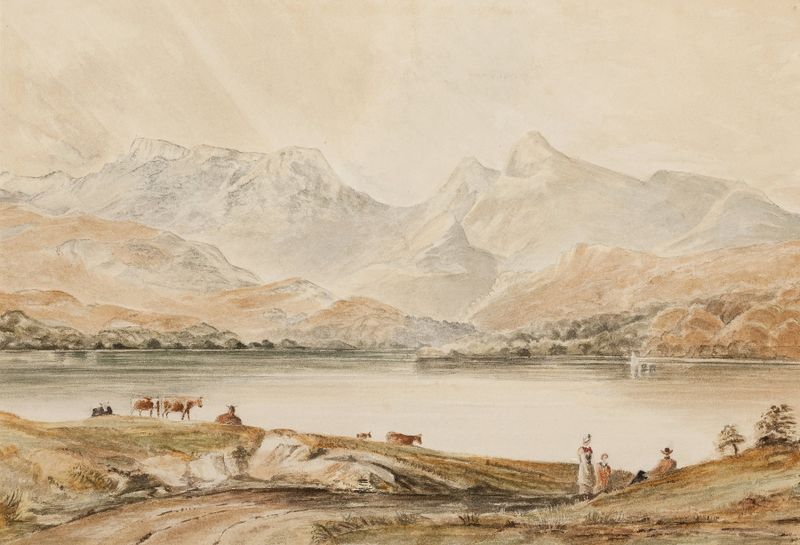
Loch Awe, Scotland
Copley Fielding
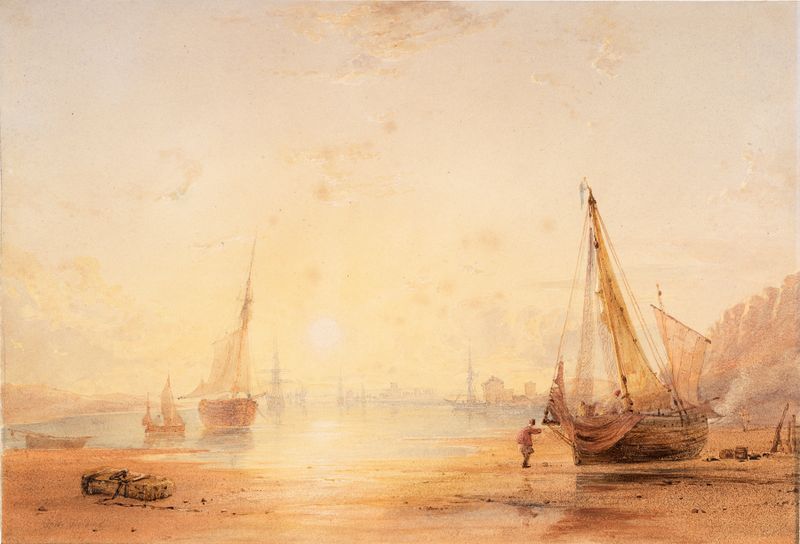
Shoreham Harbour, Sussex
Copley Fielding

Crowborough Hill
Copley Fielding
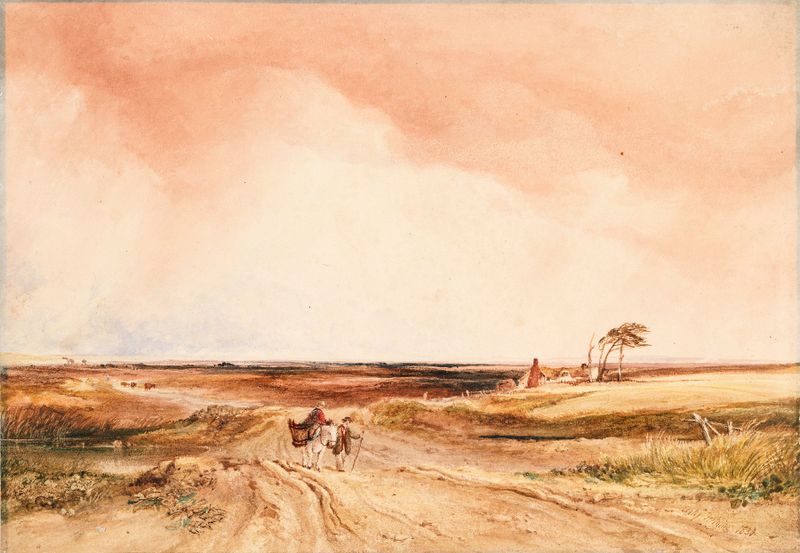
The Wash of Cumberland (Cumbria)
Copley Fielding
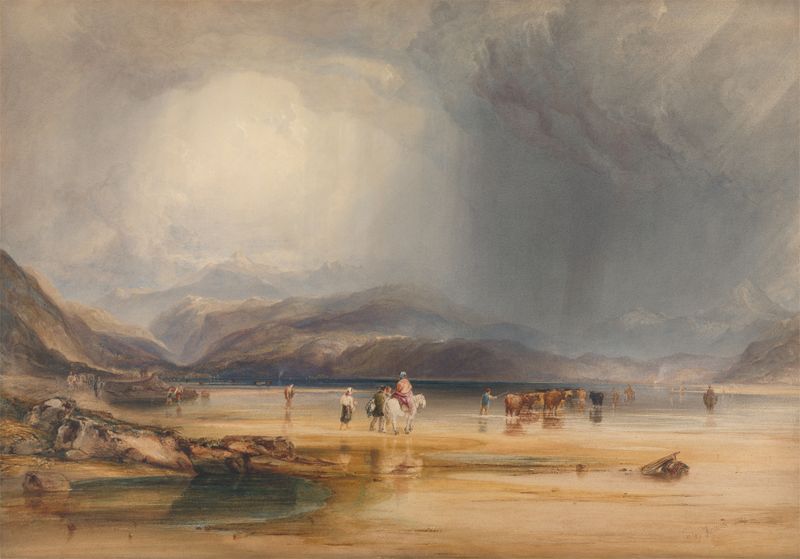
A View of Snowdon from the Sands of Traeth Mawr, taken at the Ford Between Pont Aberglaslyn and Tremadoc
Copley Fielding
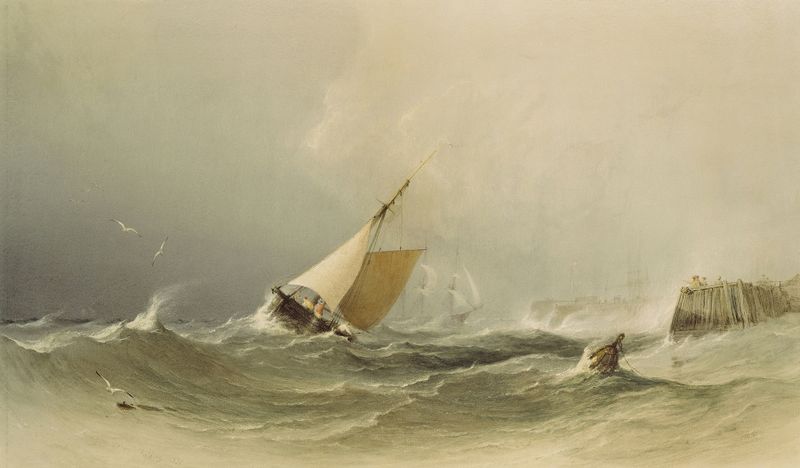
Bridlington Harbour
Copley Fielding
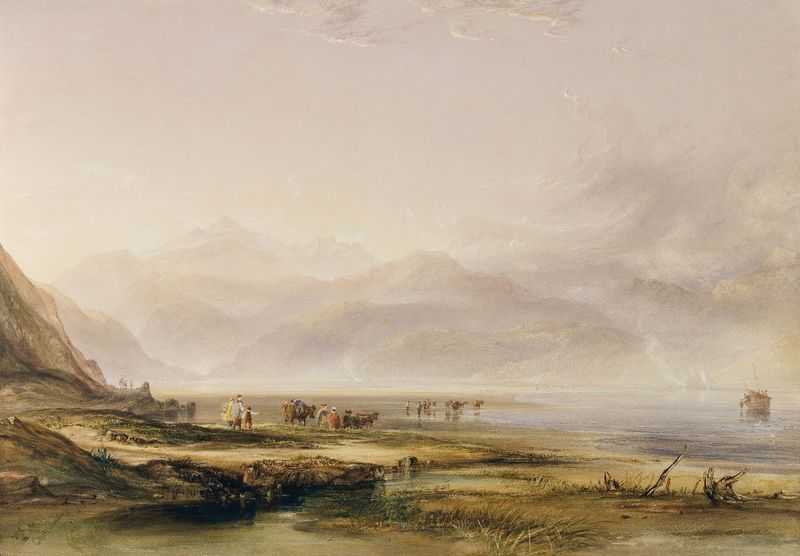
Traeth Mawr
Copley Fielding

The Head of Glencoe, North Argyll, Scotland
Copley Fielding
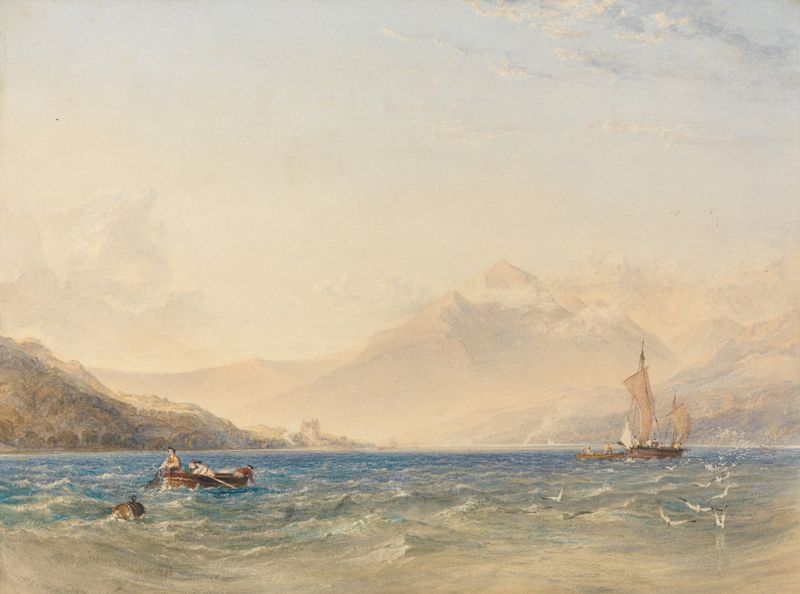
The Head of Loch Fyne, with Dindarra Castle
Copley Fielding
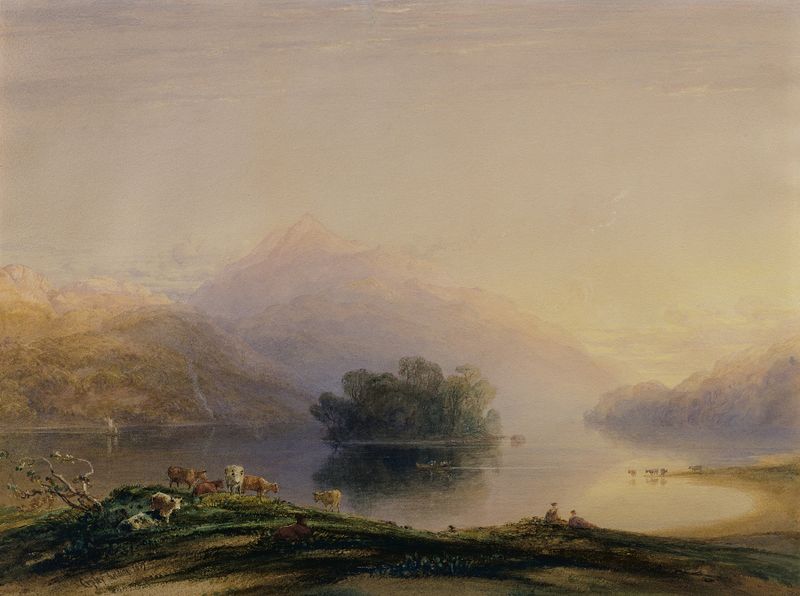
Loch Katrine
Copley Fielding





