
Comedians’ Handbill — History & Facts
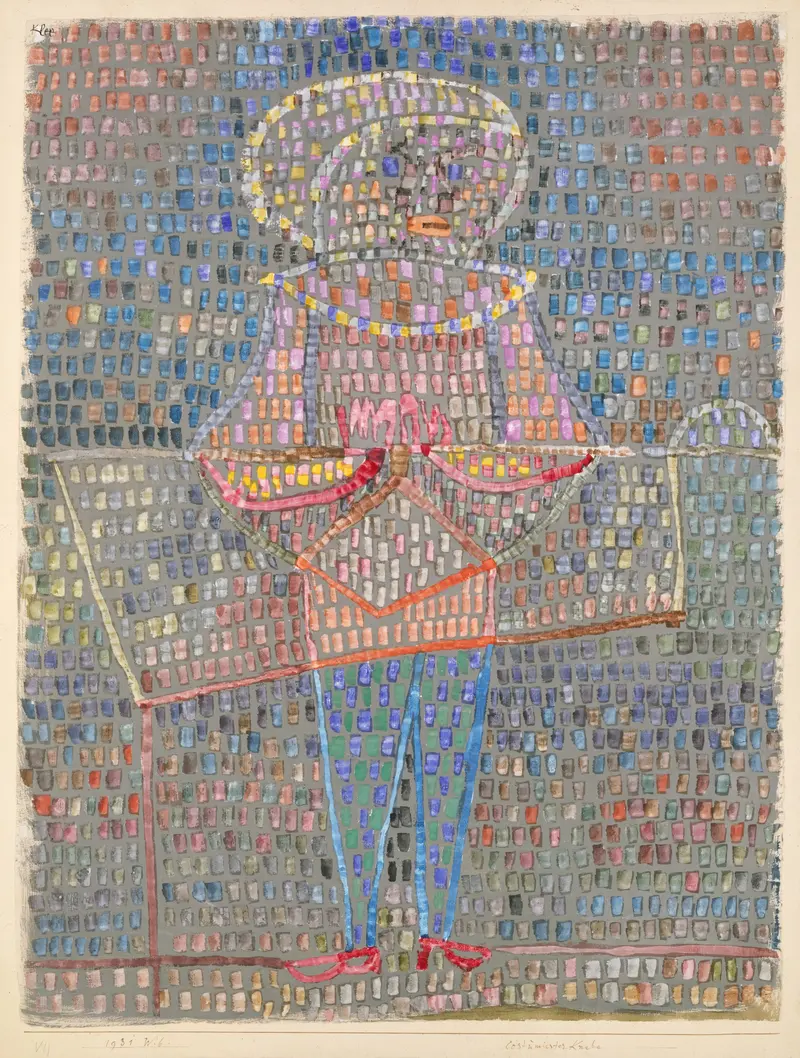
In Comedians’ Handbill, Paul Klee uses vibrant colors and whimsical figures to create a lively scene. The painting features a variety of characters, each with exaggerated expressions and playful postures. The background is filled with abstract shapes and patterns, adding to the overall sense of movement.
The use of bright reds, yellows, and blues draws the viewer's eye and creates an energetic atmosphere. The painting is executed in oil on canvas, showcasing Klee's unique style that blends abstraction with figuration. The dimensions are approximately 60 x 80 cm, making it a medium-sized work that invites close inspection. Klee's brushwork is loose and expressive, allowing for a sense of spontaneity in the depiction of the figures.
The composition is carefully balanced, with each character contributing to the overall harmony of the piece. Paul Klee was a Swiss painter associated with the Expressionist movement, known for his playful and imaginative works. Comedians’ Handbill reflects Klee's fascination with theater and performance, as he often drew inspiration from the world of the circus and the stage. An interesting fact about this work is that it was created during a period when Klee was exploring the relationship between color and emotion.
This painting exemplifies his ability to convey complex feelings through simple forms and vibrant hues.
More Artworks by Paul Klee

More Genre Scene Art

Banquet of the Officers of the St George Civic Guard
Frans Hals

Rembrandt and Saskia in the Scene of the Prodigal Son
Rembrandt van Rijn

Bal du moulin de la Galette
Pierre-Auguste Renoir

Quadrille at the Moulin Rouge
Henri de Toulouse-Lautrec

A Burial at Ornans
Gustave Courbet

When Will You Marry?
Paul Gauguin