
Contrasting Sounds — History & Facts
A great blue ring hovers like a planet in the upper left, pulling the eye into a universe where geometry and color seem to converse in code. Below, a riot of forms—checkerboards, jagged lines, and sunbursts—collide and overlap, each shape tuned to a different frequency. The painting feels as if it is staging a meeting of opposites: darkness and light, curve and angle, silence and noise.
The checkerboard pattern, stark and insistent, seems to anchor the composition, while the yellow and blue orbs radiate quietly, their edges softened by the surrounding haze. Every mark hints at a kind of visual music, with lines that intersect like staves and dots that punctuate the rhythm. Contrasting Sounds was painted in 1924, in a world still reeling from the shocks of the First World War and the birth of modern abstraction. By this time, Wassily Kandinsky had become a leading voice in the movement known as Bauhaus, where artists and architects sought to rebuild society through new forms and ideas.
Abstraction was no longer just an experiment—it was a philosophy, a way of seeing and hearing the world anew. Works like this were not made for private patrons or grand salons, but for a public eager to find order and meaning in chaos. The painting’s title hints at synesthesia, a merging of senses that fascinated Kandinsky and his contemporaries, inviting us to look for harmonies and dissonances not just with our eyes, but with our whole imagination.
More Artworks by Wassily Kandinsky

Improvisation 35
Wassily Kandinsky
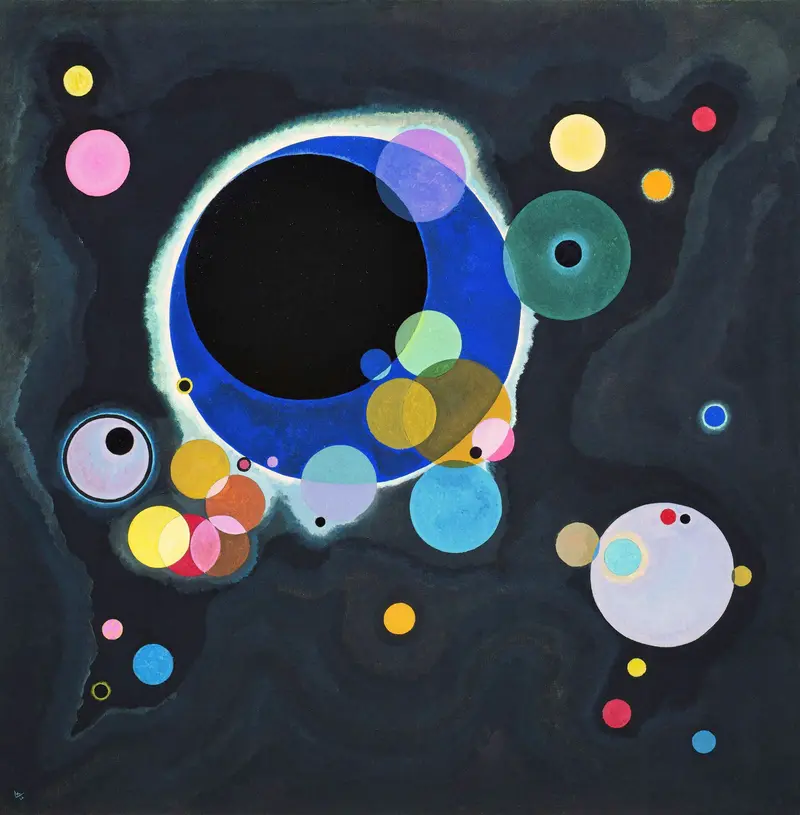
Several Circles
Wassily Kandinsky
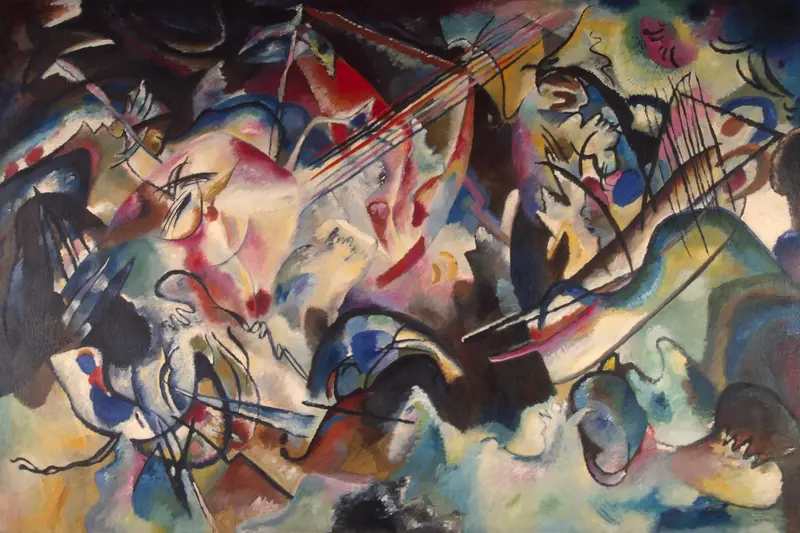
Composition VI
Wassily Kandinsky
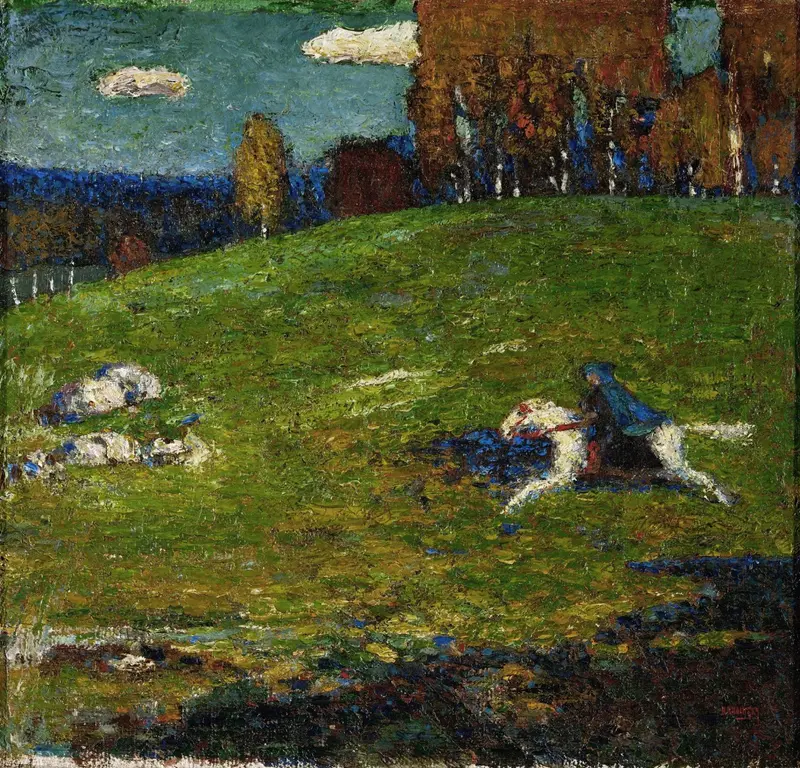
The Blue Rider
Wassily Kandinsky

Murnau
Wassily Kandinsky
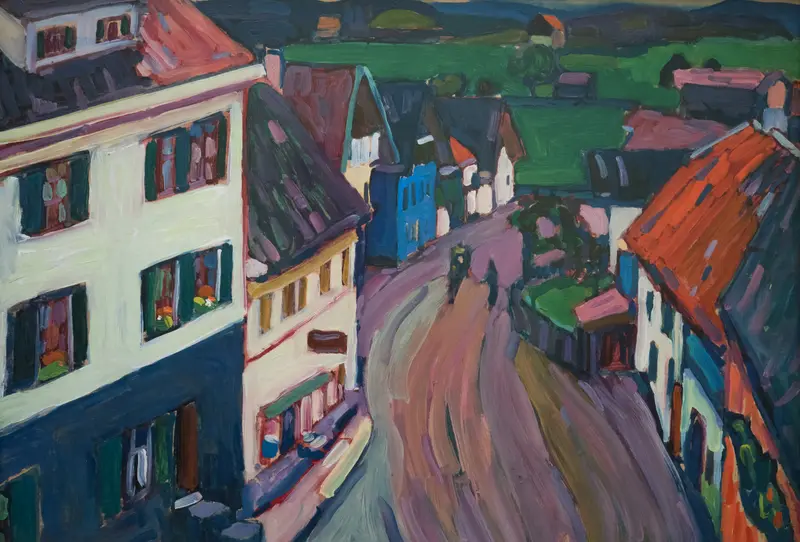
Murnau – View from the window of the Griesbräu
Wassily Kandinsky
Green Lane in Murnau
Wassily Kandinsky
Jocular Sounds
Wassily Kandinsky

Zubovsky Platz
Wassily Kandinsky

Landscape with a yellow field
Wassily Kandinsky




