
Copy of Titian's "Allegory of Alfonso d'Avalos, Marchese del Vasto" — History & Facts
What draws the eye first is the gentle, almost conspiratorial exchange between the richly dressed woman and the armored man, half-shrouded in shadow. Her hand cups a dark orb, its surface catching the faintest glint, while her gaze—soft, knowing—meets his in a moment suspended between offering and acceptance. The light falls deliberately on her exposed shoulder and the orb, guiding us through the composition, while the secondary figures—a woman with a hand to her chest and a cherubic child—lean in, their gestures echoing the drama of the central pair.
The palette is warm but subdued, the background receding into darkness and distant hills, lending the scene a sense of private significance, as if we are witnessing a secret transaction of power or fate. Painted in 1833, this work by Alfred Jacob Miller is a copy of Titian’s Allegory of Alfonso d’Avalos, Marchese del Vasto, a subject that belongs to a long tradition of allegorical portraiture in Renaissance and later art. Such paintings, often commissioned by noble patrons, were designed to immortalize not only the sitter’s likeness but their virtues and ambitions, cloaked in myth and symbolism. By the early nineteenth century, artists like Miller were both students and interpreters of these Italian masterpieces, creating copies for collectors hungry for Old Master prestige or for their own study.
While history has kept few traces of this particular copy’s journey, its presence in a modern collection invites us to look again at the ways artists and patrons alike sought to claim a place in history—sometimes by painting themselves into the allegories of the past.
More Artworks by Alfred Jacob Miller

Sunset, Wind River
Alfred Jacob Miller
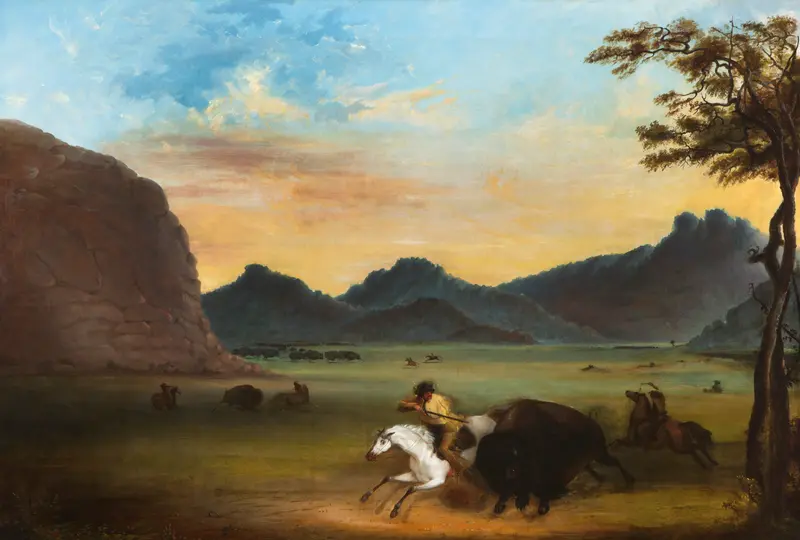
Buffalo Hunt
Alfred Jacob Miller
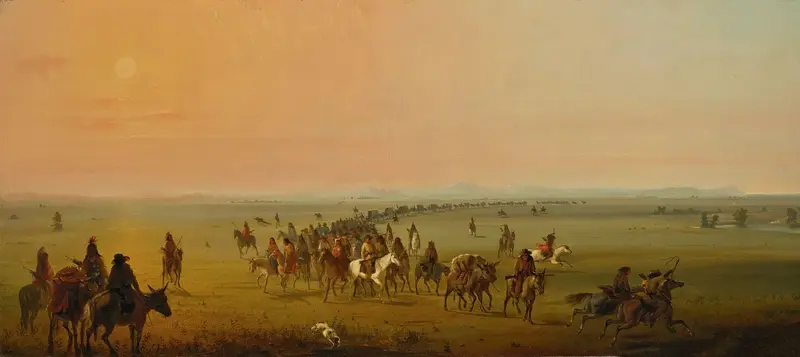
Caravan En Route [Sir William Drummond Stewart’s Caravan]
Alfred Jacob Miller
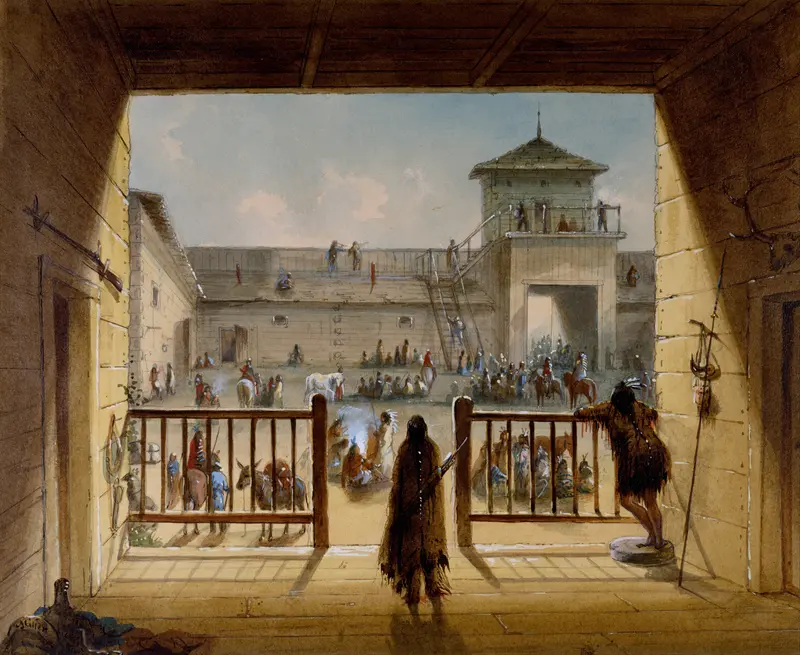
Interior of Fort Laramie
Alfred Jacob Miller
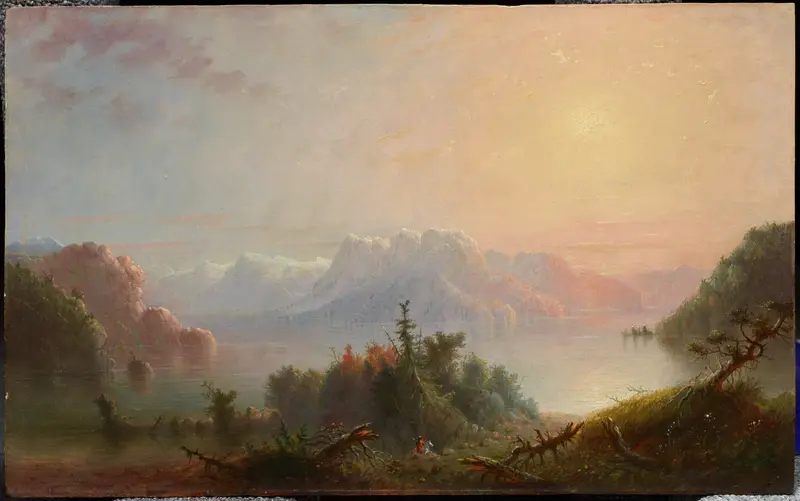
The Lake Her Lone Bosom Expands to the Sky
Alfred Jacob Miller
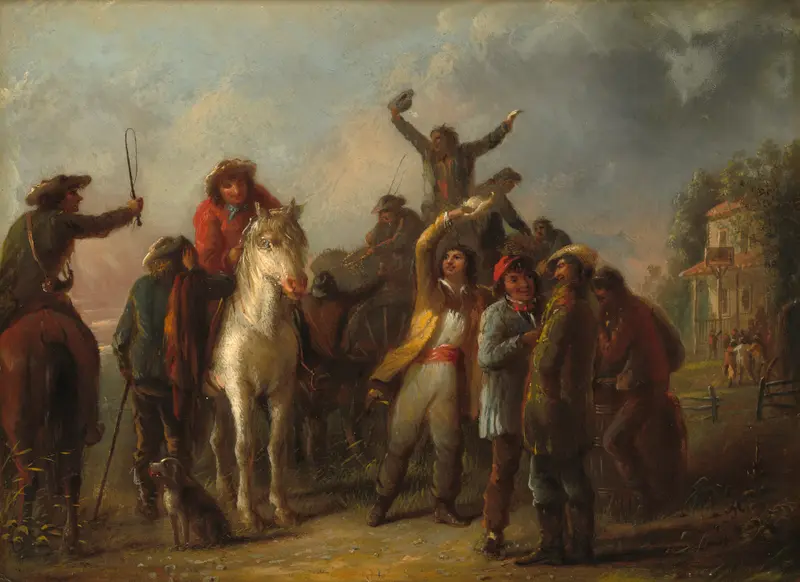
Election Scene, Catonsville, Baltimore County
Alfred Jacob Miller
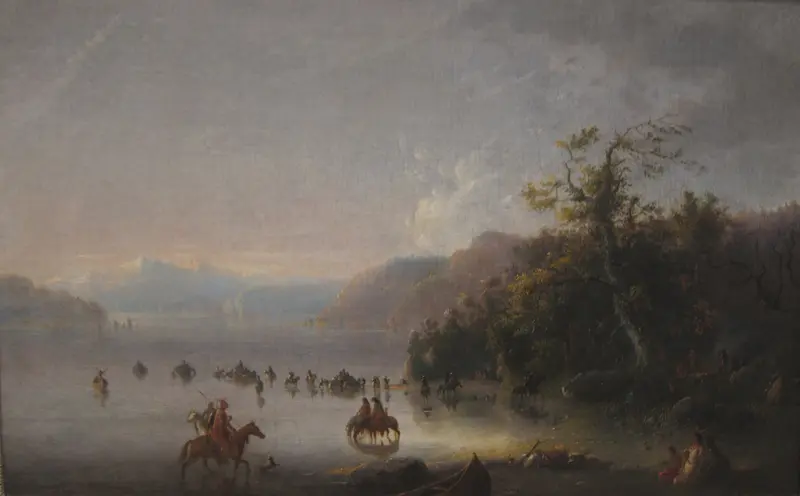
Snake River Indians
Alfred Jacob Miller
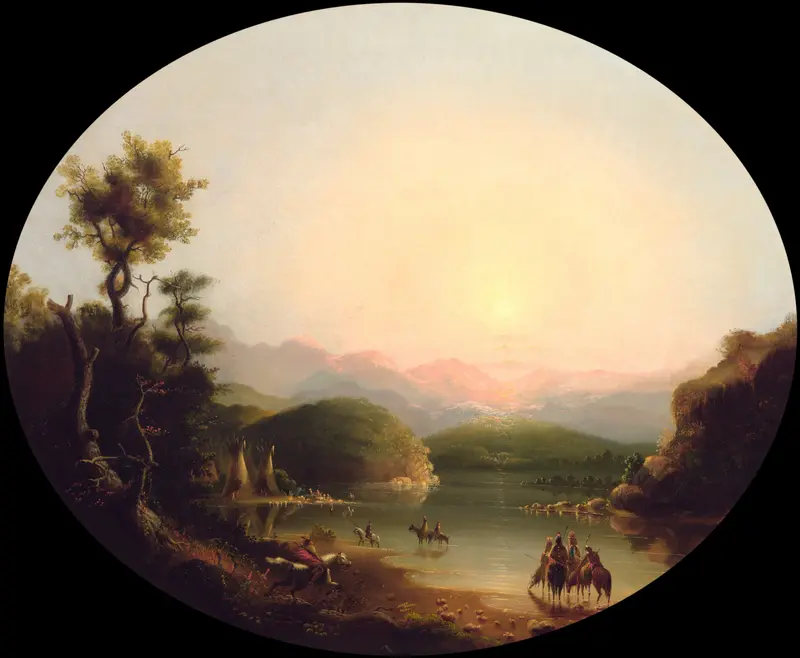
Shoshone Indians at a Mountain Lake (Lake Fremont)
Alfred Jacob Miller
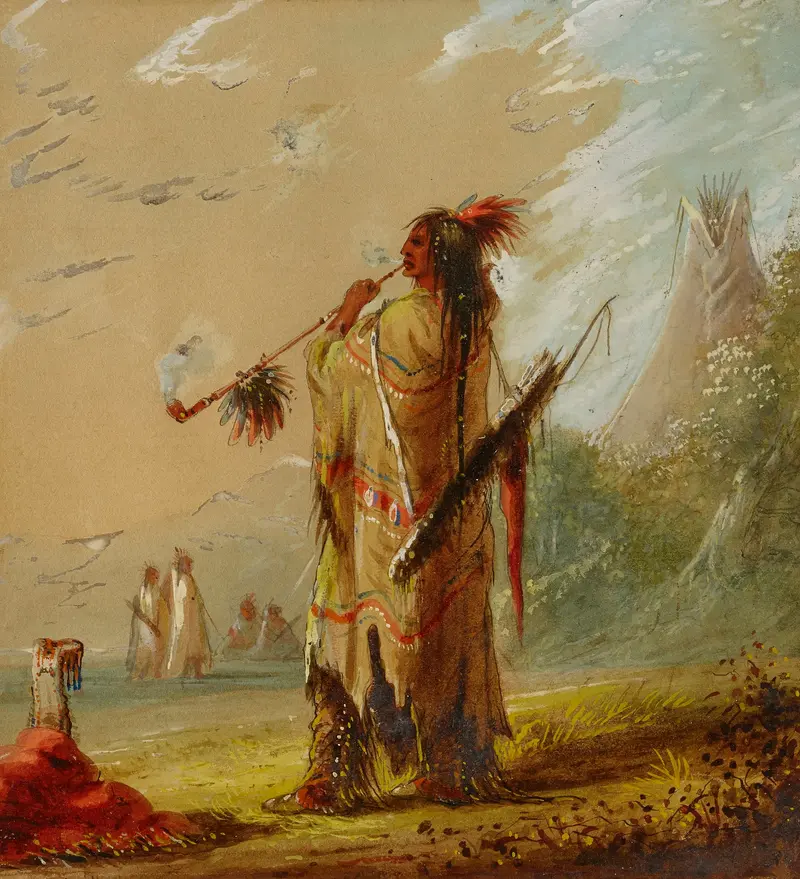
A Shoshonee Indian Smoking
Alfred Jacob Miller
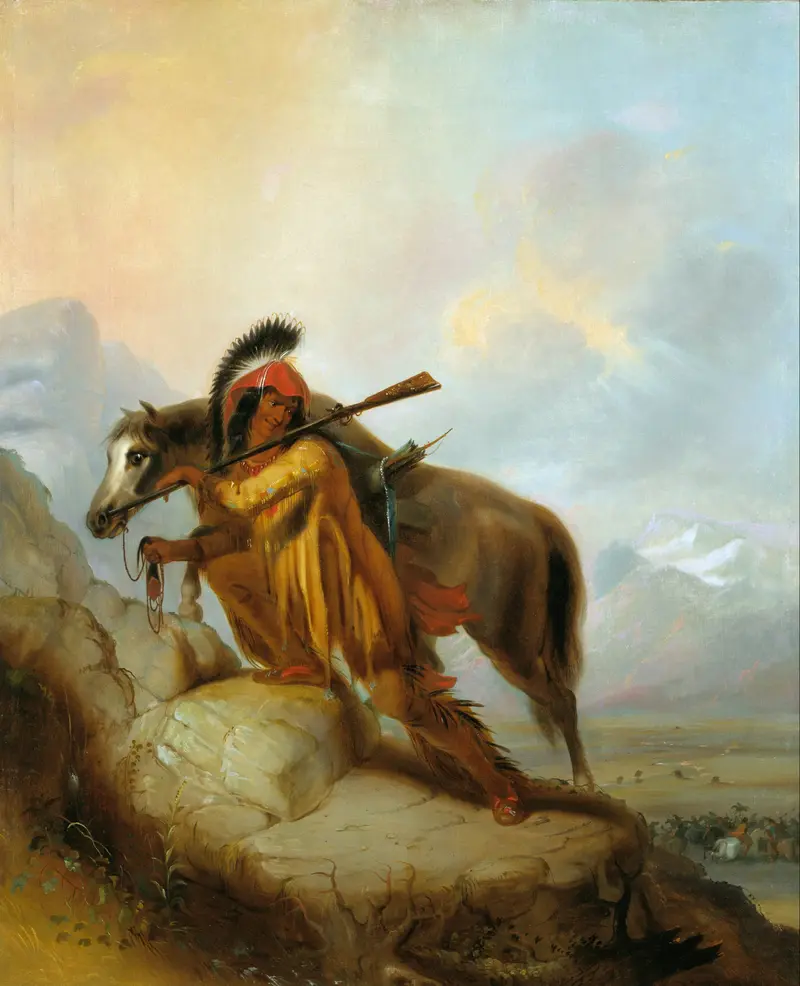
The Scalplock
Alfred Jacob Miller





