
Interior of Fort Laramie — History & Facts
The first thing that catches the eye in Interior of Fort Laramie is the sense of anticipation, as if the viewer is standing in the cool shadow of a threshold, peering into the sunlit bustle of a frontier fort. The artist frames the courtyard through a shaded portico, drawing the gaze past two figures—one leaning, one standing guard—toward a hive of activity within the palisade walls. Horses cluster at the rail, their riders marked out by vivid blue and red garments, while small groups gather around smoky fires.
The fort’s architecture, rendered in sturdy lines and pale washes, channels the light inward, guiding attention to the central tower and the figures perched atop the ramparts. Every detail—the weapons hung on the wall, the careful gradations of shadow—serves to heighten the sense of a place both protected and exposed, where cultures and purposes converge. Painted between 1858 and 1860, this work belongs to a period when images of the American West were both record and advertisement, created for audiences hungry for glimpses of distant frontiers. Artists like Alfred Jacob Miller were often commissioned by explorers, traders, or armchair travelers eager to see the daily life and architecture of outposts like Fort Laramie, which stood at the crossroads of trade, diplomacy, and migration.
The genre blends documentary intent with a touch of theater, as painters sought to capture both the facts and the atmosphere of these meeting grounds. While history has kept few traces of this specific painting’s journey, its survival in a digital collection today lets us step, for a moment, into the cool shadow and watch the past unfold just beyond the threshold.
More Artworks by Alfred Jacob Miller

Sunset, Wind River
Alfred Jacob Miller
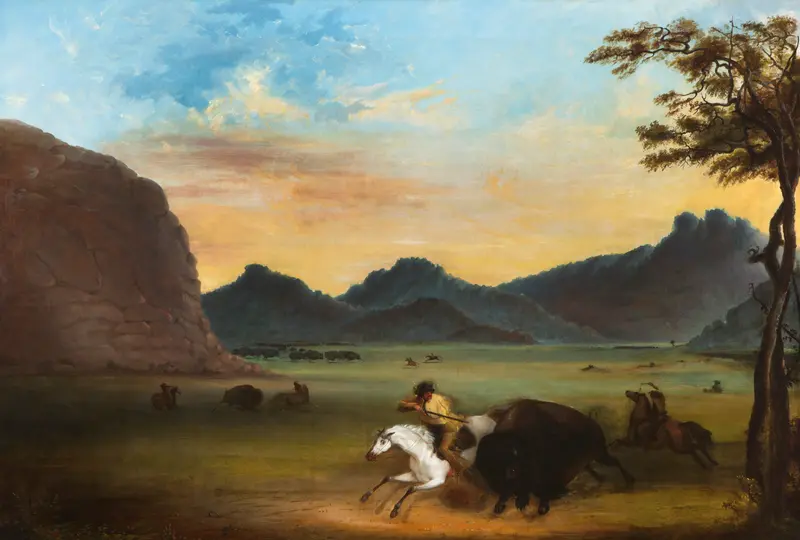
Buffalo Hunt
Alfred Jacob Miller
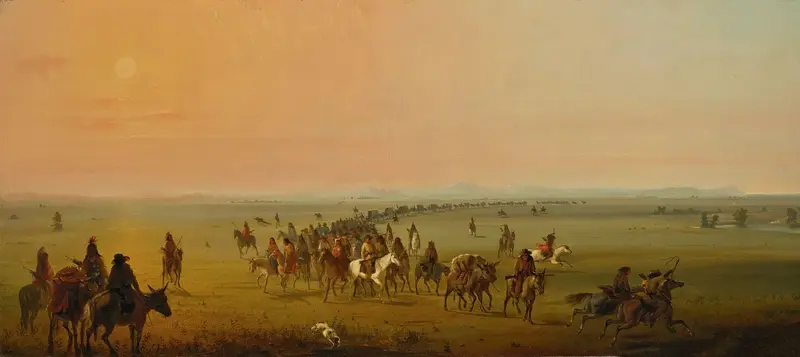
Caravan En Route [Sir William Drummond Stewart’s Caravan]
Alfred Jacob Miller
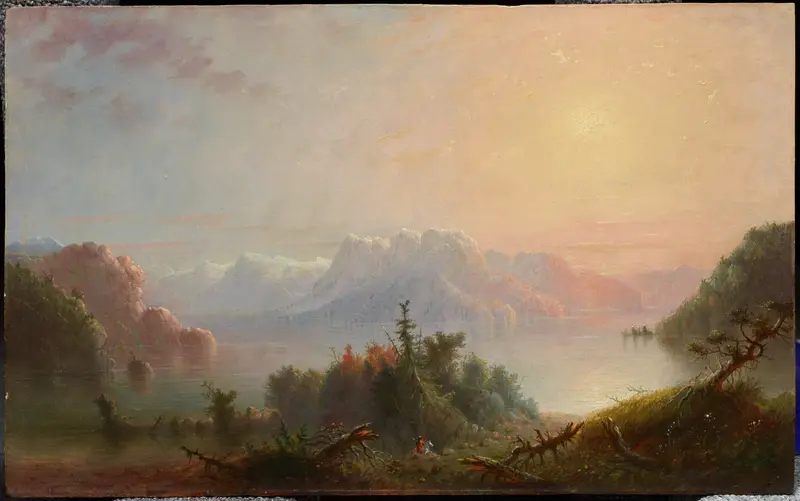
The Lake Her Lone Bosom Expands to the Sky
Alfred Jacob Miller
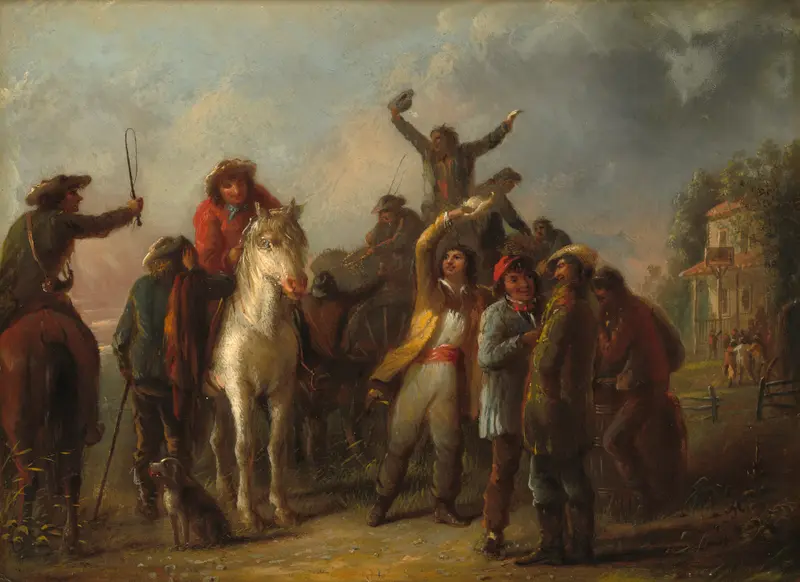
Election Scene, Catonsville, Baltimore County
Alfred Jacob Miller
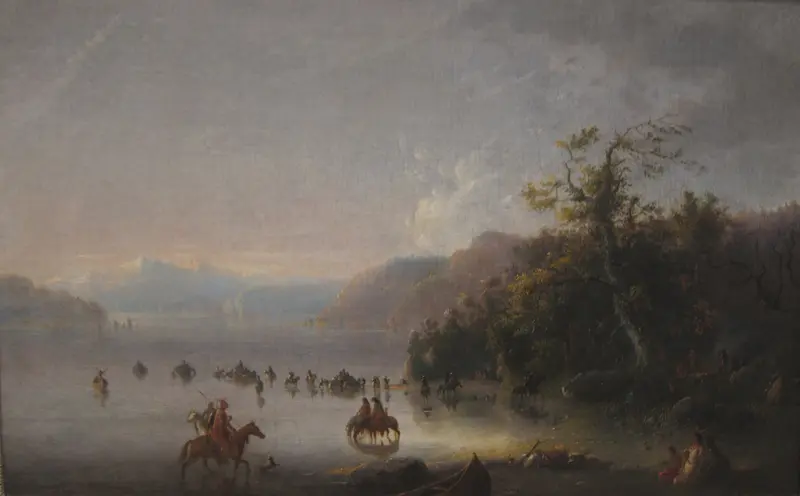
Snake River Indians
Alfred Jacob Miller
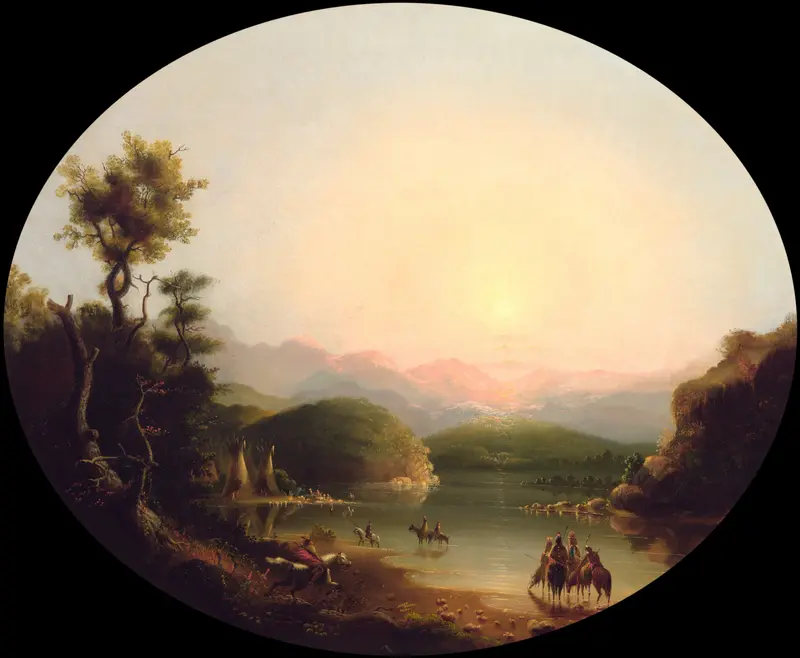
Shoshone Indians at a Mountain Lake (Lake Fremont)
Alfred Jacob Miller
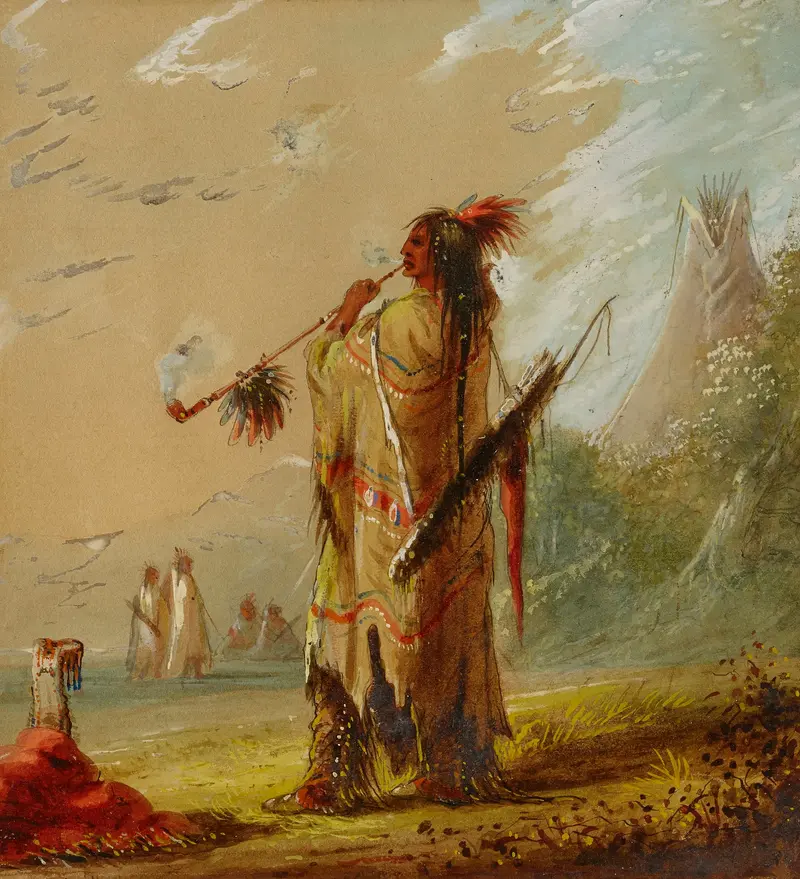
A Shoshonee Indian Smoking
Alfred Jacob Miller
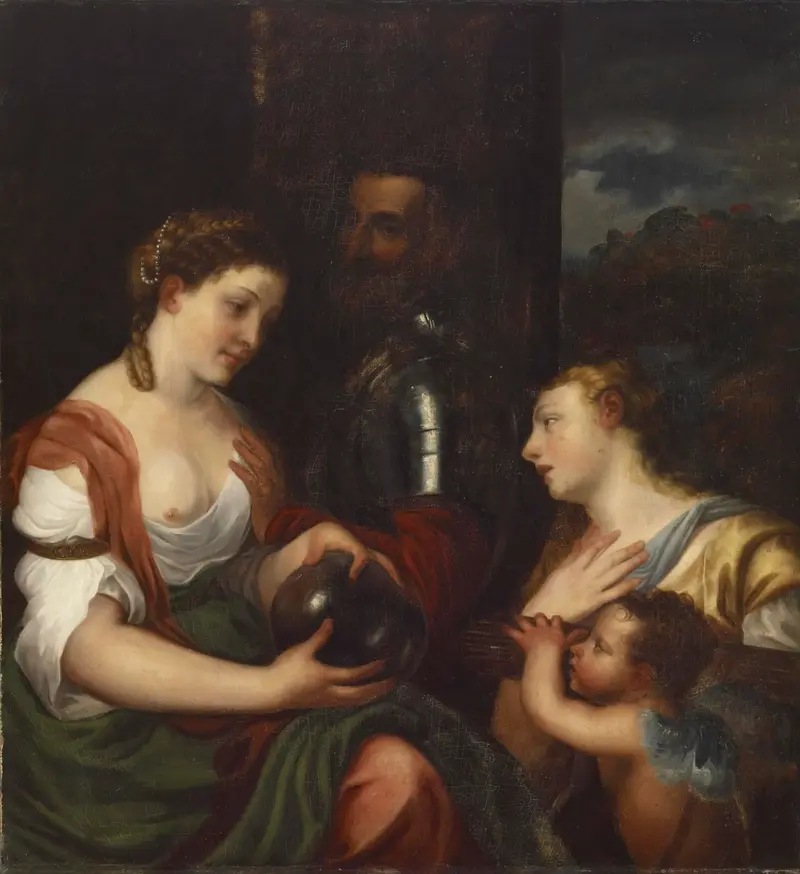
Copy of Titian's "Allegory of Alfonso d'Avalos, Marchese del Vasto"
Alfred Jacob Miller
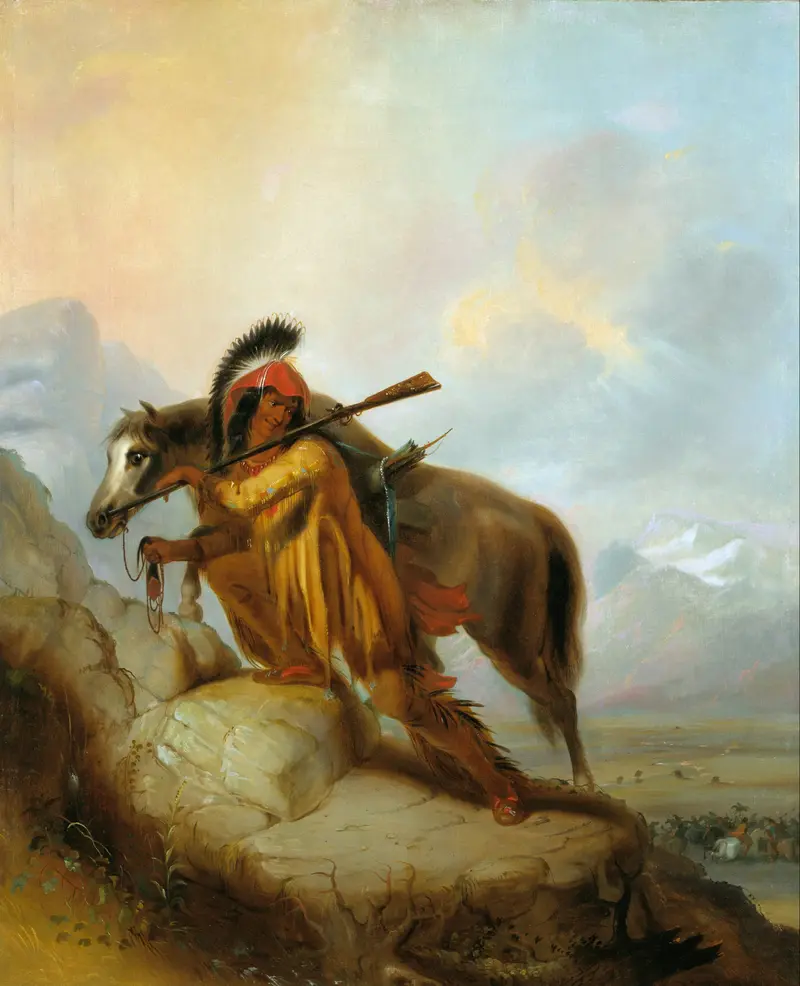
The Scalplock
Alfred Jacob Miller





