
Shoshone Indians at a Mountain Lake (Lake Fremont) — History & Facts
What first draws the eye is the extraordinary sweep of light, a soft golden haze that seems to rise from the lake itself and spill across the whole canvas, bathing the distant mountains in warmth. The painter, Alfred Jacob Miller, has chosen a moment of stillness: riders pause at the water’s edge, their reflections mingling with the gentle ripples, while a cluster of tipis nestles quietly among the trees. Every element is arranged to guide you deeper—notice how the curve of the shore and the angled trunks on the left both pull you toward the luminous heart of the scene.
The palette, dominated by delicate pinks and greens, sets a mood of calm anticipation, as if the day is just beginning or quietly ending, and the land is holding its breath. Works like this emerged from a period when American artists and their patrons were fascinated by the vast, little-known landscapes beyond the Mississippi. In the mid-19th century, painters such as Miller traveled with expeditions or worked from sketches and stories, creating images that fed the public’s hunger for visions of the “frontier.” The date attached to this painting—1850, within Miller’s lifetime—places it at the height of this movement, when such scenes were often commissioned for private homes or public exhibitions, intended to stir wonder and curiosity. Today, the painting’s presence in the Google Cultural Institute’s collection is a reminder of how much of this world is known to us only through the eyes of those who paused, looked, and painted.
Let your gaze linger on the horizon, and imagine what stories might unfold in the golden light.
More Artworks by Alfred Jacob Miller

Sunset, Wind River
Alfred Jacob Miller
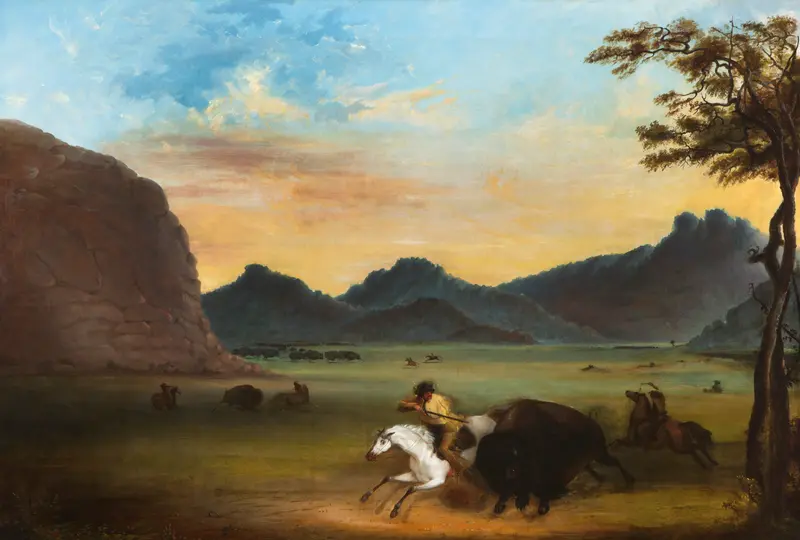
Buffalo Hunt
Alfred Jacob Miller
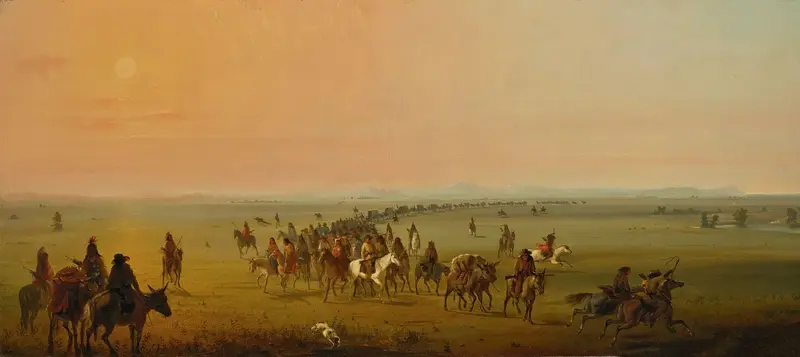
Caravan En Route [Sir William Drummond Stewart’s Caravan]
Alfred Jacob Miller
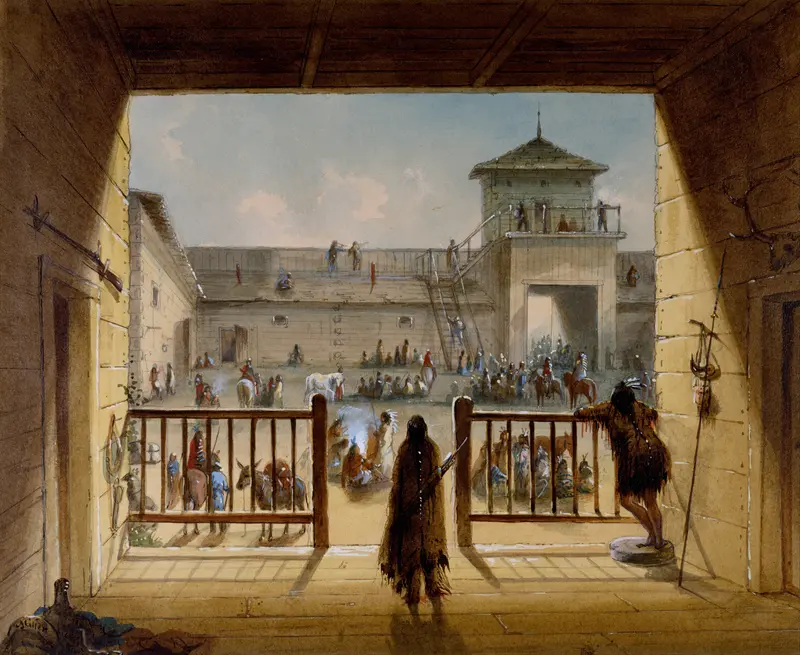
Interior of Fort Laramie
Alfred Jacob Miller
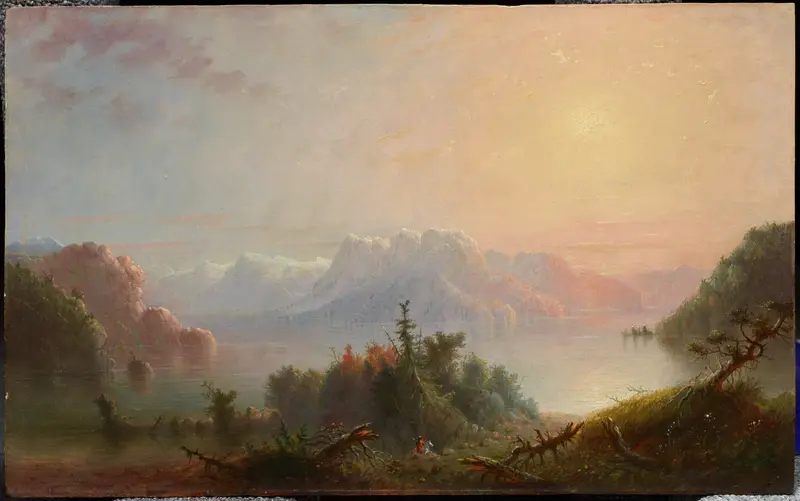
The Lake Her Lone Bosom Expands to the Sky
Alfred Jacob Miller
Election Scene, Catonsville, Baltimore County
Alfred Jacob Miller
Snake River Indians
Alfred Jacob Miller
A Shoshonee Indian Smoking
Alfred Jacob Miller
Copy of Titian's "Allegory of Alfonso d'Avalos, Marchese del Vasto"
Alfred Jacob Miller
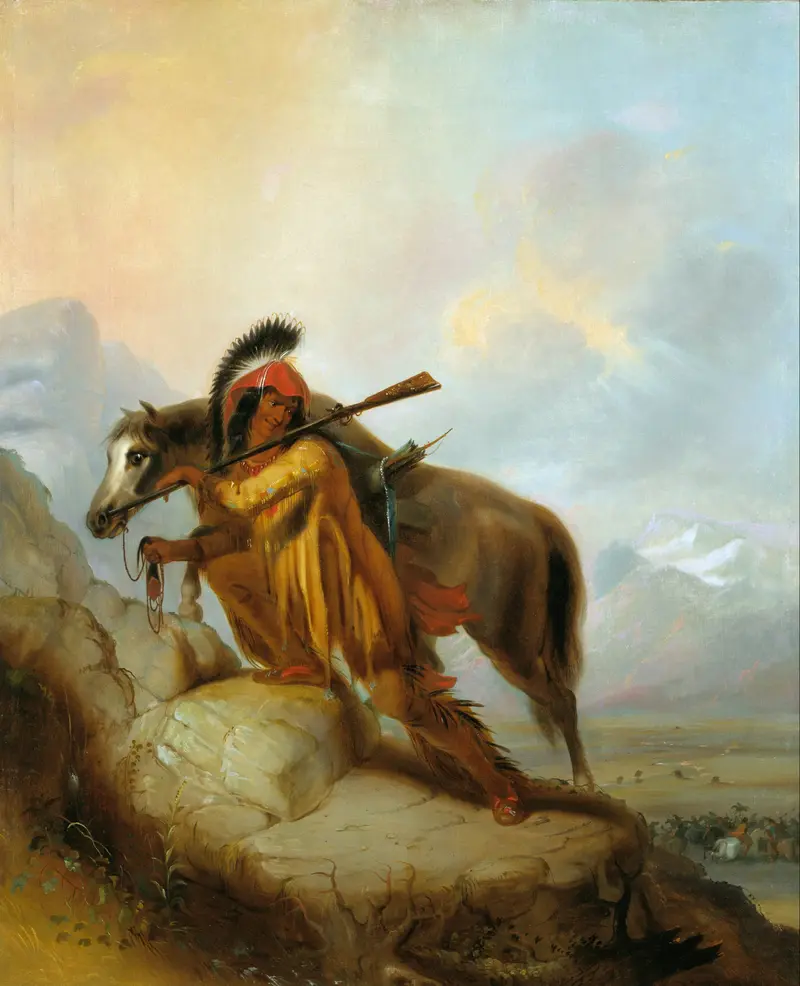
The Scalplock
Alfred Jacob Miller
More Landscape Art

The Starry Night
Vincent van Gogh

View of Delft
Johannes Vermeer

Water Lilies
Claude Monet

The Grand Canal, Venice, looking north-west from the Ca' Corner to the Ca' Contarini degli Scrigni, with the campanile of Santa Maria della Carità
Canaletto

Windsor Castle
Canaletto

The Grand Canal looking North-East from the Palazzo Dolfin-Manin to the Rialto Bridge
Canaletto