
The Scalplock — History & Facts
What first catches the eye in The Scalplock is the way the figure seems to merge with the wild landscape, both wary and commanding. The man crouches low, his body pressed into the rock as if listening for the land’s secrets, while his horse stands close behind, sharing in the tension. The rifle balanced across his shoulders is not just a weapon but a signal of vigilance, echoed by the feathered headdress and the scalplock itself—trophies and warnings in one.
The light falls gently on his ochre garments, picking out every fringe and bead, while the distant mountains and rolling clouds open up a vast, unsettled world. The painter’s choice to set the horizon low gives the sky a sweeping dominance, lending the moment a sense of watchfulness and suspense. Painted between 1810 and 1874, this work belongs to a period when American artists like Alfred Jacob Miller traveled west, drawn by the lure of unfamiliar landscapes and cultures. Such images were often commissioned by patrons eager to bring back visions of the frontier, whether for private collections or public display.
The genre thrived on both curiosity and myth-making, as artists sought to capture the drama and dignity of Indigenous life amid rapid change. Little is recorded about the specific history of this painting, now viewable in high detail through the Google Cultural Institute, but its careful rendering and dramatic pose invite us to linger, asking what stories lie behind that watchful gaze.
More Artworks by Alfred Jacob Miller

Sunset, Wind River
Alfred Jacob Miller
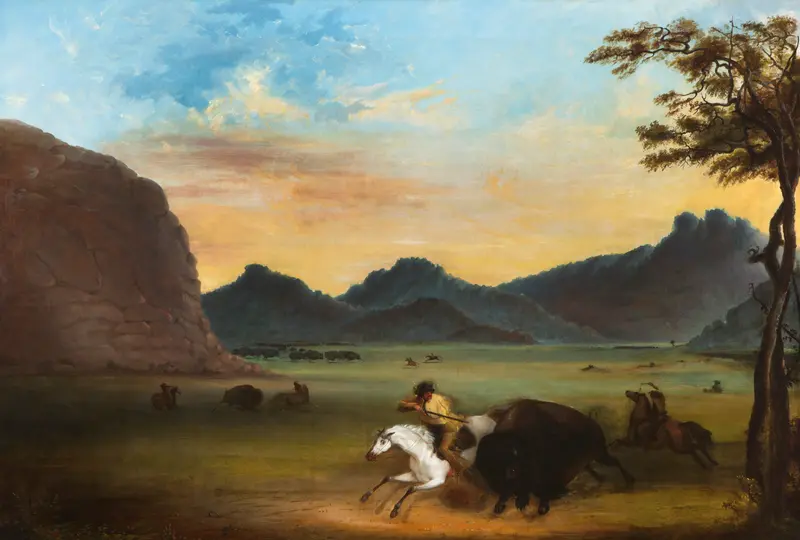
Buffalo Hunt
Alfred Jacob Miller
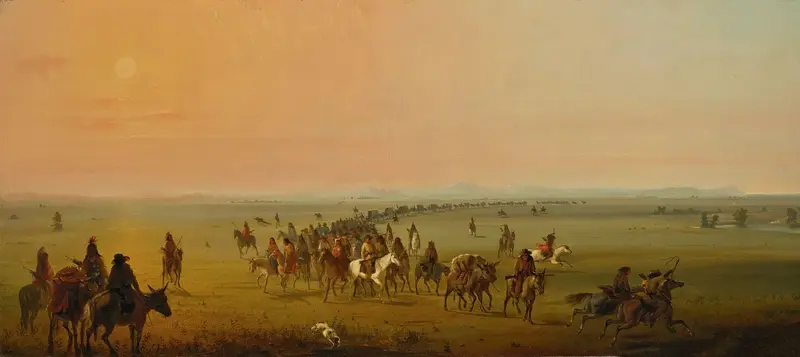
Caravan En Route [Sir William Drummond Stewart’s Caravan]
Alfred Jacob Miller
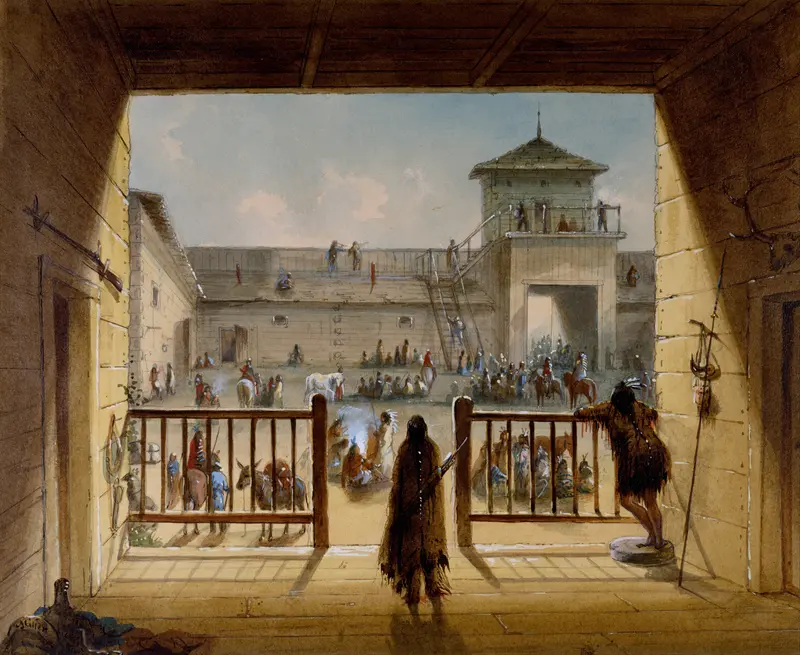
Interior of Fort Laramie
Alfred Jacob Miller
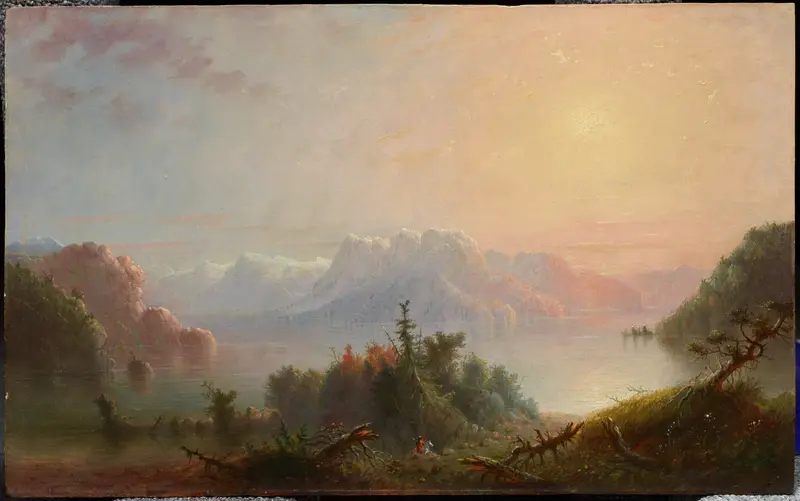
The Lake Her Lone Bosom Expands to the Sky
Alfred Jacob Miller
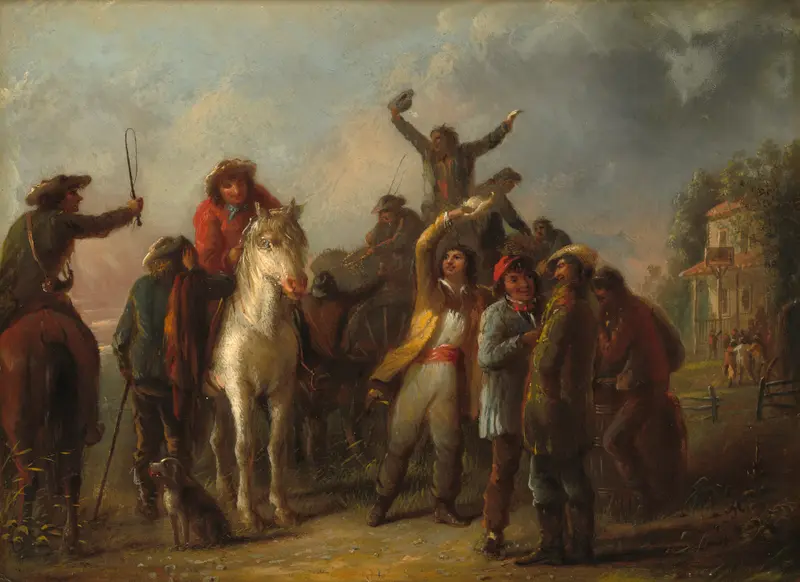
Election Scene, Catonsville, Baltimore County
Alfred Jacob Miller
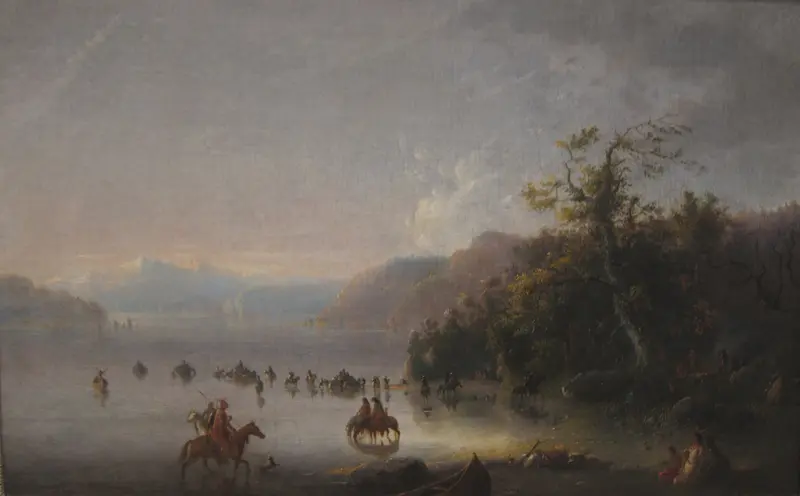
Snake River Indians
Alfred Jacob Miller
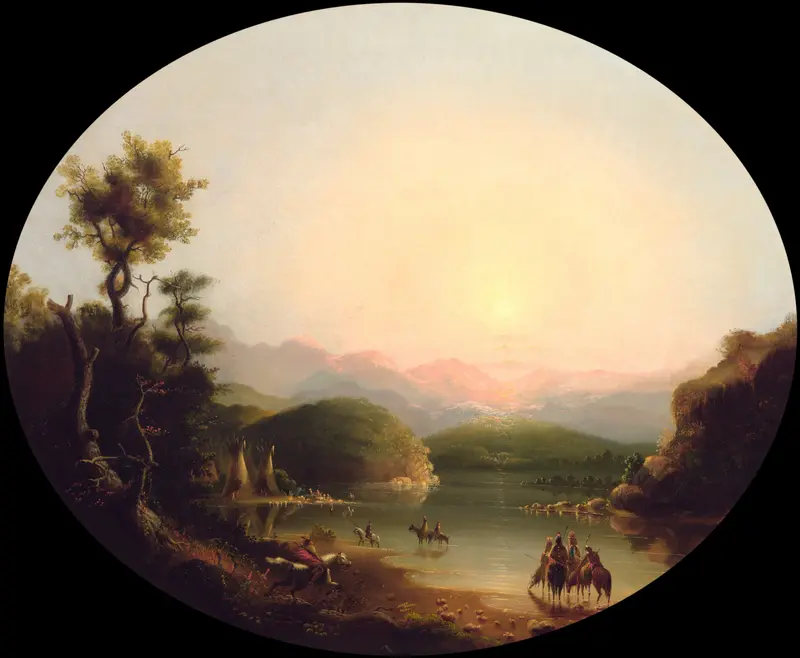
Shoshone Indians at a Mountain Lake (Lake Fremont)
Alfred Jacob Miller
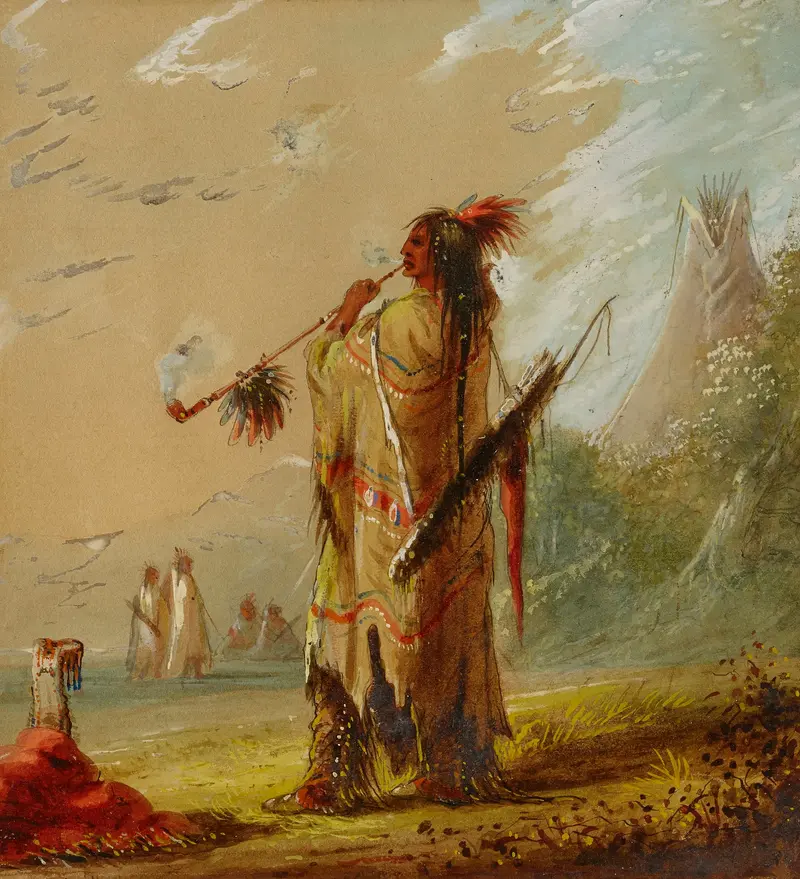
A Shoshonee Indian Smoking
Alfred Jacob Miller
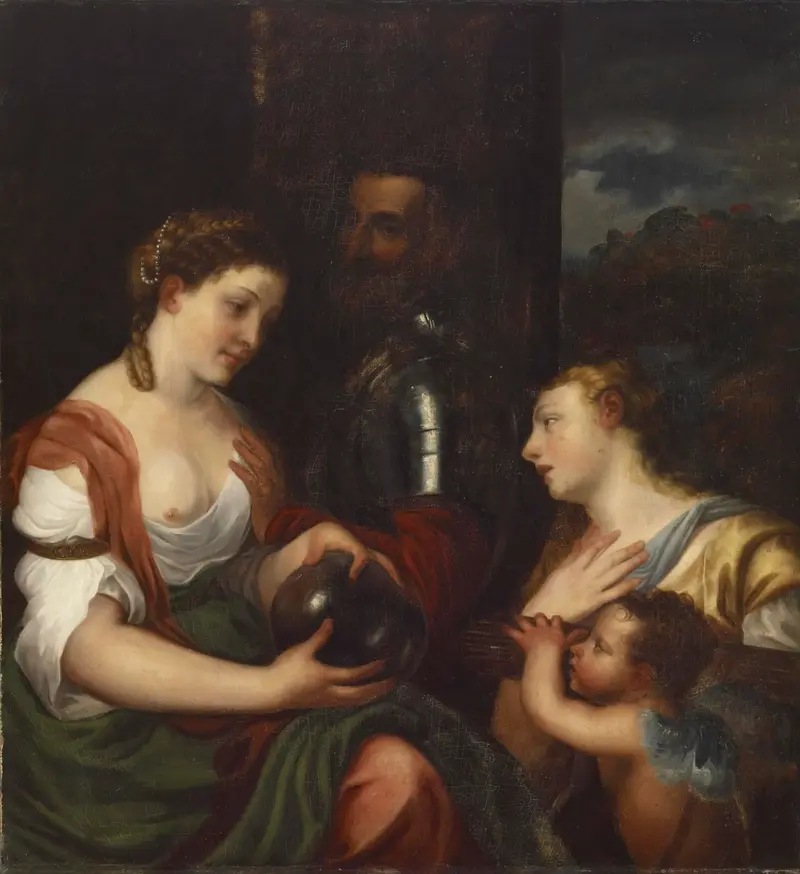
Copy of Titian's "Allegory of Alfonso d'Avalos, Marchese del Vasto"
Alfred Jacob Miller
More Landscape Art

The Starry Night
Vincent van Gogh

View of Delft
Johannes Vermeer

Water Lilies
Claude Monet

The Grand Canal, Venice, looking north-west from the Ca' Corner to the Ca' Contarini degli Scrigni, with the campanile of Santa Maria della Carità
Canaletto

Windsor Castle
Canaletto

The Grand Canal looking North-East from the Palazzo Dolfin-Manin to the Rialto Bridge
Canaletto