
A Shoshonee Indian Smoking — History & Facts
A single figure stands rooted in the open air, his gaze drifting skyward as smoke curls from the long pipe he holds. The eye is drawn first to the intricate beadwork and fringe of his clothing, then to the vivid red plume crowning his hair—a flash of color echoed in the feathered pipe and the scarlet blanket at his feet. Behind him, the pale forms of distant tipis and softly rendered companions recede into a gentle wash of light, giving the scene a sense of ceremony and pause.
Every detail—the bow slung at his side, the careful posture, the way the smoke rises—signals a moment both private and communal, a ritual act set against the vastness of the land. The palette, rich with ochres and earth tones, sets a mood of quiet dignity and connection. Created around 1860, A Shoshonee Indian Smoking by Alfred Jacob Miller belongs to a world in flux, when artists traveled the American West to record its peoples and landscapes for audiences hungry for images of a rapidly changing frontier. Such works were often commissioned by explorers, traders, or collectors eager to capture scenes they saw as vanishing, and Miller was among the first American artists to journey so far west.
Today, the painting resides in the collection of the Smithsonian American Art Museum, its origins and journeys largely unchronicled. Yet, in its stillness and detail, it invites viewers to linger, to imagine the stories carried in the smoke and the silence of the plains.
More Artworks by Alfred Jacob Miller

Sunset, Wind River
Alfred Jacob Miller
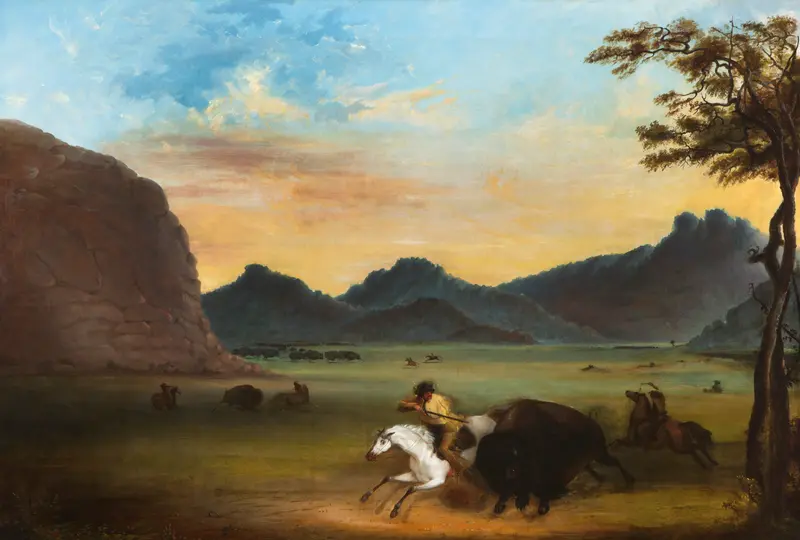
Buffalo Hunt
Alfred Jacob Miller
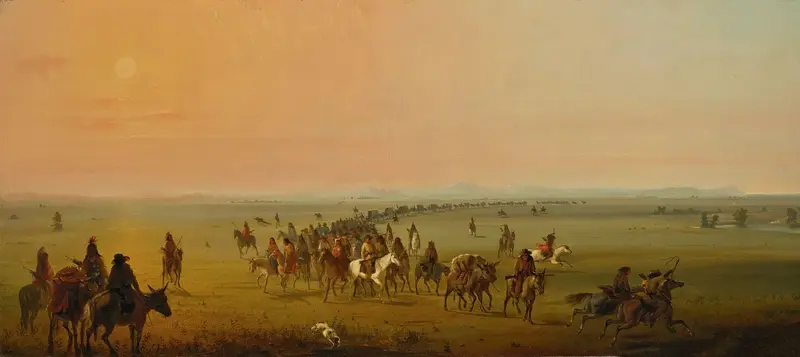
Caravan En Route [Sir William Drummond Stewart’s Caravan]
Alfred Jacob Miller
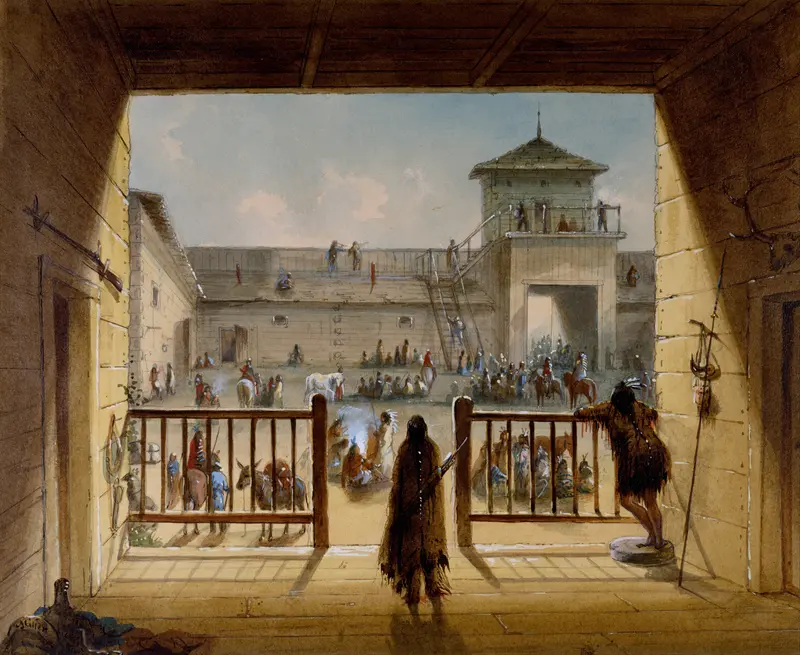
Interior of Fort Laramie
Alfred Jacob Miller
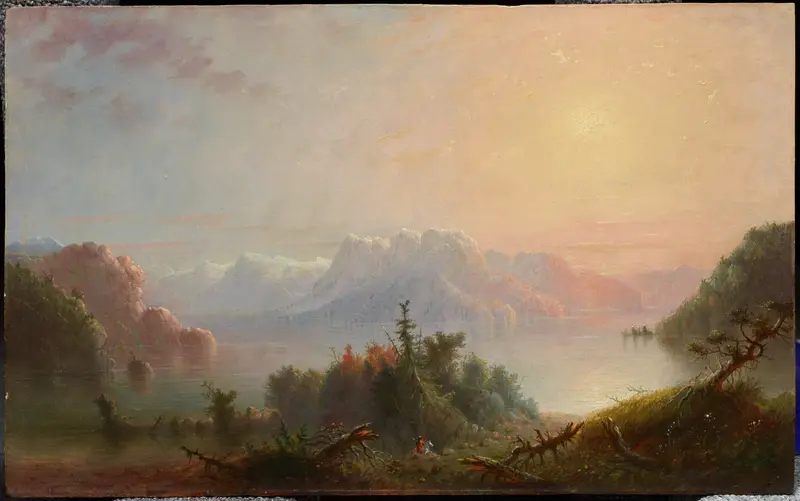
The Lake Her Lone Bosom Expands to the Sky
Alfred Jacob Miller
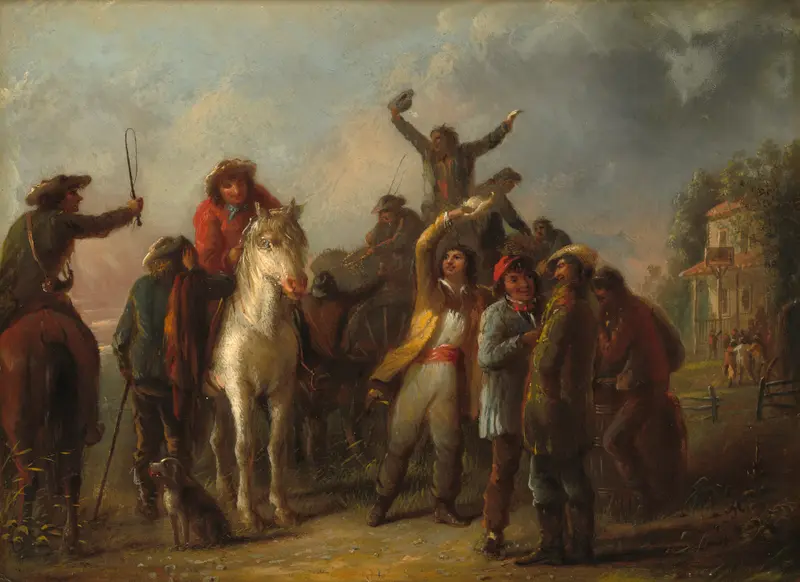
Election Scene, Catonsville, Baltimore County
Alfred Jacob Miller
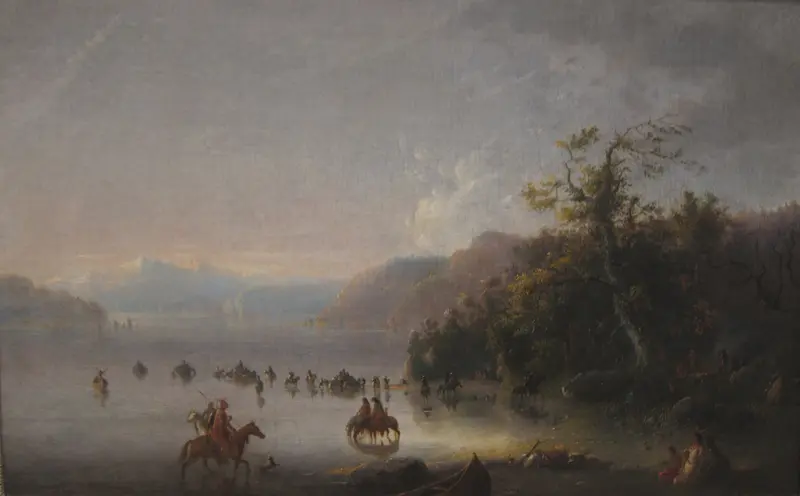
Snake River Indians
Alfred Jacob Miller
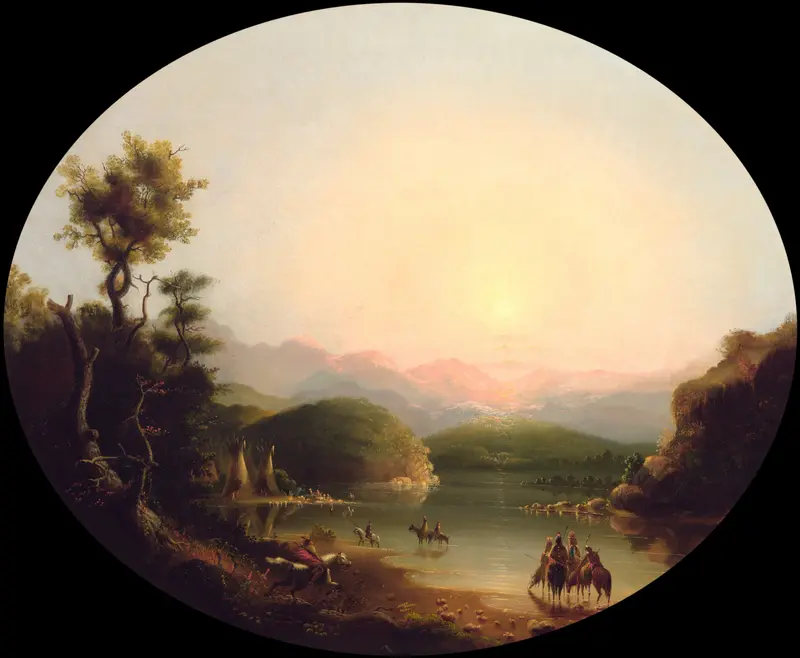
Shoshone Indians at a Mountain Lake (Lake Fremont)
Alfred Jacob Miller
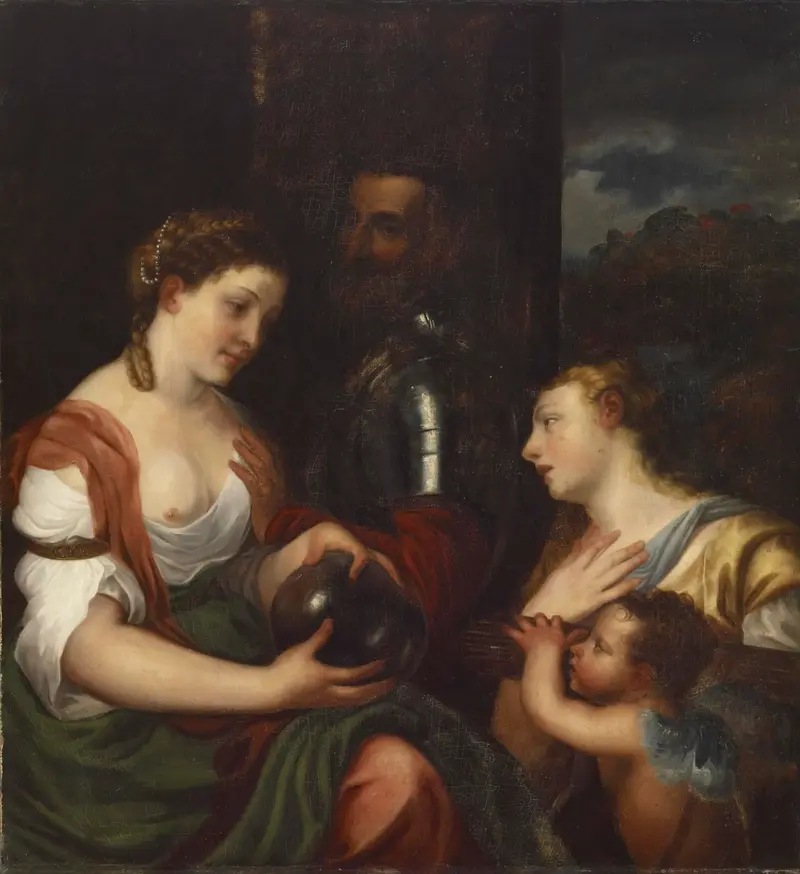
Copy of Titian's "Allegory of Alfonso d'Avalos, Marchese del Vasto"
Alfred Jacob Miller
The Scalplock
Alfred Jacob Miller
More Genre Scene Art

Banquet of the Officers of the St George Civic Guard
Frans Hals

Rembrandt and Saskia in the Scene of the Prodigal Son
Rembrandt van Rijn

Bal du moulin de la Galette
Pierre-Auguste Renoir

Quadrille at the Moulin Rouge
Henri de Toulouse-Lautrec

A Burial at Ornans
Gustave Courbet

When Will You Marry?
Paul Gauguin