
Corn Stooks, Poland — History & Facts
What if silence could speak through light? In Corn Stooks, Poland, the stillness of a sun-drenched landscape resonates with a profound sense of time—one that captures the moment between labor and rest. Look to the right at the golden stooks, arranged like sentinels in the field. The soft browns and yellows of the corn contrast sharply with the deep blues and greens of the surrounding foliage, creating a vibrant balance. Notice how the afternoon light gracefully washes over the scene, illuminating the texture of each stook while casting elongated shadows that stretch across the earth.
This interplay of light and shadow imbues the landscape with a poetic tranquility, inviting the viewer to linger in the moment. Beneath the surface, the composition speaks of labor and the cyclical nature of life. The solitary presence of the stooks symbolizes the toil of the farmer, while their orderly arrangement hints at the delicate balance between chaos and order. The vastness of the sky above silently looms, alluding to the passage of time and the fleeting nature of each season.
Here, stillness becomes a canvas for reflection, making the viewer ponder the enduring connection between humanity and the land. Robert Polhill Bevan created this piece in 1907 while residing in Poland, a period marked by his exploration of rural life and the natural world. At that time, he was influenced by post-impressionist techniques, striving to capture the essence of landscapes through bold colors and dynamic forms. This artwork reflects his evolving style and his desire to convey the profound beauty of everyday scenes.
More Artworks by Robert Polhill Bevan
Browse all →
Landscape with Three Trees
Robert Polhill Bevan
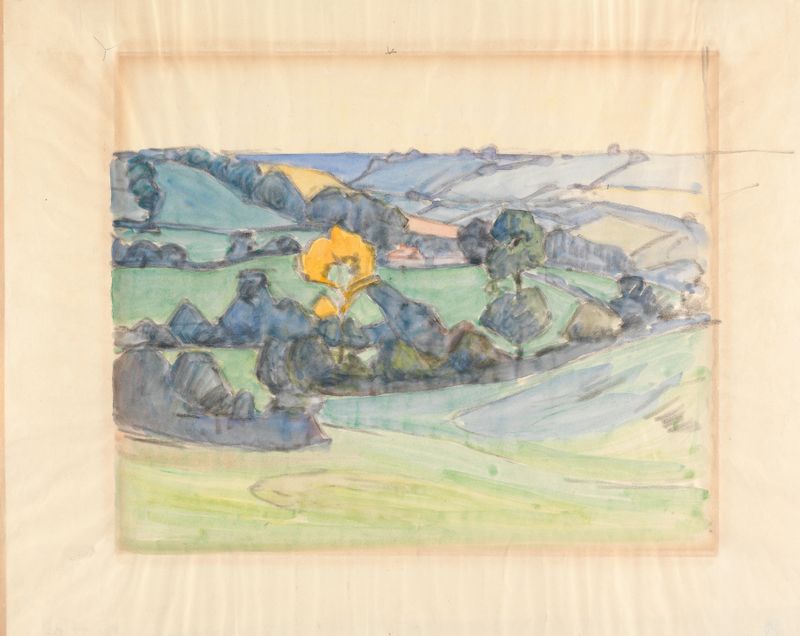
Near Brimley Hill
Robert Polhill Bevan
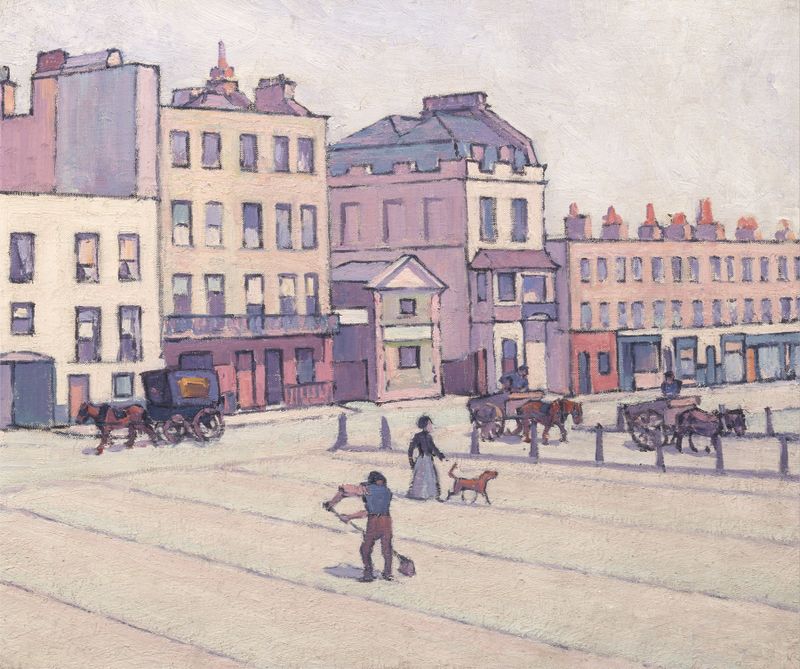
The Weigh House, Cumberland Market
Robert Polhill Bevan

Le Grand Chemin
Robert Polhill Bevan
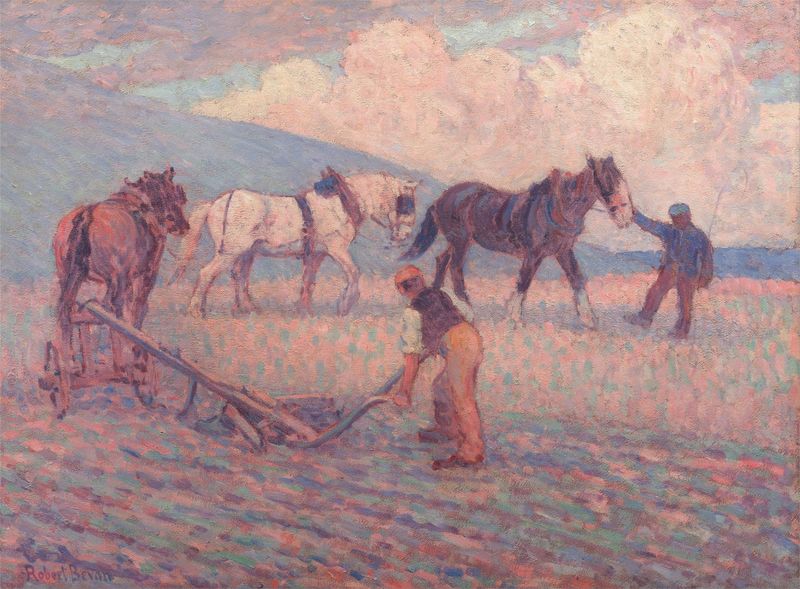
The Turn Rice-Plough, Sussex
Robert Polhill Bevan

Hay Carts, Cumberland Market
Robert Polhill Bevan

A Village in the Sussex Downs
Robert Polhill Bevan

The Ford
Robert Polhill Bevan
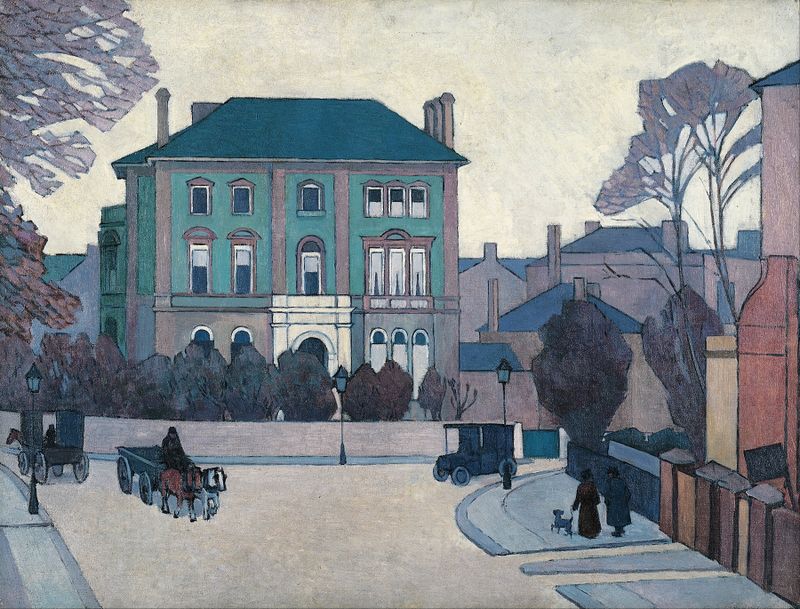
The green house, St John’s Wood
Robert Polhill Bevan
Aldwych
Robert Polhill Bevan





