
Hay Carts, Cumberland Market — History & Facts
In the stillness of a moment captured on canvas, silence births reflection. The tranquility of rural life unfolds before our eyes, inviting us to pause amidst the clamor of the everyday. Look to the right at the sturdy hay carts, their earthy tones blending with the rich greens of the surrounding landscape. Notice how the light falls upon the hay, illuminating its textured surface, while shadows play along the ground, creating a harmonious balance.
Each brushstroke is deliberate, the colors chosen with intention, drawing the viewer into the serene embrace of the countryside. The composition is thoughtfully arranged, leading the eye through the scene yet allowing for contemplative space within it. In the foreground, the muted palette conveys a sense of nostalgia, contrasting the lively, bustling background of market life. This juxtaposition highlights a moment of pause amid activity, evoking themes of simplicity, labor, and the beauty of the everyday.
The stillness invites us to consider our own relationship with the world—how silence can often speak louder than the noise of modern existence. Created in 1915, during a tumultuous period marked by World War I, Hay Carts, Cumberland Market reflects Robert Polhill Bevan’s desire to focus on the peaceful aspects of life while chaos surrounded him. Living in London and part of the Camden Town Group, Bevan sought to capture the essence of everyday scenes, infusing them with a sense of tranquility that resonated deeply with viewers yearning for solace amid uncertainty.
More Artworks by Robert Polhill Bevan
Browse all →
Landscape with Three Trees
Robert Polhill Bevan
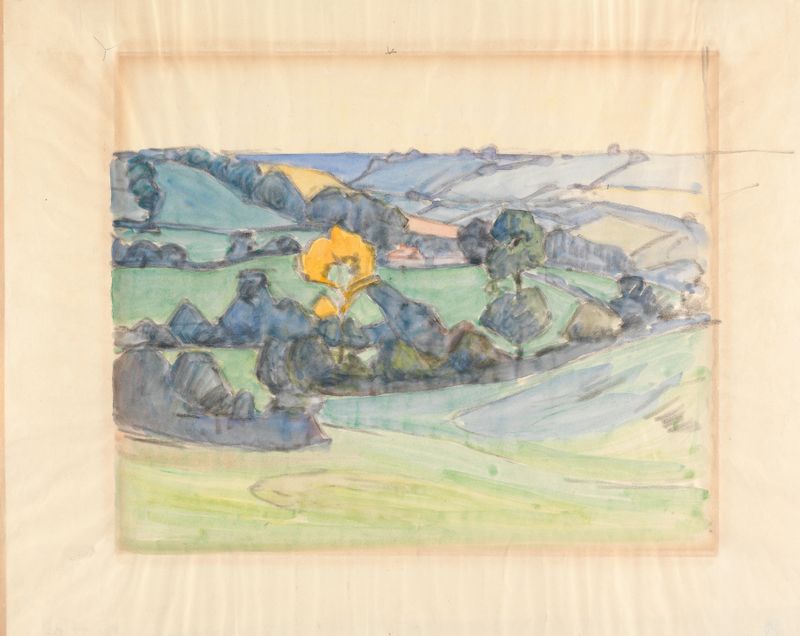
Near Brimley Hill
Robert Polhill Bevan
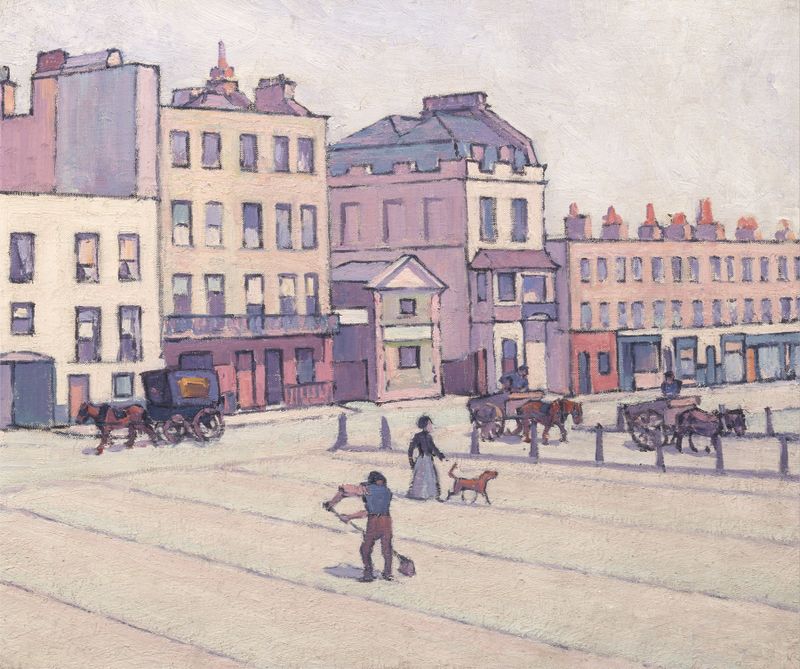
The Weigh House, Cumberland Market
Robert Polhill Bevan

Le Grand Chemin
Robert Polhill Bevan
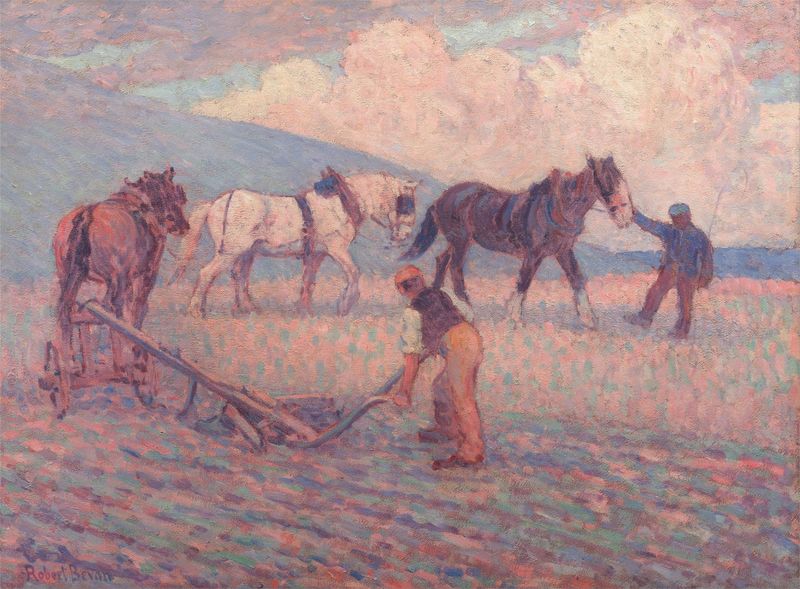
The Turn Rice-Plough, Sussex
Robert Polhill Bevan

A Village in the Sussex Downs
Robert Polhill Bevan
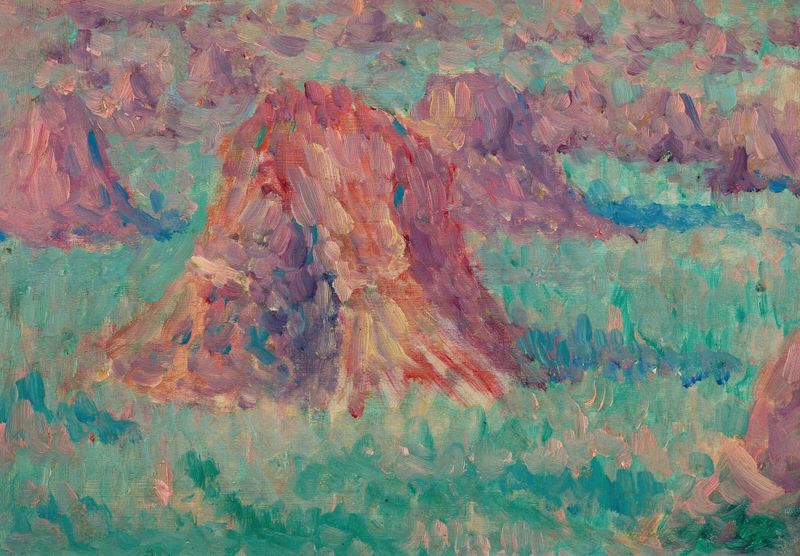
Corn Stooks, Poland
Robert Polhill Bevan

The Ford
Robert Polhill Bevan
The green house, St John’s Wood
Robert Polhill Bevan
Aldwych
Robert Polhill Bevan





