The green house, St John’s Wood — History & Facts
In a world brimming with chaos, stillness can often reveal deeper realities. Look to the center of this piece, where a verdant greenhouse stands, its greenhouse panels a mosaic of greens and blues. The play of soft light reflects off the glass, casting delicate shadows that dance on the ground below. Notice how the surrounding garden blooms with untamed vigor, the brushstrokes revealing a palpable energy that contrasts with the serene yet vibrant structure at its heart.
The artist employs a palette of earthy tones, punctuated by splashes of color that evoke both life and disorder, creating a visual harmony that is at once soothing and chaotic. Delve deeper into the layers within the foliage and earthy hues, where the brushwork reveals the turmoil beneath the tranquil surface. Each stroke vibrates with intention, hinting at the artist's struggle between the idyllic and the chaotic. The juxtaposition of the greenhouse—representing order and cultivation—against the wildness of the garden suggests a tension between human intervention and nature’s inherent disorder.
This complexity invites the viewer to reflect on the fragility of balance in both art and life. In 1918, Robert Polhill Bevan painted this work amidst the backdrop of a world recovering from the Great War. Residing in St. John’s Wood, he was part of a burgeoning community of artists seeking to capture the essence of their surroundings.
As the chaos of the outside world seeped into daily life, Bevan's focus on the serene yet wild beauty of the greenhouse represented a quest for stability and renewal during uncertain times.
More Artworks by Robert Polhill Bevan
Browse all →
Landscape with Three Trees
Robert Polhill Bevan
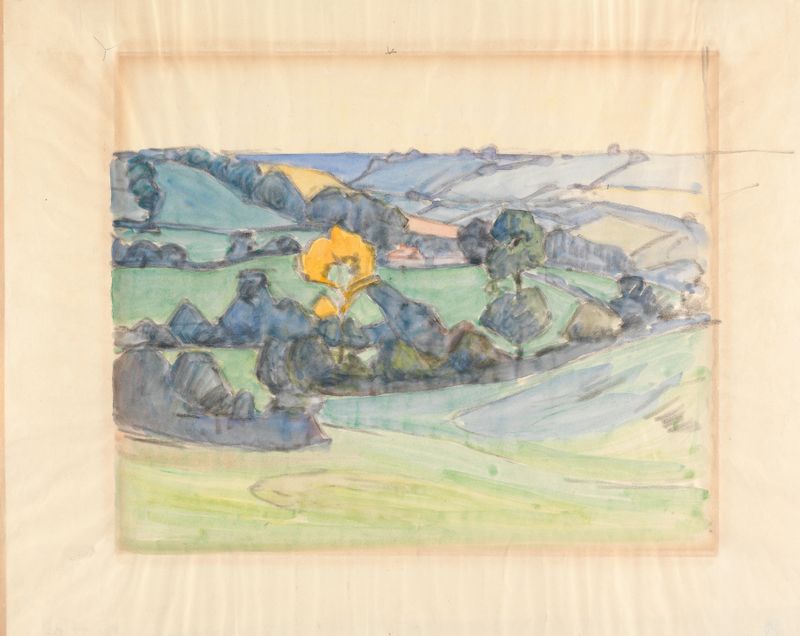
Near Brimley Hill
Robert Polhill Bevan
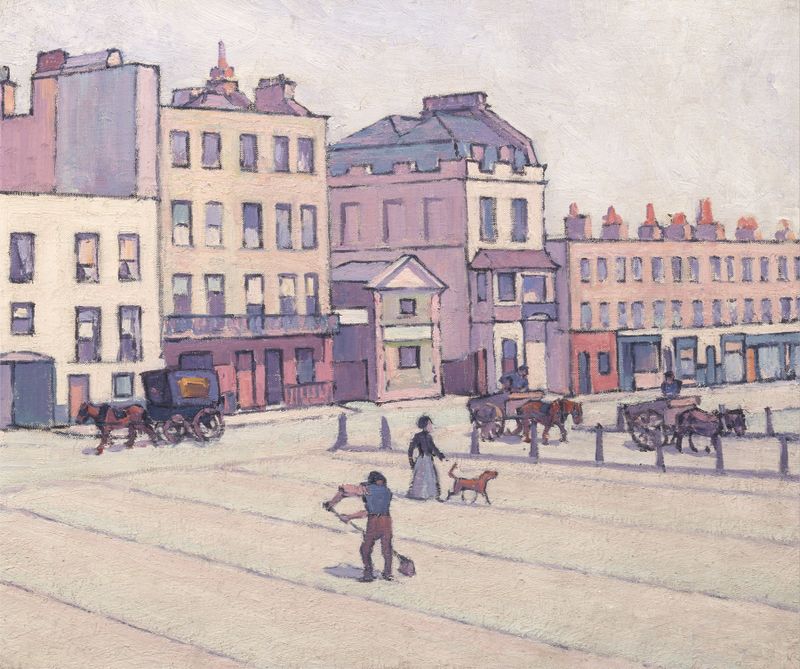
The Weigh House, Cumberland Market
Robert Polhill Bevan

Le Grand Chemin
Robert Polhill Bevan
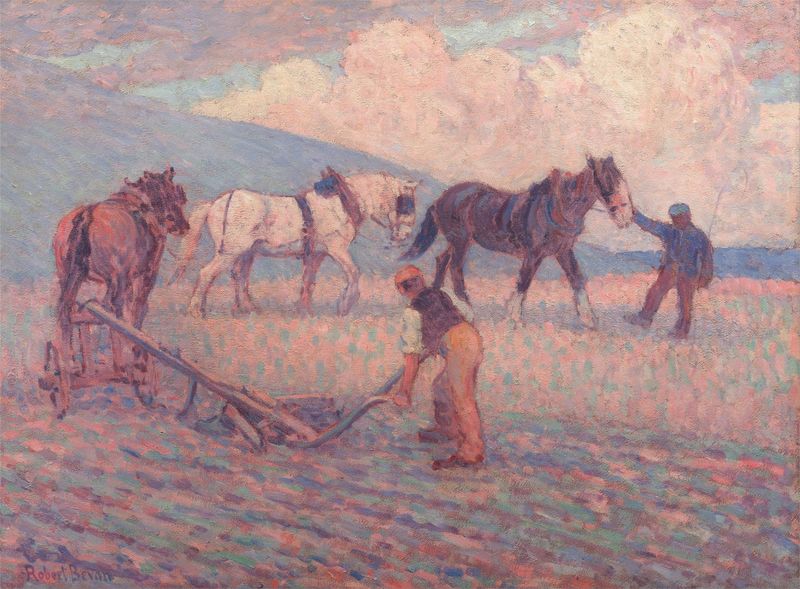
The Turn Rice-Plough, Sussex
Robert Polhill Bevan

Hay Carts, Cumberland Market
Robert Polhill Bevan

A Village in the Sussex Downs
Robert Polhill Bevan
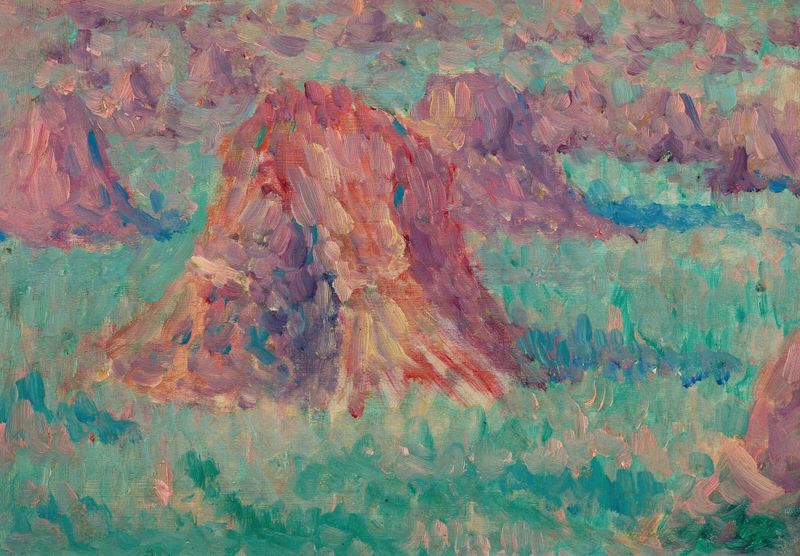
Corn Stooks, Poland
Robert Polhill Bevan

The Ford
Robert Polhill Bevan
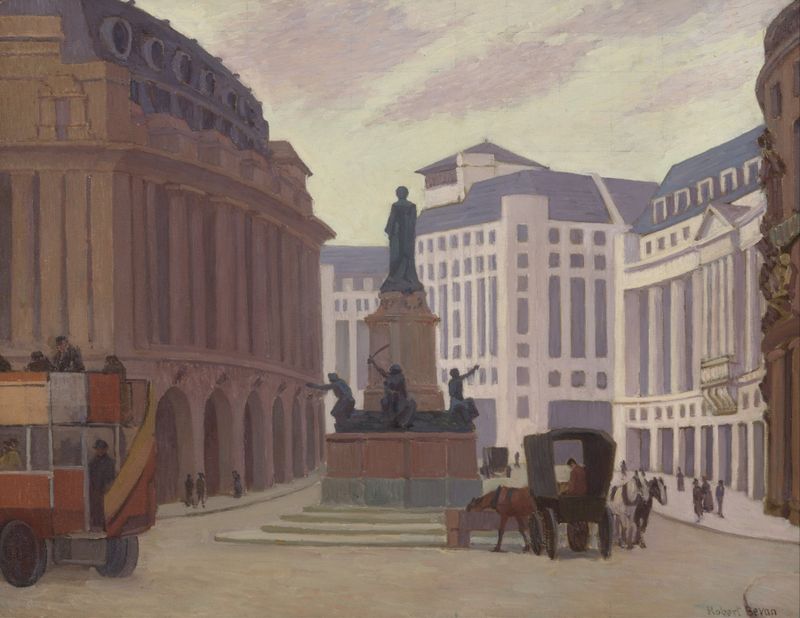
Aldwych
Robert Polhill Bevan