
The Weigh House, Cumberland Market — History & Facts
Did the painter know this moment would outlive them? Light dances across the scene, capturing an ephemeral beauty that echoes through time, inviting viewers to pause and reflect. Look to the left at the warm, diffused glow emanating from the Weigh House. This subtly illuminated structure stands firm amidst the bustling market, its soft ochres and muted greens exuding a sense of comfort. The deft brushstrokes create a lively texture, inviting you to explore the contrast between the vibrant life surrounding the building and the calm strength of its presence.
Notice how the fading daylight casts elongated shadows, elongating the market's figures, giving them a surreal quality that hints at the stories behind their fleeting interactions. Delve deeper into the emotional undercurrents of the scene. The juxtaposition of the marketplace's vibrant activity against the solid, unyielding architecture speaks to the tension between permanence and transience. The figures, absorbed in their daily tasks, become mere silhouettes against the backdrop, suggesting the passage of time and the constant march of life.
Each brushstroke seems to encapsulate a fleeting moment, a reminder of the delicate balance between the mundane and the profound. In 1914, when this piece was created, Robert Polhill Bevan was navigating the shifting tides of the Camden Town Group, a collective focused on portraying the essence of everyday life in London. The world teetered on the brink of war, and artistic movements began to challenge conventions, emphasizing individuality and expression. This work encapsulates Bevan’s quest to capture the ordinary while infusing it with a poignant sense of light, revealing both the beauty and fragility of human existence.
More Artworks by Robert Polhill Bevan
Browse all →
Landscape with Three Trees
Robert Polhill Bevan
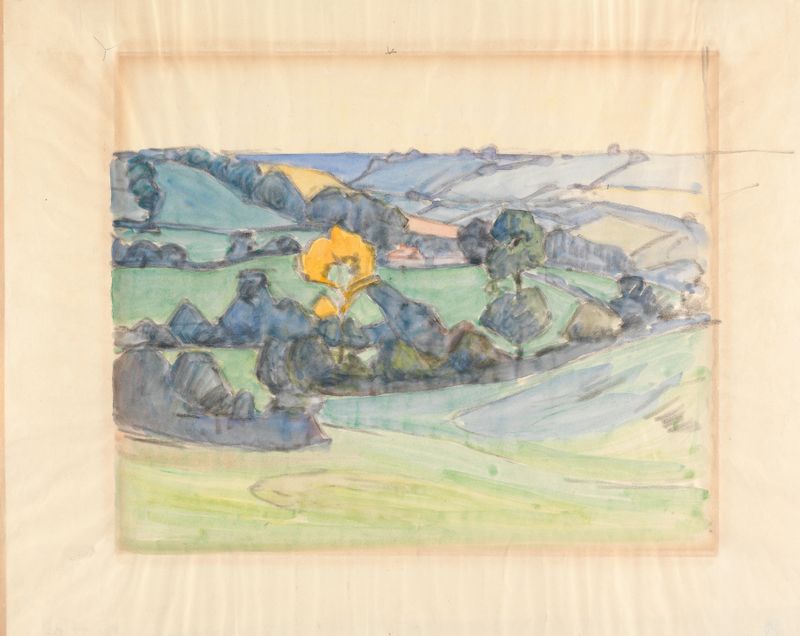
Near Brimley Hill
Robert Polhill Bevan

Le Grand Chemin
Robert Polhill Bevan
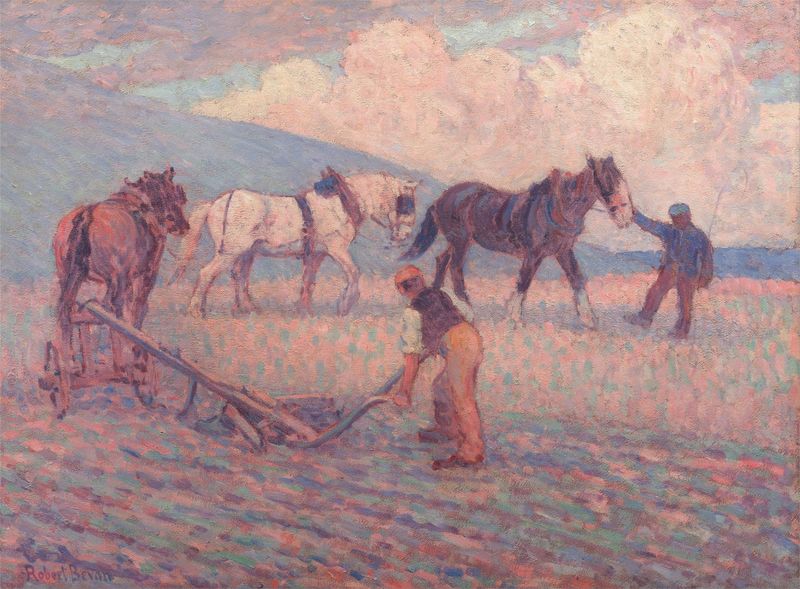
The Turn Rice-Plough, Sussex
Robert Polhill Bevan

Hay Carts, Cumberland Market
Robert Polhill Bevan

A Village in the Sussex Downs
Robert Polhill Bevan
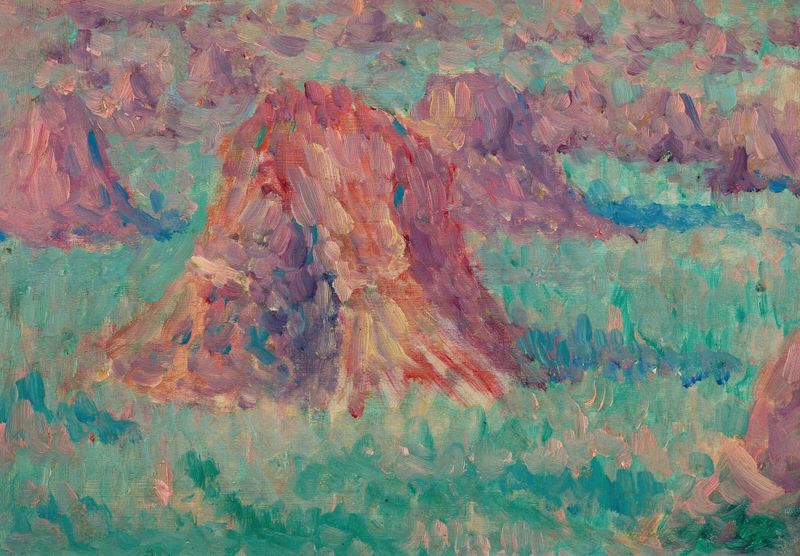
Corn Stooks, Poland
Robert Polhill Bevan

The Ford
Robert Polhill Bevan
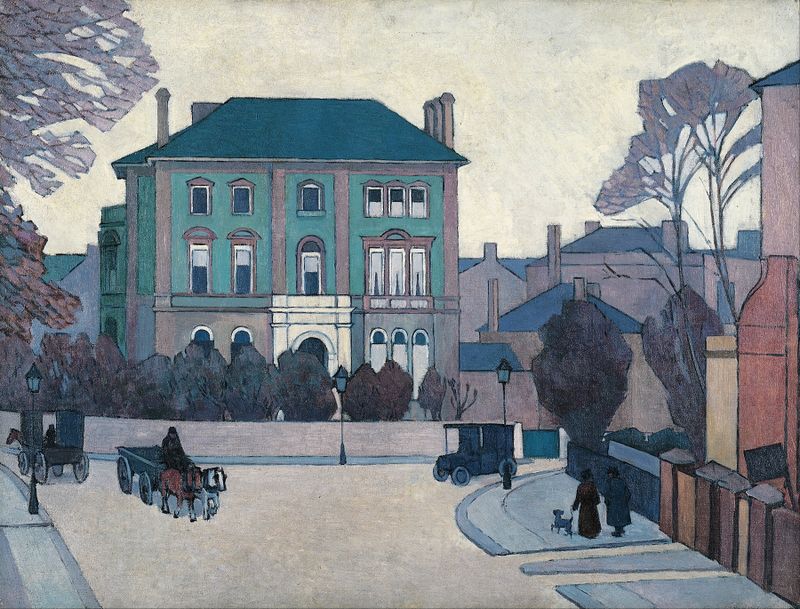
The green house, St John’s Wood
Robert Polhill Bevan
Aldwych
Robert Polhill Bevan
More Architecture Art
Browse all →
The statue of Liberty
Frédéric Auguste Bartholdi

View of Houses in Delft, Known as ‘The Little Street’
Johannes Vermeer

View of Houses in Delft, Known as ‘The Little Street’
Johannes Vermeer

The Cathedral in Rouen. The portal, Grey Weather
Claude Monet

The yellow house
Vincent van Gogh

The Church in Auvers-sur-Oise, View from the Chevet
Vincent van Gogh