
The Turn Rice-Plough, Sussex — History & Facts
In its stillness, it captures the essence of transformation, where the ordinary becomes extraordinary through the artist's careful vision. Focus on the depth of the fields, where earth and sky merge seamlessly. The muted palette of greens and browns draws the eye to the laborers working the land, their figures almost ghostly against the backdrop of natural beauty. Notice how the light caresses the ploughed soil, hinting at the promise of growth, while the gentle curves of the furrows create a rhythm that pulses with life.
Each stroke of paint seems to breathe, inviting the viewer to step into the moment, to appreciate the simplicity of hard work. Hidden within this tranquil scene lies the tension between man and nature. The ploughmen, though small in scale, embody a powerful connection to the earth, their toil symbolizing the age-old dance of cultivation. The juxtaposition of labor against the vast, unyielding landscape evokes feelings of humility and perseverance.
Every detail, from the scattered hay to the distant trees, tells a story of transformation — of the land being shaped by human hands, yet resilient in its own right. In 1909, when this work was painted, Bevan was immersed in the vibrant artistic community of Sussex, seeking to capture the essence of rural life. His focus on the relationship between humanity and nature mirrored the broader movements in art at the time, which emphasized realism and the exploration of everyday moments. This period was marked by a transition in Bevan's style, as he began to gravitate towards a more expressive approach, which would later define his contributions to the British avant-garde.
More Artworks by Robert Polhill Bevan
Browse all →
Landscape with Three Trees
Robert Polhill Bevan
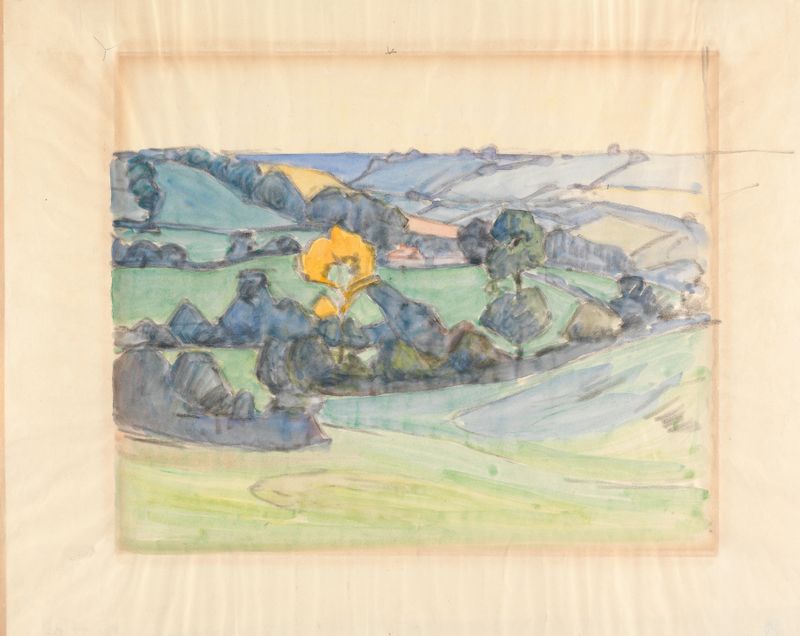
Near Brimley Hill
Robert Polhill Bevan
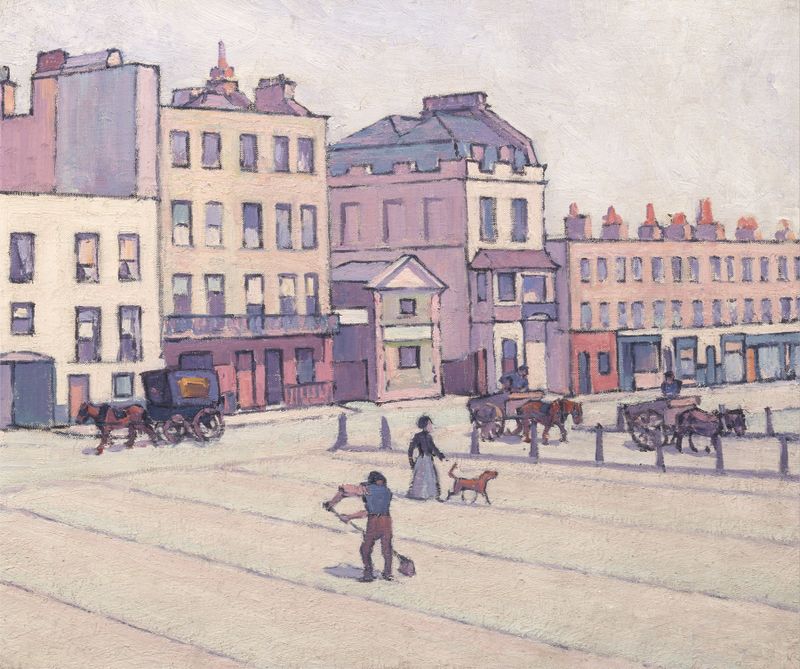
The Weigh House, Cumberland Market
Robert Polhill Bevan

Le Grand Chemin
Robert Polhill Bevan

Hay Carts, Cumberland Market
Robert Polhill Bevan

A Village in the Sussex Downs
Robert Polhill Bevan
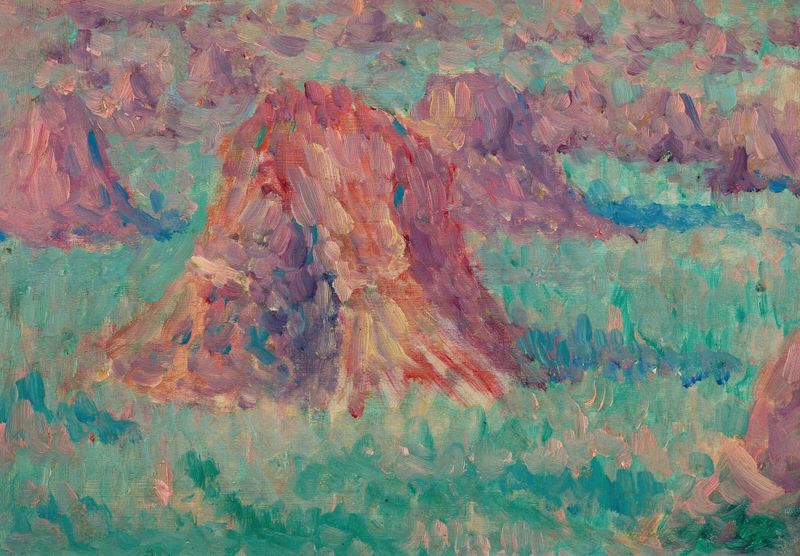
Corn Stooks, Poland
Robert Polhill Bevan

The Ford
Robert Polhill Bevan
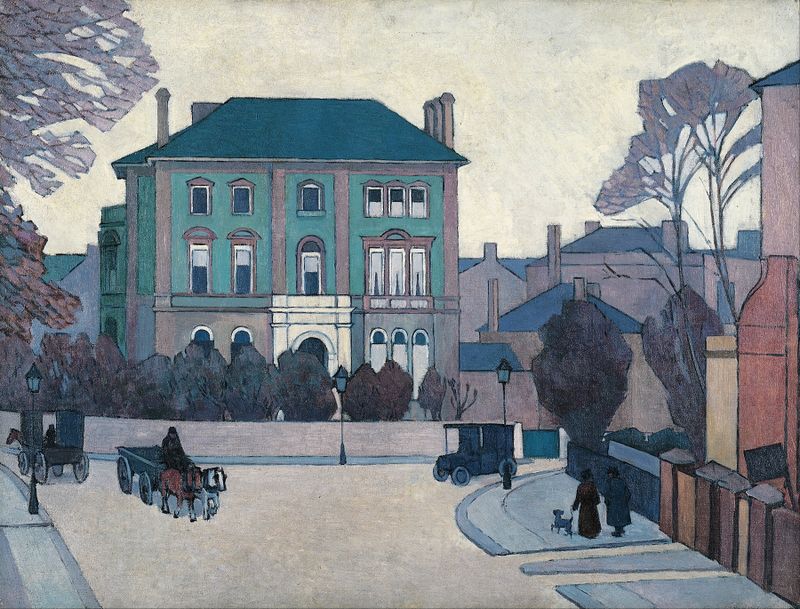
The green house, St John’s Wood
Robert Polhill Bevan
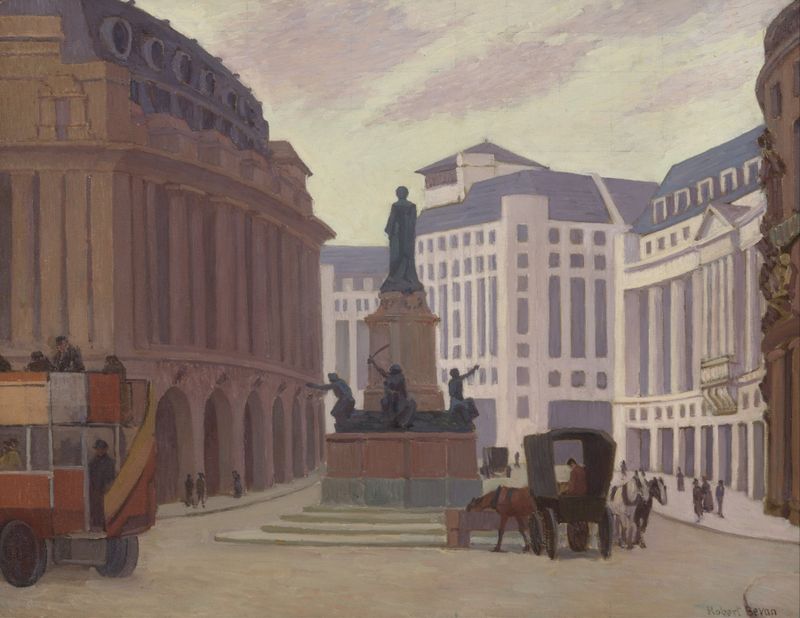
Aldwych
Robert Polhill Bevan





