
Corner of the Rue Royale (Coin de la rue royale) — History & Facts
A swirl of Parisian life gathers at the edge of the Rue Royale, where the city’s pulse seems to quicken beneath the gaze of grand columns and the flicker of a streetlamp. The most striking detail is the woman in the foreground, poised in her fashionable hat at a café table, her presence both a statement and a mystery. She draws the viewer in, her face half-shadowed, as if she is both part of the world around her and set apart from it.
The play of light and shadow animates the scene, guiding the eye from her glass to the bustling street, where carriages, pedestrians, and vendors spill across the boulevard. Every figure is caught mid-gesture: a man hunched over his wares, a couple in quiet conversation, a cabman urging his horse forward—the city’s choreography rendered in delicate lines and washes of ink. Created in 1890, Corner of the Rue Royale belongs to a moment when artists like Auguste Lepère turned their attention to the spectacle of modern urban life. This was the Paris of the Belle Époque, a city remade by boulevards, electric lights, and the ceaseless movement of people and machines.
Works like this were not simply souvenirs; they were invitations to witness the drama of the everyday, to see the poetry in a crowded street or a fleeting glance. The National Gallery of Art’s collection preserves this image as part of a wider project to make such scenes accessible to all, though the individual stories of sitter and artist alike remain just out of reach. Return to the image and let your eye wander—there is always another detail waiting to be discovered in the crowd.
More Artworks by Auguste Lepère

Le Pont-Neuf (Paris)
Auguste Lepère
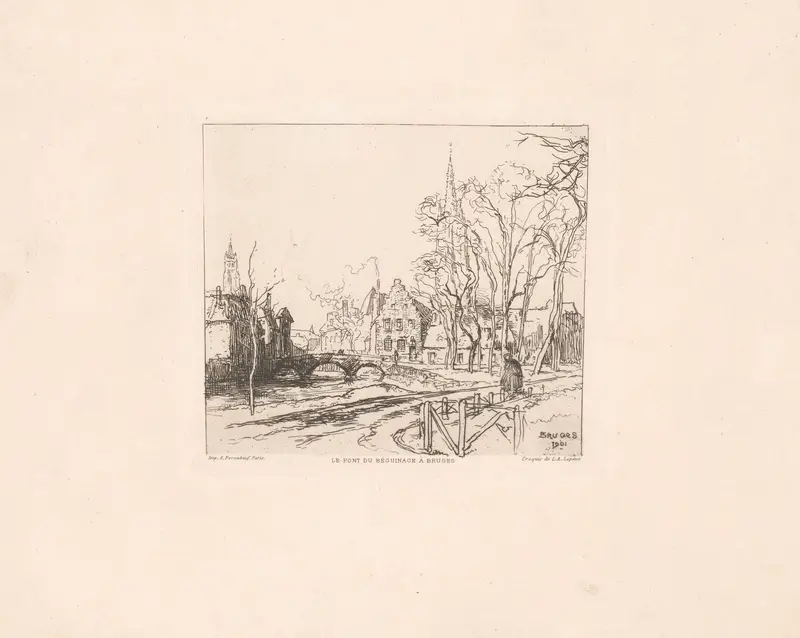
Le pont du Beguinage à Bruges
Auguste Lepère
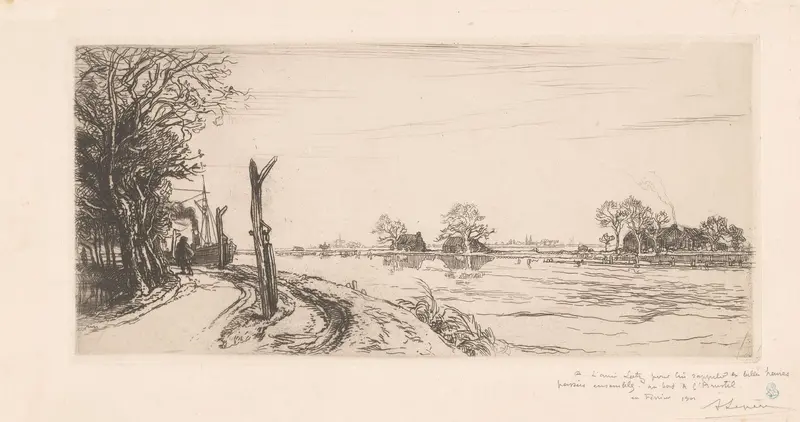
Au bord de l’Amstel
Auguste Lepère
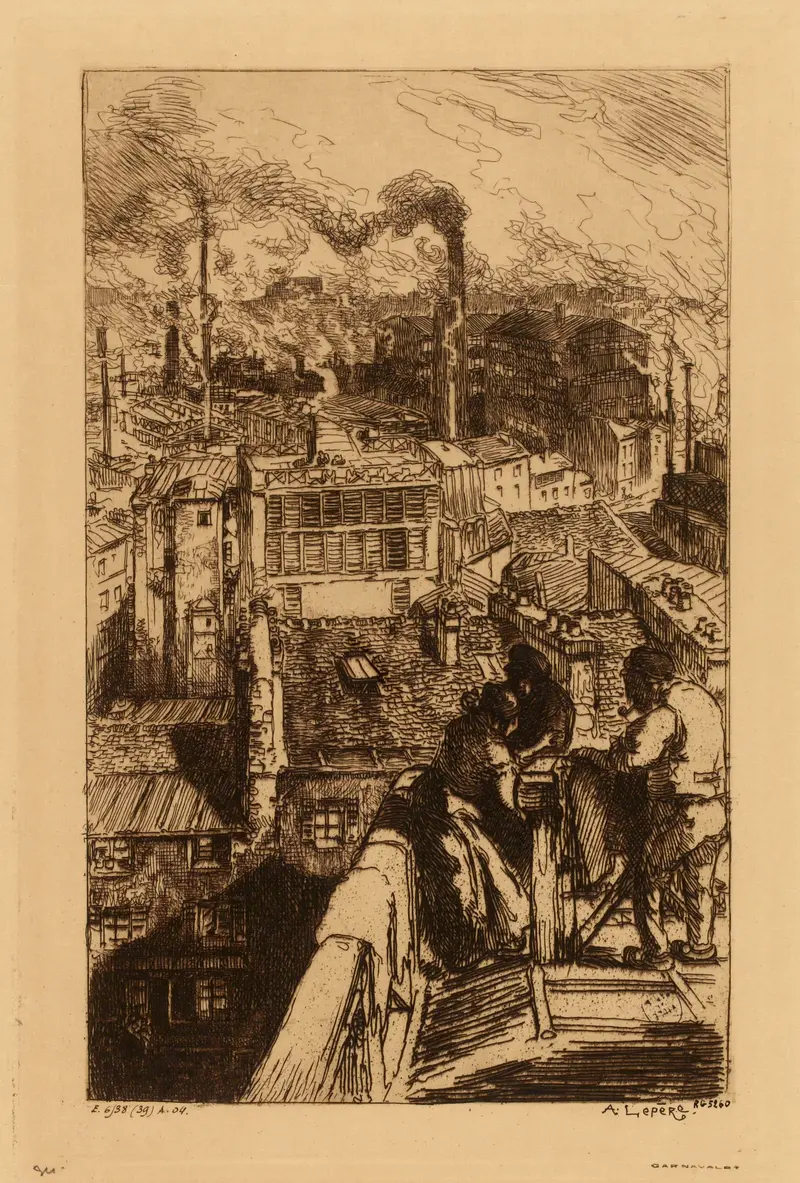
Le quartier des Gobelins
Auguste Lepère
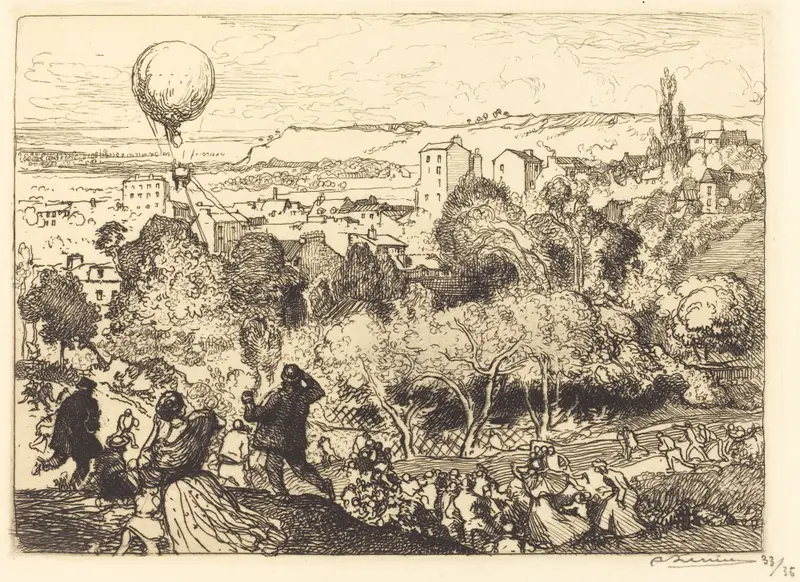
The Falling Balloon, in Pre-Saint-Gervais (Lebaloon qui tombe, au Pre-Saint-Gervais)
Auguste Lepère
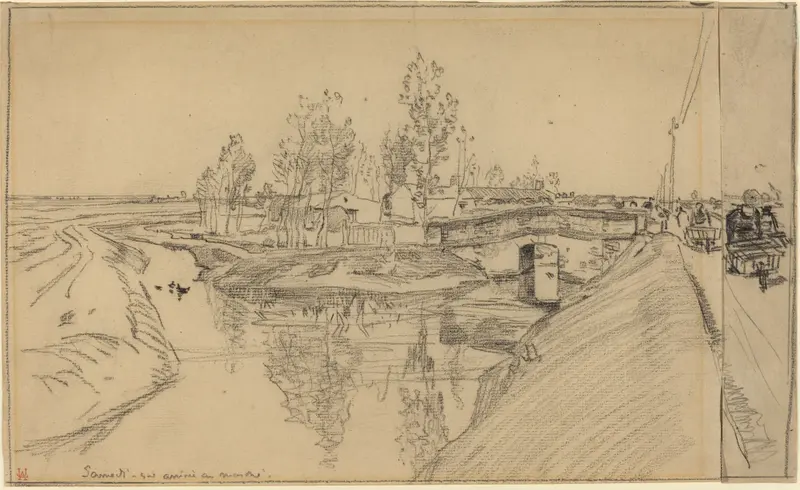
Arrivee au Marche
Auguste Lepère
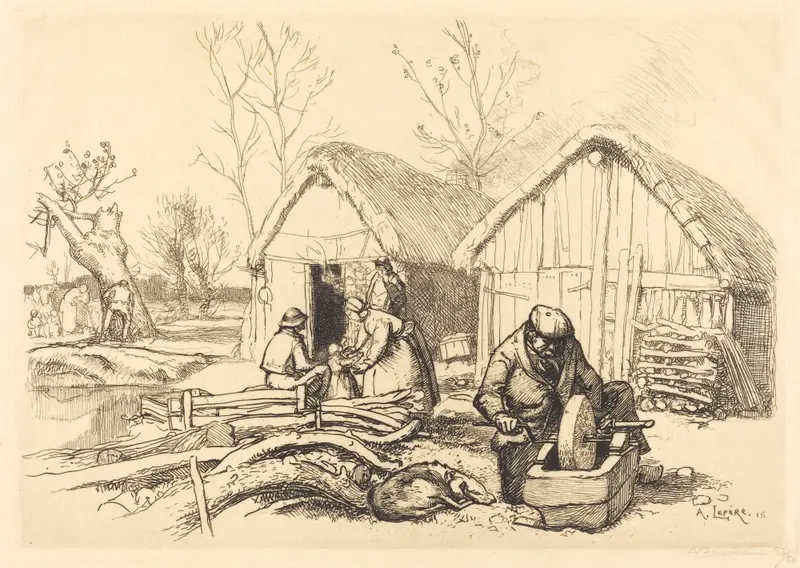
The House of the Woodcutter, Vendee (La maison du bucheron, Vendee)
Auguste Lepère
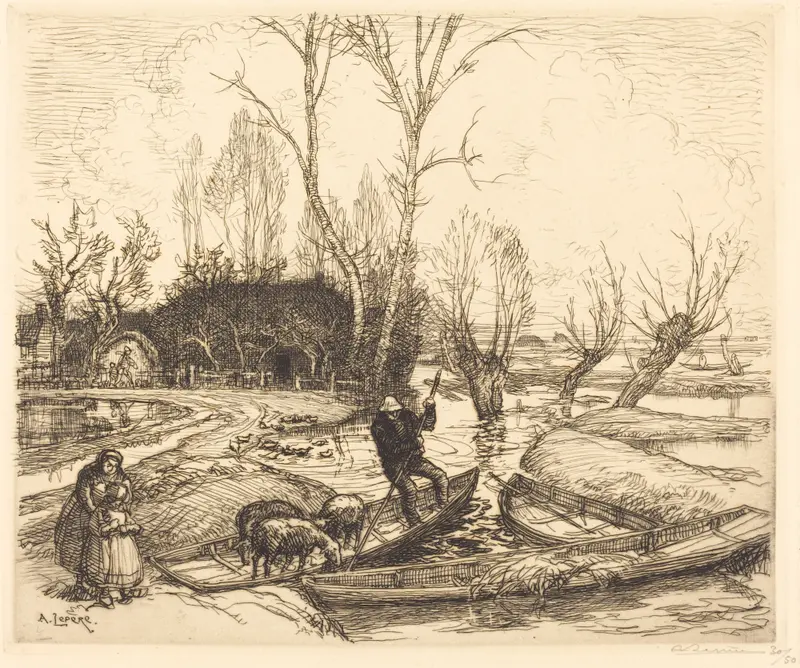
In the Deluged Marsh - The Shepherd (Au marais inonde - Le berger)
Auguste Lepère
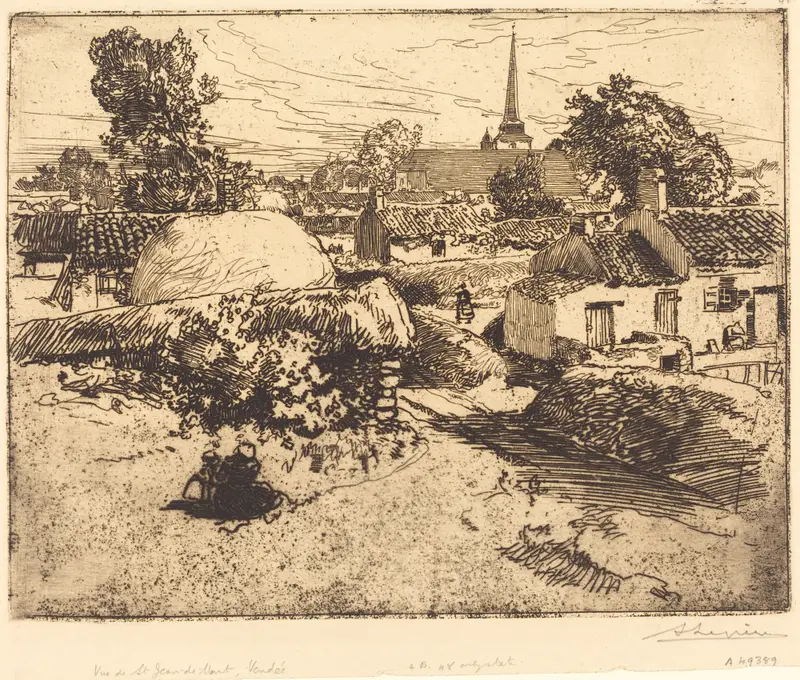
View of St.-Jean-de-Mont, Vendee (Vue de St.-Jean-de-Mont, Vendee)
Auguste Lepère
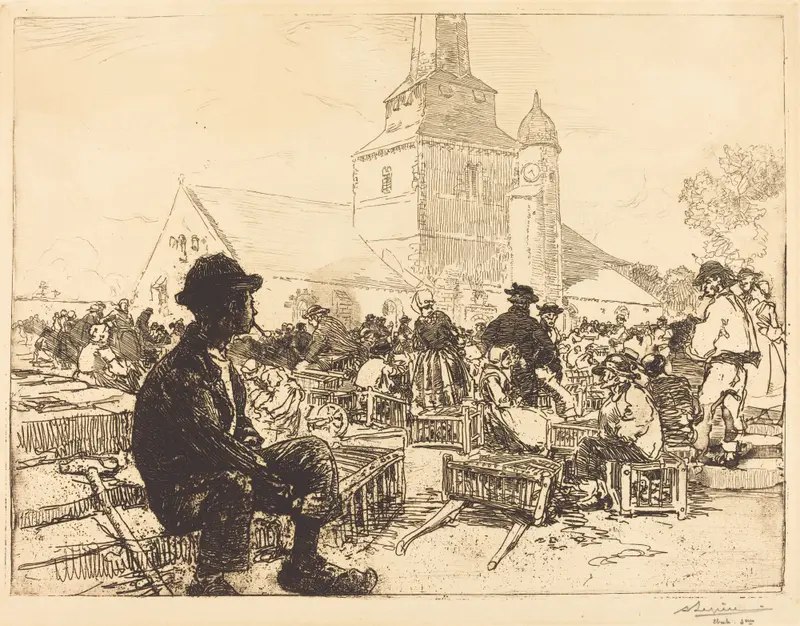
Poultry Market at St.-Jean-de-Mont (Marche a la volaille, a St.-Jean-de-Mont)
Auguste Lepère
More Genre Scene Art

Banquet of the Officers of the St George Civic Guard
Frans Hals

Rembrandt and Saskia in the Scene of the Prodigal Son
Rembrandt van Rijn

Bal du moulin de la Galette
Pierre-Auguste Renoir

Quadrille at the Moulin Rouge
Henri de Toulouse-Lautrec

A Burial at Ornans
Gustave Courbet

When Will You Marry?
Paul Gauguin