
Corpus Christi procession in Toruń — History & Facts
The sun hangs low over the cobbled streets of Toruń, casting long shadows that stretch like the arms of an unseen crowd. Clusters of townsfolk, adorned in their Sunday best, move in solemnity and fervor, their faces illuminated by the warm, golden light. Banners flutter gently, their colors vibrant against the backdrop of a clear blue sky, each movement whispering stories of faith and tradition. Look to the center of the canvas, where a procession unfolds with meticulous choreography.
The artist captures the figures in mid-step, their garments flowing gracefully, while the tableau is anchored by a distant church spire piercing the skyline. Notice how the light falls upon the ornate details of their attire, each stroke of paint revealing the textures of fabric and the sheen of polished wood from the altar. The cohesive composition leads the eye along the path of devotion, inviting viewers to piously walk alongside the participants. Yet, amidst the harmony of movement, a palpable tension simmers beneath the surface.
The juxtaposition of joyous celebration against an echoing silence speaks to the balance of public faith and private reflection. The expressions vary: some faces are uplifted in prayer, while others betray a hint of doubt, revealing the complexity of belief. The artist's hand hints at an underlying dichotomy, where moments of serenity are punctuated by the collective heartbeat of the community. In 1920, Julian Falat was immersed in a Poland emerging from the shadows of war, seeking to rediscover its cultural identity.
Painting from his studio in Toruń, he sought to capture the essence of shared experiences and spiritual renewal in a nation fraught with tensions. This era of artistic exploration was characterized by a blend of realism and emotional depth—a quest that Falat vividly encapsulated in this evocative scene.
More Artworks by Julian Falat
Browse all →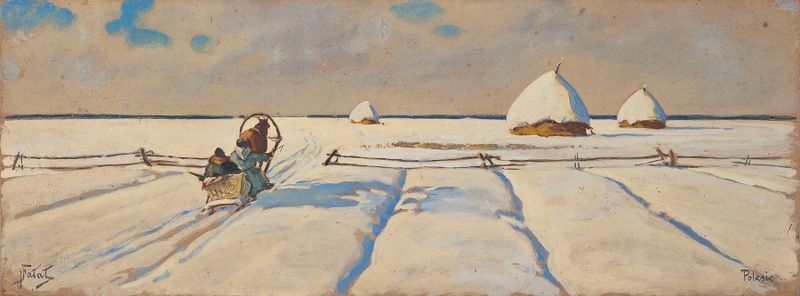
Sleigh in a snowy field – Polesia
Julian Falat
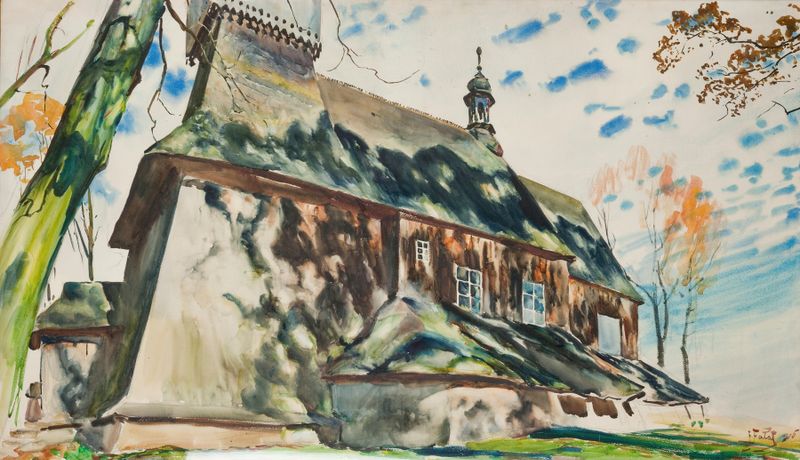
Church in Osiek
Julian Falat
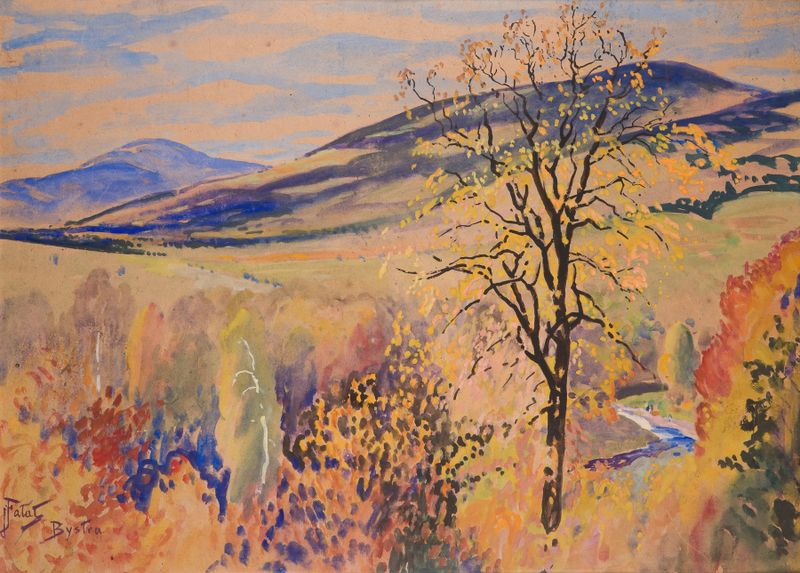
Pejzaż jesienny z Bystrej
Julian Falat
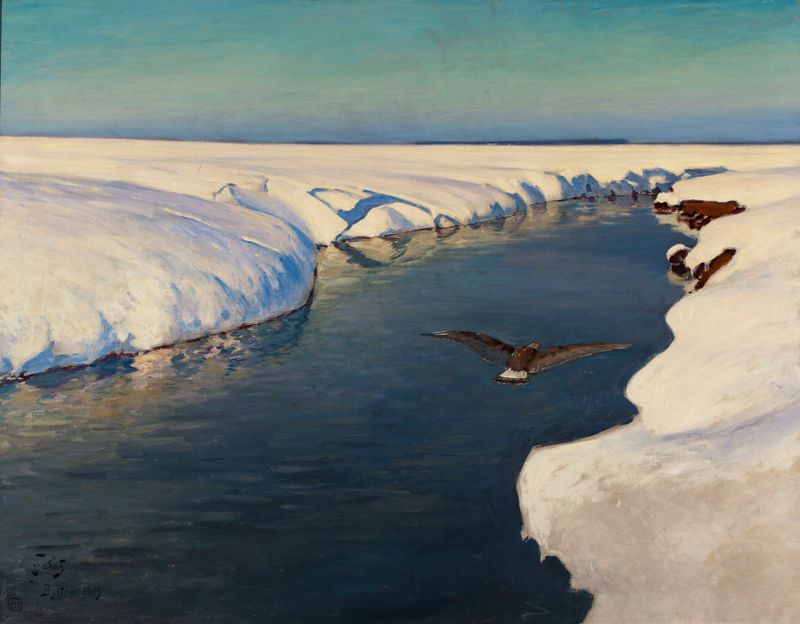
Winter landscape with a river and a bird
Julian Falat
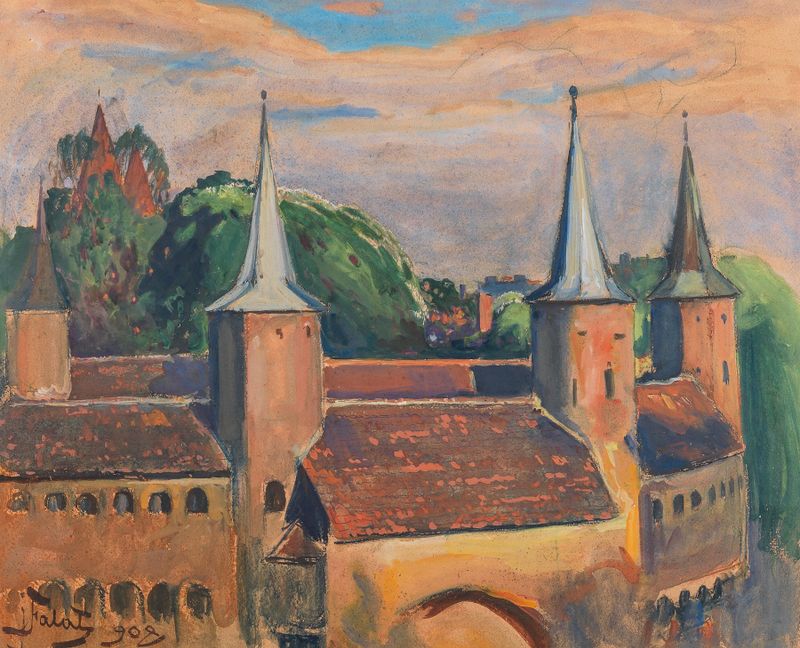
The Kraków Barbican
Julian Falat
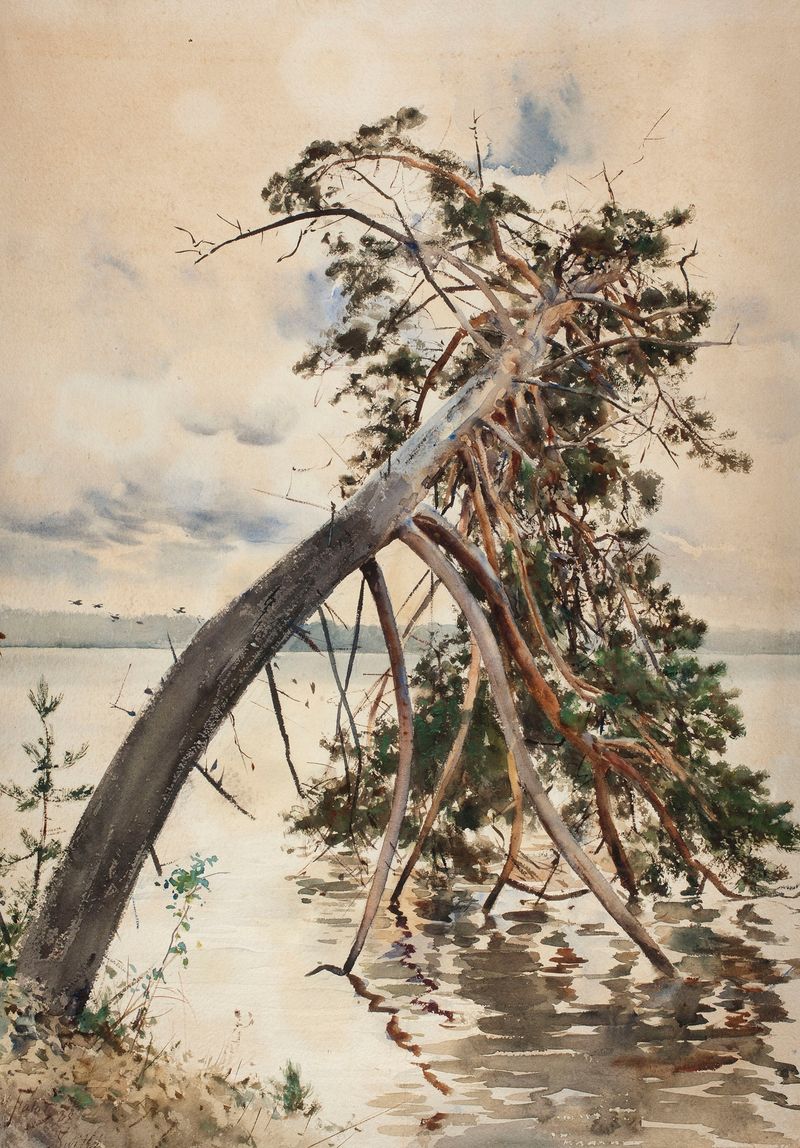
Świteź
Julian Falat
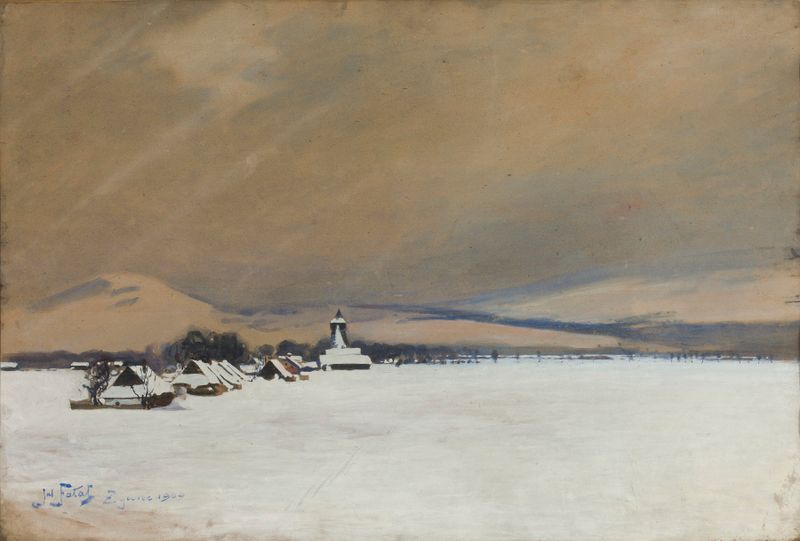
Winter landscape from Żywiec
Julian Falat
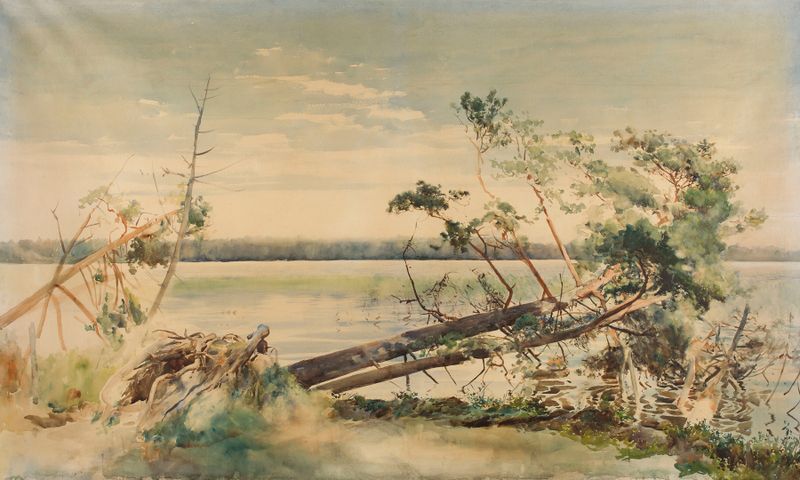
Świteź
Julian Falat
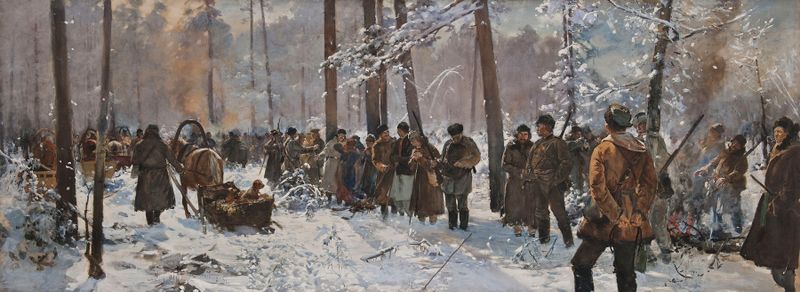
Battue at a hunt in Nieśwież
Julian Falat
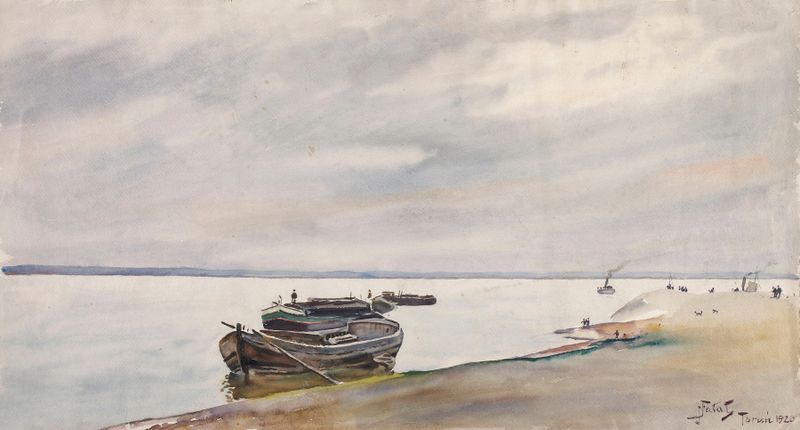
Boats and steamship on the Vistula near Toruń
Julian Falat





