
Cottage Interior with Four Peasants — History & Facts
A shaft of warm, golden light slices through the gloom, catching on the faces and hands of four peasants gathered in the cramped interior of a cottage. One slumps heavily on a stool, his posture loose and his gaze unfocused, while another leans in with a knowing smile, his elbow propped on a battered barrel that serves as their table. The third sits close, knees drawn up, a jug nestled by his boot, his expression caught between fatigue and amusement.
To the right, a fourth figure stands apart, braced against a wooden beam, his head bowed as if lost in thought or perhaps the effects of drink. Even the small dog sprawled on the earthen floor seems to share in the languor of the moment, the hush of the room broken only by the silent conversation of body language and sidelong glances. Works like this, painted in the early seventeenth century, form the heart of Dutch genre painting—scenes of everyday life, rendered with a keen eye for both humor and humanity. Artists such as Adriaen van Ostade made their names with these glimpses into the rustic world, often commissioned by the prosperous urban middle class who delighted in images of rural simplicity and folly.
The dim, smoky palette and theatrical lighting recall the influence of Rembrandt, but the subject matter is all Ostade: the rough-hewn furniture, patched clothing, and battered walls speak to a world where comfort is scarce but camaraderie persists. This particular painting was documented in 2012 at the Hallwyl House, a reminder that, while its early history may be obscure, its quiet drama still draws the eye—and perhaps a wry smile—today.
More Artworks by Adriaen van Ostade

Dans in de herberg
Adriaen van Ostade
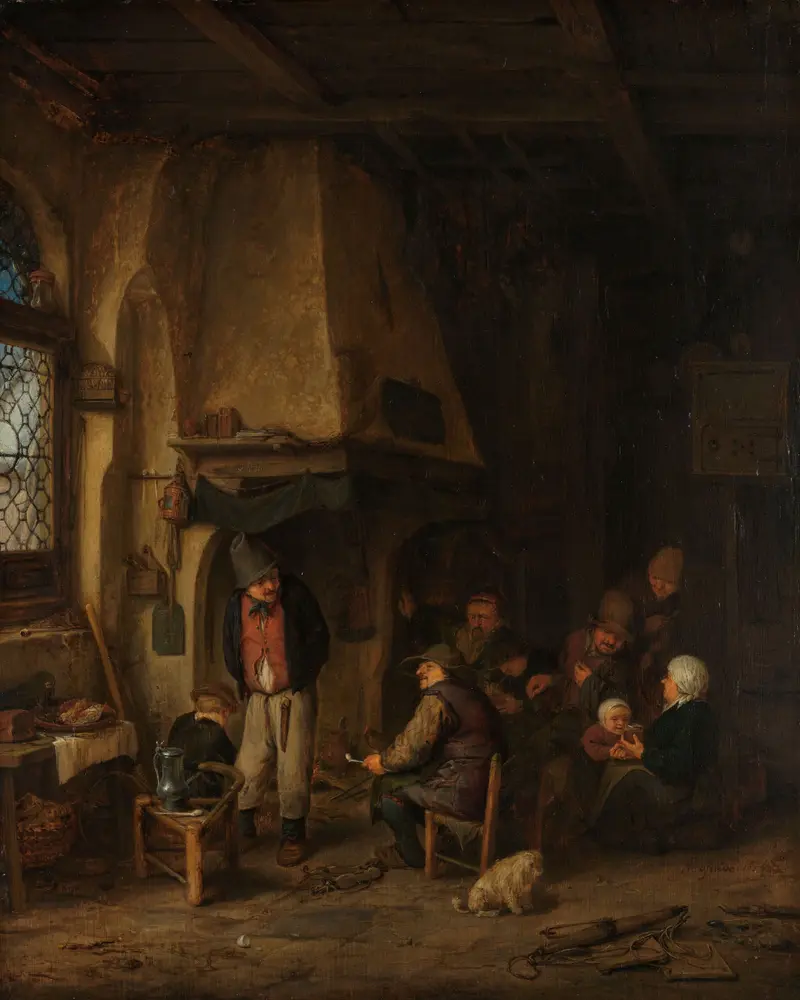
‘The Skaters’: Peasants in an Interior
Adriaen van Ostade
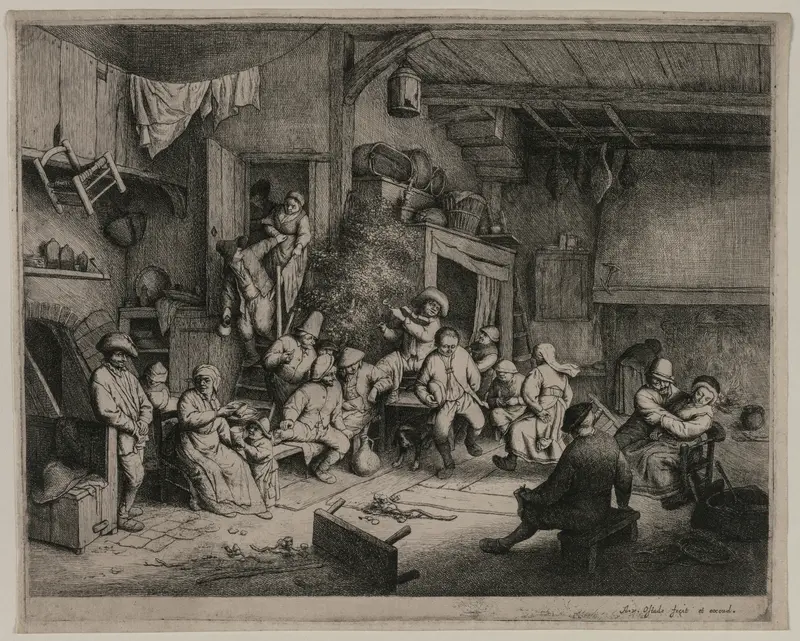
Dance at the Inn
Adriaen van Ostade
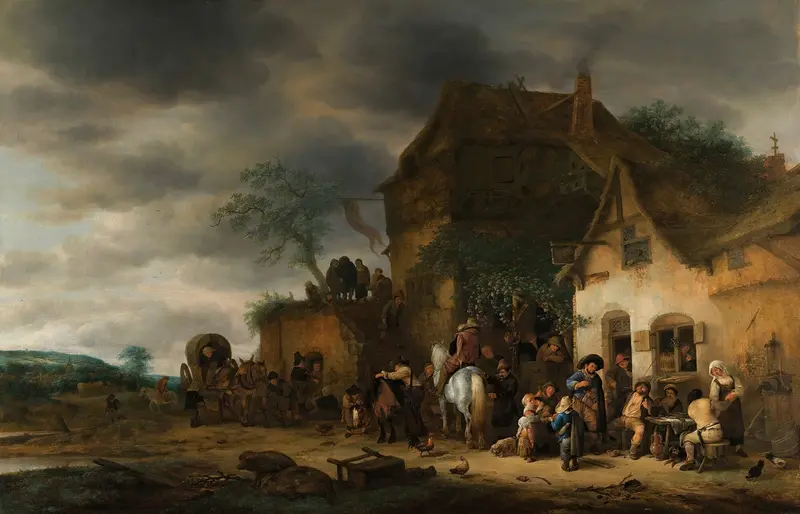
Travellers Halted At A Country Inn
Adriaen van Ostade
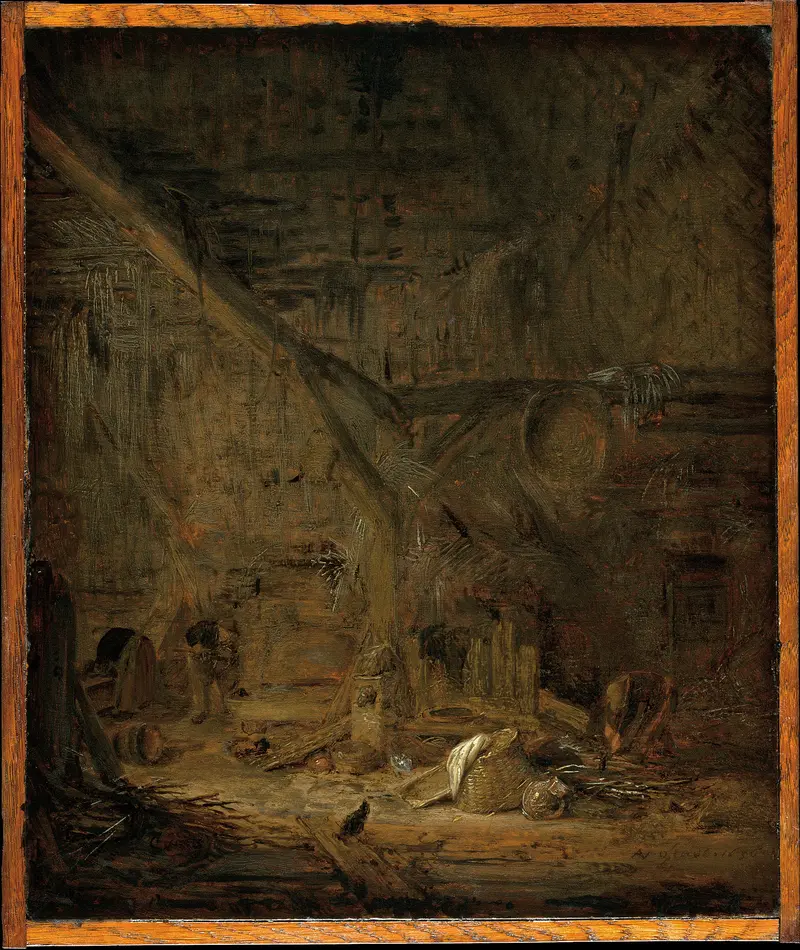
Interior of a Barn
Adriaen van Ostade
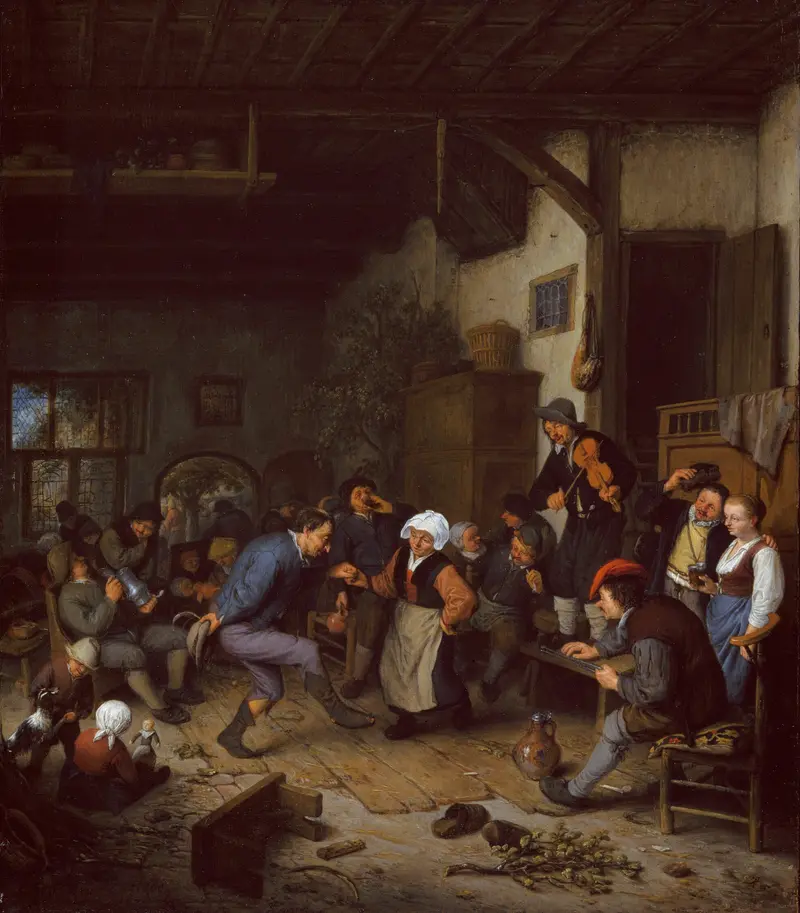
Merrymakers in an Inn
Adriaen van Ostade
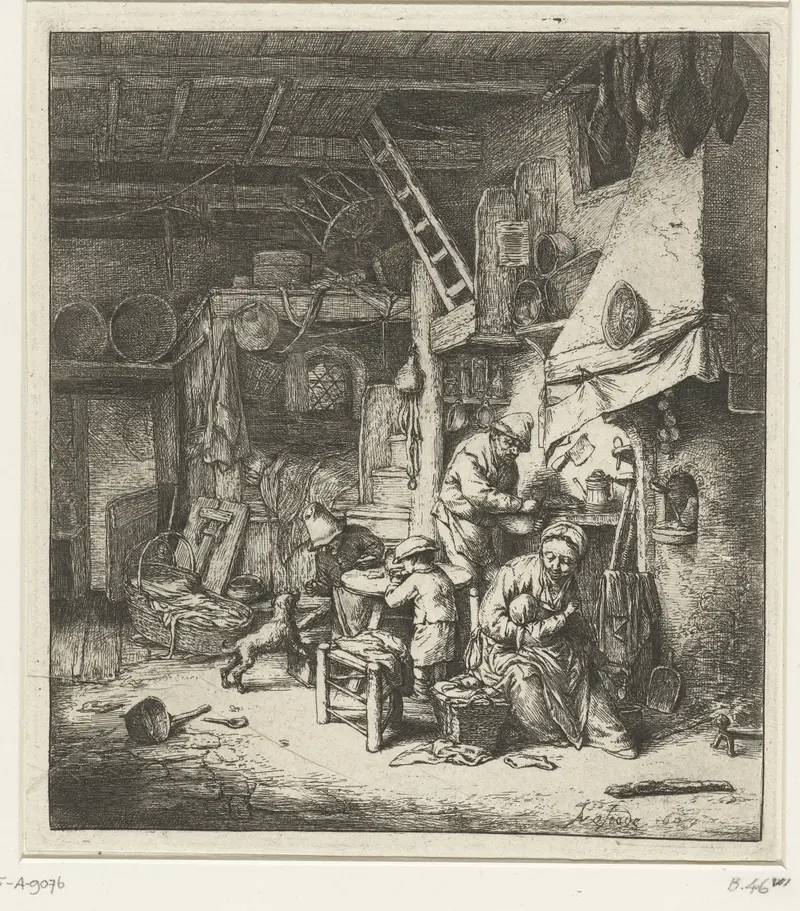
Boerengezin in interieur
Adriaen van Ostade
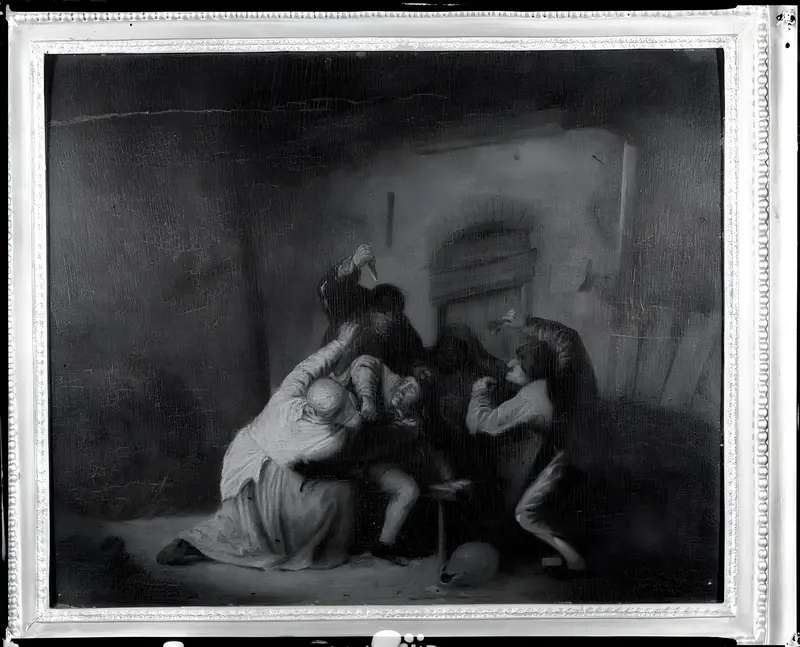
Peasants Brawling in a Tavern
Adriaen van Ostade
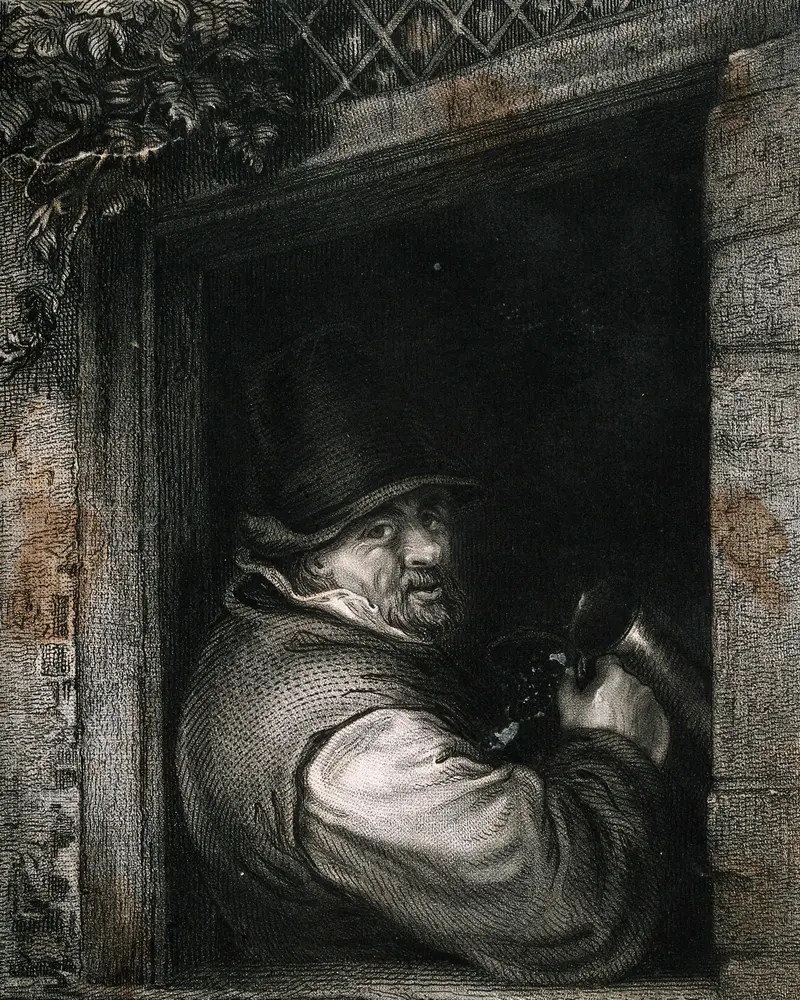
Man with a Tankard at a Window
Adriaen van Ostade
Dans in de herberg
Adriaen van Ostade
More Genre Scene Art

Banquet of the Officers of the St George Civic Guard
Frans Hals

Rembrandt and Saskia in the Scene of the Prodigal Son
Rembrandt van Rijn

Bal du moulin de la Galette
Pierre-Auguste Renoir

Quadrille at the Moulin Rouge
Henri de Toulouse-Lautrec

A Burial at Ornans
Gustave Courbet

When Will You Marry?
Paul Gauguin