
Cows and Sheep — History & Facts
What first draws the eye in Cows and Sheep by Abraham Van Calraet is the quiet authority of the central cow, its gaze meeting the viewer with a calm, almost challenging steadiness. The animal stands in a patch of warm light, its hide rendered with a softness that invites the hand, while behind it, a pair of sheep and a second cow cluster in the shadowed earth. The composition leads us gently from the sunlit animal to the cool, receding landscape: a farmhouse, half-veiled by trees, anchors the right, while the sky stretches broad and pale above.
Every element is tuned to a mood of stillness, the hush of early morning or late afternoon, when the world seems to pause and breathe with its creatures. Painted before 1722, this work belongs to a Dutch tradition that prized the humble dignity of rural life. In the late seventeenth and early eighteenth centuries, such scenes were sought after by a burgeoning middle class eager to celebrate the countryside’s quiet order and prosperity. Van Calraet’s animals are not merely livestock; they are characters in a pastoral ideal, their forms shaped by the same light that touches the distant hills and the tiled roofs of the farmhouse.
The painting now resides in the collection documented as VAHRQePmErKFxg, a reminder of how history has kept few traces of its journey but preserved the gentle encounter it offers. The longer you linger, the more the play of shadow and light reveals itself, drawing you into the painted silence.
More Artworks by Abraham Van Calraet
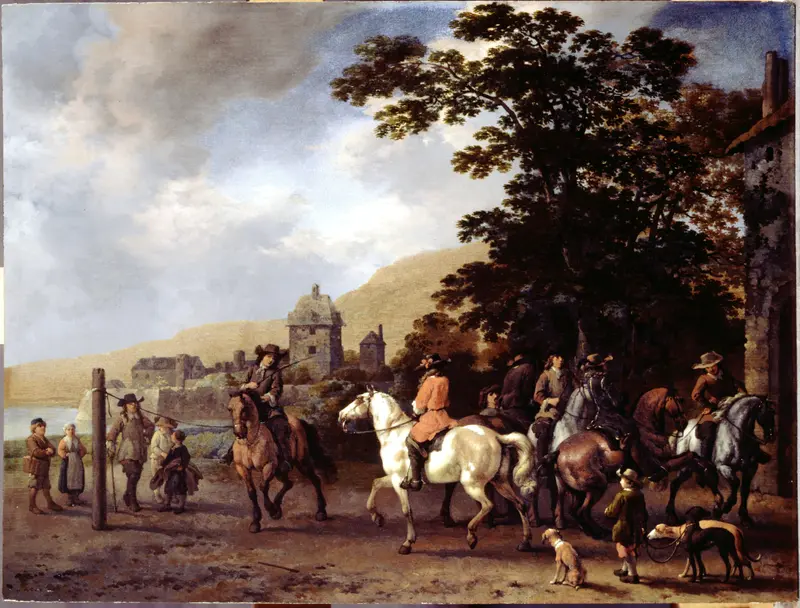
A Riding School in the Open Air
Abraham Van Calraet
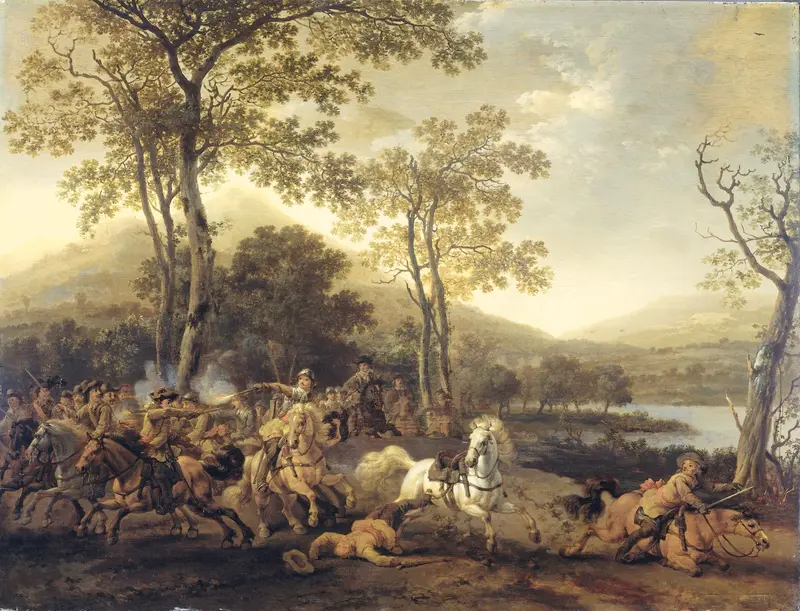
Cavalry Skirmish
Abraham Van Calraet
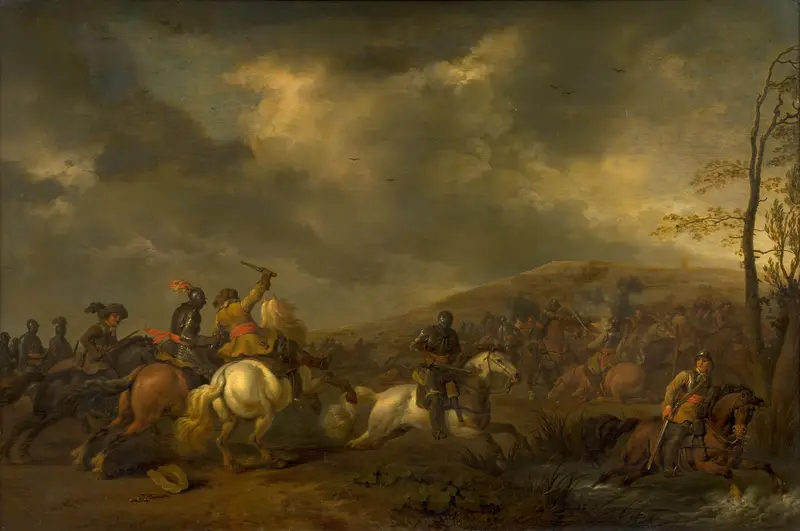
Choc de cavalerie
Abraham Van Calraet
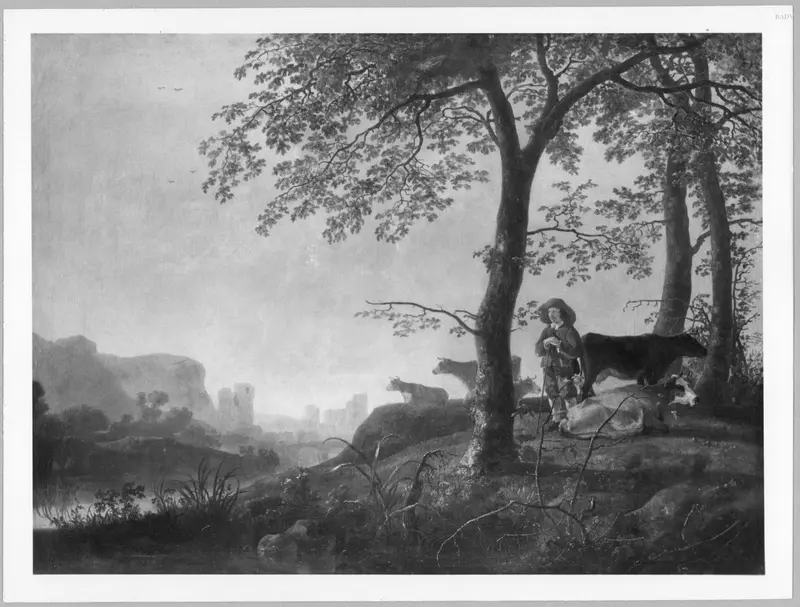
Herder and Cattle under Trees
Abraham Van Calraet
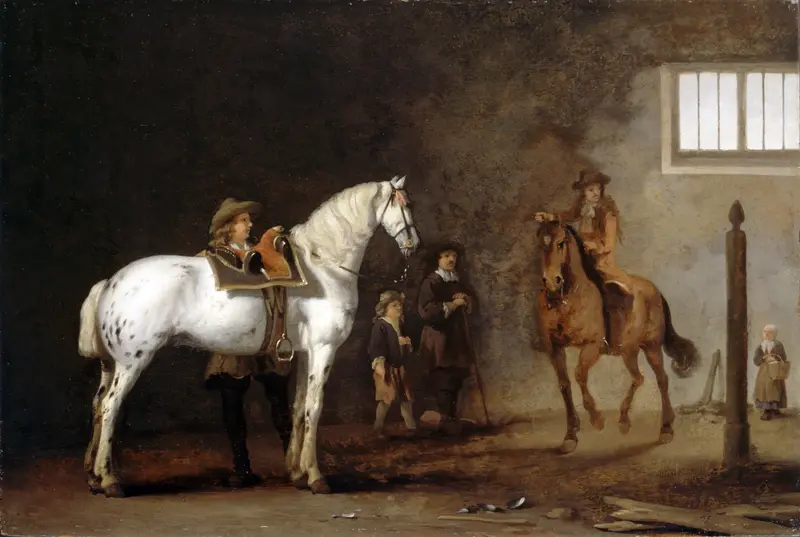
White Horse in a Riding School
Abraham Van Calraet
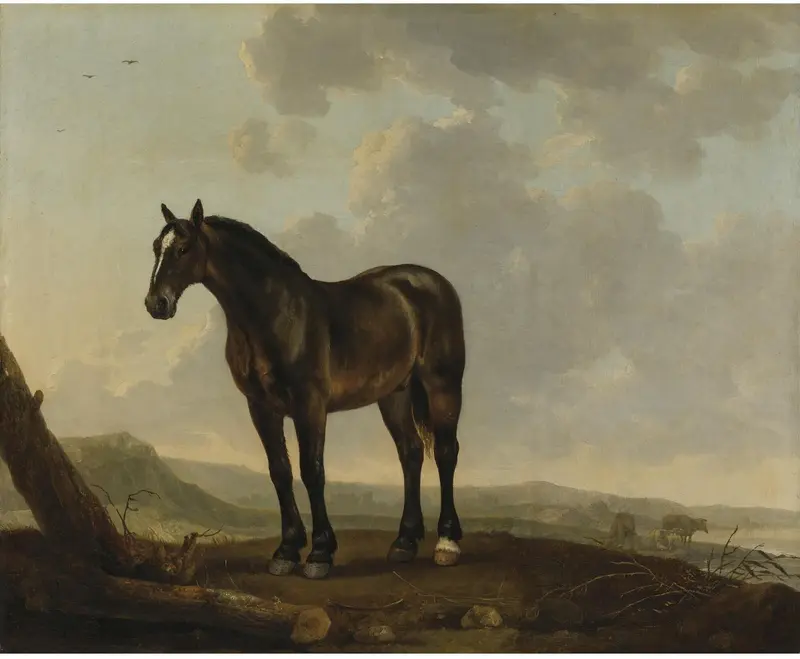
Landscape with a brown horse
Abraham Van Calraet
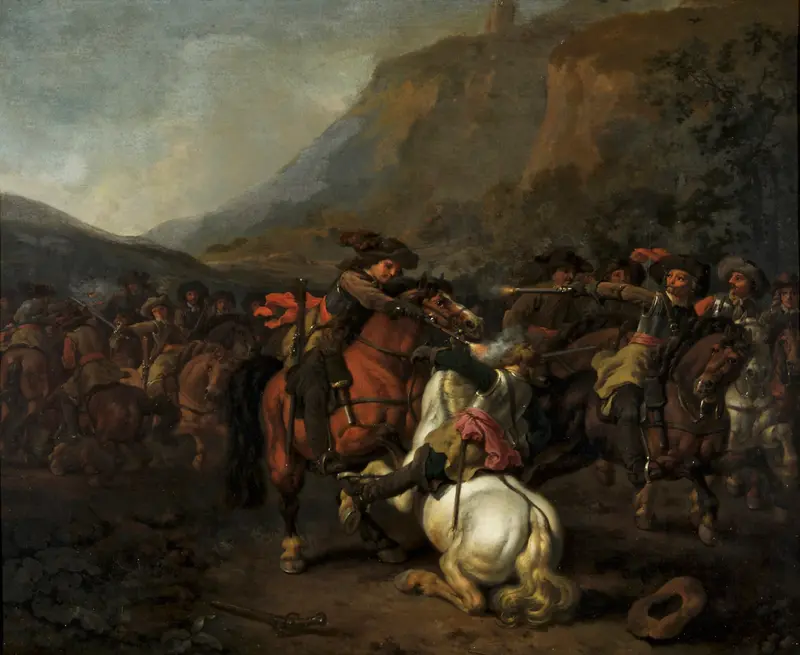
Ruitergevecht DM 016 1163 Dordrechts Museum
Abraham Van Calraet
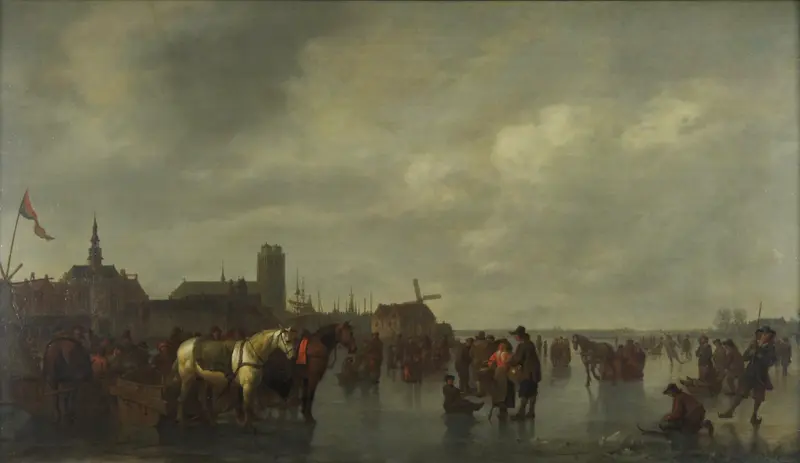
Scene on the Ice outside Dordrecht
Abraham Van Calraet
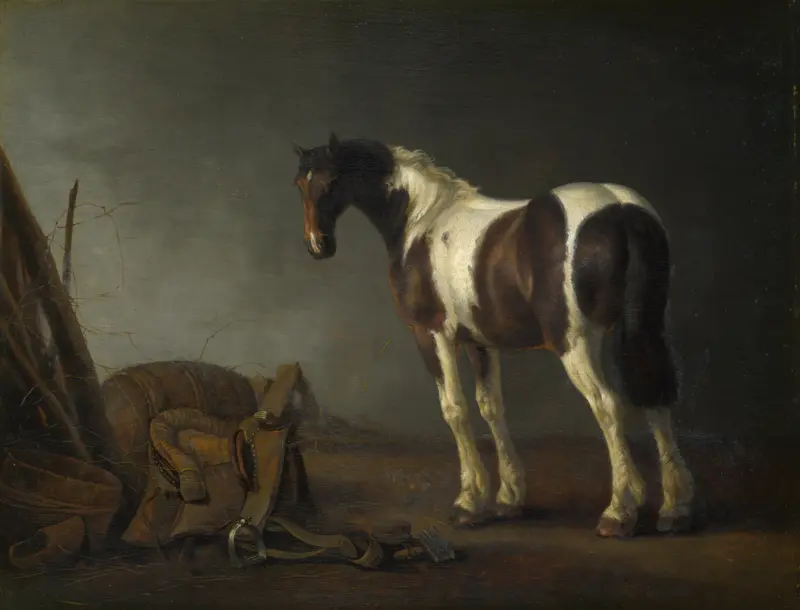
A Horse with a Saddle Beside it
Abraham Van Calraet
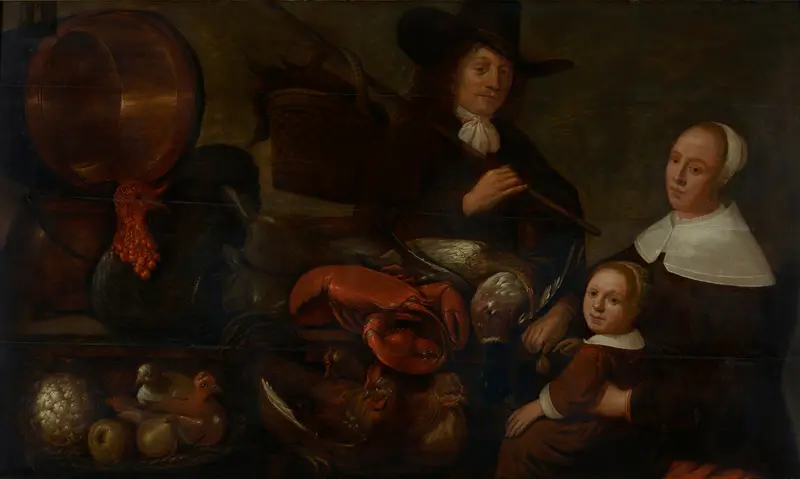
Portrait of a family
Abraham Van Calraet





