Cows at evening — History & Facts
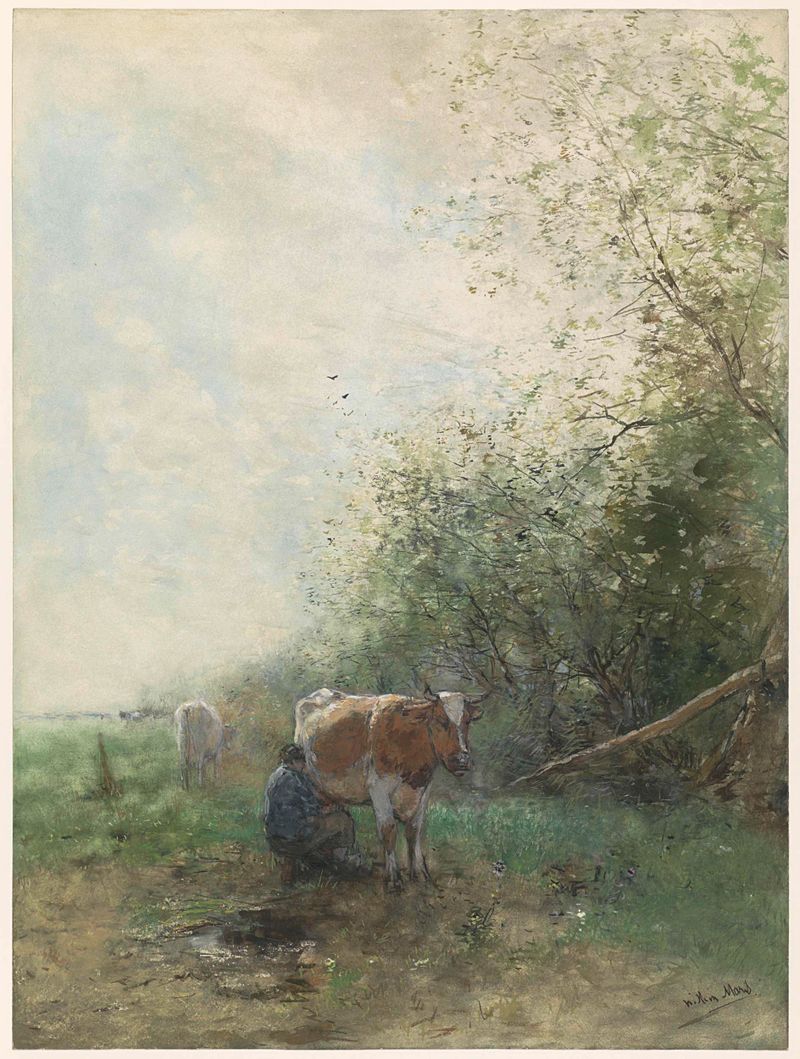
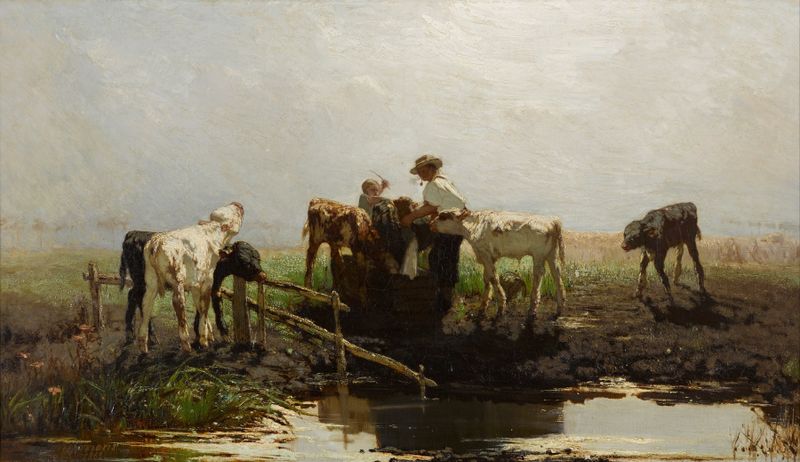
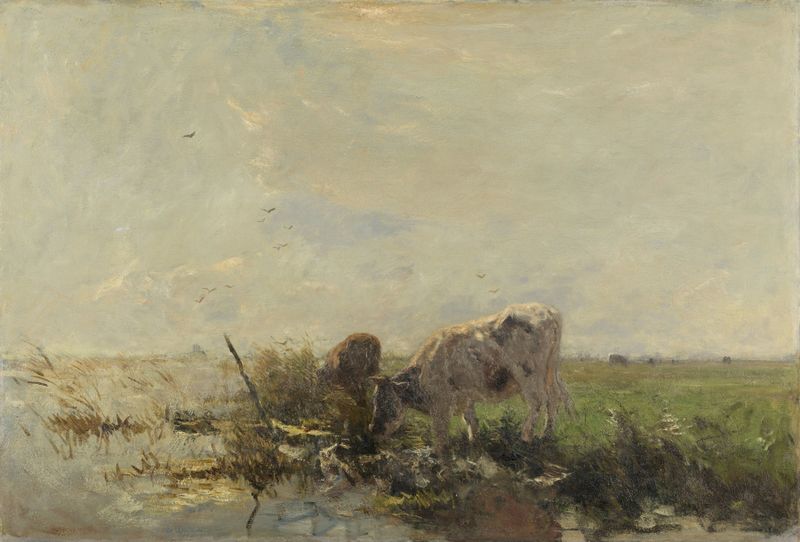
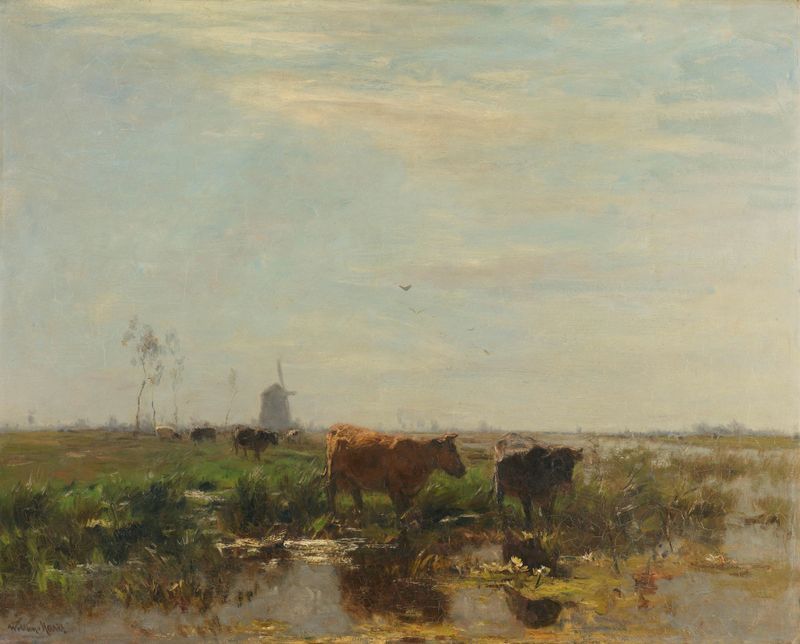
In the gentle embrace of twilight, nature feels alive and breathing. A moment captured, where the ordinary transforms into the extraordinary, inviting us into a space of quiet reflection and awakening. Look to the center of the canvas, where the cows graze lazily, their forms softened by the soft, golden light of evening. Notice how the artist employs delicate brushstrokes to recreate the texture of the animals’ fur, capturing the warmth and tranquility of the scene.
The muted palette—rich browns, serene greens, and the fading blush of the sky—evokes a sense of peace, inviting the viewer to linger in this pastoral moment. Beneath the surface, however, lies a profound exploration of harmony and solitude. The solitary cows symbolize both the tranquility and vulnerability of rural life, their stillness contrasting with the impending dusk that hints at an inevitable passage of time. This duality of peace and transience resonates deeply, encouraging us to reflect on our own moments of awakening amid life’s cyclical nature. Willem Maris painted this evocative piece during a time when the Dutch art world was embracing realism and nature's beauty.
Working in the late 19th century, he sought to capture the essence of pastoral life, drawing from his observations of the Dutch countryside. As Impressionism flourished, Maris found his niche in portraying serene, intimate landscapes, showcasing the delicate interplay of light and shadow that marked his artistic vision.