
Criccieth, N Wales — History & Facts
Could a single brushstroke hold eternity? In Criccieth, N Wales, the artist captures the fleeting essence of a coastal moment, where nature’s beauty teeters on the edge of temporal fear. Look to the left, where soft waves crash against the rugged shore, each ripple echoing a gentle white. The palette swells with muted blues and grays, suggesting both tranquility and foreboding, while the distant hills loom darkly under a heavy sky. Notice how the light, diffused and eerie, dances across the canvas, revealing the textured strokes that breathe life into the scene, inviting the viewer deeper into this serene yet ominous world. The contrast between the placid sea and the turbulent sky speaks to a deeper emotional tension—a fragile balance between calm and chaos.
One can sense the undercurrents of fear, perhaps a reminder of nature's unpredictability, lurking behind the idyllic facade. The solitary boat, minuscule against the vastness, evokes a haunting solitude, a whisper of humanity’s vulnerability amidst nature’s grandeur. In 1899, George Elbert Burr painted this work during a period of significant artistic exploration in America, as Impressionism gained traction. Living in New England, Burr found himself at the crossroads of tradition and modernity, capturing landscapes that echoed his own contemplations of beauty and transience.
This painting reflects the artist's fascination with nature's duality, a theme prevalent in his oeuvre during this transformative era in American art.
More Artworks by George Elbert Burr
Browse all →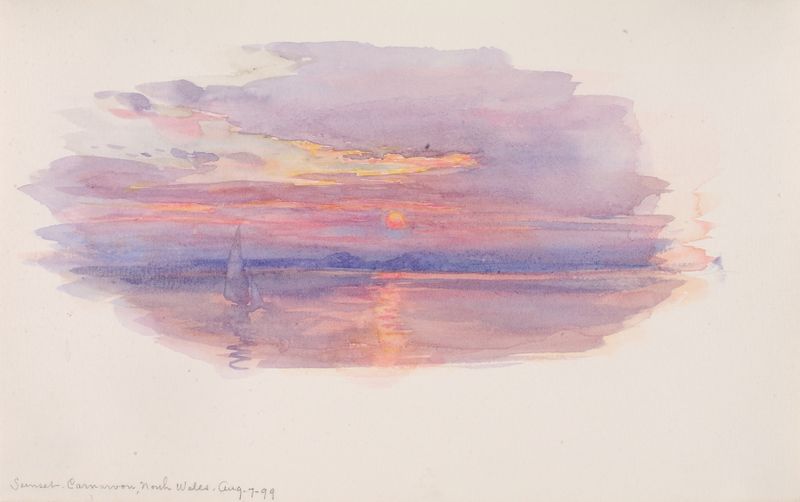
Sunset, Caernarvon, North Wales
George Elbert Burr
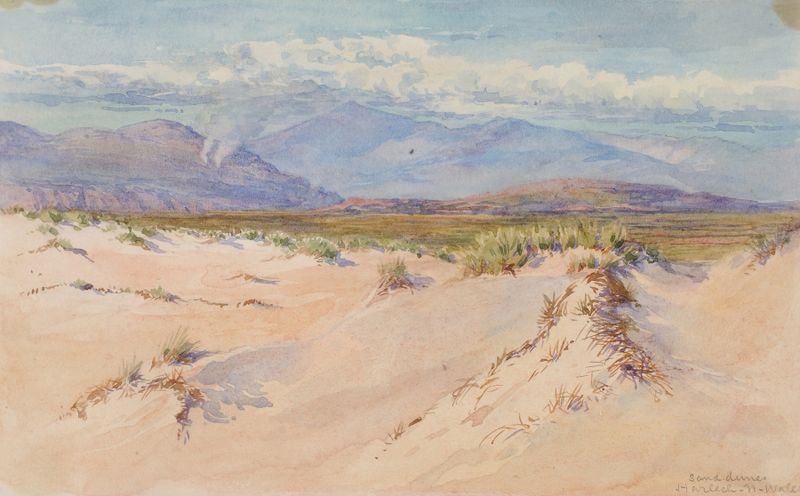
Sand Dunes, Harlech, North Wales
George Elbert Burr

From Pincio, Rome
George Elbert Burr

The Wye near Ross
George Elbert Burr

Venice
George Elbert Burr
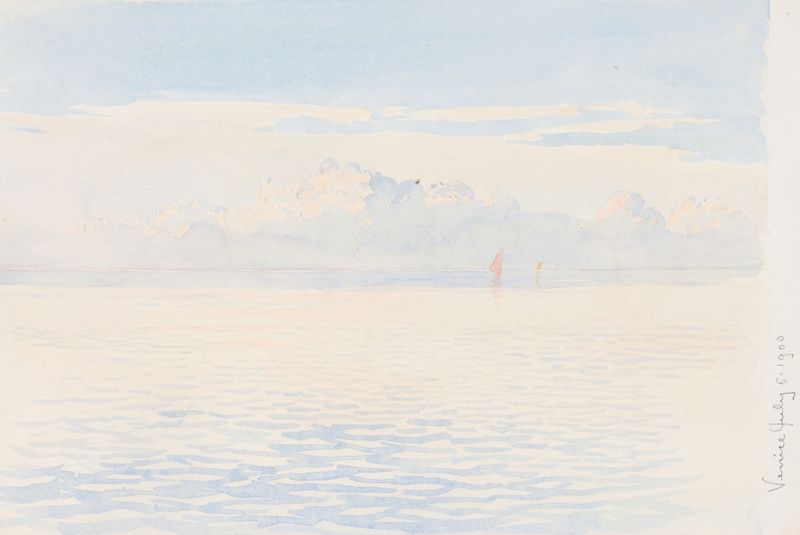
Venice II
George Elbert Burr

Shore at Pwllheli, N. Wales
George Elbert Burr

The Wye at Wilton Castle (Wales)
George Elbert Burr

Venice
George Elbert Burr

Criccieth, N. Wales II
George Elbert Burr





