
Danger aloft – Ptarmigan — History & Facts
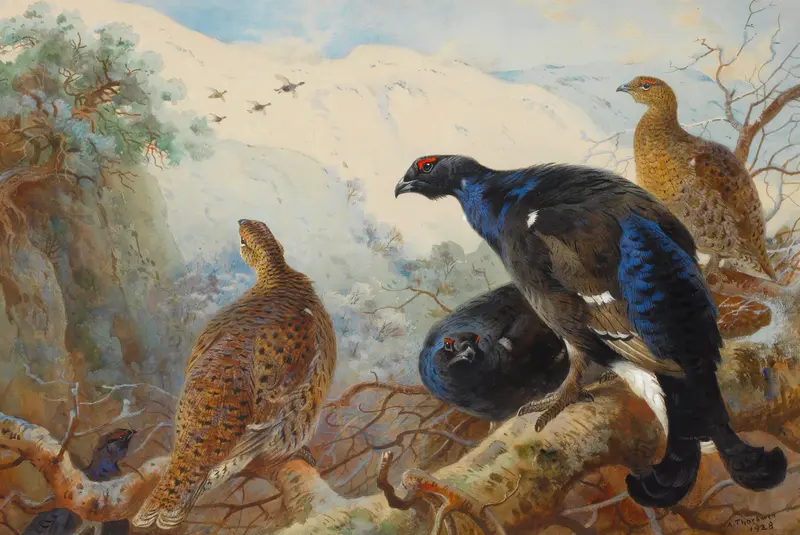
A sudden hush sweeps over the moorland as the ptarmigan freeze mid-forage, their bodies pressed low against the ochre and russet earth. The artist has caught the moment of tension, a split second before flight or stillness becomes survival, as a dark speck—danger aloft—circles high in the pale, cloud-brushed sky. The birds’ crimson eye-combs flicker with alertness, their feathers blending almost perfectly with the autumn bracken, while the sweep of the mountain behind them draws the viewer’s gaze upward to the threat that has stilled the flock.
The careful placement of each bird, some almost invisible among the rocks, invites the eye to search and count, echoing the vigilance that rules their world. Painted in 1927, this work by Archibald Thorburn belongs to a tradition of British wildlife art that flourished in the late nineteenth and early twentieth centuries, when field sports and natural history were passions of the landed gentry. Artists like Thorburn, renowned for their precision and sympathy toward their subjects, supplied illustrations for ornithological books and adorned the walls of country houses. The painting’s presence in the Bonhams collection today speaks to the enduring appeal of such scenes—not merely as records of species, but as windows into the drama and beauty of wild places.
The world that produced this painting prized the balance of observation and artistry, and Thorburn’s ptarmigan, caught between camouflage and exposure, continue to hold the viewer’s attention long after the imagined danger has passed.
More Artworks by Archibald Thorburn

The Watchful Hinds
Archibald Thorburn
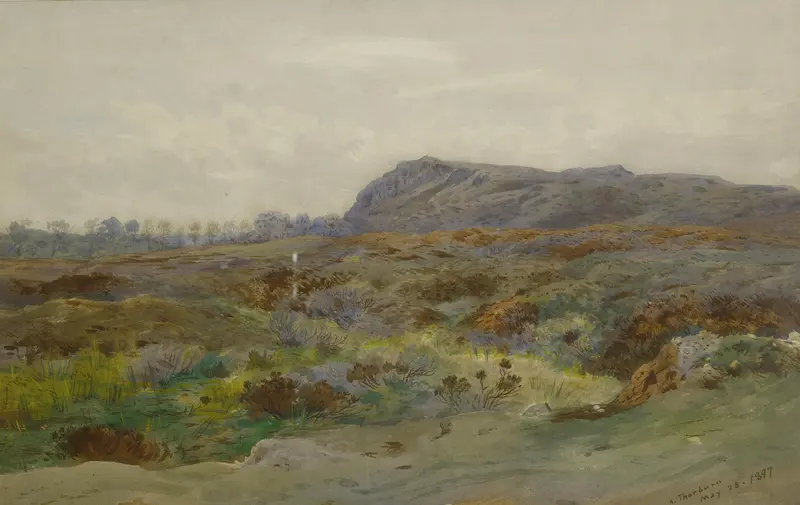
Moorland Landscape
Archibald Thorburn
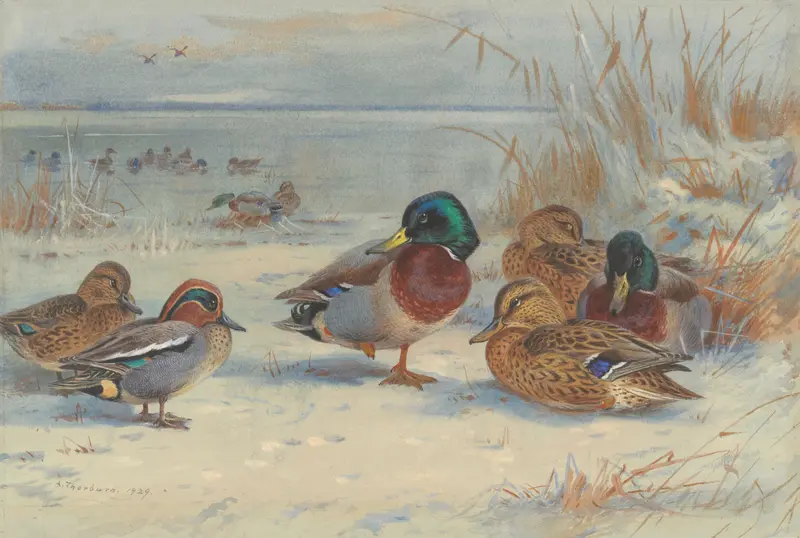
Mallard and teal in the snow
Archibald Thorburn
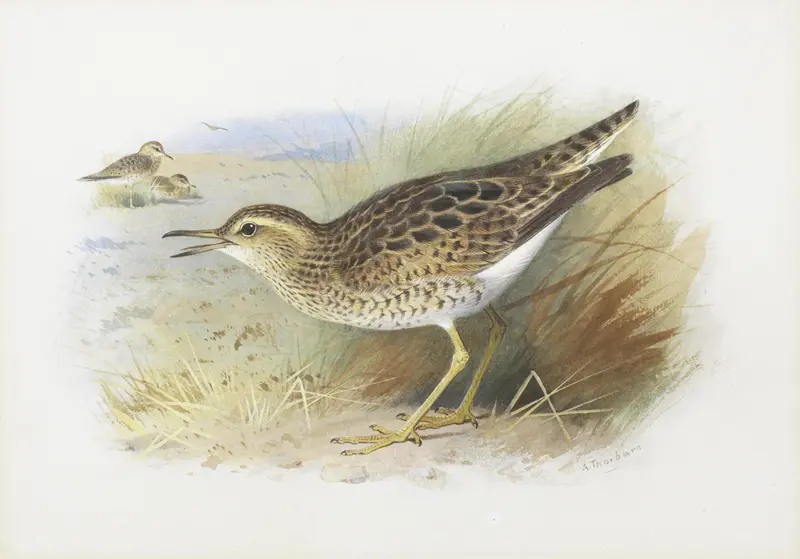
Bartram's Plover
Archibald Thorburn
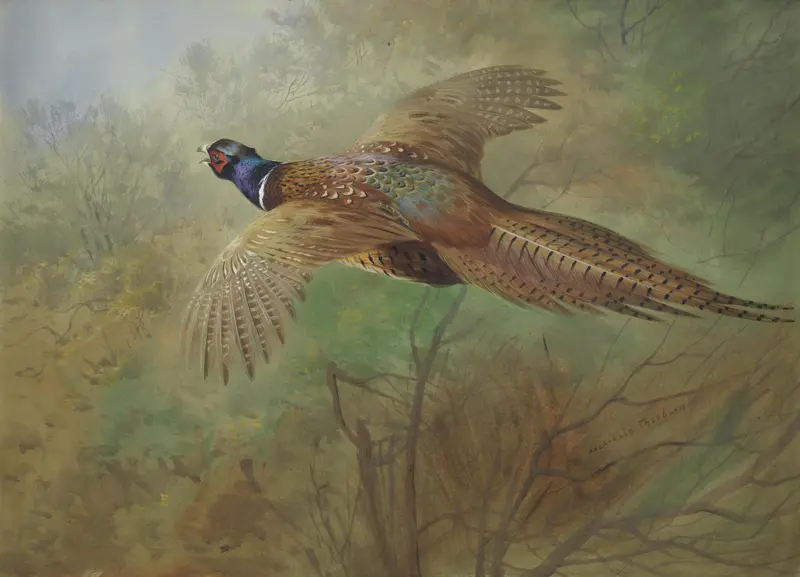
Pheasant in flight
Archibald Thorburn
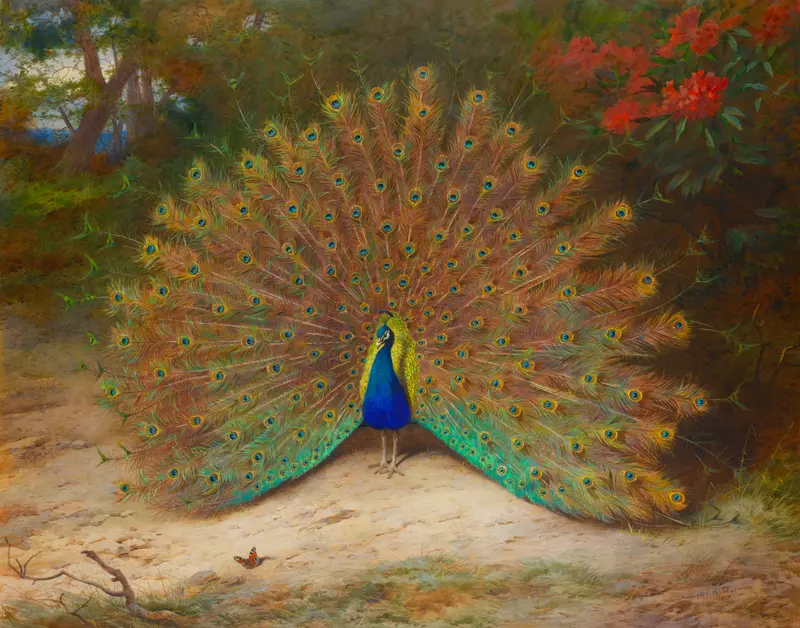
Peacock and Peacock Butterfly
Archibald Thorburn
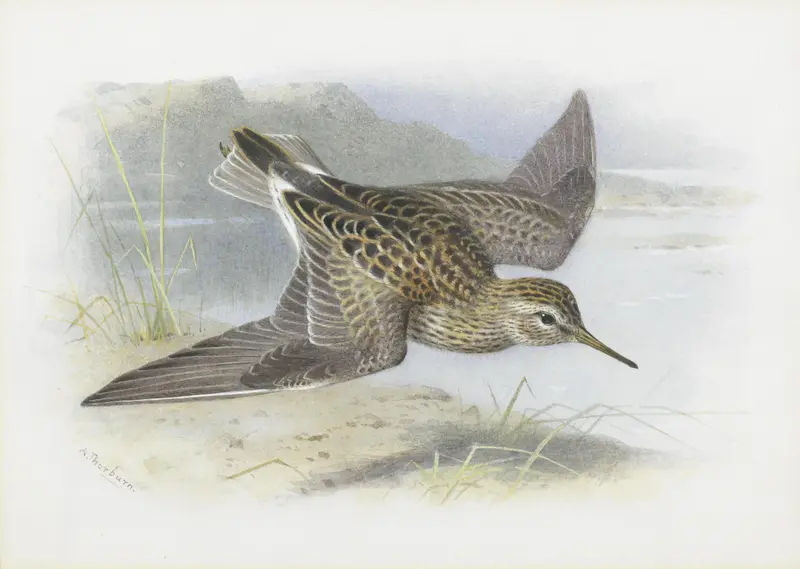
Pectoral Sandpiper
Archibald Thorburn
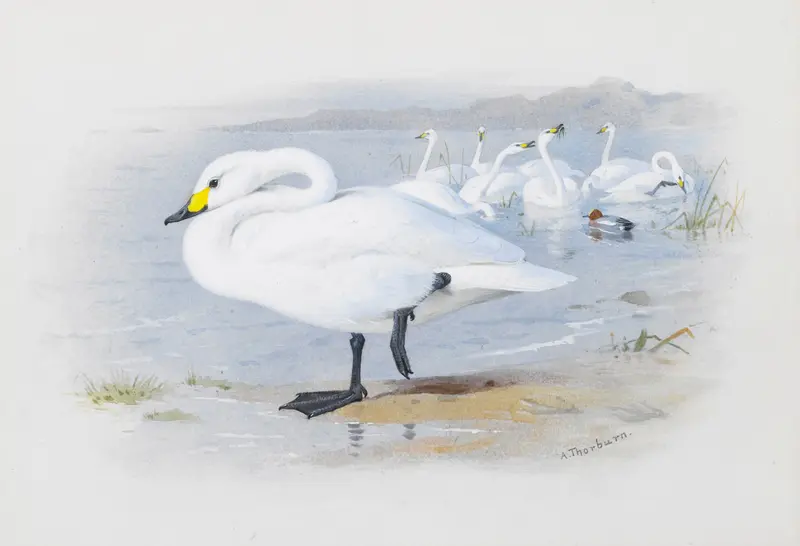
Bewick's swan.
Archibald Thorburn
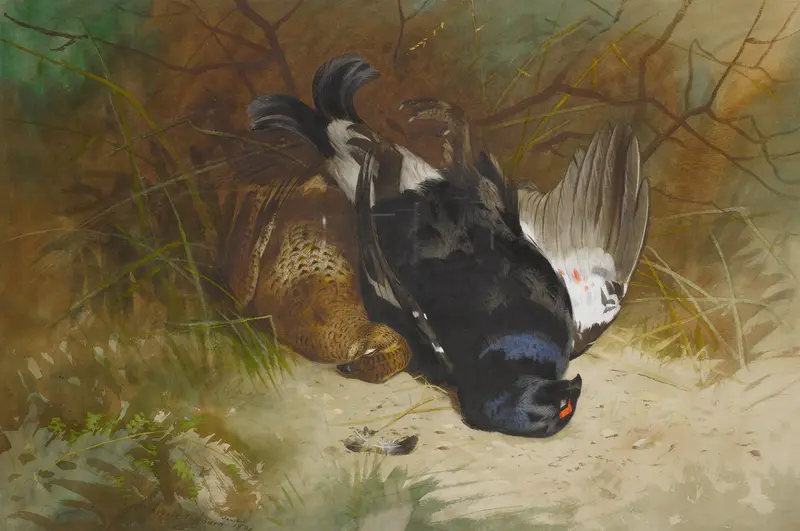
Still life of a pair of Blackgame.
Archibald Thorburn
Blackgame
Archibald Thorburn





