
Dansende man en vrouw, twee zittende mannen en vrouw — History & Facts
In a world where innocence is both a treasure and a tragedy, the juxtaposition between joy and sadness mirrors the human experience. This delicate balance is poignantly captured in the work before us. Look to the center, where a man and woman dance with joyous abandon, their movements echoing the blissful freedom of music. Surrounding them, two seated men and a woman observe, their expressions a blend of admiration and wistfulness.
Notice how the warm, golden hues envelop the dancers, contrasting with the cooler tones of the onlookers, evoking a sense of longing and reflection. The intricate brushwork emphasizes the fluidity of the dancers’ forms, while the meticulous detail in the clothing grounds the figures in their time. The positioning of each figure speaks volumes—while the dancers are caught in their moment of ecstasy, the seated trio’s stillness draws attention to the fleeting nature of such joy. The interplay of light and shadow not only highlights the dancers’ youthful exuberance but also casts a gentle veil over the seated figures, suggesting the weight of unexpressed emotions.
In this composition, innocence shines brightly but is shadowed by the collective consciousness of what it means to observe rather than participate. Created between 1642 and 1664, this piece emerged during a time of profound change in Dutch art. Cornelis Pietersz. Bega found himself navigating the rich traditions of genre painting while infusing his works with a sense of intimacy and complexity.
The cultural landscape of the period, marked by the flourishing of the arts and a growing interest in the human condition, undoubtedly influenced the artist’s exploration of themes like innocence and longing.
More Artworks by Cornelis Pietersz. Bega
Browse all →
Mannen en jonge vrouw in herberg
Cornelis Pietersz. Bega

Twee mannen en vrouw met kind zittend in herberg
Cornelis Pietersz. Bega
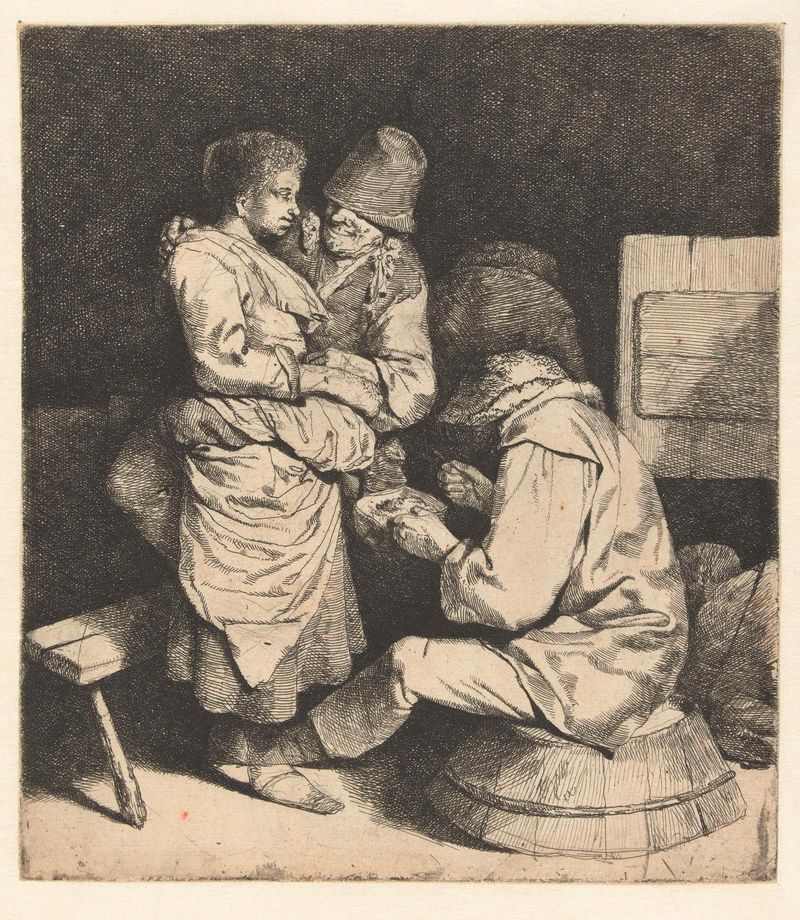
Vrouw vastgepakt door man, andere man zit te eten in herberg
Cornelis Pietersz. Bega

Jonge vrouw zittend met een pijp
Cornelis Pietersz. Bega

Staande vrouw vastgepakt door man, andere man kijkt toe in herberg
Cornelis Pietersz. Bega
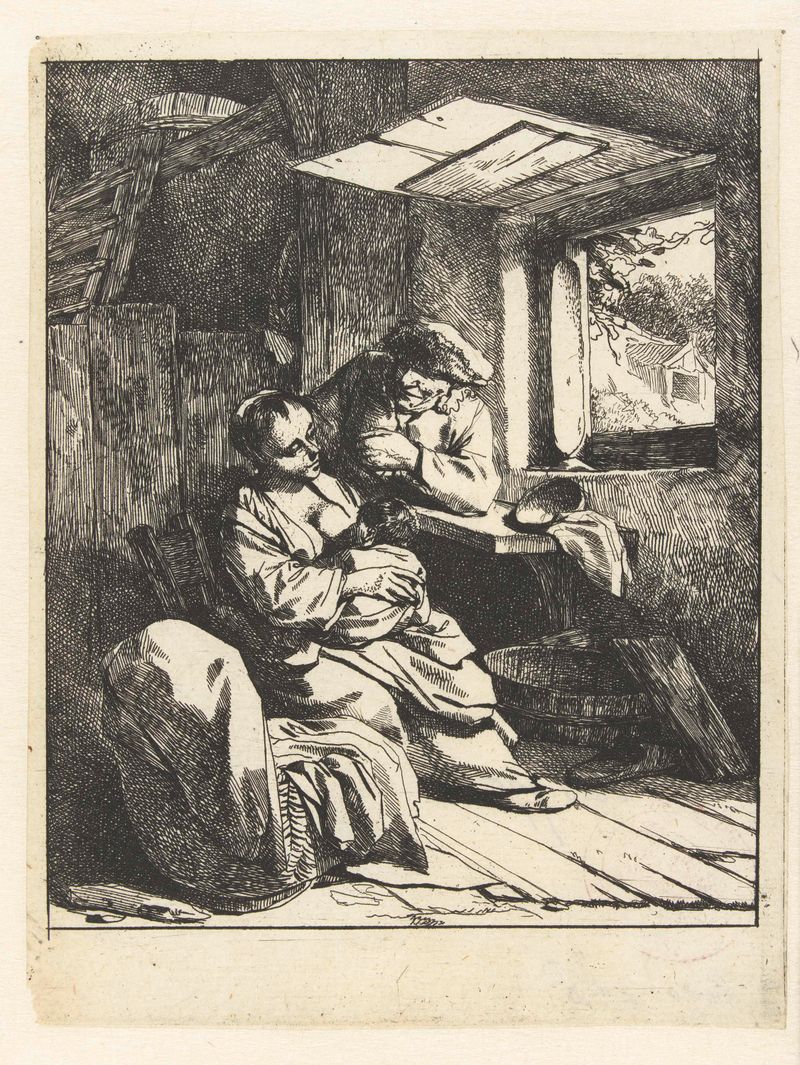
Vrouw met kind en man bij wieg in interieur met open raam
Cornelis Pietersz. Bega
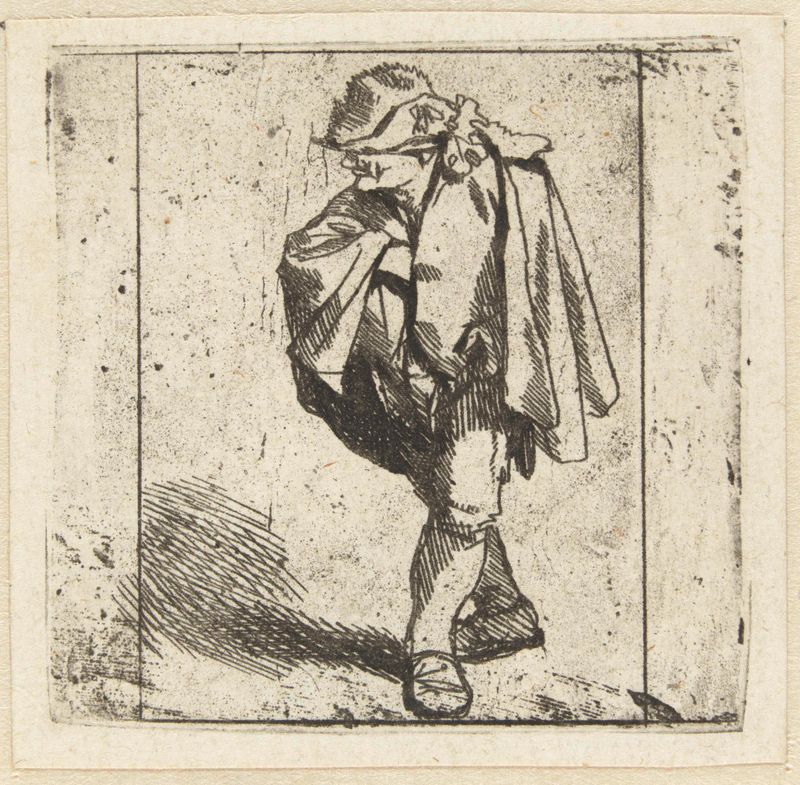
Staande man met de rechterhand op de borst in zijn mantel gestoken
Cornelis Pietersz. Bega
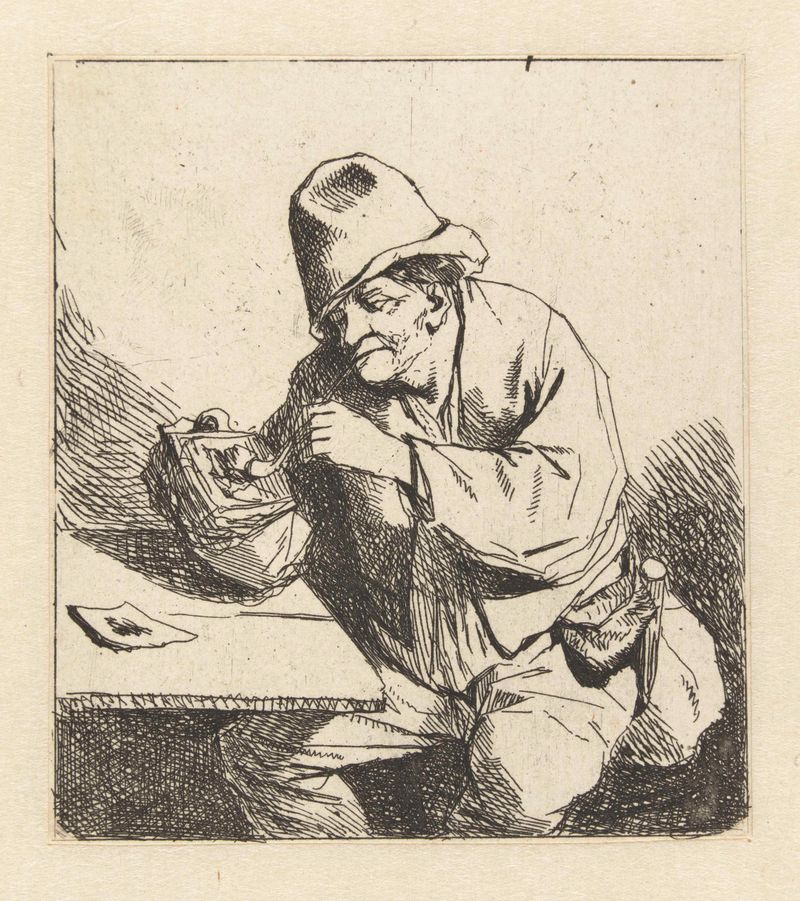
Zittende man steekt pijp aan
Cornelis Pietersz. Bega

Man zittend op ton met kruik in handen
Cornelis Pietersz. Bega

Liefdespaar
Cornelis Pietersz. Bega





