
Daruma (Buddhist Saint) — History & Facts
No other figure in Japanese art has been as persistently reimagined as Daruma, the legendary founder of Zen Buddhism, and few artists have returned to him as often as Katsushika Hokusai. In 1799, Hokusai produced Daruma (Buddhist Saint) during a period of personal reinvention, when he was changing both his name and artistic style. The real Daruma—known in India as Bodhidharma—was said to have meditated facing a wall for nine years, a feat that became a favorite subject for painters eager to capture the limits of human endurance and enlightenment.
Hokusai’s version stands out for its intensity and immediacy, and for the way it helped mark a shift in Japanese popular art toward bolder, more expressive figures. At the heart of the image is Daruma himself, caught in a moment of fierce concentration. His wide, staring eyes and wild beard dominate the composition, while his robe, rendered in sweeping lines, seems to swirl with pent-up energy. Hokusai chooses not to show the saint in serene meditation, but rather at the instant his legendary patience is tested—a choice that brings out the human struggle beneath the legend.
The exaggerated features and dynamic brushwork recall the theatricality of Utagawa Kuniyoshi’s later warrior prints, but Hokusai’s Daruma is less a hero than an embodiment of spiritual struggle. The absence of background detail throws all attention on the figure, making the viewer confront Daruma’s gaze directly. The medium of this particular Daruma (Buddhist Saint) remains uncertain, as does its early provenance—a common challenge with Hokusai’s works from this period, which ranged from paintings to woodblock prints and often circulated widely. What is clear is that Hokusai’s repeated engagement with Daruma helped cement the saint’s place in Japanese visual culture and signaled the artist’s own restless search for new forms.
Today, this image is prized not just as a religious icon, but as a turning point in Hokusai’s career, foreshadowing the expressive force that would define his later masterpieces. Its current location is not firmly established, but it remains a touchstone for scholars tracing the evolution of both Hokusai’s art and the enduring image of Daruma.
More Artworks by Katsushika Hokusai

The Great Wave off Kanagawa
Katsushika Hokusai
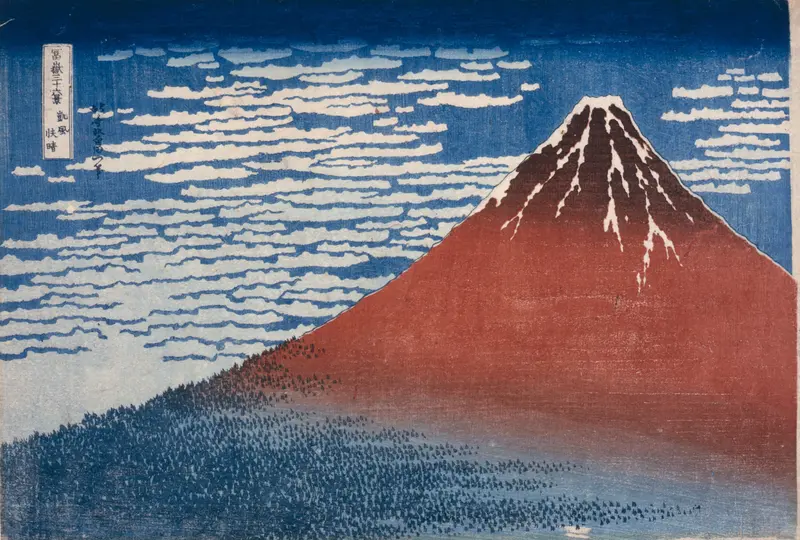
Fine Wind, Clear Morning (Red Fuji)
Katsushika Hokusai
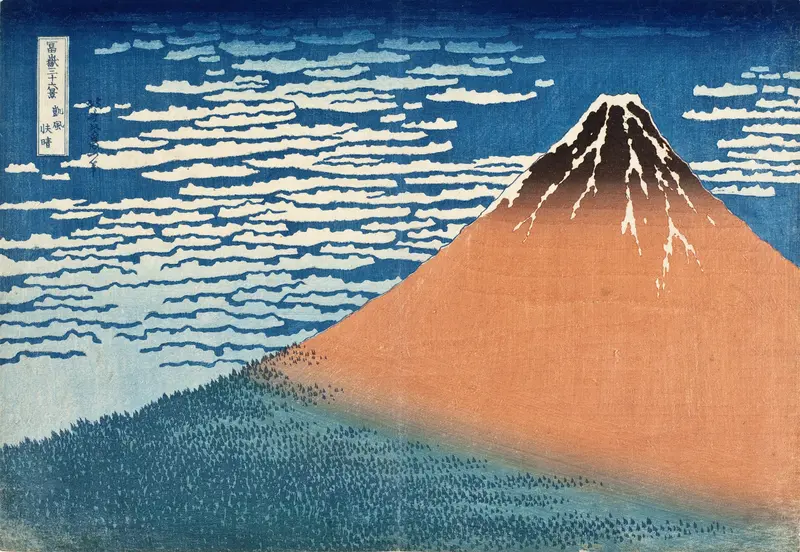
South Wind, Clear Dawn
Katsushika Hokusai
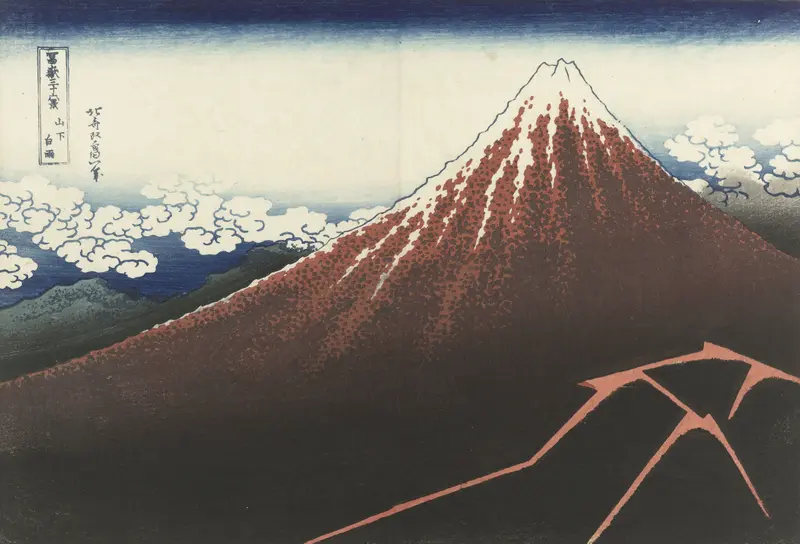
Rainstorm Beneath the Summit
Katsushika Hokusai
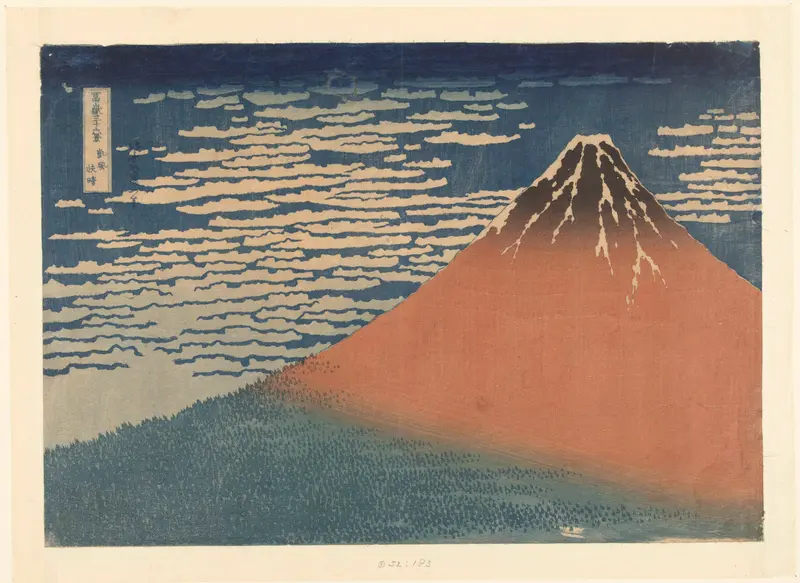
Clear Weather with a Southerly Wind
Katsushika Hokusai
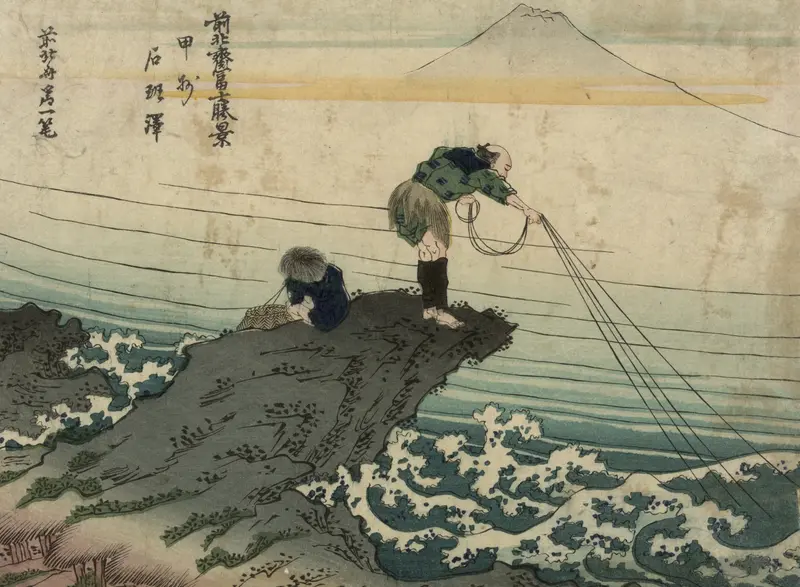
Kōshū kajikazawa
Katsushika Hokusai
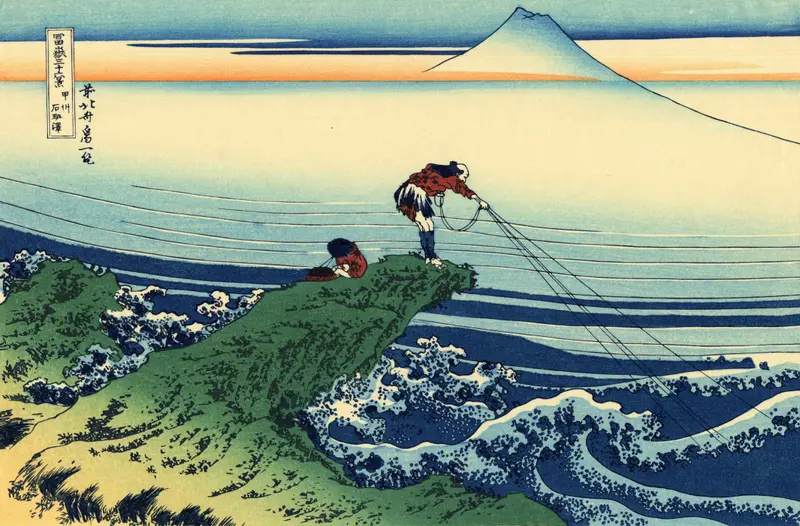
Kōshū kajikazawa 2
Katsushika Hokusai
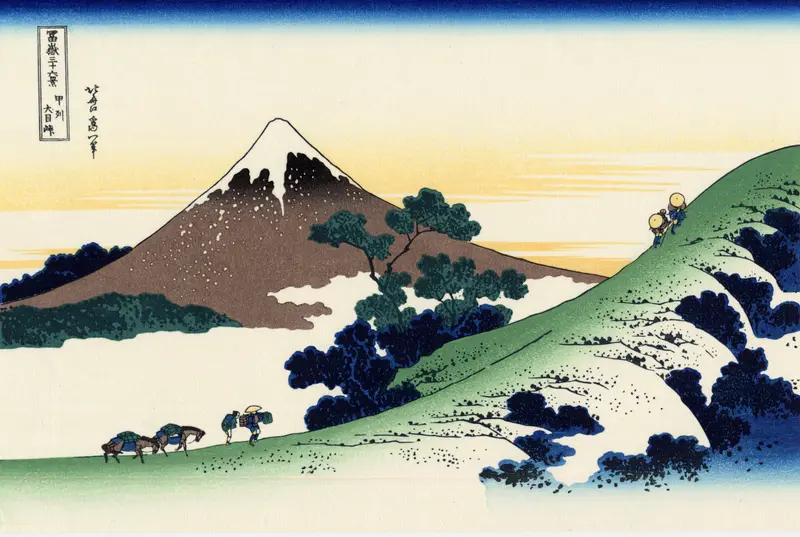
Inume Pass in Kai Province (Kôshû inume-tôge)
Katsushika Hokusai

Yoro Falls in Mino Province (Mino no Yoro no taki), from the series "A Tour of Waterfalls in Various Provinces (Shokoku taki meguri)"
Katsushika Hokusai
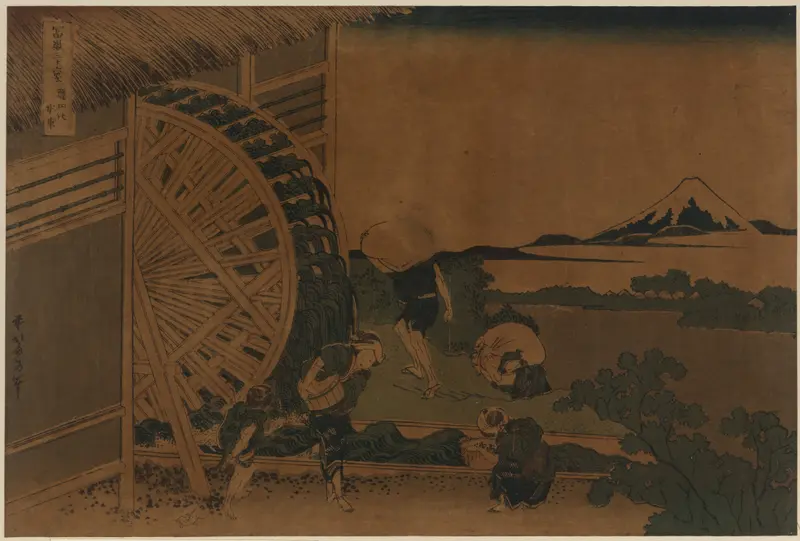
Onden no suisha
Katsushika Hokusai





