David speelt harp voor Saul — History & Analysis
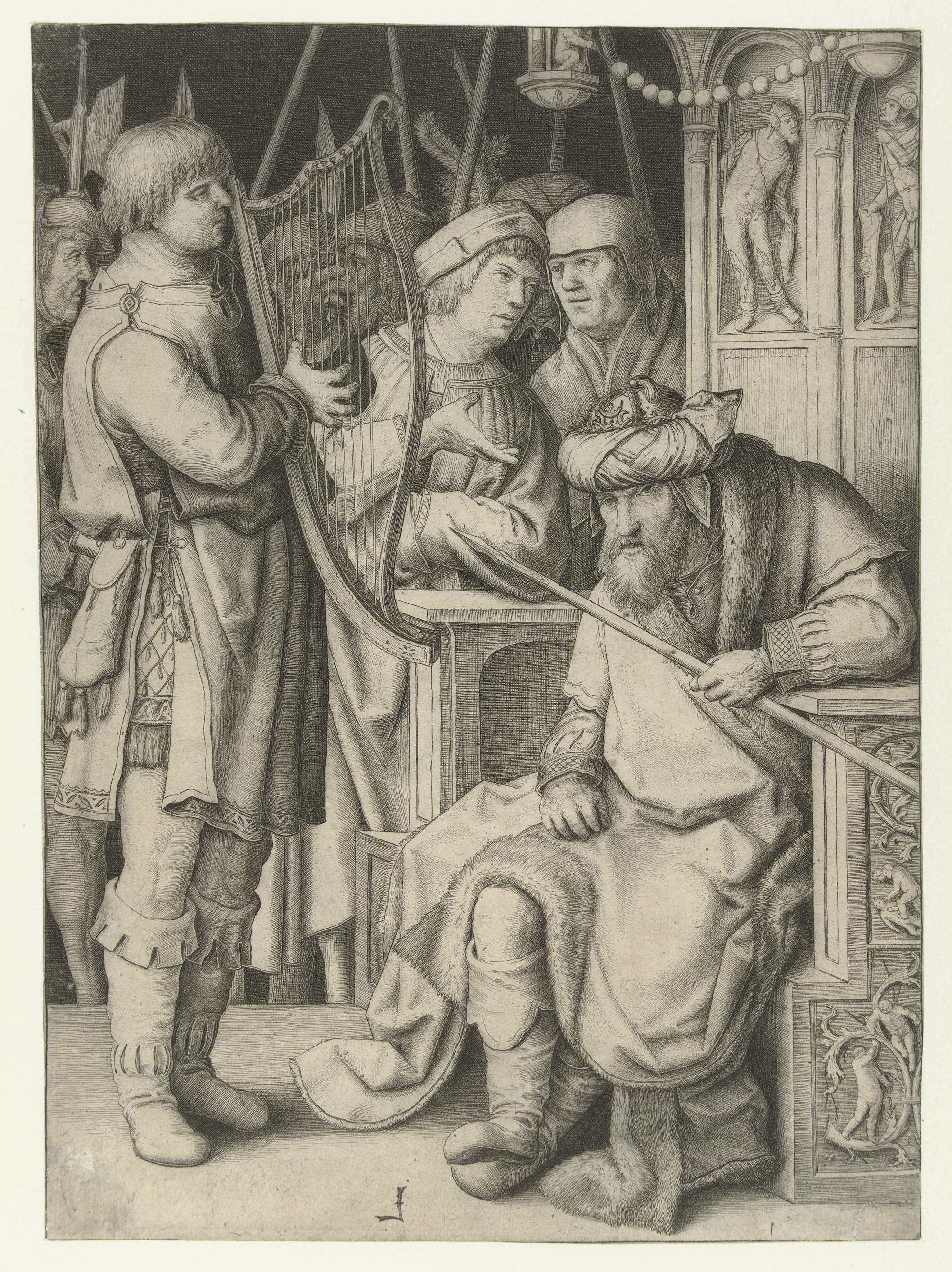
“Under the brush, chaos becomes grace.” In the quiet moments of creation, dreams unfurl, revealing hidden truths and untold stories awaiting discovery. Focus on the serene expression of David, as he strums his harp with gentle precision. Look closely at the way light filters through the fabric of Saul’s rich garments, illuminating the scene with a soft glow. The warm hues of gold and brown envelop the figures, creating a sensation of intimacy that draws the viewer in.
Notice the intricate details in David’s delicate fingers, the tension in his posture, and the way his eyes seem to connect with the soul of the troubled king, offering solace through music. Beneath the surface, the painting contrasts vulnerability and strength. David’s youthful demeanor juxtaposes Saul’s weary sadness, hinting at the underlying struggle for power that looms over them both. The harp, a symbol of peace, becomes a bridge between two worlds: the innocence of a shepherd and the burden of a king.
This moment captures more than just a performance; it reflects the profound interdependence of art and emotion, suggesting that music can soothe even the deepest fears and insecurities. In the years between 1506 and 1510, Lucas van Leyden thrived in the vibrant art scene of the Northern Renaissance, a period marked by detailed realism and a growing emphasis on narrative in painting. Residing in Holland, he was grappling with his own artistic identity amid the influences of contemporaries. It was a time when artists were beginning to explore the depths of human experience, and in this piece, he captured an ephemeral moment that resonates through history, echoing the timeless nature of art itself.