
De jager (Le garde chasse). 55394 Museum Gouda — History & Facts
A sudden tension crackles in the air as the central figure, gun poised, steps forward into the wild under a sky heavy with storm. The viewer is drawn first to the back of this solitary hunter—his posture taut, his intent clear, his dogs straining at his heels—before the eye is swept leftward to the distant pair of figures, half-lost in shadow, and the darkening landscape that threatens to swallow them all. The drama is not in the chase itself, but in this moment of anticipation: the charged stillness before action, the way the light briefly catches the hunter’s shirt and the tangled brush, while the rest of the world seems to crouch under the weight of the coming weather.
Decamps uses the low horizon to give the stormy sky a dominating presence, making nature itself a participant in the hunt. Painted in 1830, De jager (Le garde chasse) belongs to a world on the cusp of change. In early nineteenth-century France, scenes of rural labor and country life began to claim space on canvases once reserved for myth and nobility, reflecting a growing fascination with the realities of everyday existence. Works like this—now in the collection of Museum Gouda—were rarely commissioned by the elite, but found their way into the hands of collectors drawn to the raw honesty and immediacy of the countryside.
History has kept few traces of this particular painting’s journey, but its brooding energy places it firmly within the Romantic movement’s embrace of the untamed and the real. Let your gaze linger on the hunter’s bent back and the restless sky, and feel the world of 1830 press close.
More Artworks by Alexandre-Gabriel Decamps

Still Life with Herring, Bread, and Cheese
Alexandre-Gabriel Decamps
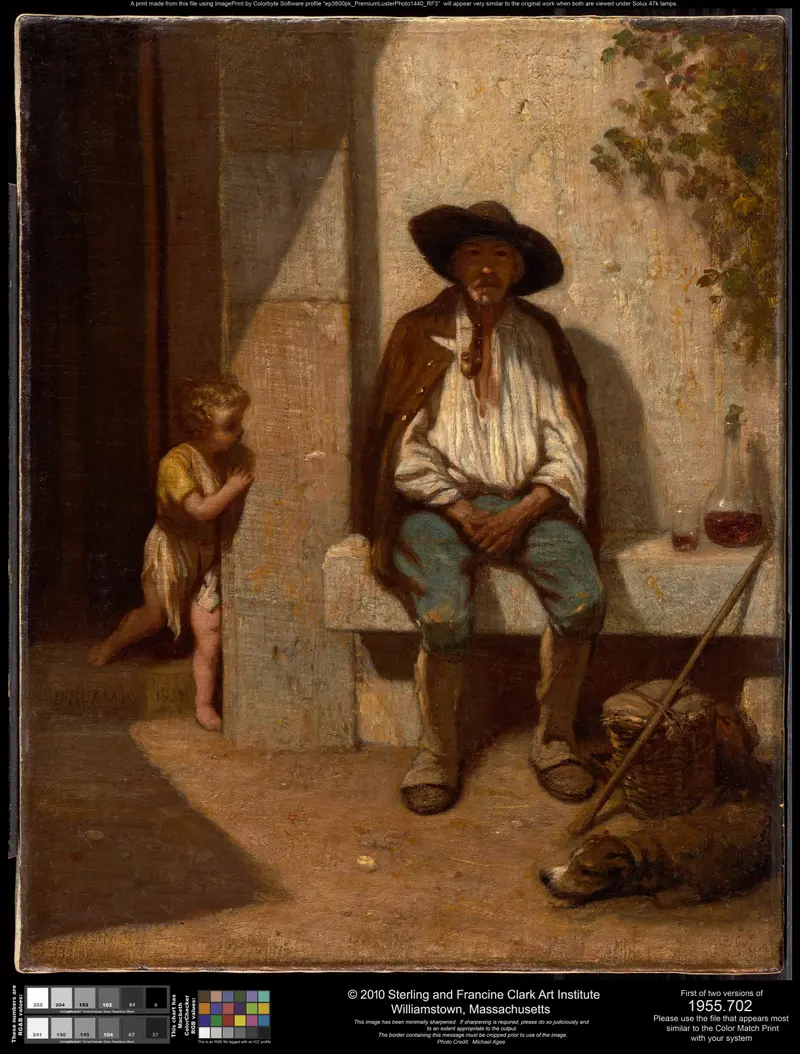
Italian Peasant
Alexandre-Gabriel Decamps
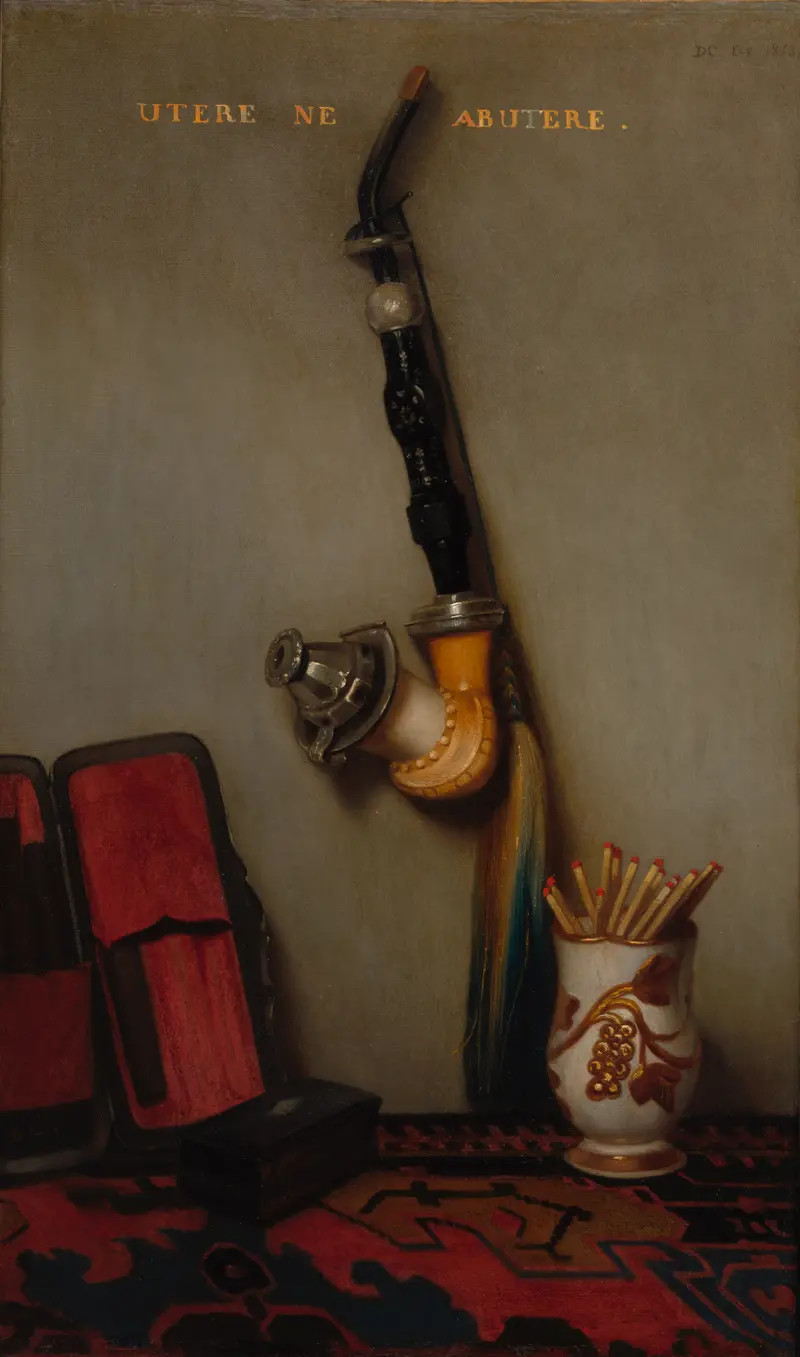
Still Life with Pipe and Matches
Alexandre-Gabriel Decamps
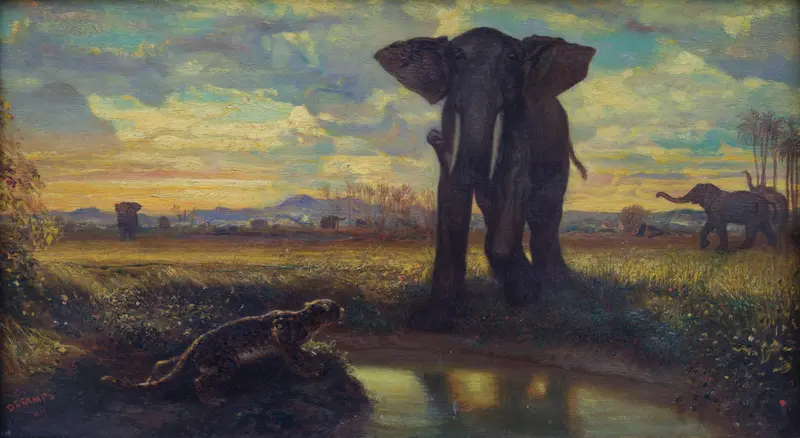
Tigre et éléphant à la source Musée du Louvre Peintures RF
Alexandre-Gabriel Decamps
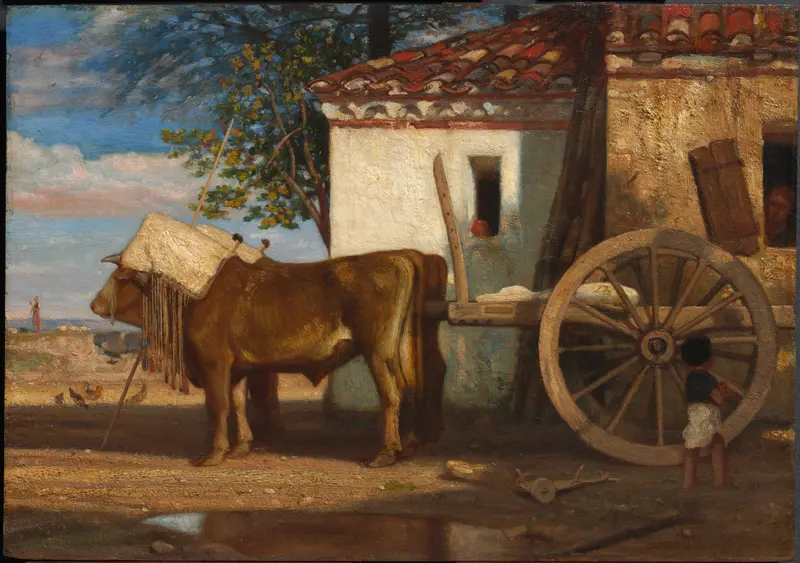
Oxen before a Farmhouse at Le Verrier
Alexandre-Gabriel Decamps
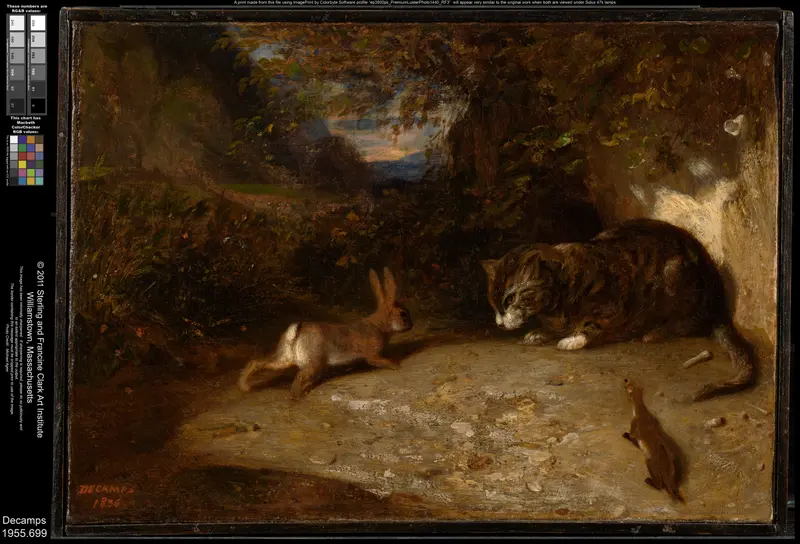
Cat, Weasel, and Rabbit
Alexandre-Gabriel Decamps
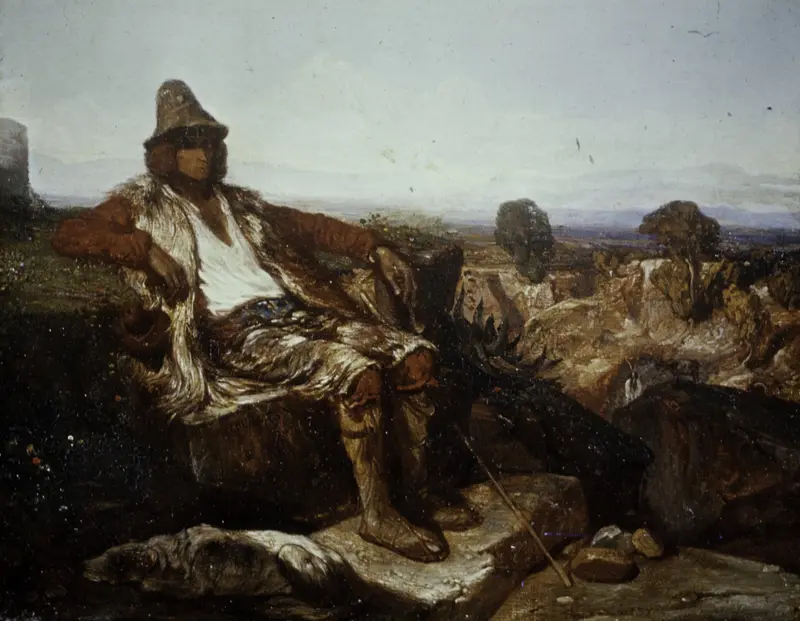
Goatherd of the Abruzzi
Alexandre-Gabriel Decamps
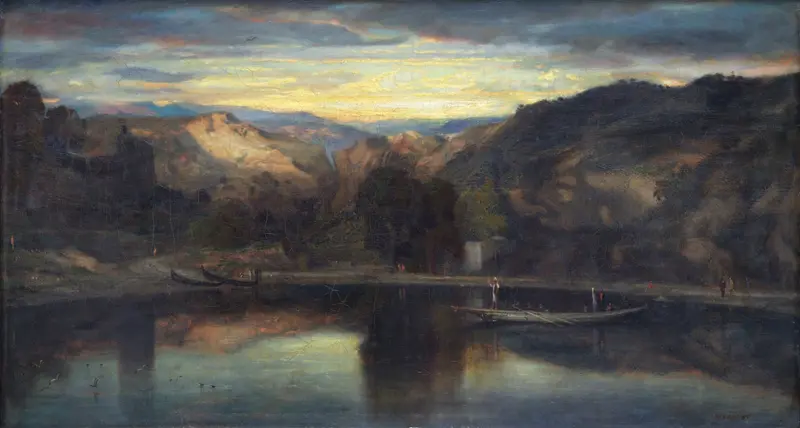
Jésus sur le lac de Génésareth Musée du Louvre Peintures RF
Alexandre-Gabriel Decamps

Espagnols jouant aux cartes Musée du Louvre Peintures RF
Alexandre-Gabriel Decamps
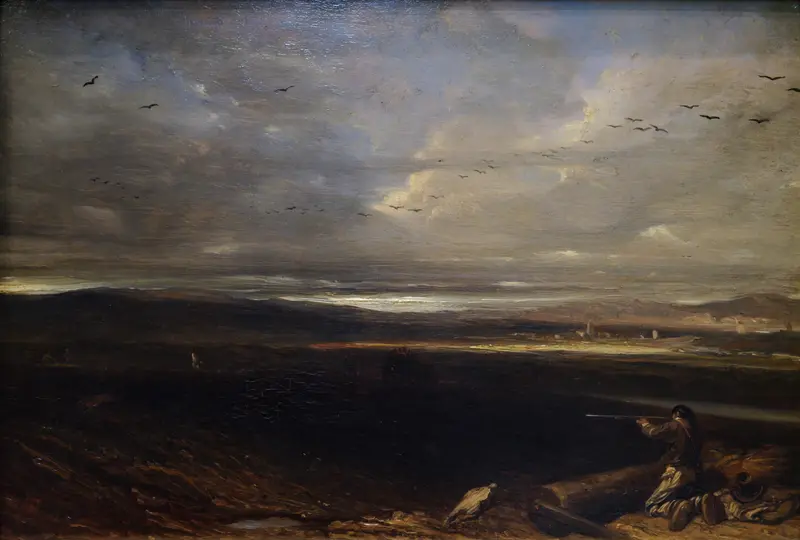
La battue en plaine Musée du Louvre Peintures RF
Alexandre-Gabriel Decamps





