
De kermis bij de molen — History & Facts
In the vibrant chaos of life, the mark we leave can echo through time, shaping the legacy we leave behind. Focus on the swirling colors that dance across the canvas, drawing the viewer's eye into the exuberance of a fairground at the foot of a windmill. The joyful figures, rendered in whimsical detail, possess an almost dreamlike quality that invites exploration. The contrast of warm yellows and reds against cooler blues creates a pulsating rhythm—where laughter meets nostalgia.
Each brushstroke seems to vibrate with the energy of festivities, yet hints at deeper undercurrents of fleeting moments captured in time. Look closely at the faces of the attendees, each painted with exaggerated features that suggest both delight and a hint of melancholy. This juxtaposition speaks to the ephemeral joy of celebration, reflecting how happiness and sorrow often coexist. The windmill, towering and steadfast, stands as a silent witness to this dance of life, embodying the passage of time and the legacy embedded within these joyful gatherings. In 1889, Ensor was living in Ostend, Belgium, a period characterized by his exploration of themes intertwining joy and existential inquiry.
The art world was shifting, with movements like Impressionism challenging traditional forms. This painting illustrates his belief in the importance of memory and experience, positioning him as a pivotal figure in the evolution of modern art.
More Artworks by James Ensor
Browse all →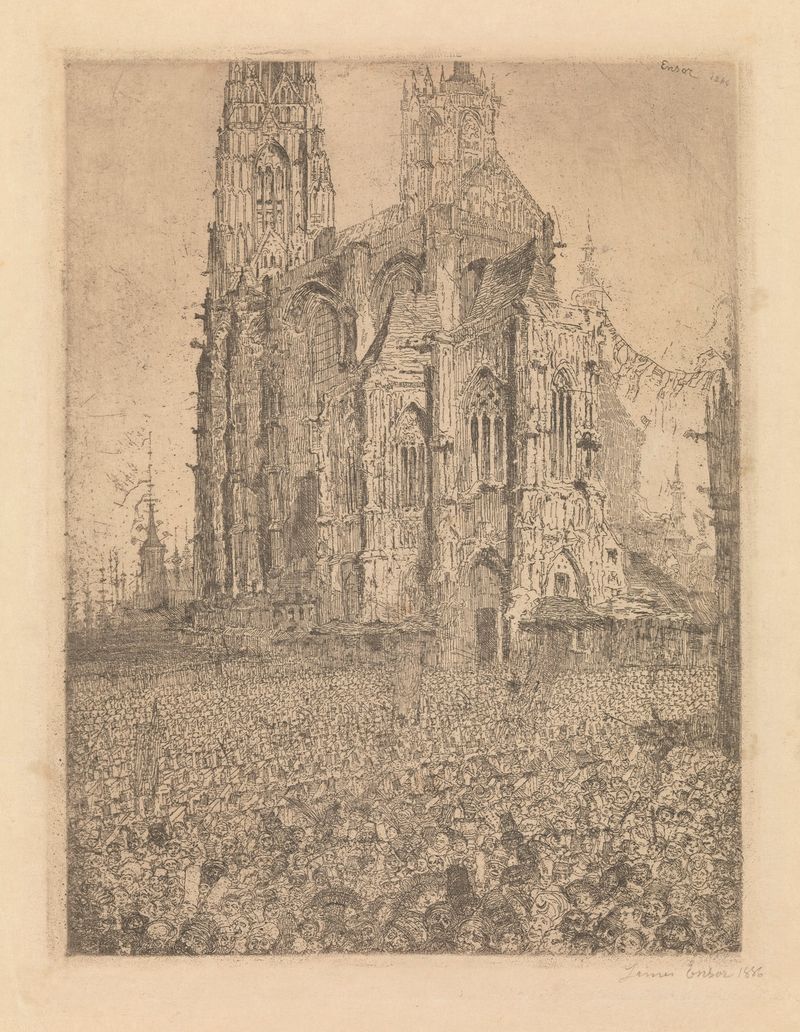
The Cathedral
James Ensor
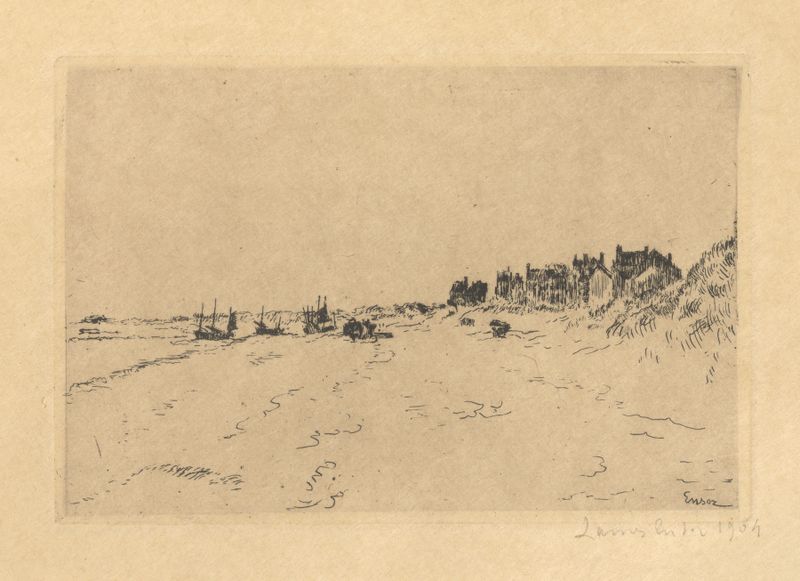
Het strand van De Panne
James Ensor
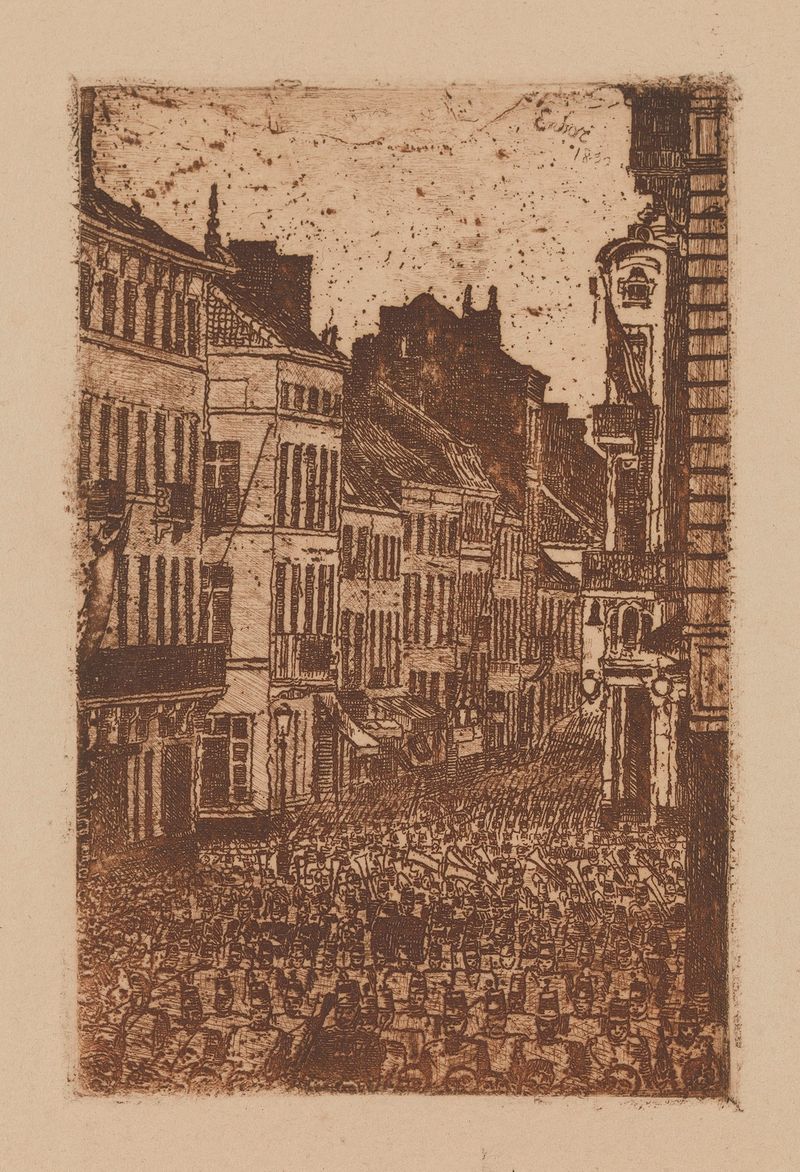
The Music in the rue de Flandre, Ostend
James Ensor
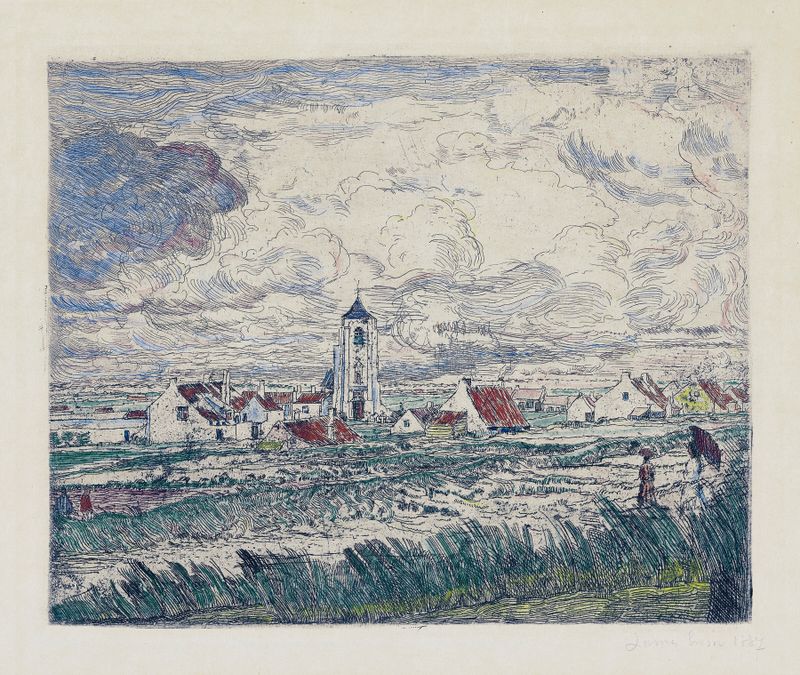
Grande vue de Mariakerke
James Ensor
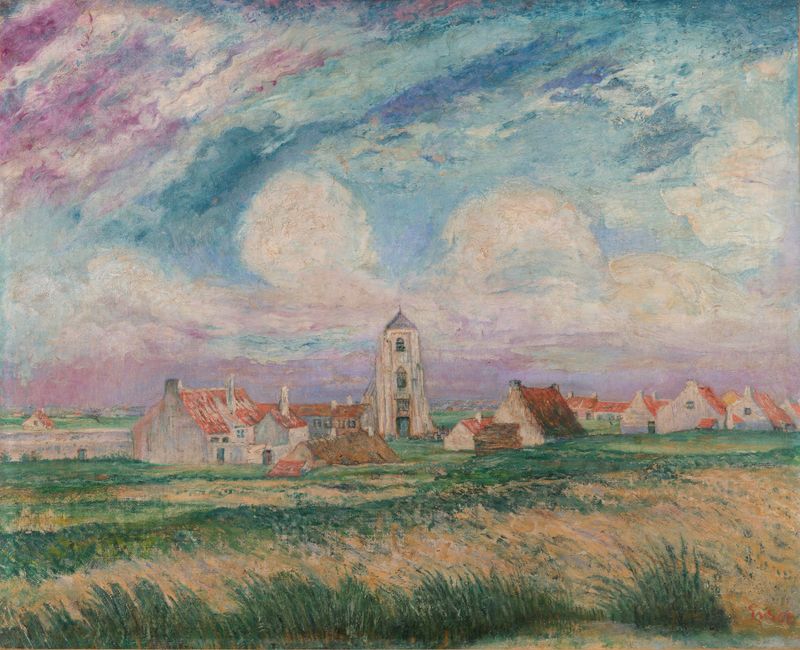
View of Mariakerke
James Ensor
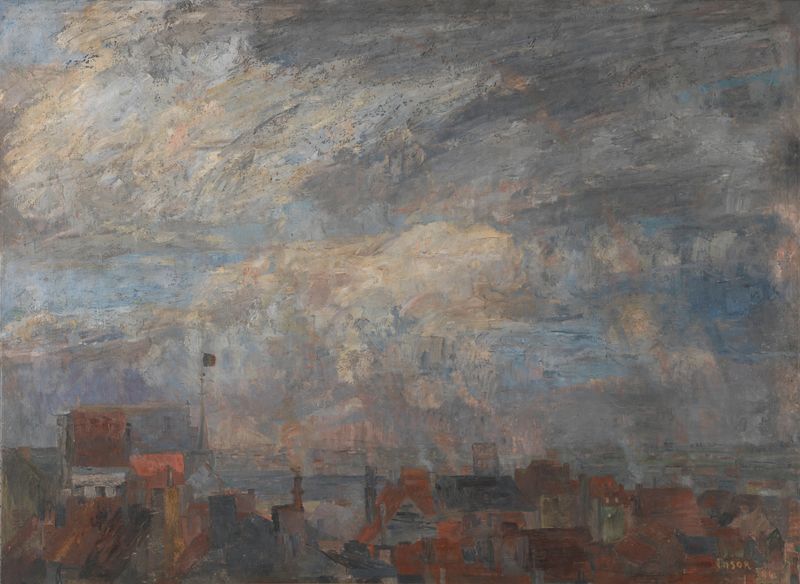
The Rooftops of Ostend
James Ensor
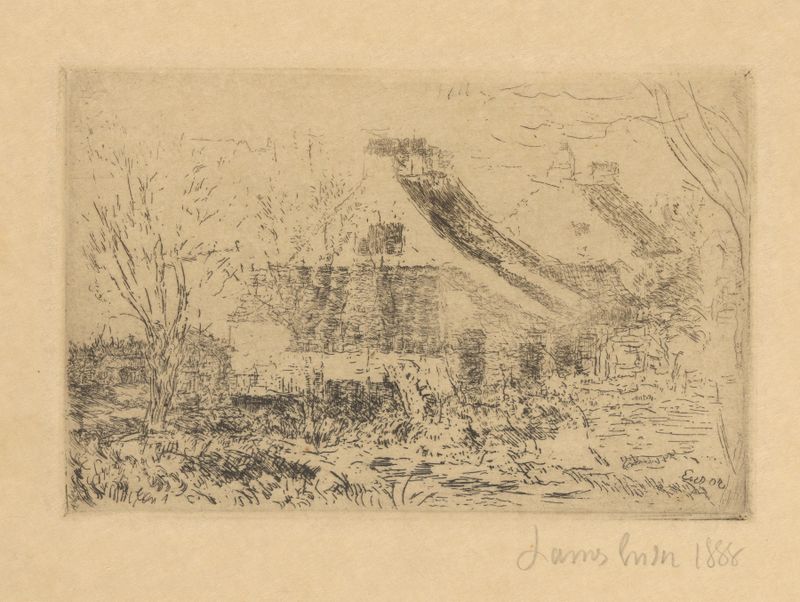
Huisjes in Mariakerke
James Ensor
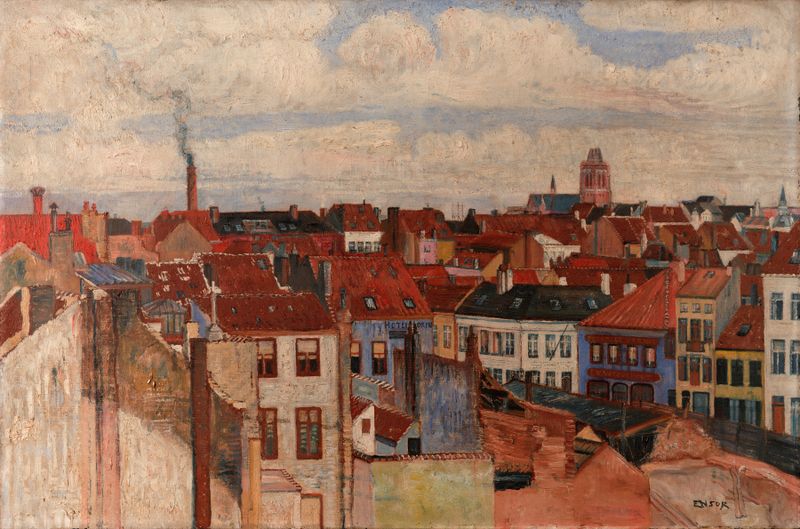
The rooftops of Ostend
James Ensor
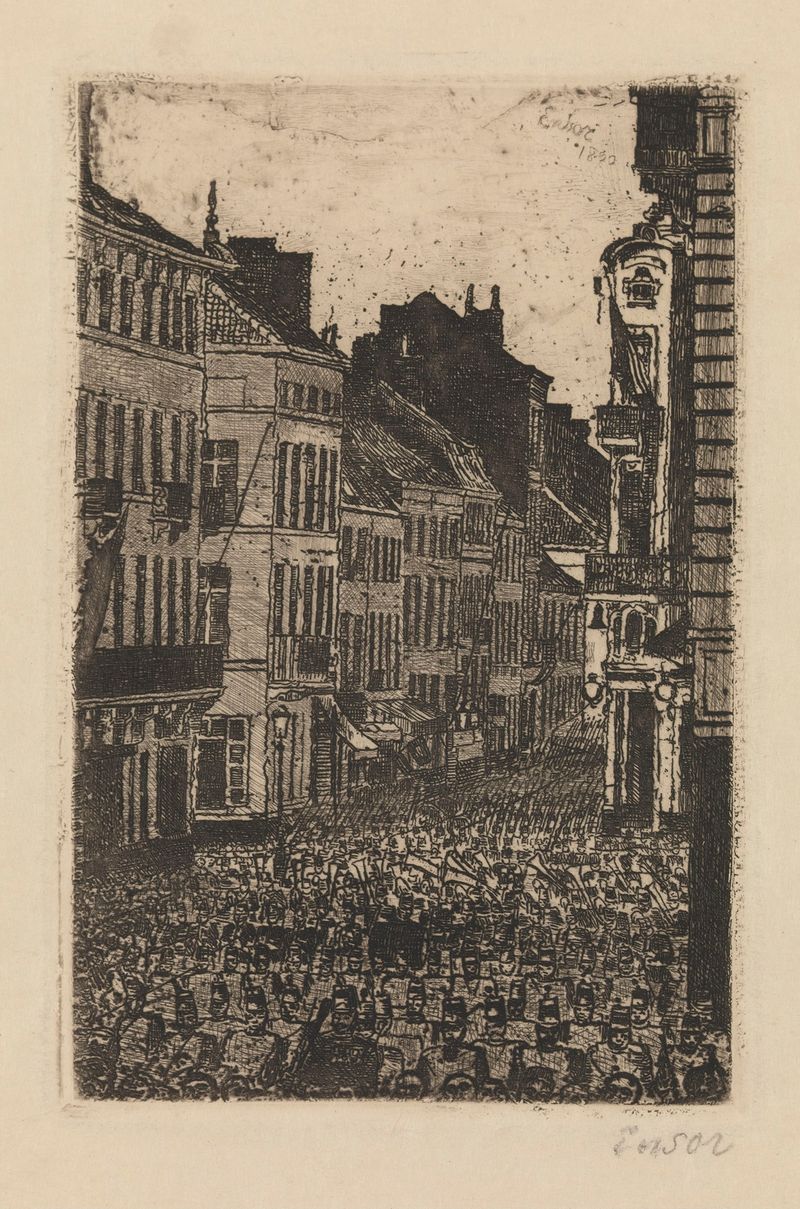
The Music in the rue de Flandre, Ostend
James Ensor
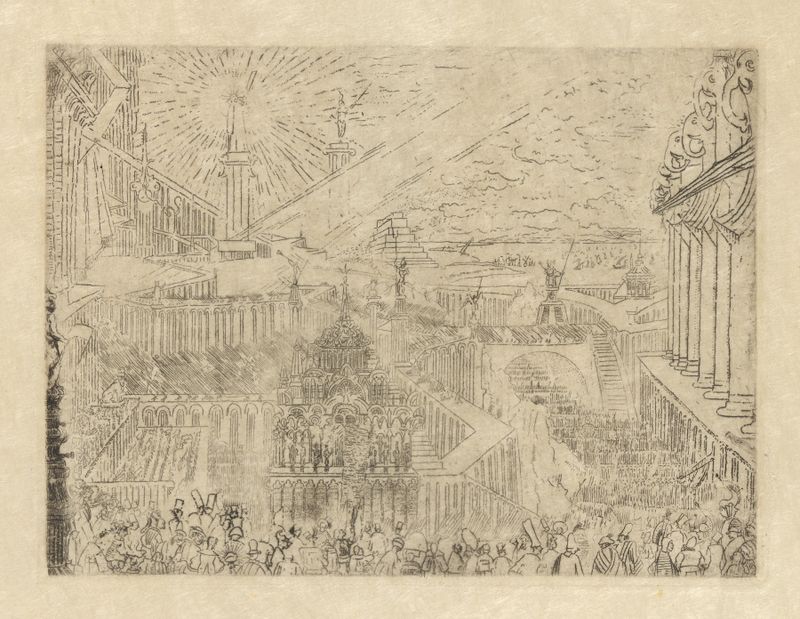
Verovering van een vreemde stad
James Ensor





