
Deauville, marée basse — History & Facts
Can beauty exist without sorrow? In Deauville, marée basse, a delicate dance unfolds on the canvas, revealing the harmonious interplay of light and shadow against an awakening seascape. Focus first on the horizon, where the soft blues of the sky meet the muted browns and greens of the sandy shore. Notice how the brushstrokes blend seamlessly, inviting you to explore the gentle waves lapping at the beach, their fleeting touch caressing the land. The fishermen, mere silhouettes, labor diligently in the distance, their figures mirrored in the stillness of the water, a testament to both human toil and nature’s grace. Yet, amidst this serene beauty lies a palpable tension.
The low tide exposes the damp, vulnerable earth, reminding us of the ever-shifting balance between abundance and scarcity. The colors convey not just a moment of ecstasy, but also a fleeting glimpse of life’s transience—where joy and melancholy coexist, revealing the fragility of existence. Each element speaks of the ephemeral nature of happiness, anchored by the silent whispers of the sea. Eugène Boudin painted this piece between 1860 and 1865 while residing in Deauville, a coastal town that would deeply influence his work.
At this time, he was exploring plein air painting, drawing inspiration from the changing light and atmosphere of his surroundings. The art world was beginning to embrace Impressionism, and Boudin’s light-filled scenes paved the way for future artists to capture the ephemeral beauty of everyday life.
More Artworks by Eugène Boudin
Browse all →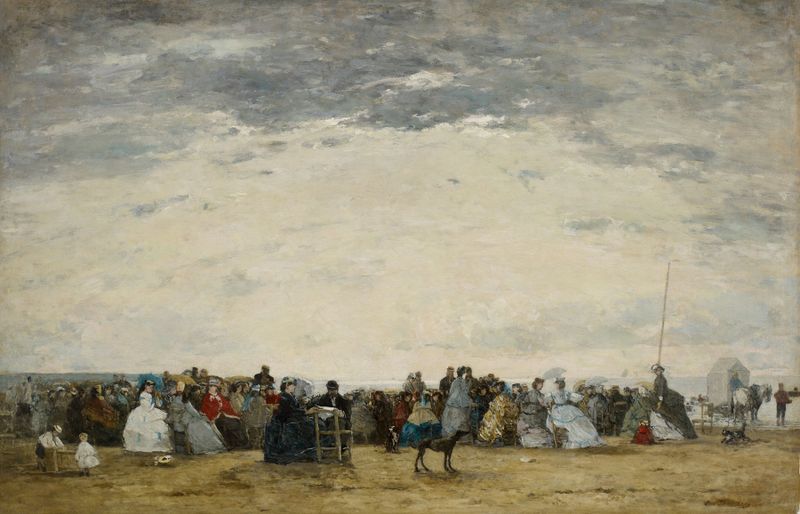
Vacationers on the Beach at Trouville
Eugène Boudin

Washerwoman near Trouville
Eugène Boudin
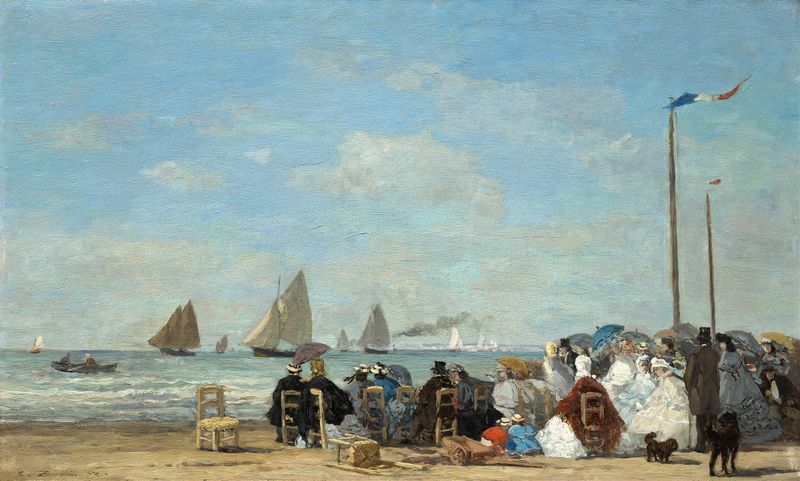
Beach Scene at Trouville
Eugène Boudin

Port aux environs d’Honfleur
Eugène Boudin

Le Faou, un coin du village
Eugène Boudin
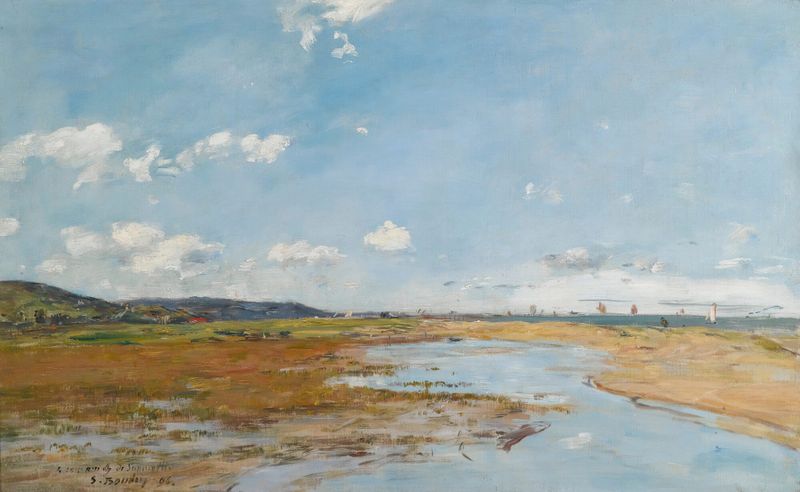
Deauville. Le Rivage
Eugène Boudin
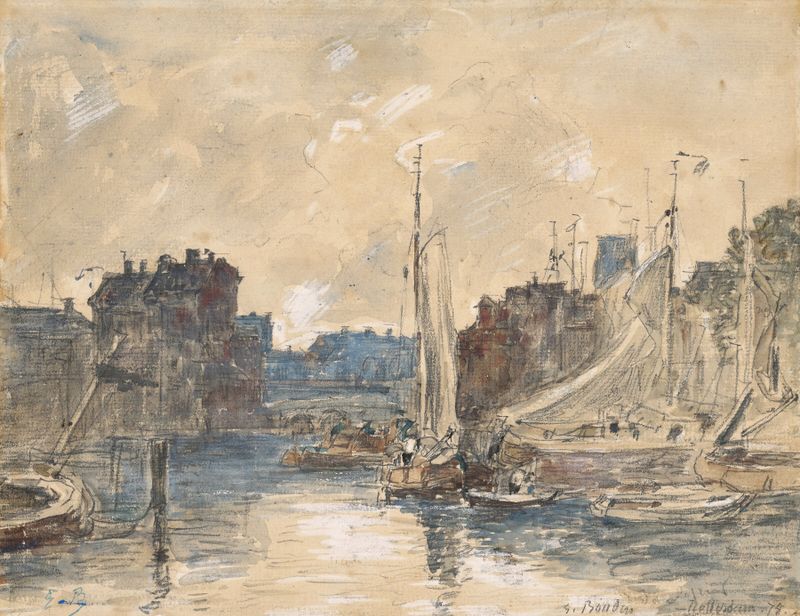
Port de Rotterdam
Eugène Boudin

View of Bordeaux, from the Quai des Chartrons
Eugène Boudin

Trouville, Scène De Plage
Eugène Boudin

Trouville, Le Port
Eugène Boudin





