
Departure for Greenwich (Depart pour Greenwich) — History & Facts
A hush of anticipation seems to hang in the air, as if the figures themselves are waiting for the moment to begin. The woman at the center, her hat tilted at a rakish angle, sits upright on a bench, her gloved hand poised in her lap. Around her, the faint outlines of other travelers and the suggestion of a ship’s rail conjure the bustle of departure without ever spelling it out.
The artist’s hand is light and searching, as if catching the fleeting impressions of a scene glimpsed in passing—faces barely resolved, gestures half-formed, yet the sense of movement and expectation is unmistakable. The eye is drawn to the interplay of line and shadow, where the unfinished quality invites us to imagine the rest of the journey. Works like this from the late nineteenth century often capture the rhythms of modern life, when travel by steamship or train was transforming the experience of time and distance. Auguste Lepère was known for his sensitivity to the everyday, and in 1891, scenes like this would have resonated with viewers accustomed to the novelty of leisure excursions and the mingling of social classes in public spaces.
The piece now resides in the National Gallery of Art, a quiet testament to the era’s fascination with movement and the fleeting encounters of travel. Look again at the subtlety of the lines—the world they conjure is one of possibilities, suspended just before departure.
More Artworks by Auguste Lepère

Le Pont-Neuf (Paris)
Auguste Lepère
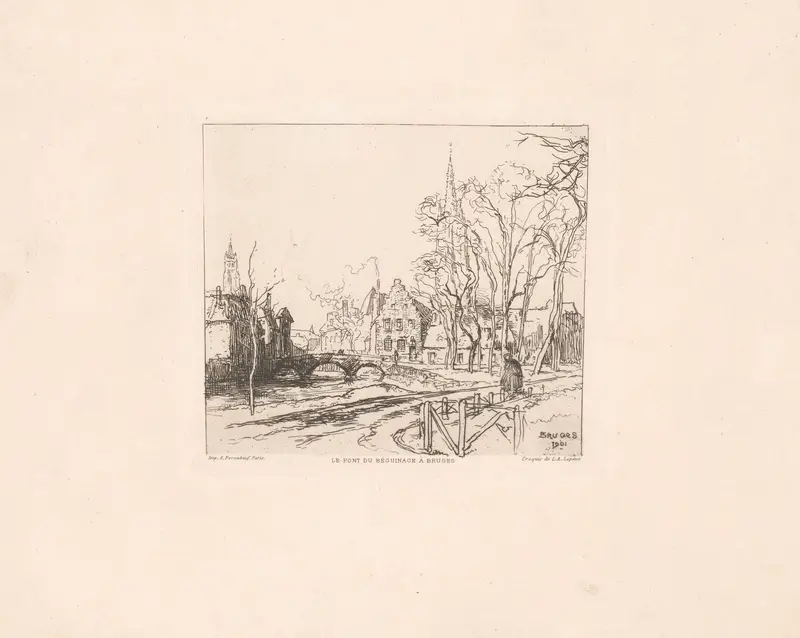
Le pont du Beguinage à Bruges
Auguste Lepère
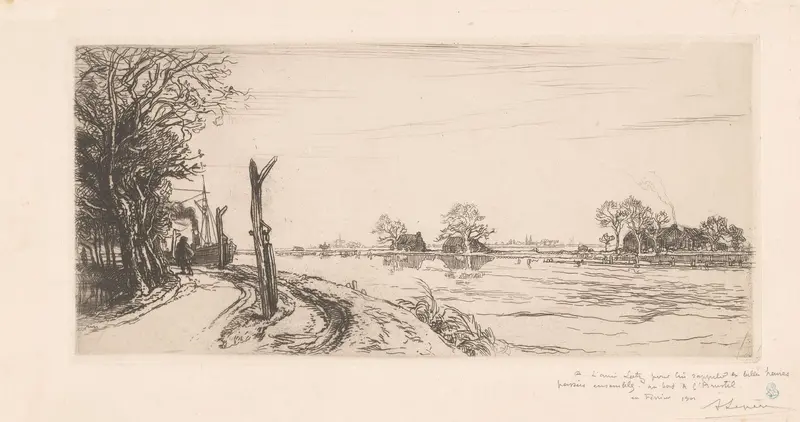
Au bord de l’Amstel
Auguste Lepère
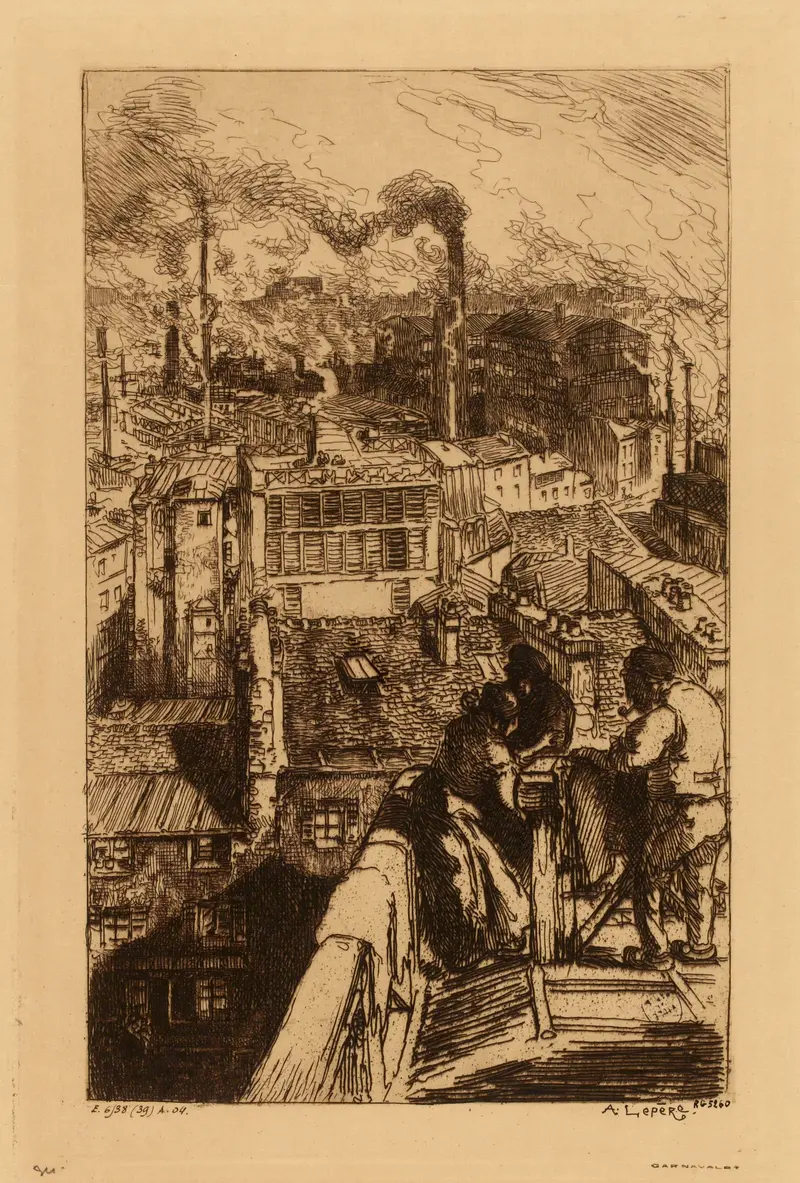
Le quartier des Gobelins
Auguste Lepère
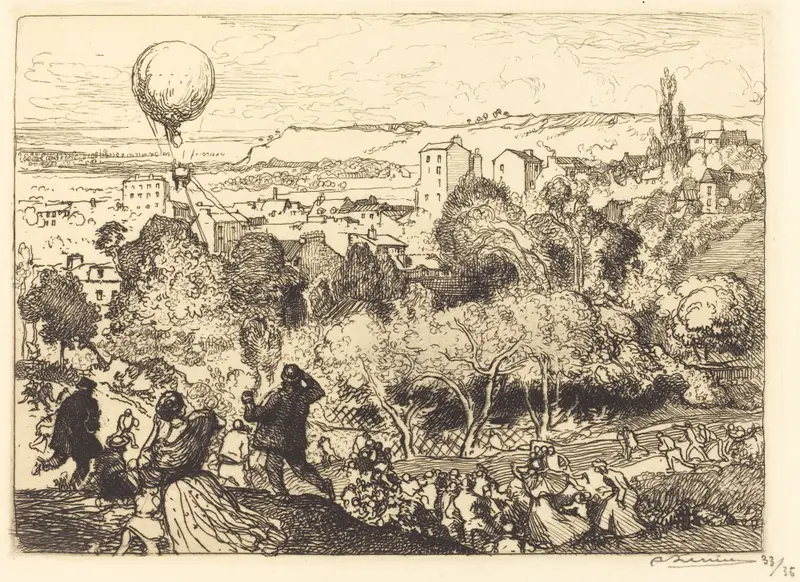
The Falling Balloon, in Pre-Saint-Gervais (Lebaloon qui tombe, au Pre-Saint-Gervais)
Auguste Lepère
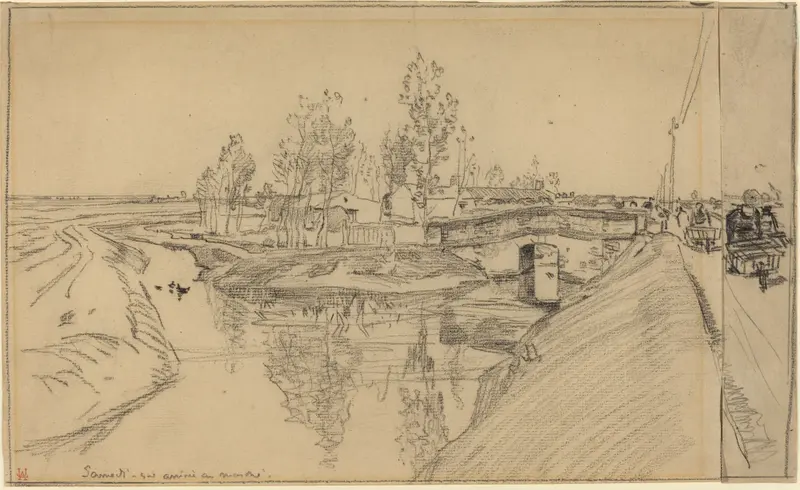
Arrivee au Marche
Auguste Lepère
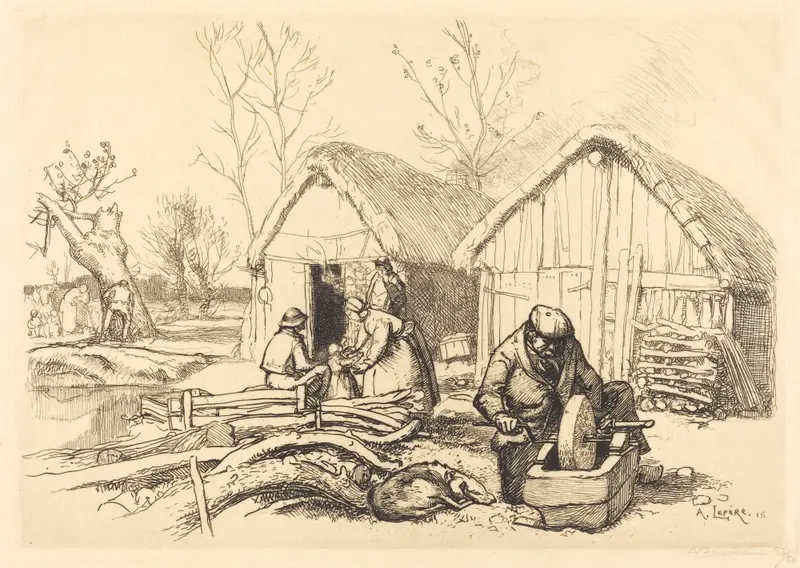
The House of the Woodcutter, Vendee (La maison du bucheron, Vendee)
Auguste Lepère
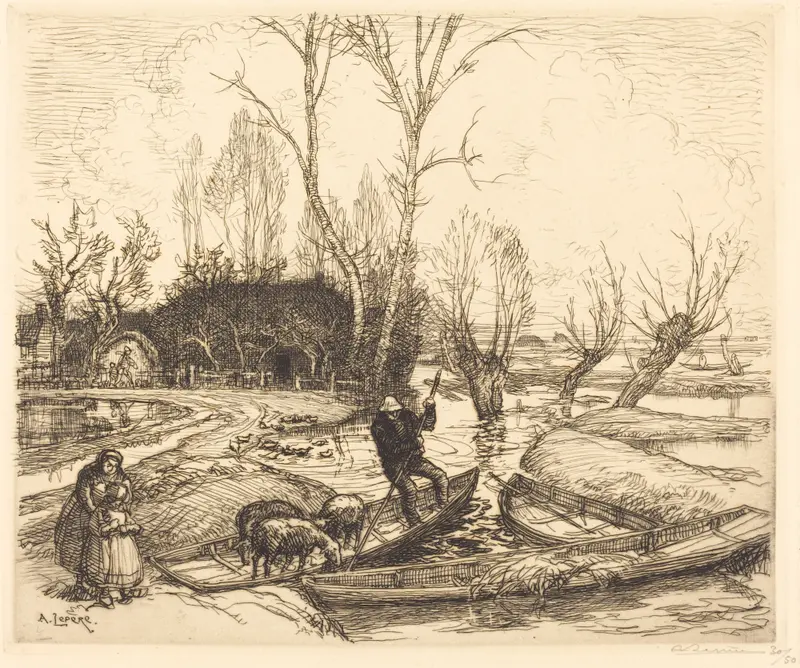
In the Deluged Marsh - The Shepherd (Au marais inonde - Le berger)
Auguste Lepère
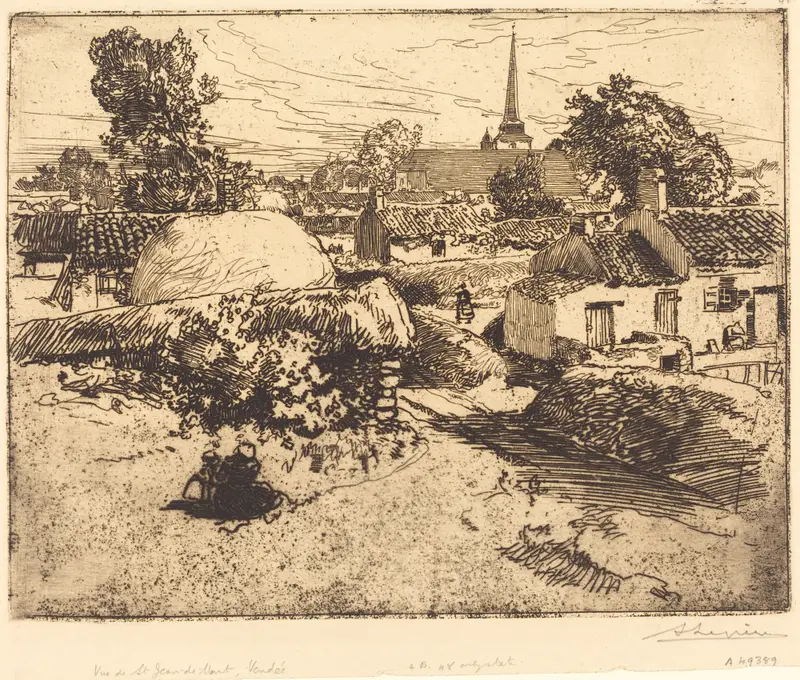
View of St.-Jean-de-Mont, Vendee (Vue de St.-Jean-de-Mont, Vendee)
Auguste Lepère
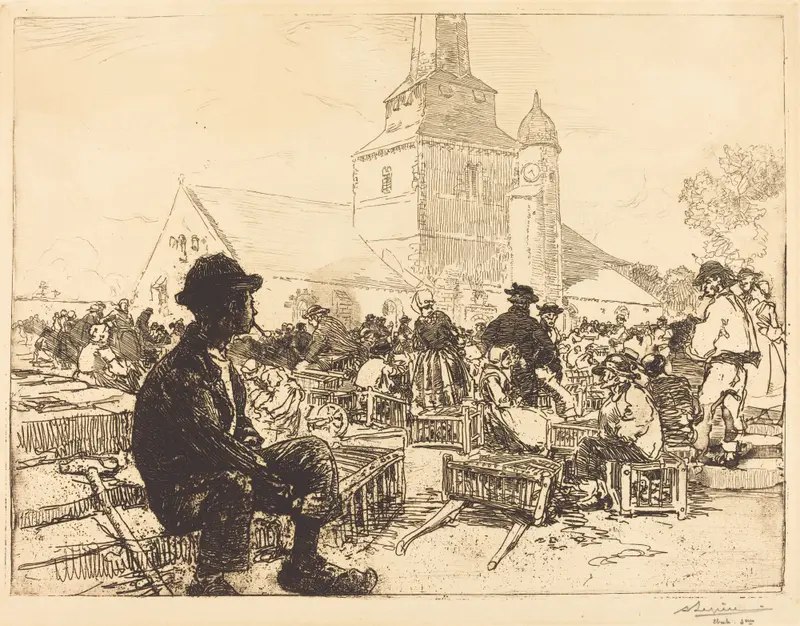
Poultry Market at St.-Jean-de-Mont (Marche a la volaille, a St.-Jean-de-Mont)
Auguste Lepère
More Genre Scene Art

Banquet of the Officers of the St George Civic Guard
Frans Hals

Rembrandt and Saskia in the Scene of the Prodigal Son
Rembrandt van Rijn

Bal du moulin de la Galette
Pierre-Auguste Renoir

Quadrille at the Moulin Rouge
Henri de Toulouse-Lautrec

A Burial at Ornans
Gustave Courbet

When Will You Marry?
Paul Gauguin