
Der Festbraten — History & Facts
Few paintings of 19th-century German domestic life are as beloved as Der Festbraten by Felix Schlesinger, a work that has charmed generations with its warm humor and close observation. The painting became widely known through popular engravings, which circulated in middle-class homes across Europe, cementing its reputation as a quintessential scene of familial festivity. While the exact date and circumstances of its creation remain uncertain, Der Festbraten stands out for its role in shaping the sentimental genre scenes that defined Schlesinger’s career. The scene captures a bustling kitchen at the climactic moment before a festive meal: an elderly woman, perhaps the family matriarch, presents a roasted bird—likely a goose or duck—while children and a dog cluster around, their faces alight with anticipation.
The painter’s eye lingers on the gleam of the browned skin, the crisp linen, and the eager, mischievous expressions. Every detail, from the copper pots to the scuffed wooden floor, speaks of a well-lived home. The composition’s gentle humor recalls the work of Franz von Defregger, yet Schlesinger’s touch is lighter, focusing on the interplay of generations and the simple pleasures of shared food.
The dog’s upturned nose and the children’s barely contained excitement hint at the universality of such moments. Though the provenance of Der Festbraten is not fully documented, it is typical of the genre pieces that brought Felix Schlesinger acclaim in the late 19th century. These works were often purchased by private collectors or reproduced for a growing bourgeois audience eager for images of home and hearth. Today, the painting is most often encountered through reproductions, as its original location is not widely known.
Schlesinger’s reputation rests on such scenes, which capture the everyday rituals of German family life with affection and wit, securing his place among the most cherished genre painters of his era.
More Artworks by Felix Schlesinger

Fleißige Helfer in der Küche
Felix Schlesinger

Die Zeitungslektüre
Felix Schlesinger
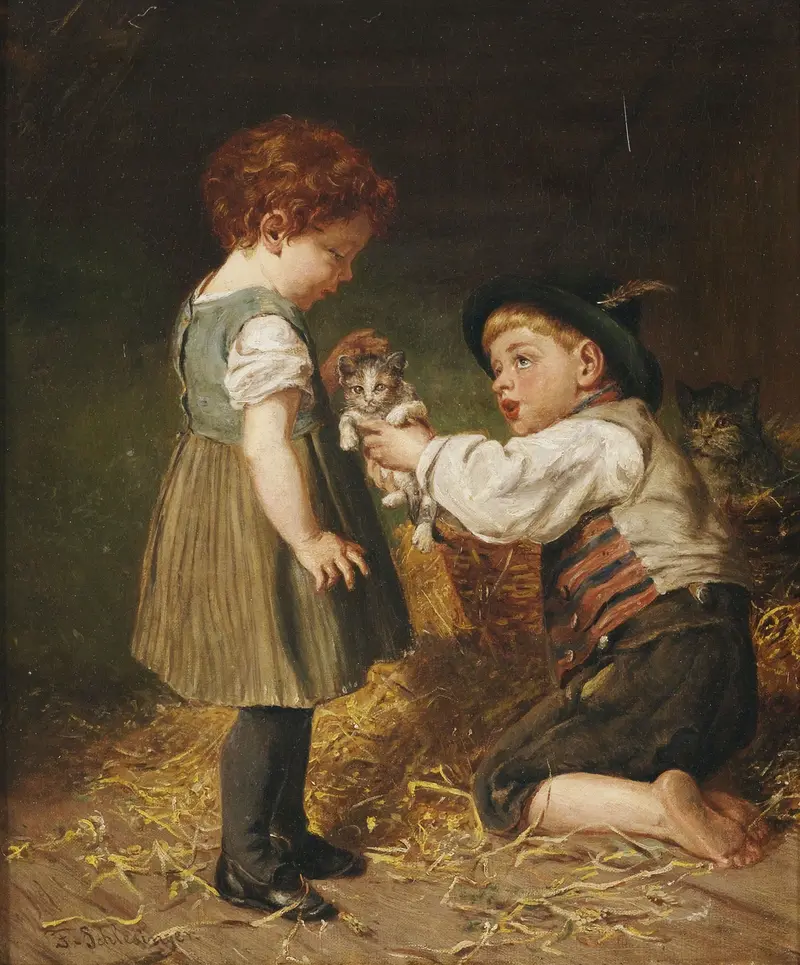
Zwei Kinder mit Kätzchen im Stall
Felix Schlesinger
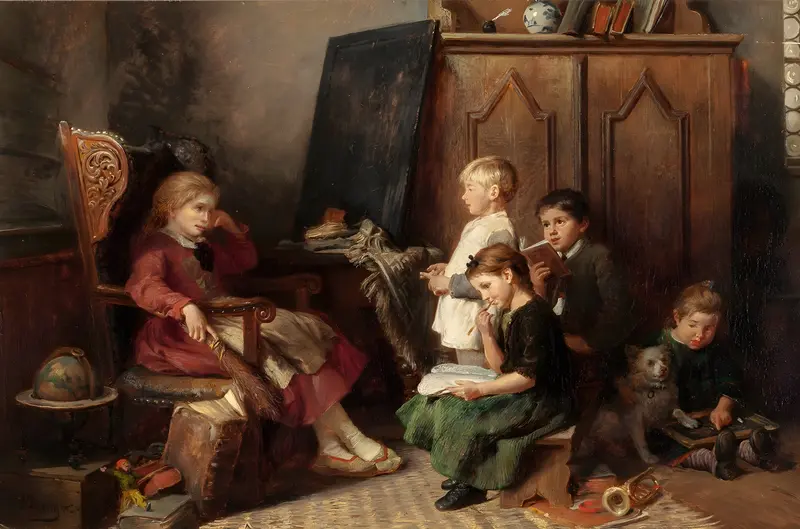
Children Reading
Felix Schlesinger
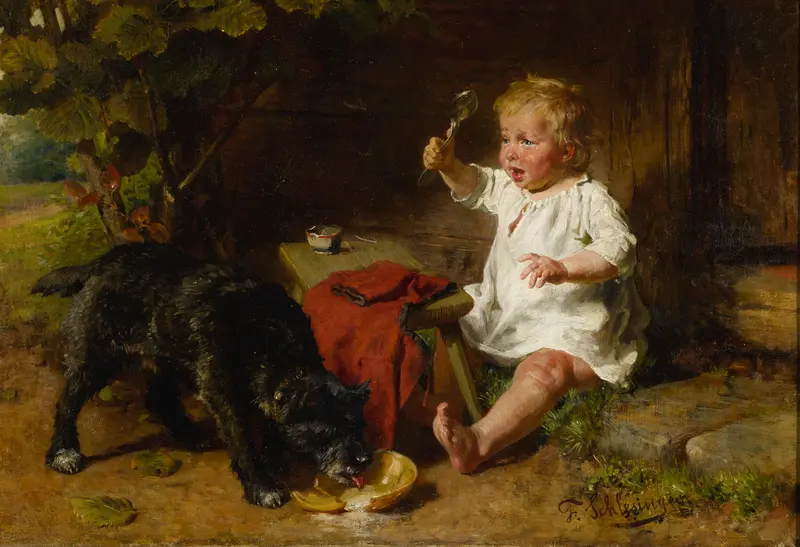
A Shared Meal
Felix Schlesinger
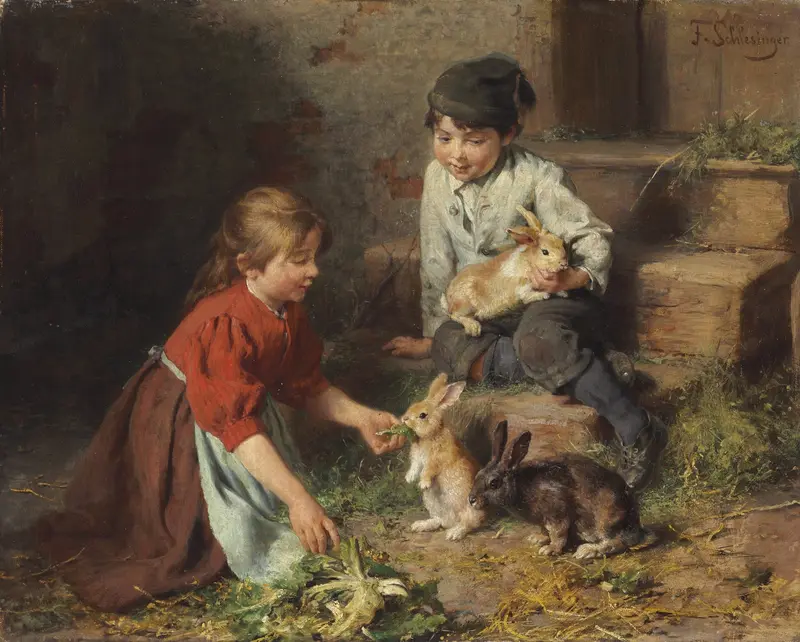
Fütterung Der Kaninchen
Felix Schlesinger
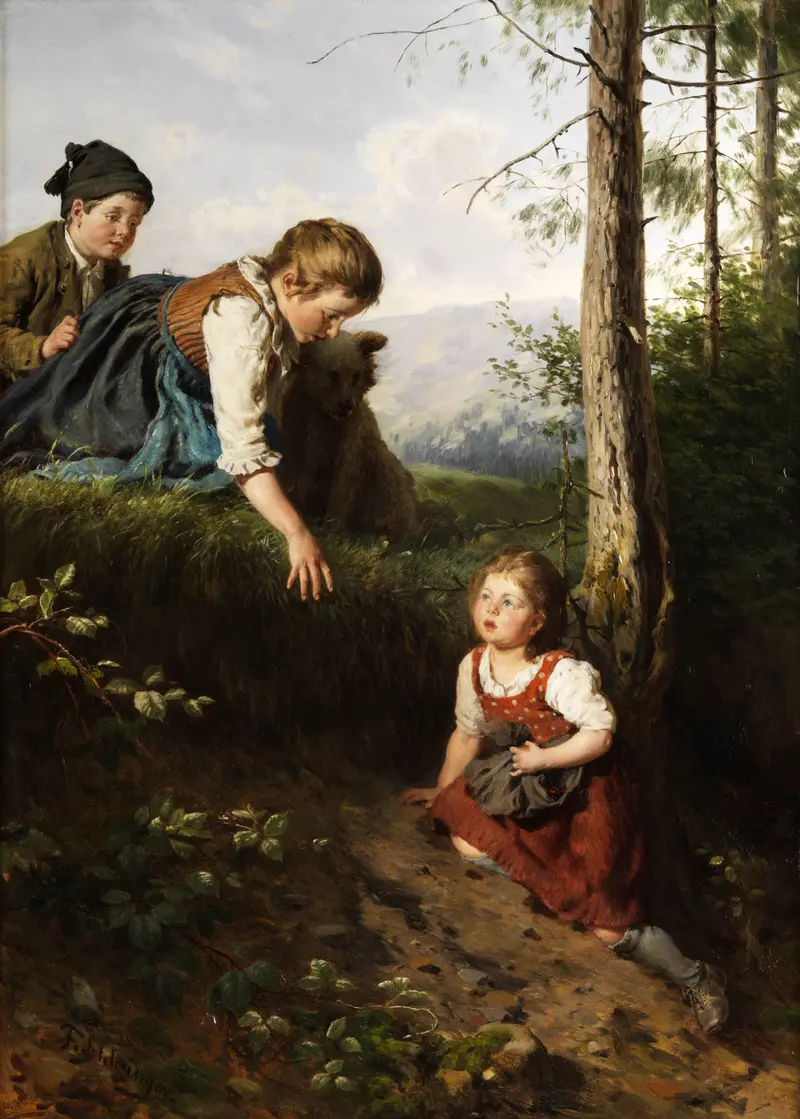
Drei Kinder im Wald beim Beerenpflücken
Felix Schlesinger
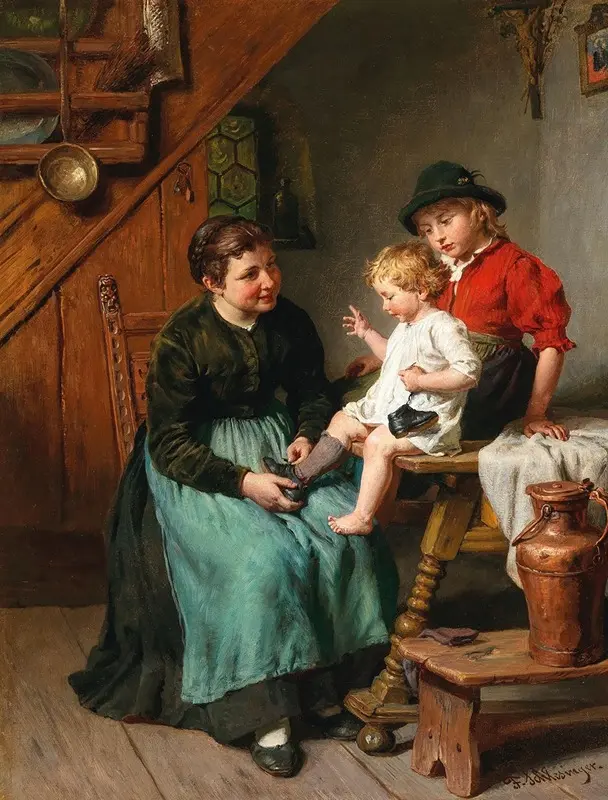
The First Shoe
Felix Schlesinger
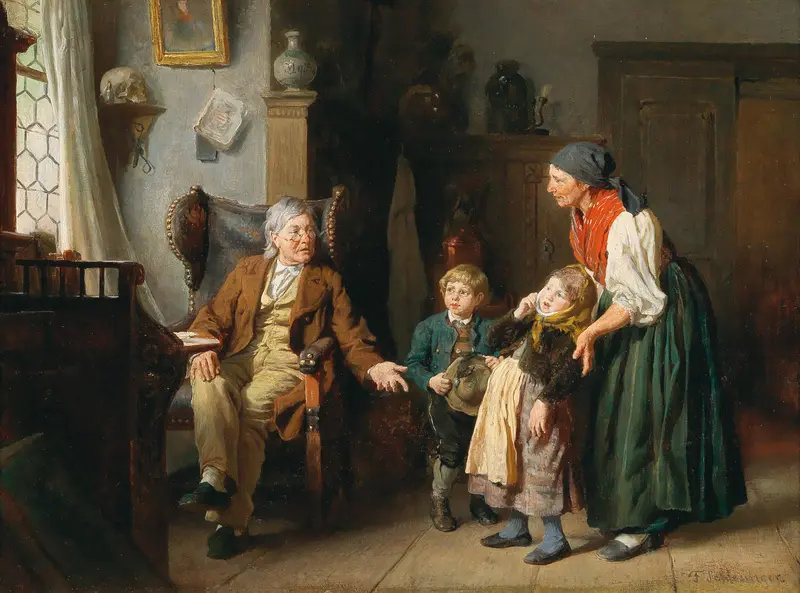
The village doctor
Felix Schlesinger
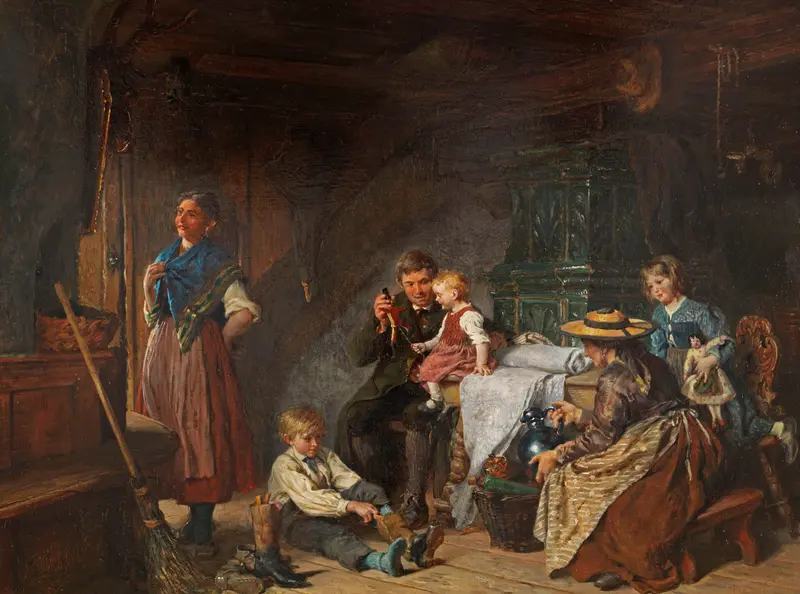
Familienszene
Felix Schlesinger
More Genre Scene Art

Banquet of the Officers of the St George Civic Guard
Frans Hals

Rembrandt and Saskia in the Scene of the Prodigal Son
Rembrandt van Rijn

Bal du moulin de la Galette
Pierre-Auguste Renoir

Quadrille at the Moulin Rouge
Henri de Toulouse-Lautrec

A Burial at Ornans
Gustave Courbet

When Will You Marry?
Paul Gauguin