
Der Königssee mit dem Watzmann — History & Facts
Can paint confess what words never could? In Der Königssee mit dem Watzmann, the stillness of a solitary lake reflects a profound melancholy, inviting us to explore the depths of solitude and nature's embrace. Look to the foreground, where the serene blue waters of Königssee stretch infinitely, seamlessly blending with the misty gray horizon. The towering Watzmann looms majestically in the background, shrouded in soft clouds, while delicate strokes of pastel hues add texture to the lake's surface. Notice how the light dances upon the water, creating a glimmering path that draws the viewer’s gaze, urging us to contemplate the unspoken secrets tucked away beneath the mirrored surface. In this tranquil landscape, contrasts emerge: the stillness of the lake juxtaposed with the imposing granite peaks, echoing the emotional tides of longing and introspection.
The gentle ripples on the water suggest fleeting moments of life, while the expansive sky speaks to both the insignificance and beauty of existence. Each brushstroke captures the essence of solitude, evoking a sense of yearning intertwined with serene acceptance. Adalbert Stifter painted this piece in 1837, during a period marked by a burgeoning Romantic movement in Europe, where artists sought to express deep emotions and personal experiences through their work. Living in Austria, Stifter was influenced by the enchanting beauty of his surroundings, and his focus on nature reflected his philosophical beliefs about the relationship between humanity and the environment.
This painting serves as a poignant testament to his ability to encapsulate complex feelings within a seemingly simple landscape.
More Artworks by Adalbert Stifter
Browse all →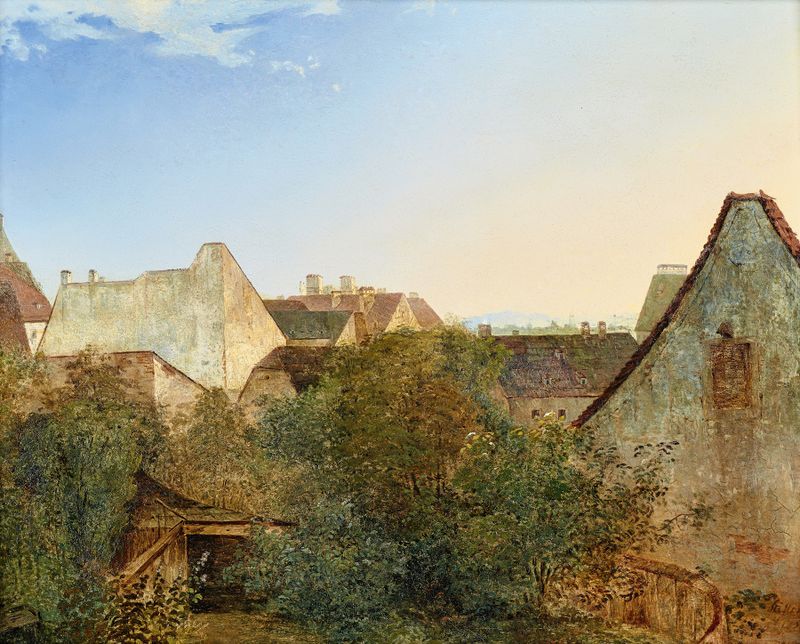
Blick über Wiener Vorstadthäuser (Beatrixgasse)
Adalbert Stifter
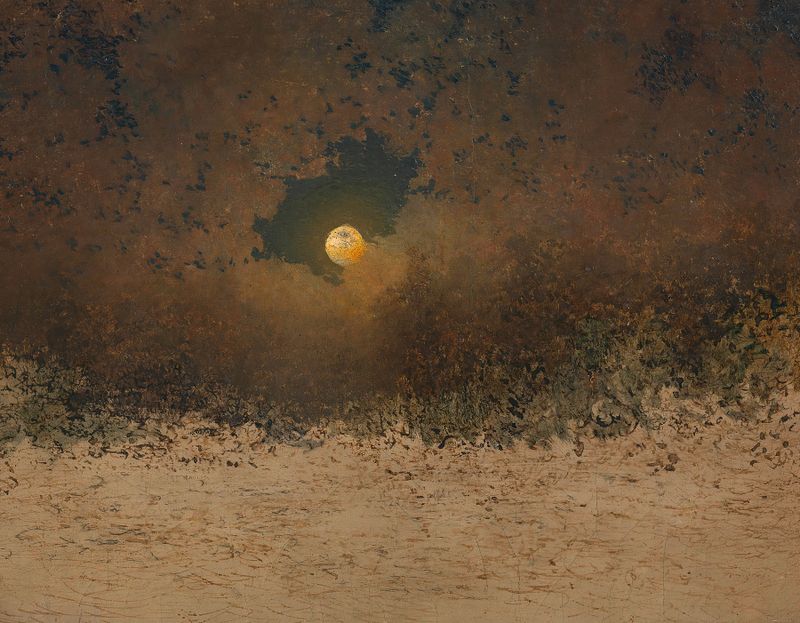
Mondlandschaft mit bewölktem Himmel
Adalbert Stifter
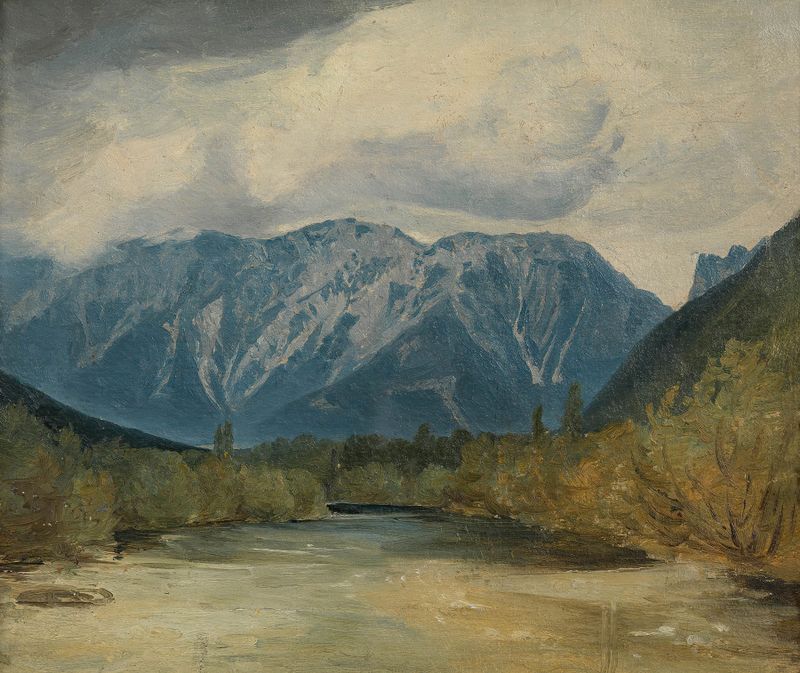
Die Rax in Niederösterreich
Adalbert Stifter
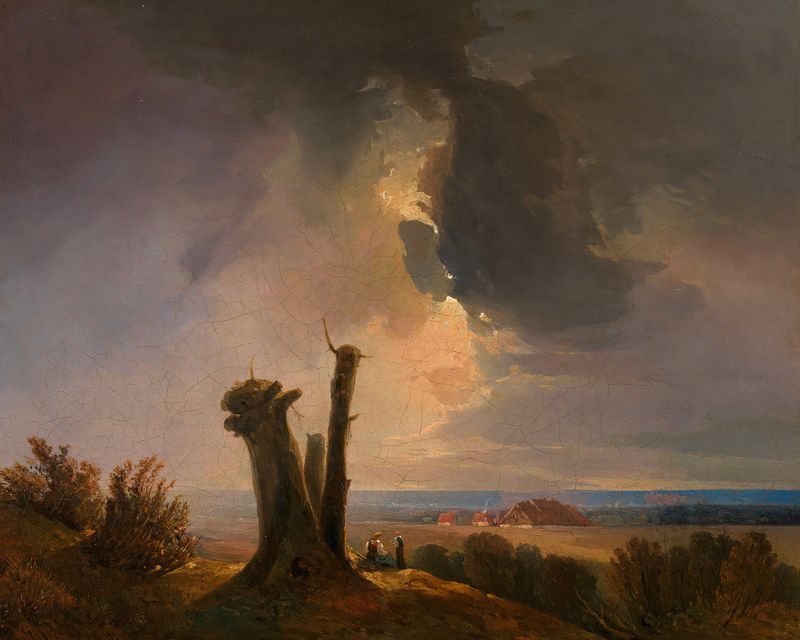
Westungarische Landschaft – Blick vom Leithagebirge
Adalbert Stifter
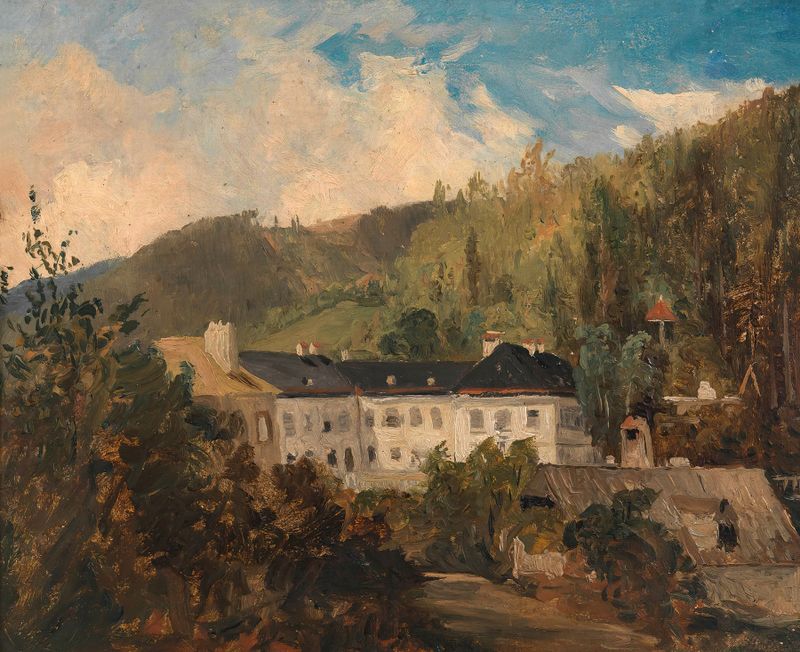
Motiv aus Neuwaldegg
Adalbert Stifter
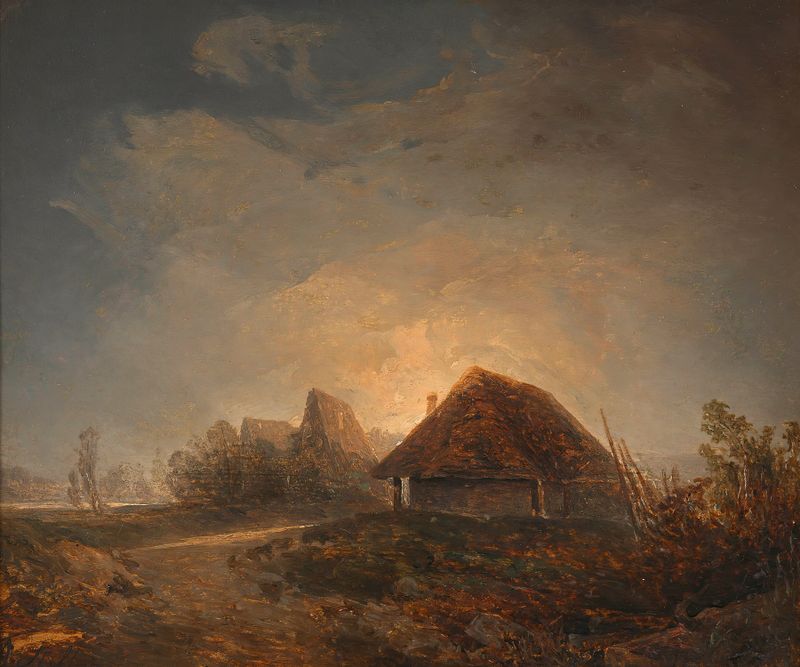
Westungarische Landschaft mit Hütten und aufgehendem Mond
Adalbert Stifter
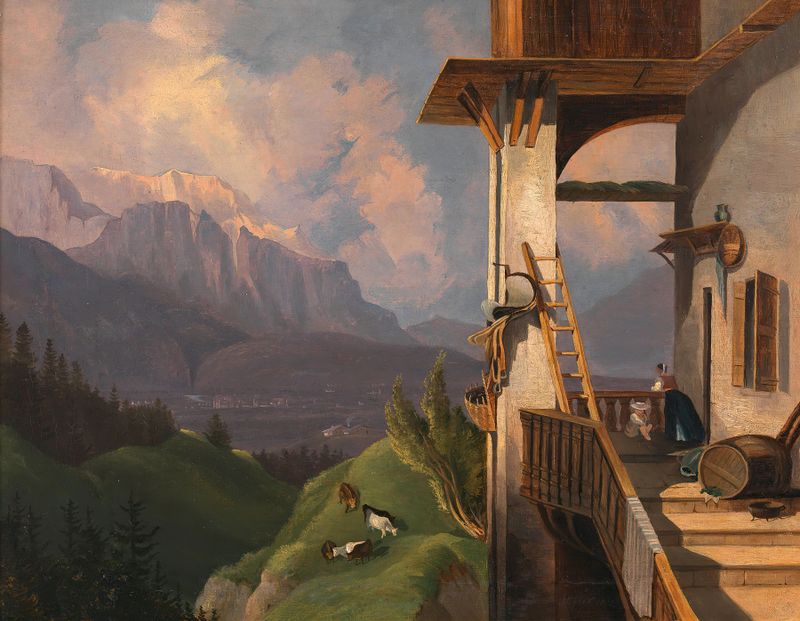
Innsbruck mit der Nordkette
Adalbert Stifter
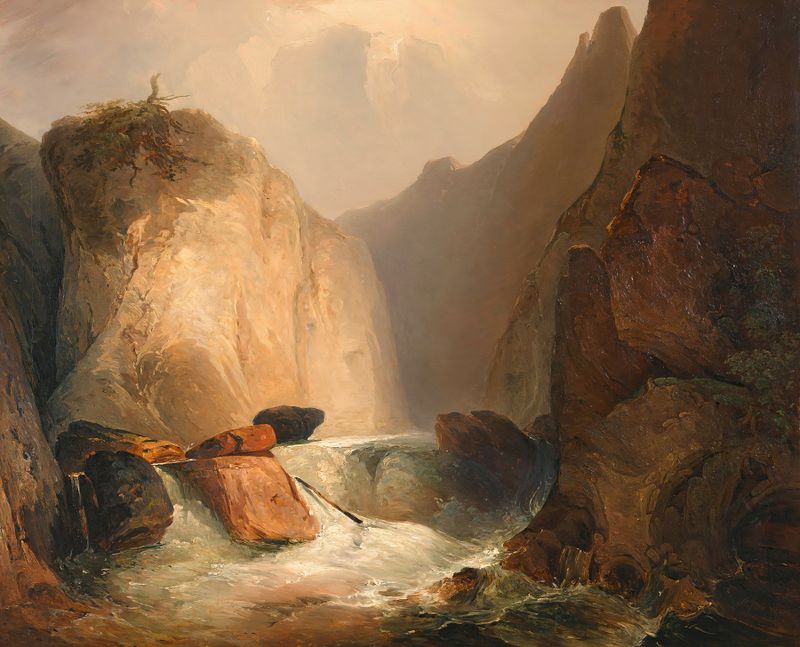
Felspartie – Moldauenge bei Hohenfurt
Adalbert Stifter
Im Gosautal (Oberösterreich)
Adalbert Stifter
Der Sarstein bei Alt-Aussee
Adalbert Stifter





