
Der Spielgefährte — History & Facts
Few paintings of 19th-century childhood have sparked as much gentle curiosity as Der Spielgefährte, for its title alone—“The Playmate”—invites viewers into a private world whose details remain tantalizingly out of reach. The absence of a documented date or commission has only added to the air of mystery surrounding this work by Felix Schlesinger, a German artist celebrated for his scenes of everyday domestic life. Despite these uncertainties, the painting’s enduring popularity lies in its universal theme: the quiet drama of a child’s companionship, whether with a beloved pet, toy, or perhaps an imaginary friend. At the heart of Der Spielgefährte is a moment of absorbed play.
A young child, cheeks flushed, sits on a well-worn rug, eyes fixed on a small animal—perhaps a puppy or kitten—whose eager posture mirrors the child’s own delight. The scattered toys and the gentle spill of daylight through a window speak to a world where time slows, and the boundaries between reality and imagination blur. Schlesinger’s careful attention to textures—the soft wool of the child’s clothing, the gleam of polished wood—grounds the scene in the tangible, while the warmth of his palette recalls the intimacy found in August von Pettenkofen’s genre scenes, though Schlesinger’s focus remains firmly on the innocence of youth rather than the bustle of village life. The physical history of Der Spielgefährte is as elusive as its subject.
No records survive of its first owner, and its early journey through private collections remains undocumented, a common fate for many works by Felix Schlesinger, whose paintings were often sold directly to middle-class patrons in Germany. Today, the painting is recognized as a fine example of late 19th-century German genre painting, a style that flourished in the decades following the Biedermeier period. While not as widely exhibited as some of his contemporaries, Schlesinger’s works—including Der Spielgefährte—continue to appear in auction catalogues and private galleries, cherished for their ability to capture the fleeting joys of childhood.
More Artworks by Felix Schlesinger

Fleißige Helfer in der Küche
Felix Schlesinger

Die Zeitungslektüre
Felix Schlesinger
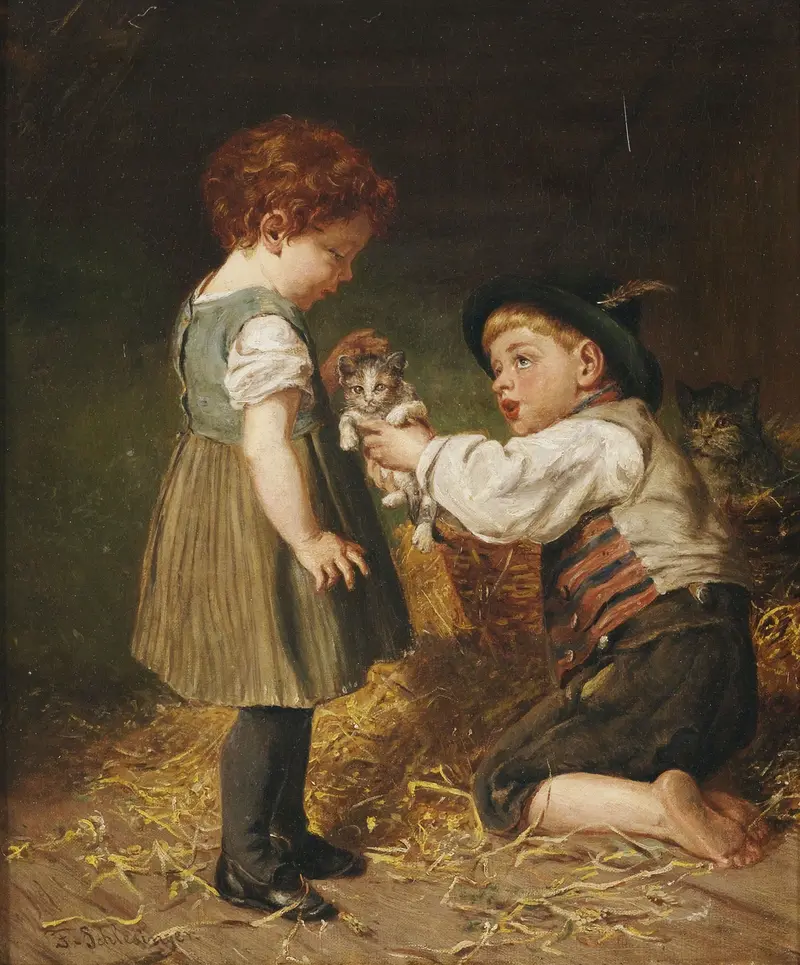
Zwei Kinder mit Kätzchen im Stall
Felix Schlesinger
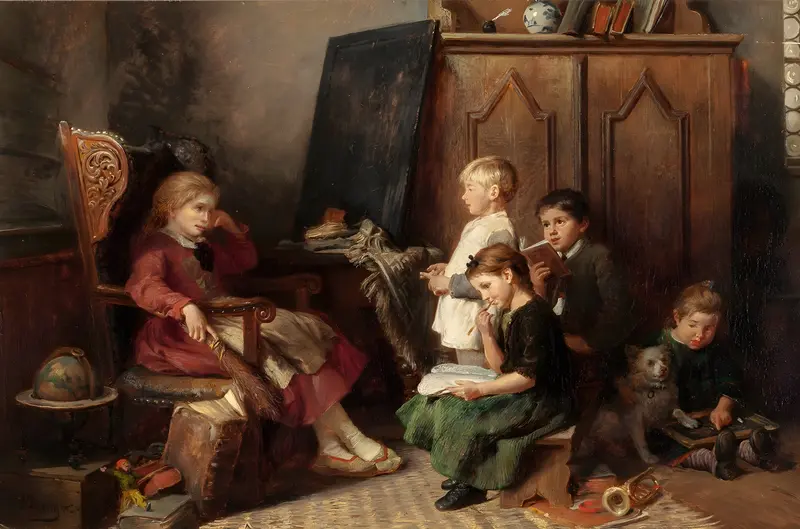
Children Reading
Felix Schlesinger
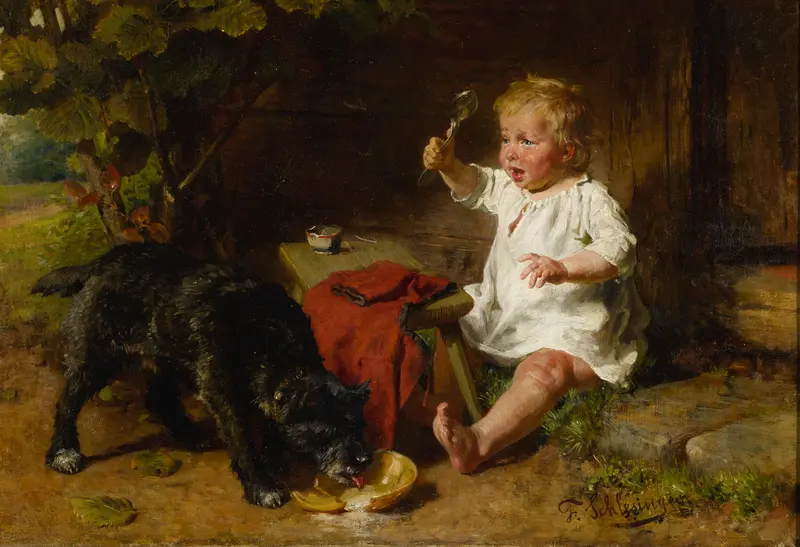
A Shared Meal
Felix Schlesinger
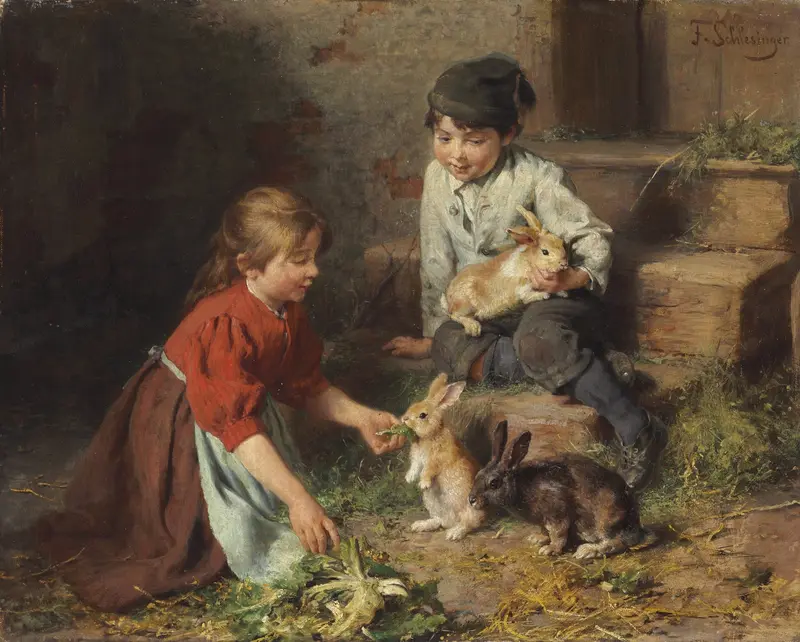
Fütterung Der Kaninchen
Felix Schlesinger
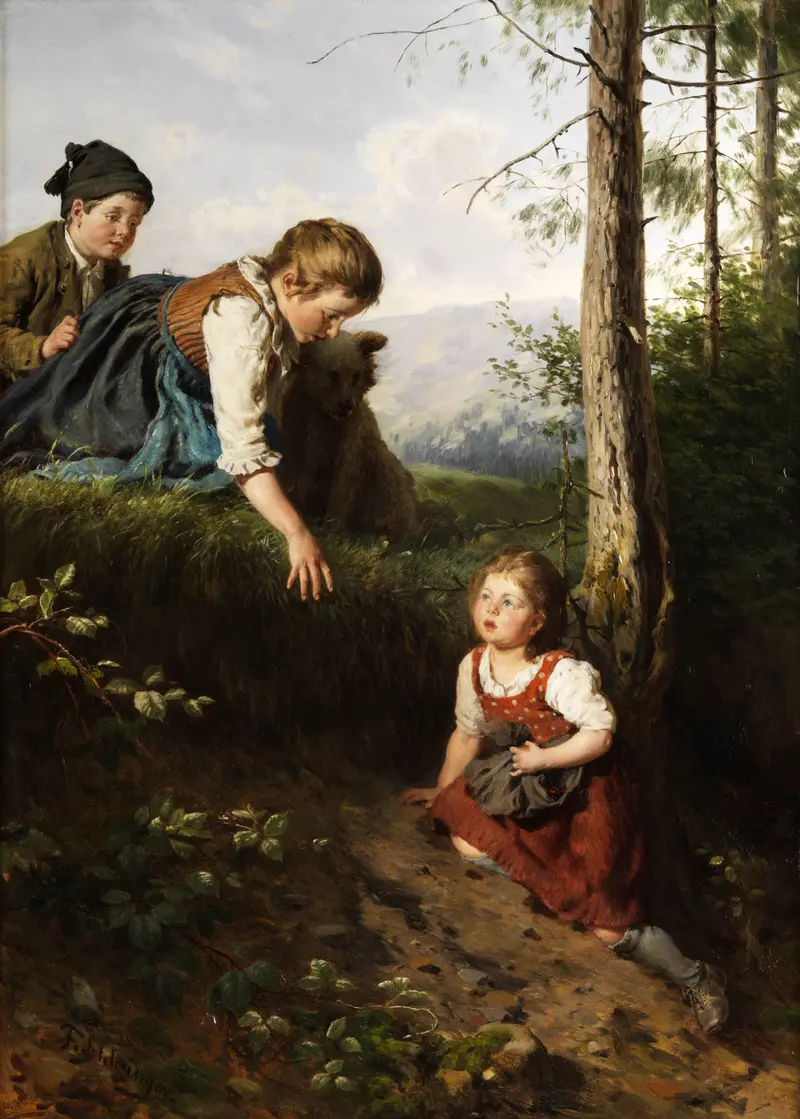
Drei Kinder im Wald beim Beerenpflücken
Felix Schlesinger
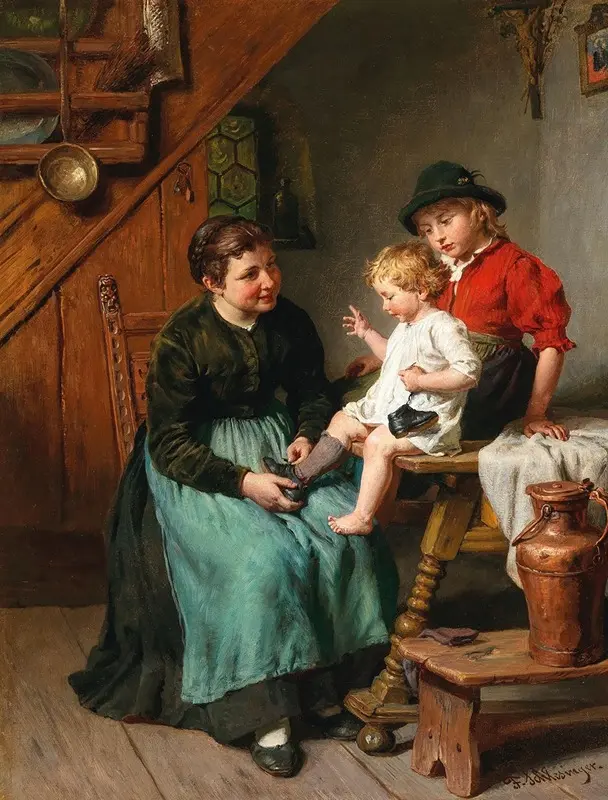
The First Shoe
Felix Schlesinger
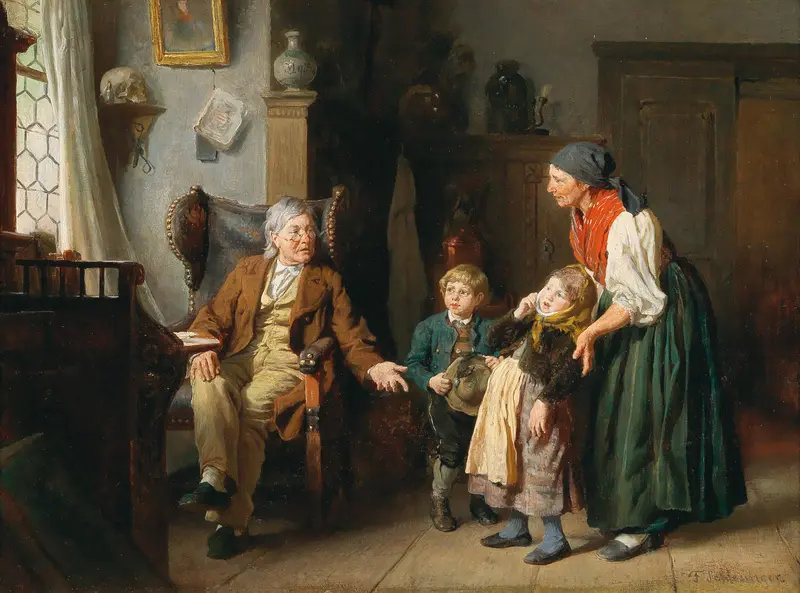
The village doctor
Felix Schlesinger
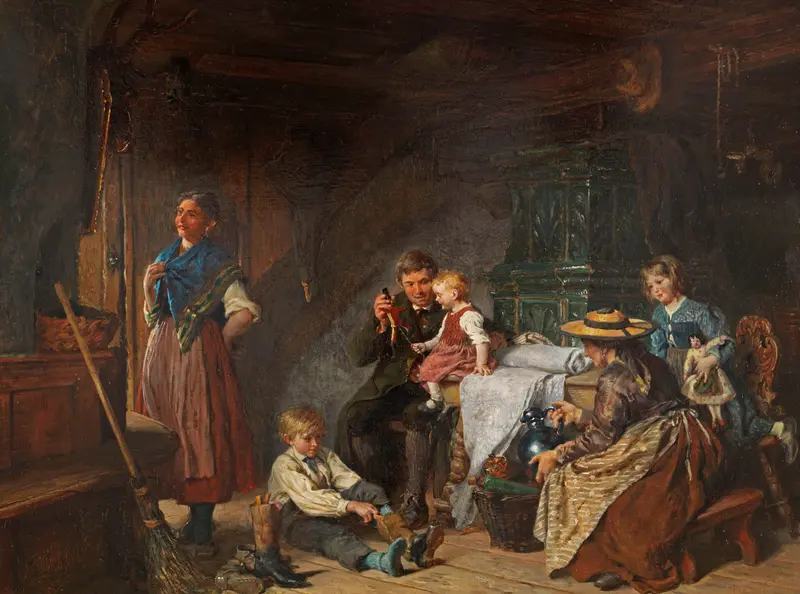
Familienszene
Felix Schlesinger
More Genre Scene Art

Banquet of the Officers of the St George Civic Guard
Frans Hals

Rembrandt and Saskia in the Scene of the Prodigal Son
Rembrandt van Rijn

Bal du moulin de la Galette
Pierre-Auguste Renoir

Quadrille at the Moulin Rouge
Henri de Toulouse-Lautrec

A Burial at Ornans
Gustave Courbet

When Will You Marry?
Paul Gauguin